Custom Hats for Sports Teams: Sideline Gear and Fan Merchandise That Builds Identity
Design custom hats for sports teams at every level — youth leagues, high school, college clubs, adult recreational, and fan merchandise. Covers team branding, color strategies, decoration methods, and bulk ordering for athletic programs.
Marcus Chen
E-Commerce Growth & Merchandising Lead at RareCustom. MBA from Wharton, former Shopify strategist. Marcus has helped 200+ merchants launch custom merchandise lines and specializes in business strategy, bulk ordering, and fundraising programs.
Custom hats are essential components of sports team identity at every level — from youth soccer leagues to adult recreational softball to high school varsity programs. A team hat worn on the sideline, in the dugout, during warm-ups, and around town extends the team's visual presence beyond the field. Unlike custom jerseys that are worn primarily during games, team hats are everyday accessories that build community recognition, foster team pride, and create revenue opportunities through fan merchandise sales.
The sports headwear market for custom team orders exceeds $2 billion annually, with grassroots teams, leagues, and clubs accounting for 45% of that volume. This guide covers team hat design strategy, color coordination with existing uniforms, decoration method selection for athletic environments, sizing for diverse team rosters, and bulk ordering approaches that keep per-unit costs manageable for team budgets and booster clubs.
Building Team Identity Through Headwear
A team hat serves as the most visible symbol of team membership outside the playing field. While jerseys are game-day garments, hats are worn daily — to practice, school, work, errands, and social events. This everyday visibility makes the team hat the single most effective tool for building community recognition of a team's brand, colors, and mascot.
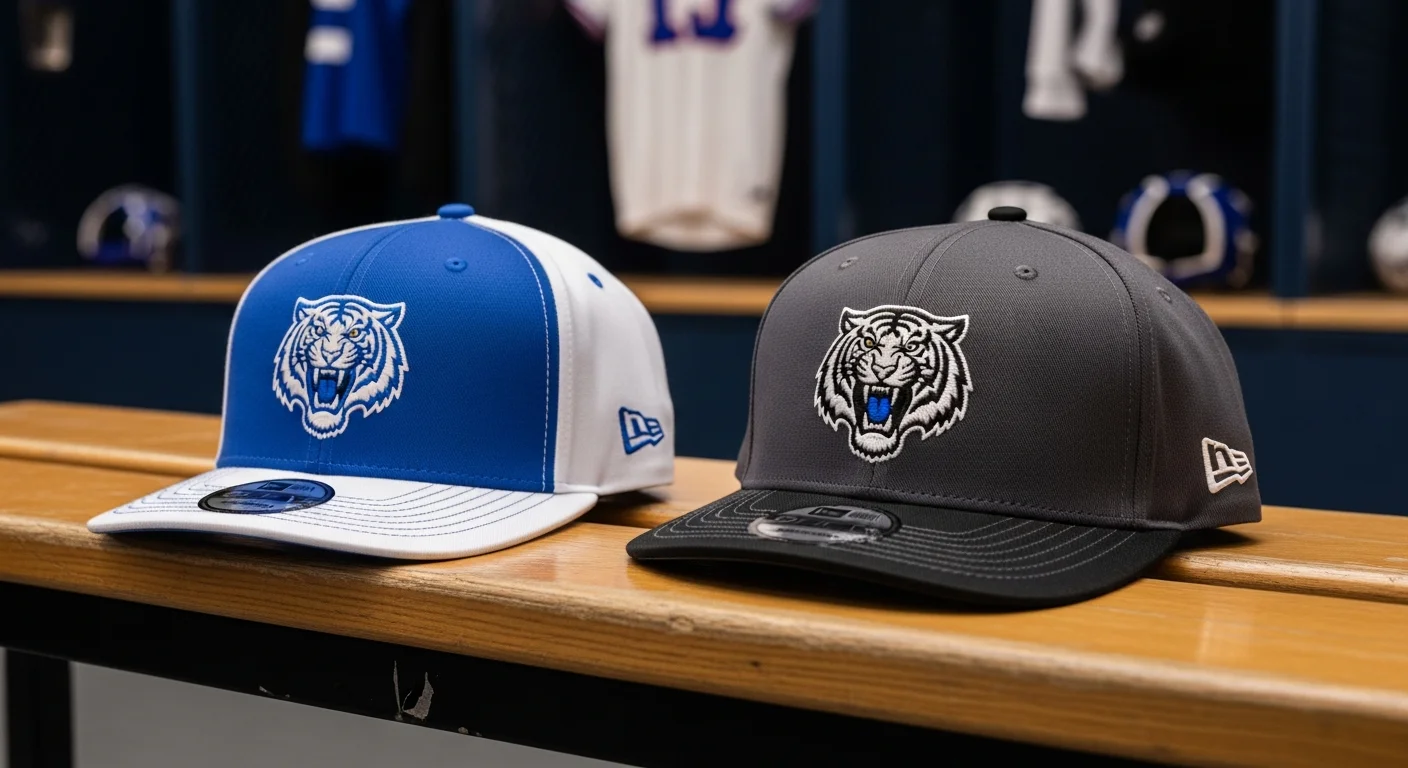
The most impactful team hats feature a bold, simplified version of the team logo optimized for the small embroidery canvas. Team logos designed for jerseys (which have 12+ inches of print area) often contain too much detail for a 4-inch hat embroidery space. Work with a designer to create a hat-specific logo variation — typically the mascot head or a letter mark rather than the full team name — that reads clearly from 10+ feet away. Professional sports teams maintain separate logo variations for different merchandise sizes, and community teams benefit from the same approach.
Color coordination between hats and existing team uniforms creates visual cohesion. The hat should use the team's primary color as the hat body and the secondary color as the embroidery thread, or vice versa for an alternate colorway. Offering both a "home" hat (primary color body, secondary thread) and an "away" hat (secondary color body, primary thread) doubles the merchandise options and gives players and fans variety. For comprehensive team color strategy, see the hat style guide.

Hat Styles for Different Sports
Baseball and softball: Structured baseball caps with 3D puff embroidery are the standard — they match the sport's aesthetic and provide sun protection during games. Fitted caps for the starting lineup and adjustable snapbacks for coaches, staff, and fan sales cover all sizing needs. Teams at the competitive travel level invest in both game caps (matching the jersey) and practice caps (alternate colorway) for a complete program look.
Football, soccer, and lacrosse: Structured baseball caps and performance caps for sideline and fan wear. Beanies for cold-weather sports seasons — a team beanie with the logo embroidered on the cuff is essential gear for November and December games. Performance caps with moisture-wicking fabric work well for coaching staff who spend hours on the sideline in varying conditions.
Golf: Performance caps with subtle flat embroidery or small leather patches. Golf team hats favor a cleaner, less bold aesthetic compared to team sport caps — think understated logo marks rather than full mascot embroidery. Pair with custom hats designed specifically for tournament play, where the hat becomes part of the team uniform visible on the course.
Basketball and volleyball: Snapback caps and dad hats for fan merchandise and warm-up wear. These indoor sports do not require performance headwear during play but generate strong hat demand for travel, pre-game, and fan wear. Bold 3D puff designs on snapbacks appeal to the younger demographic that dominates basketball and volleyball culture.
Decoration Methods for Athletic Headwear
Sports team hats face unique durability demands — sweat, sun exposure, rain, frequent washing, and the general rough handling of athletic environments. The decoration method must withstand these conditions without fading, peeling, cracking, or degrading.
3D puff embroidery is the premium standard for sports team hats. The raised, bold appearance mimics professional-level caps and creates maximum visual impact from a distance — important for sideline visibility and team photography. Puff embroidery is the most durable method for athletic use, maintaining its raised profile and color integrity through hundreds of wash cycles. The premium cost ($3-$6 per hat over flat embroidery) is justified for hats that represent the team's competitive identity.
Flat embroidery works well for secondary team hats — practice caps, coaching staff hats, and lower-budget programs. Flat embroidery is durable, professional, and approximately 30% less expensive than puff, making it the practical choice for programs that need to stretch their hat budget across more units.
For multi-color team logos with complex mascot illustrations, embroidered patches offer the best reproduction quality at the most manageable cost. A detailed mascot patch can be produced separately with high fidelity and then sewn onto the hat, avoiding the stitch-density limitations that make complex direct embroidery expensive and prone to quality issues. Learn more about decoration options in the decoration methods comparison.
Fan Merchandise and Revenue Generation
Custom team hats are one of the most effective fan merchandise products for community sports programs. Parents, siblings, alumni, and local supporters are willing to pay $20-$30 for a well-designed team hat, compared to a $10-$15 production cost — generating $8-$15 profit per unit that funds team expenses, equipment, travel, and end-of-season events.
Successful fan hat programs offer 2-3 hat style variations at different price points: a premium 3D puff structured cap ($25-$30), a standard flat-embroidery dad hat ($18-$22), and an affordable trucker hat ($15-$20). This tiered approach serves different customer preferences and budgets while maximizing total revenue. Seasonal variations (beanies in fall/winter, performance caps in spring/summer) extend the merchandise calendar and create recurring purchase opportunities.
Online pre-sales through a team store or order form ensure that production quantities match demand, eliminating unsold inventory risk. Collect orders for 2-3 weeks, then submit the total quantity to the manufacturer for production. This approach aggregates volume for better per-unit pricing while guaranteeing that every hat produced has a buyer. Teams that pair hat sales with custom t-shirts and custom sweatshirts in a unified team store generate 60-80% more total merchandise revenue than single-product offerings.
Sizing and Ordering for Team Rosters
Sports teams span wide size ranges — from 8-year-old youth players to adult coaches with above-average head sizes. The sizing strategy must accommodate this full range without requiring individual measurements from every person on the roster.
The most practical approach for team orders is adjustable-closure hats (snapback, strapback, or velcro) in one-size-fits-most, which covers approximately 90% of adults and older youth (ages 12+). For younger players (ages 6-12), order a separate batch of youth-size adjustable hats. Most manufacturers offer youth blanks in the same colors and styles as adult blanks, allowing matching team hats across all age groups.
For premium fitted-cap programs (common in competitive baseball and softball), distribute a sizing survey to the team with measurement instructions and a two-week response deadline. Order the exact quantities per size with 2-3 extra hats in the most common sizes (7 1/8, 7 1/4, 7 3/8) as backup for measurement errors. For detailed sizing information, reference the custom hat sizing guide.
Get Started with Team Hats
Custom team hats transform a group of players into a recognizable, unified team — on and off the field. Whether the program needs 24 sideline caps or 200 fan merchandise pieces, the custom hats product page offers every style, color, and decoration option for athletic programs. Start designing through the free online design tool, which provides real-time 3D previews of team logos on any hat style.
Frequently Asked Questions
What is the best hat style for youth sports teams?
Adjustable-closure structured baseball caps are the best choice for youth sports teams. The structured front provides the best embroidery surface, and the adjustable closure (velcro for younger ages, snapback for teens) accommodates growing heads without requiring individual sizing. For cold-weather sports, add team beanies with cuff embroidery as a seasonal complement to the primary team cap.
How much do custom team hats cost in bulk?
At quantities of 48-72 hats, expect $8-$12 per hat for structured caps with flat embroidery (7,500 stitches or less). 3D puff embroidery adds $2-$4 per hat. At 100+ quantities, per-unit costs typically drop by 15-20%. Youth sizes are priced the same as adult sizes at most manufacturers. These costs include the hat blank, embroidery, and standard packaging — setup fees for digitizing are typically a one-time charge of $25-$50.
Can different positions have different hat designs?
Yes. Many teams order a unified base design (same hat style, color, and front logo) with position-specific side-panel text or back-panel numbers. Each variation requires its own digitizing setup ($10-$25 per variation), so it is most cost-effective to create 2-4 variations (e.g., "Player," "Coach," "Staff," "Fan") rather than individual customization for every roster spot. This approach maintains team unity while allowing role identification.
Share this article
Written by
Marcus Chen
E-Commerce Growth & Merchandising Lead at RareCustom. MBA from Wharton, former Shopify strategist. Marcus has helped 200+ merchants launch custom merchandise lines and specializes in business strategy, bulk ordering, and fundraising programs.