Embroidery vs. Patches vs. DTF: Custom Hat Decoration Methods Compared
Compare the three major custom hat decoration methods — embroidery (flat and 3D puff), patches (leather, woven, PVC), and DTF transfers — by durability, appearance, cost, complexity, and best use cases.
Terrence Okafor
Head of Production at RareCustom with 20+ years in commercial printing. SGIA certified with deep expertise in embroidery, patch application, and DTF transfer processes for custom headwear.
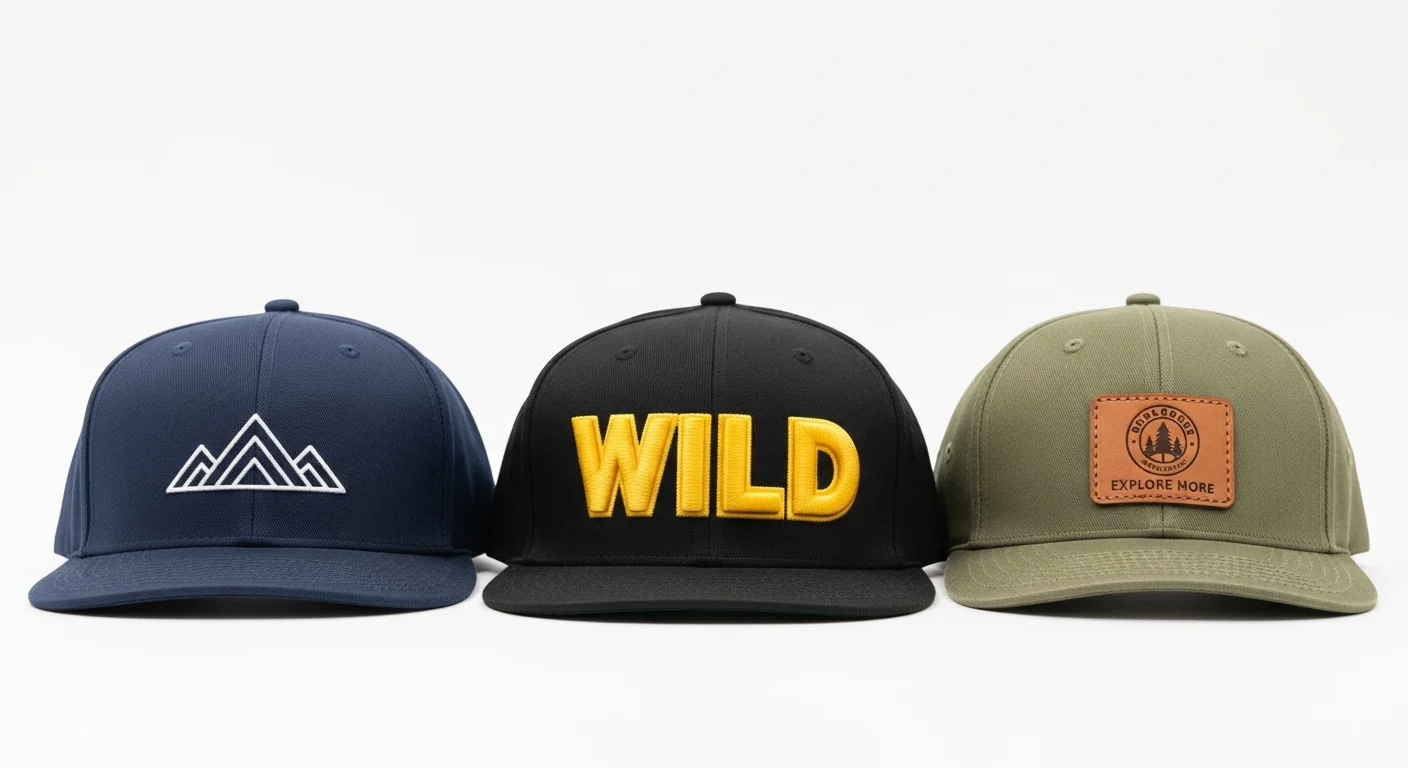
The decoration method chosen for custom hats determines the look, feel, durability, and cost of every unit. Unlike custom t-shirts where screen printing and DTG dominate, the headwear industry offers a wider variety of decoration techniques — each producing a distinctly different aesthetic. Choosing the wrong method for a design is one of the most common mistakes first-time buyers make, resulting in hats that look cheap, feel stiff, or fail to capture the intended brand personality.
This guide breaks down five decoration methods head-to-head: flat embroidery, 3D puff embroidery, woven patches, leather patches, PVC patches, and DTF (direct-to-film) transfers. By the end, the right method for any design, budget, and use case will be clear — whether the order is 24 dad hats for a wedding party or 2,000 trucker hats for a retail product launch.
Flat Embroidery: The Industry Standard
Flat embroidery is the most widely used decoration method for custom headwear, accounting for approximately 60% of all custom hat orders. Thread is stitched directly into the hat fabric using a computerized embroidery machine running at 800-1,200 stitches per minute. The result is a clean, professional, textured design that sits flush with the hat surface and lasts the lifetime of the garment.
The process begins with digitizing — converting artwork into a machine-readable stitch file (.DST or .PES format) that specifies stitch type, direction, density, and sequence for every element. A skilled digitizer translates design intent into stitch patterns: satin stitches for text and borders, fill stitches for large color areas, and running stitches for outlines and fine details. Digitizing quality directly determines the final embroidery quality, which is why reputable manufacturers employ experienced digitizers rather than relying solely on auto-digitize software.
Flat embroidery excels for corporate logos, team emblems, text-based designs, and brand marks — any design where clean lines, consistent colors, and a professional tactile quality are priorities. The textured surface of embroidery conveys permanence and quality in a way that printed methods cannot match. A flat-embroidered company logo on a structured baseball cap communicates professionalism and attention to detail.
Limitations include color count constraints (practical maximum of 12-15 colors per design), inability to reproduce photographic imagery or smooth gradients, minimum detail size (0.25-inch text height, 1mm line width), and a slight stiffness in heavily stitched areas. Production pricing is calculated by stitch count, typically $0.50-$1.00 per 1,000 stitches with a setup fee of $25-$50 for digitizing.

3D Puff Embroidery: Premium Raised Effect
3D puff embroidery places a layer of closed-cell foam (typically 3mm thick) beneath the embroidery stitches, creating a raised, three-dimensional effect that makes designs pop off the hat surface. The foam is trimmed to match the design outline, and the embroidery stitches compress the edges while the center remains elevated. This technique is the signature look of professional sports caps, streetwear brands, and premium corporate headwear.
Puff embroidery works best with bold, simple shapes — block letters, geometric logos, and thick-lined graphics with minimum 0.35-inch feature sizes. Fine details, thin lines, and small text cannot be puffed because the foam collapses under narrow stitch patterns, creating an uneven, lumpy appearance. A common approach combines puff embroidery for large elements (the main text or logo shape) with flat embroidery for smaller details (taglines, outlines, secondary text).
The premium aesthetic comes at a premium cost — 3D puff typically adds 20-40% over flat embroidery pricing. The foam material costs $0.10-$0.20 per hat, but the real cost increase comes from slower production speeds (the machine runs at 400-600 stitches per minute for puff versus 800-1,200 for flat) and higher reject rates. Foam placement must be precise, and any misalignment between the foam and the stitch pattern produces visible defects that require the hat to be scrapped.
Woven and Embroidered Patches: Artisan Quality
Patches are produced as separate pieces and then attached to the hat via sewing, heat-seal backing, or both. This separation allows patches to be produced with tighter quality control than direct embroidery — every patch is inspected before attachment, and defective patches can be discarded without wasting a hat blank. Patches also create a distinct aesthetic: clean, defined edges with a raised border that frames the design.
Woven patches use thin threads woven on a loom to create highly detailed, smooth-surfaced designs with excellent color reproduction. Woven patches can reproduce fine text as small as 0.15 inches and complex multi-color artwork with up to 12 colors. They lay flat against the hat surface and have a refined, upscale appearance suitable for fashion brands and premium merchandise. Pricing runs $0.30-$1.50 per patch depending on size and complexity, plus $0.50-$1.00 per hat for sewing.
Embroidered patches use the same stitch techniques as direct embroidery but on a separate twill or felt backing. They offer the same textured, premium look as direct embroidery with the added benefit of a clean merrowed (overlocked) border edge. Embroidered patches are slightly thicker and more raised than woven patches, creating a more prominent visual presence on the hat. They work well for military-style designs, outdoor brands, and retro aesthetics.

Leather Patches: The 2026 Headwear Trend
Leather patches have emerged as the fastest-growing hat decoration trend, with demand increasing 45% from 2024 to 2026. Available in genuine leather, faux leather (vegan), and suede, leather patches add a rugged, artisan quality that resonates with outdoor lifestyle brands, craft breweries, ranch and farm businesses, and premium fashion lines. For a deep dive into this and other emerging trends, see custom hat trends for 2026.
Leather patches are decorated using three techniques: debossing (pressing the design into the leather creating a sunken impression), laser engraving (burning the design into the surface for high-detail reproduction), and heat branding (scorching the design onto the surface for a rustic, hand-crafted look). Debossing produces the most subtle, premium result. Laser engraving offers the highest detail capability, reproducing fine text down to 0.10 inches. Heat branding creates the most dramatic, rugged aesthetic.
Genuine leather patches range from $1.50-$4.00 per piece depending on size and decoration method, while faux leather runs $0.80-$2.50. Both options are attached via heat-seal backing or sewn borders. Leather patches pair exceptionally well with earth-toned hat blanks — olive, tan, brown, charcoal, and forest green — and trucker or dad hat styles where the casual construction complements the artisan patch aesthetic.
DTF Transfers: Full-Color Freedom
DTF (Direct-to-Film) transfers print full-color artwork onto a special film using CMYK plus white ink, then transfer the design to the hat via heat press. DTF is the newest mainstream hat decoration method, gaining significant market share since 2024 because it removes nearly all design limitations — unlimited colors, photographic imagery, smooth gradients, fine text, and complex multi-color artwork are all possible at no additional per-color cost.
The finished DTF transfer sits on top of the hat fabric as a thin, flexible film approximately 0.1mm thick. Modern DTF films are soft, breathable, and crack-resistant through washing, though they do not match the longevity of embroidery. DTF transfers typically last 50-80 washes before visible wear appears, compared to 200+ washes for quality embroidery. The surface texture is smooth and slightly glossy — distinctly different from the raised, textured feel of embroidery.
DTF shines for promotional merchandise, event giveaways, small-batch fashion, and any design that requires photographic reproduction or complex gradients. Unit pricing is lower than embroidery for complex designs — a 12-color photographic logo that would cost $8-$12 per hat in embroidery costs $3-$5 per hat in DTF. However, for simple 1-3 color designs, embroidery is often cheaper and produces a more premium result. The choice between DTF and embroidery often comes down to design complexity and the desired aesthetic rather than pure cost comparison.
Head-to-Head Comparison Table
The following comparison summarizes the key differences across all five decoration methods for custom hats, helping buyers match the right method to their specific design, budget, and use case:
| Factor | Flat Embroidery | 3D Puff | Woven Patch | Leather Patch | DTF Transfer |
|---|---|---|---|---|---|
| Max Colors | 12-15 | 8-10 | 12 | 1-2 (tone) | Unlimited |
| Durability | 200+ washes | 200+ washes | 150+ washes | Lifetime | 50-80 washes |
| Minimum Detail | 0.25" text | 0.35" text | 0.15" text | 0.10" (laser) | 0.10" text |
| Texture | Raised thread | 3D raised foam | Flat woven | Natural leather | Smooth film |
| Gradients | No | No | Limited | No | Yes |
| Unit Cost (simple) | $2-$4 | $3-$6 | $2-$3 | $3-$5 | $2-$3 |
| Unit Cost (complex) | $5-$10 | $7-$12 | $3-$5 | $4-$6 | $3-$5 |
| MOQ (typical) | 12-24 | 24-48 | 50-100 | 25-50 | 6-12 |
| Best For | Corporate, teams | Sports, streetwear | Fashion, premium | Outdoor, artisan | Promo, complex art |
Choosing the Right Method for Your Project
The decision framework is straightforward once the design characteristics and goals are defined. Start by answering three questions: How many colors does the design use? What aesthetic does the brand require? What is the per-unit budget?
For 1-6 color logos, text, and brand marks where a premium, professional look matters most, flat embroidery is the default choice. For the same designs with a bold, attention-grabbing presence, upgrade to 3D puff. For rustic, artisan, or outdoor brands where texture and material quality define the brand identity, leather patches deliver unmatched character. For complex, multi-color, or photographic designs that would be prohibitively expensive in embroidery, DTF transfers provide full-color freedom at a fraction of the cost.
Many successful custom hat programs combine methods — a 3D puff logo on the front with a flat-embroidered tagline on the side, or a leather patch on the front with a woven label on the back closure strap. The free online design tool lets users preview different decoration methods on 3D hat mockups before committing to an order, making it easy to compare the look and feel of each option side by side.
Frequently Asked Questions
Can you combine multiple decoration methods on one hat?
Yes. Combining methods is increasingly popular for premium custom headwear. Common combinations include 3D puff embroidery on the front with flat embroidery on the side, a leather patch on the front with embroidered text on the back, or a woven patch on the front with DTF printing on the side panels. Each additional method adds its own setup fee and per-unit cost, but the mixed-media result creates a premium, multi-textured aesthetic that single-method hats cannot achieve.
Which method is most durable for outdoor use?
Embroidery (both flat and 3D puff) is the most durable method for hats exposed to sun, rain, sweat, and frequent washing. Polyester embroidery thread resists UV fading and maintains color integrity through 200+ wash cycles. Leather patches are equally durable for structure but will develop a natural patina over time — which many outdoor brands consider a feature rather than a flaw. DTF transfers are the least durable for outdoor use, with UV exposure accelerating wear beyond the standard 50-80 wash rating.
What is the most affordable decoration method for small orders?
DTF transfers offer the lowest per-unit cost for small orders (6-24 hats) because there is minimal setup cost and no digitizing fee. Simple embroidery is competitive for small orders of 12-24 hats when stitch counts are low (under 7,500). Patches require separate patch production minimums (50-100 pieces), making them less economical for very small orders unless leftover patches can be used for future orders or alternative products.
Share this article
Written by
Terrence Okafor
Head of Production at RareCustom with 20+ years in commercial printing. SGIA certified with deep expertise in embroidery, patch application, and DTF transfer processes for custom headwear.