Custom Jersey Sizing Guide: Athletic Fit, Loose Fit & Youth Measurements
Get the right fit for every player on your team. This guide covers athletic versus loose fit, youth-to-adult size bridging, measurement techniques, and how to handle team-wide sizing.
Terrence Okafor
Head of Production at RareCustom with 20+ years in commercial printing. Terrence's hands-on experience with athletic garment fit helps teams find the perfect jersey size.
Getting the right size across an entire team is one of the trickiest parts of ordering custom jerseys. One player likes a snug athletic fit while another prefers a loose, relaxed drape. Youth players can bridge awkwardly between child and adult sizes. And if you are ordering for a league with dozens of teams, the sizing logistics multiply fast.
Unlike ordering custom t-shirts where an imperfect fit is merely a preference issue, jersey fit affects athletic performance. A too-tight basketball jersey restricts shooting motion. A too-loose football jersey gives opponents extra material to grab. Getting sizing right is not just about comfort — it is about competitive advantage.
Athletic Fit vs. Loose Fit: What Is the Difference?
Athletic fit jerseys contour closer to the body with tapered sides and shorter hemlines. This cut reduces excess fabric, which matters in sports where opponents might grab loose material (basketball, football, soccer). Athletic fit is the modern standard for competitive play and gives jerseys a sharp, professional appearance.
Loose fit jerseys have a boxier cut with more room through the chest, waist, and length. This works well for recreational leagues, fan jerseys, and situations where comfort is prioritized over performance. Loose fit is also a smart choice when ordering jerseys that need to accommodate shoulder pads (football) or protective padding (hockey).

How to Measure for Custom Jerseys
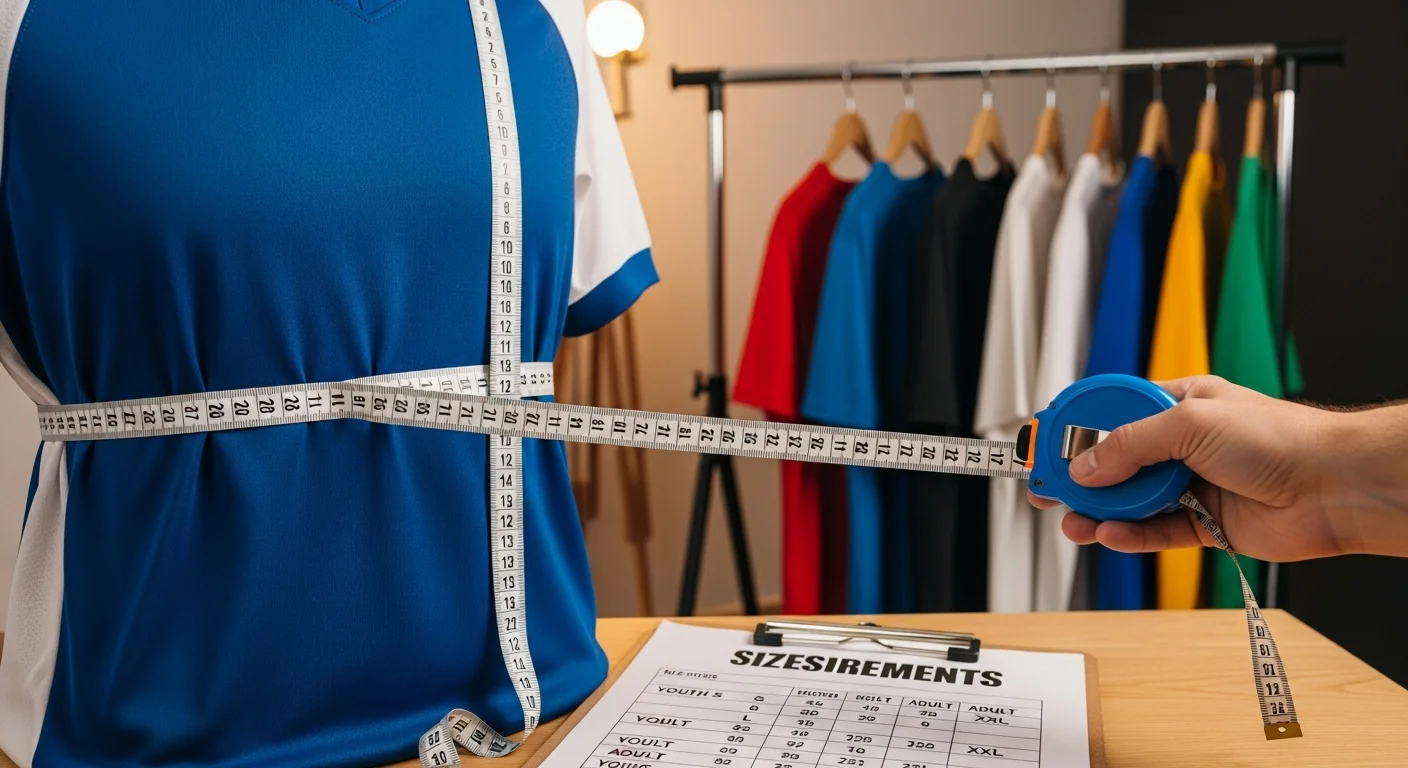
Accurate measurements start with three key numbers: chest circumference, jersey length, and sleeve length (for sleeved jerseys). Measure the chest at the widest point under the arms with a flexible tape measure. For jersey length, measure from the top of the shoulder to where you want the hem to fall. For sleeves, measure from the shoulder seam to the desired endpoint.
When measuring an entire team, create a sizing station at practice. Have players wear the type of undergarment or equipment they will wear during games, since a basketball player measured in a compression shirt will need a different size than one measured over bare skin.
Youth Sizing: Bridging the Gap
Youth jersey sizes typically range from Youth XS (ages 4-5) to Youth XL (ages 14-16). The tricky zone is Youth XL to Adult Small, where there can be significant overlap or a frustrating gap depending on the manufacturer. Some brands offer a Youth XXL that bridges this gap.
For youth teams, always order sample sizes before committing to a full team order. Children grow quickly, and a jersey ordered in January might be tight by the fall season. Build in a small amount of growing room — one size up from the current measurement is usually appropriate for younger players who are still growing.
Common Sizing by Sport
Basketball
Basketball jerseys run slightly larger than standard apparel due to the sleeveless, open design. If a player normally wears a medium t-shirt, a medium basketball jersey will fit comfortably. For a tighter, more modern look, some players size down. Always check the specific manufacturer's size chart rather than assuming universal sizing.
Football
Football jerseys must accommodate shoulder pads underneath. Order one to two sizes larger than the player's regular shirt size. A player who wears a large t-shirt typically needs an XL or XXL football jersey to fit properly over pads.
Soccer
Soccer jerseys tend to have a more fitted, European cut. If your team prefers a relaxed fit, consider sizing up. If they want the athletic, close-fitting look common in professional soccer, order true to size based on chest measurements.
Baseball
Baseball jerseys are designed to be tucked into pants, so length is important. They should fall two to three inches below the waistband when untucked. Button-front jerseys should allow comfortable shoulder rotation for throwing without pulling at the buttons.

Team-Wide Sizing Strategies
For teams of ten or more players, use a sizing kit. Most custom jersey providers will send a set of sample sizes for your team to try on before you place the full order. This eliminates guesswork and dramatically reduces exchange rates.
Create a shared sizing spreadsheet with columns for player name, position, chest measurement, preferred fit (athletic or loose), and final size selection. Designate one team manager to collect all sizes and submit a single consolidated order. Our bulk ordering checklist walks through the complete process.
What to Do About Sizing Mistakes
Even with careful measurement, some jerseys may not fit perfectly. Before ordering, confirm the provider's exchange policy. Most quality jersey companies offer exchanges within a defined window. Some provide a reorder guarantee for mid-season additions, allowing you to order additional jerseys in the same design and colors even months after the original order.
Frequently Asked Questions
Should custom jerseys be tight or loose?
For competitive play, a slightly fitted athletic cut is standard. It reduces excess material that opponents can grab and looks more professional. For recreational play and fan jerseys, a loose fit prioritizes comfort. The right choice depends on your team's level of play and personal preference.
How do youth jersey sizes compare to adult sizes?
A Youth XL is generally equivalent to an Adult XS or Small, but this varies by manufacturer. The chest measurement is the most reliable comparison point. A Youth XL typically fits a 30-32 inch chest, while an Adult Small fits a 34-36 inch chest.
How much room should I leave for growing youth players?
Order one size up from the player's current measurement. This provides about one to two inches of growing room through the chest without the jersey looking excessively baggy during the current season.
Can I order additional jerseys after the initial team order?
Most providers support reorders for teams that need to add players mid-season. Confirm this capability before placing your initial order, as some providers archive custom designs after production and cannot reproduce them exactly.
Share this article
Written by
Terrence Okafor
Head of Production at RareCustom with 20+ years in commercial printing. Terrence's hands-on experience with athletic garment fit helps teams find the perfect jersey size.