How to Start a Custom Phone Case Business in 2026: Complete Guide
Learn how to start a profitable custom phone case business in 2026. Covers niche selection, business models, sourcing, pricing strategy, marketing, sales channels, fulfillment, and scaling from side hustle to full-time business.
Natalie Voss
Founder & CEO of RareCustom. MBA from Stanford with 8 years in e-commerce operations. Natalie shares business strategy insights for aspiring custom phone case entrepreneurs.
The custom phone case industry represents one of the most accessible and profitable business opportunities for aspiring entrepreneurs in 2026. With a global market exceeding $11 billion and growing at 7.5 percent annually, the demand for personalized custom phone cases shows no signs of slowing. What makes this market particularly attractive for new business owners is the combination of low startup costs, minimal inventory risk through print-on-demand models, high profit margins relative to other custom product categories, and a massive addressable audience — over 6.9 billion smartphone users worldwide, roughly 68 percent of whom use phone cases.
This complete guide walks through every stage of building a custom phone case business plan, from identifying your niche and choosing a business model to sourcing production partners, setting profitable pricing, developing a marketing strategy, establishing sales channels, managing fulfillment, and scaling beyond your first 100 sales. Whether you envision a phone case side hustle generating supplemental income or a full-time custom phone case company, the principles and strategies covered here provide a practical roadmap from idea to execution. Along the way, we reference companion guides on printing methods, phone case materials, and pricing structures for deeper dives into technical topics that inform your business decisions.
Why a Custom Phone Case Business Is Profitable in 2026
Before investing time and money into any business, understanding the market fundamentals that make it viable is essential. The custom phone case business offers several structural advantages that create favorable conditions for new entrants in 2026.
First, the addressable market is enormous and growing. Over 6.9 billion smartphone subscriptions exist globally, with 68 percent of owners using protective cases. The average phone case is replaced every eight to twelve months due to wear, device upgrades, or simply wanting a fresh design. This replacement cycle creates recurring demand without requiring the business owner to constantly acquire new customers — a satisfied customer who replaces their case every ten months generates repeat revenue indefinitely.
Second, phone case profit margin percentages are among the highest in the custom product industry. A custom phone case that costs $4 to $8 to produce (including case blank, printing, and packaging) typically sells for $18 to $35 at retail, yielding gross margins of 60 to 80 percent. Even after accounting for platform fees, shipping, marketing costs, and returns, net margins of 25 to 45 percent are achievable — significantly higher than custom apparel (15 to 30 percent net) or custom drinkware (20 to 35 percent net).
Third, phone case business startup cost requirements are remarkably low compared to other product businesses. A print-on-demand phone case business can be launched with zero inventory investment, no production equipment, and total startup costs under $500 — covering only a domain name, basic e-commerce platform subscription, and initial design tools. Even a self-production model using a UV printer requires a more modest investment ($3,000 to $8,000 for an entry-level UV flatbed printer) compared to other custom product categories that require industrial-scale equipment.
Fourth, the trend toward personalization is accelerating, not slowing. Research from Deloitte shows that one in three consumers now expects personalized products as a standard offering, and 48 percent are willing to wait longer for customized items. Social media platforms like TikTok and Instagram continue to drive discovery and demand for unique phone case designs, creating organic marketing opportunities that reduce customer acquisition costs for visually appealing products.

Choosing Your Phone Case Business Niche
The custom phone case market is too large and diverse to serve everyone effectively. Choosing a specific niche allows you to focus your designs, marketing, and brand identity on a defined audience, making it easier to stand out in a crowded marketplace. The most successful phone case businesses carve out a distinct position that combines a target audience with a design aesthetic and a value proposition.
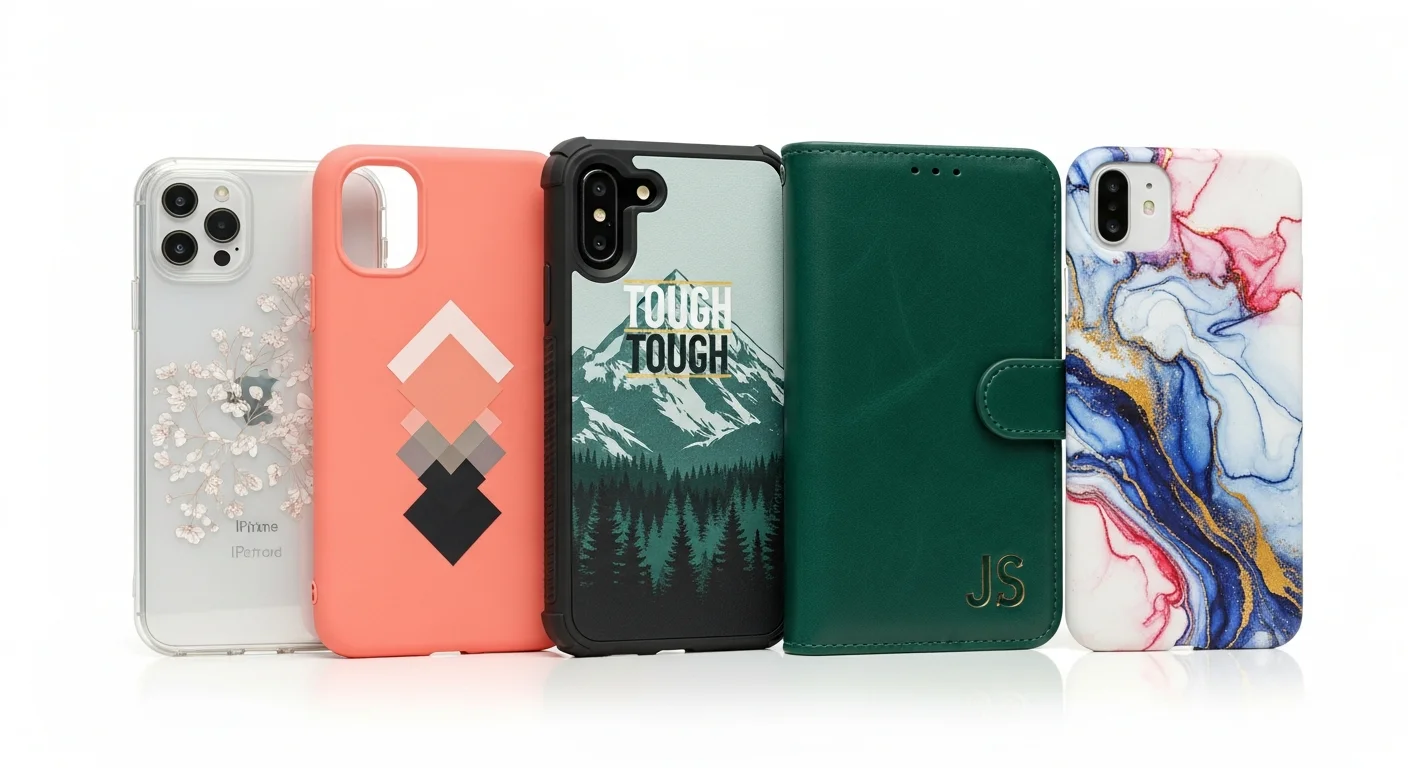
Popular and profitable phone case niches in 2026 include pet portrait phone cases (custom artistic renderings of customers' pets), anime and pop culture fan art, minimalist typography and monogram designs, nature and botanical photography, zodiac and astrology themed cases, sports team and fan culture designs, profession-specific cases (nurses, teachers, engineers, gamers), LGBTQ+ pride designs, and eco-friendly sustainable phone cases. Each niche has its own audience size, competitive density, and design requirements.
To evaluate a potential niche, assess four factors: audience size (is there enough demand to sustain a business?), competition density (how many established sellers already serve this niche?), design differentiation (can you create designs that are meaningfully different from existing options?), and repeat purchase potential (will customers come back for new designs?). A niche like pet portrait phone cases scores well across all four dimensions — millions of pet owners, moderate competition with room for unique artistic styles, high emotional attachment driving differentiation, and strong repeat purchase rates as customers get new pets, want different artistic styles, or upgrade phones.
Avoid niches that depend on licensed intellectual property (major sports team logos, Disney characters, branded entertainment properties) unless you secure proper licensing agreements. Unlicensed use of copyrighted or trademarked designs exposes your business to legal liability, platform account suspension, and inventory seizure. Instead, focus on niches where original designs — your own artistic interpretations, photographs, and typographic compositions — are the product. This also creates a moat around your business that competitors cannot easily replicate.
Business Model Options for Custom Phone Cases
The business model you choose determines your investment requirements, operational complexity, profit margins, and scalability. Three primary models dominate the custom phone case business landscape, each with distinct advantages and trade-offs.
Print-on-demand (POD) is the lowest-risk model, where you design phone cases and list them on your own website or marketplace platforms, but production and shipping are handled entirely by a POD partner. When a customer places an order, the design file is automatically sent to the POD provider, who prints the case, packages it, and ships it directly to the customer under your brand name. Print on demand phone cases eliminate inventory risk entirely — you never purchase stock, and you pay the production cost only after you have already received payment from the customer. The trade-off is lower profit margins (typically $8 to $15 per case after POD costs and platform fees) and less control over production quality, shipping speed, and packaging presentation.
Bulk production and inventory involves ordering pre-printed phone cases in bulk from a production partner and storing, marketing, and shipping them yourself. This model offers higher per-unit margins ($12 to $22 per case) because bulk production costs are significantly lower than POD pricing, but it requires upfront investment in inventory ($500 to $5,000 depending on initial order size), storage space, and shipping supplies. The inventory risk is real — if designs do not sell as expected, you are left with unsold stock. This model works best for established sellers with proven designs and predictable demand patterns. For bulk ordering strategies, see our bulk ordering checklist guide.
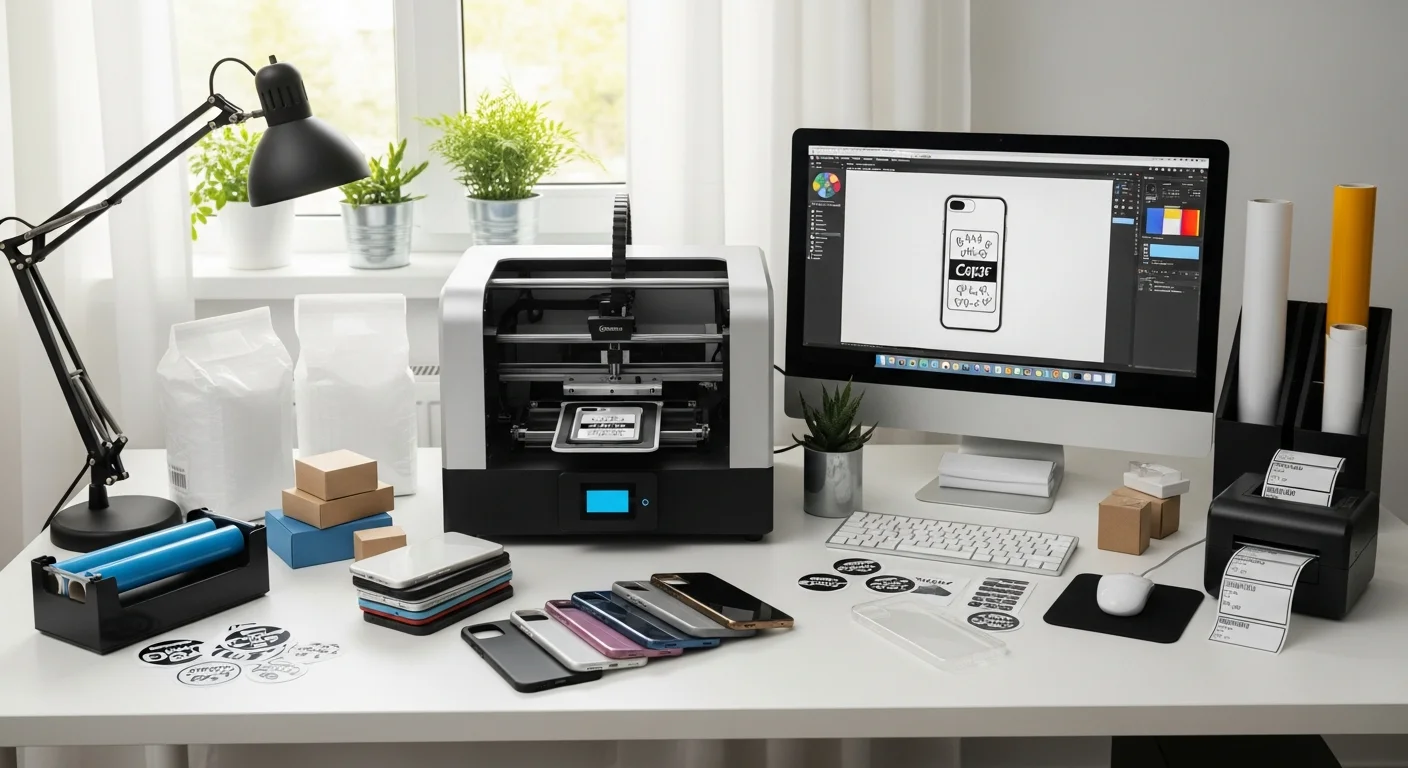
Self-production means purchasing a UV flatbed printer and blank phone cases, then printing, packaging, and shipping each order yourself. This model offers the highest margins ($15 to $28 per case) and complete control over quality, customization options, and turnaround time. However, it requires the largest upfront investment ($3,000 to $15,000 for equipment) and the most operational complexity (learning to operate and maintain printing equipment, managing ink and supply inventory, handling production scheduling). Self-production is ideal for entrepreneurs who want maximum control and are willing to develop technical printing skills.
| Factor | Print-on-Demand | Bulk Production | Self-Production |
|---|---|---|---|
| Startup Cost | $100-500 | $1,000-5,000 | $3,000-15,000 |
| Per-Unit Cost | $10-17 | $5-10 | $3-7 |
| Typical Selling Price | $22-32 | $20-30 | $20-35 |
| Gross Margin | 45-55% | 55-75% | 70-85% |
| Inventory Risk | None | Medium | Low (blank cases) |
| Quality Control | Limited | Moderate | Full |
| Shipping Speed | 3-7 days | 1-3 days | 1-2 days |
| Scalability | Easy | Moderate | Equipment-limited |
Setting Up Your Phone Case Business
Once you have chosen your niche and business model, the administrative and technical setup of your custom phone case company involves several sequential steps. First, register your business — a sole proprietorship or LLC provides legal protection and is required for tax compliance, obtaining wholesale accounts, and opening a business bank account. LLC registration costs vary by state, typically ranging from $50 to $500 in filing fees.
Next, secure your brand identity. Choose a business name that is memorable, available as a domain name, and not already trademarked in the phone accessories category. Register your domain name, set up professional email, and create accounts on the social media platforms where your target audience is most active. For phone case businesses, Instagram, TikTok, and Pinterest are the highest-value social platforms due to their visual nature and strong engagement with fashion, accessories, and personalized product content.
Build your online storefront. For a standalone website, platforms like Shopify ($39/month), WooCommerce (free plugin on WordPress hosting), or Squarespace ($33/month) provide e-commerce functionality with professional templates optimized for product businesses. If using a POD model, choose a provider that integrates directly with your e-commerce platform — Printful, Printify, and Gooten all offer Shopify, WooCommerce, and Etsy integrations that automate order routing, production, and fulfillment. Ensure your storefront includes high-quality product mockups showing your designs on actual phone models, clear pricing and shipping information, a size and compatibility guide, and customer review functionality.
Sourcing and Production Partners
Finding the right phone case supplier or production partner is one of the most critical decisions in building your business. The quality of your phone cases, the reliability of your production partner, and the consistency of your output directly determine customer satisfaction, review scores, and repeat purchase rates.
For POD businesses, evaluate potential partners on five criteria: print quality (request physical samples), product range (how many phone models and case styles are available), shipping speed (production plus shipping time to your primary customer regions), integration capabilities (does the platform connect seamlessly with your e-commerce store?), and pricing transparency (are all costs clearly disclosed, including shipping, with no hidden fees?). Order samples from at least three providers before committing, and test each sample by using it as your own phone case for two weeks to evaluate real-world durability, print adhesion, and case fit.
For bulk production, identify manufacturers who specialize in custom phone case production and can handle your specific printing method requirements. If your designs require UV printing with white ink on dark cases, ensure the manufacturer has UV printing capabilities and experience with white ink workflows. If you need sublimation on polymer-coated blanks, verify that the manufacturer uses compatible coating systems and heat press configurations. For a detailed understanding of how different printing methods affect quality and cost, consult our printing methods comparison guide.
For self-production, research UV flatbed printers in the $3,000 to $8,000 entry-level range (Roland VersaUV LEF2-200, Mimaki UJF-3042 MkII, and similar models). Blank phone case suppliers like CaseCow, PixMax, and direct manufacturer accounts on Alibaba provide quality blanks at $1.50 to $4.00 per unit in moderate quantities. Ensure that the blank cases you source are compatible with your chosen printing method and cover the phone models most popular with your target audience. Understanding the differences between case materials helps you select blanks that deliver the best print quality and customer satisfaction for your specific product line.

Pricing Your Phone Cases for Profit
Pricing strategy is the single most impactful factor in your phone case business profitability. Price too low and you leave money on the table while potentially signaling low quality. Price too high relative to your perceived value and you lose sales to competitors. The optimal pricing point maximizes revenue per unit while maintaining a conversion rate that supports sustainable growth.
Start with a cost-plus pricing framework. Calculate your total cost per unit, including case blank, printing/decoration, packaging, shipping materials, and any platform fees (Etsy takes 6.5 percent, Shopify charges payment processing of approximately 2.9 percent plus $0.30 per transaction). Add your desired profit margin — a minimum of $10 per unit for POD businesses and $15 per unit for self-production businesses is a reasonable starting target. This gives you your floor price — the minimum price at which the sale is worth making.
Then apply market-based pricing adjustments. Research competitors in your specific niche to understand the price range customers expect. Phone case profit margin optimization often comes from positioning at the upper end of the niche price range rather than competing on price. A pet portrait phone case business that charges $28 for a custom artistic rendering positions itself as a premium, artisanal product. The same design sold for $14 signals mass-market quality and attracts price-sensitive customers who are less likely to become repeat buyers or leave positive reviews. For comprehensive pricing analysis including volume discounts, material costs, and method-specific pricing, review our complete pricing guide.
Consider offering tiered pricing to capture different customer segments. A basic design on a slim case at $18 to $22, a premium design on a tough case at $25 to $30, and a deluxe option with premium packaging at $32 to $38 allows customers to self-select their price point while increasing your average order value. Add-on options like gift packaging ($3 to $5), matching PopSocket designs ($8 to $12), or discounts on multi-case bundles (two cases for 15 percent off) increase revenue per customer without requiring additional customer acquisition spend.
Marketing Strategy for Your Phone Case Business
A phone case marketing strategy in 2026 must be visual-first and platform-native, recognizing that phone cases are fundamentally visual products that sell through imagery, video, and social proof rather than text descriptions or feature lists. Your marketing efforts should prioritize creating stunning visual content that stops the scroll and inspires purchase intent.
Instagram and TikTok are the primary marketing channels for phone case businesses. On Instagram, invest in high-quality product photography showing your cases on real phones in lifestyle settings — not just flat-lay product shots, but cases in action: being pulled from a pocket, catching light at an angle, paired with complementary accessories. Reels and Stories featuring your design process, unboxing moments, customer reactions, and behind-the-scenes production glimpses generate significantly higher engagement than static posts. On TikTok, short-form videos showing the transformation from blank case to finished product, satisfying peeling or pressing moments from production, and customer testimonial compilations perform well in the phone case content category.
Pinterest drives significant traffic for phone case businesses because users actively search for design inspiration, gift ideas, and specific aesthetic categories — searches like "aesthetic phone case ideas," "minimalist iPhone case," and "couple phone cases" generate millions of monthly impressions. Create pins for each design in your collection, linking directly to product pages, and organize pins into themed boards that align with your niche and target keywords.
An Etsy phone case shop provides access to a built-in marketplace of buyers actively searching for custom and handmade products. Etsy's search algorithm rewards shops that consistently add new listings, maintain high customer review scores, respond quickly to messages, and ship orders promptly. The marketplace charges approximately 6.5 percent per transaction plus listing fees, but the organic traffic from Etsy's search engine can be substantial — particularly for niche designs that match specific long-tail search queries.
Email marketing builds long-term customer value. Collect email addresses through your website (offer 10 percent off the first order in exchange for signup), and send regular communications featuring new designs, seasonal collections, flash sales, and customer spotlights. Email generates the highest ROI of any marketing channel for e-commerce businesses, with average returns of $36 to $42 for every dollar spent according to DMA research.

Sales Channels and Platform Strategy
Diversifying across multiple sales channels reduces dependency on any single platform and maximizes your total addressable audience. The most effective phone case business sales channel strategy combines a branded direct-to-consumer website with presence on two to three marketplace platforms.
Your own website (Shopify, WooCommerce, or similar) should be the hub of your business because it offers the highest margins (no marketplace commissions), complete brand control, customer data ownership, and flexibility in pricing, promotions, and product presentation. However, building traffic to a standalone website requires investment in SEO, paid advertising, and social media marketing. Direct website sales typically take three to six months to build meaningful volume.
Etsy provides immediate access to millions of active buyers searching for custom products. An Etsy phone case shop benefits from the platform's built-in search engine, trust signals (reviews, star seller badges), and seasonal traffic surges during gift-giving holidays. The trade-off is Etsy's fee structure (approximately 10 to 12 percent of sale price including listing, transaction, and payment processing fees) and limited brand differentiation within the marketplace format.
Amazon Handmade and Amazon Merch offer access to Amazon's massive customer base. Amazon Handmade caters to artisan and custom products with a 15 percent referral fee, while Amazon Merch operates as a POD service where you upload designs and Amazon handles everything else. Both channels offer enormous scale but limit brand building and customer relationship development. Social commerce through Instagram Shopping, TikTok Shop, and Facebook Marketplace represents the fastest-growing sales channel category, allowing customers to purchase directly within social media platforms where they discover your designs.
Fulfillment and Shipping Operations
Fulfillment efficiency directly impacts customer satisfaction, review scores, and repeat purchase rates. In the custom phone case business, customers expect delivery within five to ten business days from order placement — faster for standard designs, slightly longer for fully custom designs requiring design work.
For POD businesses, fulfillment is handled by your production partner. Your responsibility is selecting a partner with reliable shipping times, tracking number automation, and branded packaging options. Monitor fulfillment metrics regularly — if your POD provider's average production-to-shipment time exceeds three business days or their defect rate exceeds two percent, consider switching providers before customer satisfaction erodes.
For self-fulfillment (bulk production or self-production models), establish a standardized packing and shipping workflow. Invest in quality shipping supplies — rigid mailers or small boxes with foam inserts protect phone cases during transit and prevent the damage that leads to returns and negative reviews. Use shipping label platforms like ShipStation, Pirate Ship, or Shippo to access discounted carrier rates (typically 30 to 50 percent below retail shipping prices) and automate tracking number generation and customer notification.
Offer free shipping on orders above a threshold (typically $25 to $35) to increase average order value. Research consistently shows that free shipping is the single strongest conversion driver in e-commerce — 90 percent of consumers cite free shipping as their primary incentive to purchase online. Build shipping costs into your product pricing rather than charging separately. A phone case priced at $27 with free shipping converts significantly better than the same case at $22 plus $5 shipping, even though the customer's total cost is identical.
Scaling Beyond Your First 100 Sales
Reaching your first 100 sales is the critical proof-of-concept milestone for a scaling phone case business. Those initial sales validate your niche, designs, pricing, and operational processes. Beyond 100 sales, the focus shifts from validation to optimization and growth — refining what works, eliminating what does not, and investing in systems that support higher volume without proportionally increasing your workload.
Analyze your first 100 sales data to identify patterns. Which designs sell best? Which phone models generate the most orders? What is your average order value? What percentage of customers return for a second purchase? Which marketing channel drives the most sales? These data points inform every scaling decision — double down on your best-selling design categories, ensure you always have your top five phone models in stock, and allocate marketing budget to the channels with the lowest customer acquisition cost.
Automate repetitive tasks to free your time for design creation and marketing. Automated email sequences for order confirmation, shipping notification, delivery confirmation, and review requests reduce manual communication overhead. Social media scheduling tools (Later, Hootsuite, Buffer) allow you to plan and automate content posting. Inventory management tools integrated with your e-commerce platform prevent overselling and automate reorder notifications when blank case stock runs low.
Expand your product line strategically. Once your phone case designs are established, consider adding complementary products that leverage the same designs and appeal to the same audience. Matching AirPods cases, laptop sleeves, tablet cases, and PopSocket designs allow customers to create a coordinated accessory collection. Cross-category expansion into related custom products like stickers, tumblers, and tote bags — using the same design aesthetic — broadens your revenue base without requiring a completely new brand identity. For insights on expanding into complementary product categories, see our guide on starting a custom sticker business.
Build a team when workload exceeds what you can manage alone. The typical scaling sequence is: hire a virtual assistant for customer service and order processing first, then add a freelance designer to expand your design library, then bring on a marketing specialist to manage paid advertising as your budget allows. Each hire should directly enable additional revenue — if a $500/month virtual assistant frees you to create designs that generate $2,000/month in additional sales, the investment pays for itself four times over. For personalized guidance on scaling your business, reach out to our team for consultation on production partnerships and volume pricing.

Launch Your Custom Phone Case Business Today
Starting a custom phone case business in 2026 has never been more accessible. The combination of low startup costs, high margins, massive market demand, and print-on-demand fulfillment options means you can launch with minimal risk and scale based on real market feedback rather than guesswork. The entrepreneurs who succeed in this space share common traits: they choose focused niches, create distinctive designs, price for profit rather than volume, invest in visual marketing, and systematically optimize their operations as they grow.
Whether you are building a phone case side hustle around your day job or pursuing a full-time custom phone case company, the path starts with a single step: creating your first design. Use our free design tool to experiment with phone case designs, test different styles and aesthetics, and preview your creations on multiple phone models. Explore our complete range of custom phone cases to see the case styles, materials, and printing options available for your business — and take the first step toward turning your creative vision into a profitable venture.
Related Articles
Share this article
Written by
Natalie Voss
Founder & CEO of RareCustom. MBA from Stanford with 8 years in e-commerce operations. Natalie shares business strategy insights for aspiring custom phone case entrepreneurs.