Bulk Custom Phone Case Ordering: The Complete Checklist and Guide
Master bulk custom phone case ordering with this comprehensive checklist covering phone model mix planning, design preparation, proofing, volume pricing, production timelines, quality control, packaging, and shipping logistics.
Terrence Okafor
Head of Production at RareCustom with 20+ years in commercial printing. Terrence's production logistics expertise ensures bulk phone case orders are managed efficiently from design to delivery.
Ordering custom phone cases in bulk — whether for a corporate giveaway, a retail product line, a wedding party, or a nonprofit fundraiser — is fundamentally different from ordering a single personalized case. A bulk custom phone case order involves coordinating multiple phone models, managing design files across different case dimensions, navigating volume pricing tiers, planning production timelines, and ensuring consistent quality across dozens or hundreds of units. Without a structured approach, even experienced buyers end up with mismatched colors, wrong model assignments, missed deadlines, or unexpected shipping costs that erode the savings they expected from ordering in volume.
This guide provides a step-by-step checklist for every stage of the wholesale phone cases ordering process, from the initial planning phase through delivery and distribution. Whether you are placing your first multi-model phone case order of 25 units or scaling to a 500-piece inventory planning phone cases run, following this checklist ensures that your bulk order arrives on time, on budget, and exactly as you envisioned. Along the way, we reference companion guides that dive deeper into specific topics like phone case materials, pricing structures, and design best practices so you can make informed decisions at every step.
Pre-Order Preparation Checklist
Before you contact a supplier or open a design tool, invest time in defining the scope of your bulk custom phone case order. Start by answering four foundational questions: Who is the audience? What is the purpose of the cases? How many units do you need? And what is your total budget including shipping? These answers shape every subsequent decision, from case material selection to packaging upgrades.
Begin by creating a project brief document. This does not need to be elaborate — a simple spreadsheet or document listing the purpose of the order, the target recipient profile, the quantity range you are considering, your ideal delivery date, and any brand guidelines that must be followed is sufficient. For corporate orders, include Pantone color codes for brand consistency, logo usage rules, and any compliance requirements such as product safety certifications for international distribution. For event-based orders like weddings or conferences, note the event date and work backward to establish your order deadline. Most production facilities require a minimum of ten to fourteen business days for bulk custom phone case production, plus shipping time. Starting the planning process at least six to eight weeks before your need date gives you adequate margin for revisions, sample approval, and potential shipping delays.
The pre-order phase is also the time to determine whether you need a single universal design applied across all cases or multiple design variants. A corporate branding campaign might use one logo design across all models, while a retail product line might require five to ten distinct designs. Each additional design variant adds to the proofing and setup process, so document exactly how many unique designs your order requires and whether any designs need model-specific adjustments for different case dimensions. Consider consulting our guide on phone cases for business branding for strategies on maximizing impact with limited design variants.

Phone Model Mix Planning
One of the most common mistakes in bulk ordering is failing to plan the phone model mix accurately. If you are ordering cases for a group of people — employees, event attendees, team members — you need to know exactly which phone models each person uses before placing the order. A multi-model phone case order that assumes everyone uses the latest iPhone will result in unusable cases for the Samsung, Google Pixel, and older iPhone users in the group.
The most reliable approach is to distribute a simple survey or form collecting each recipient's exact phone model. Do not accept vague answers like "iPhone" or "Samsung Galaxy" — you need the specific model number (iPhone 15 Pro, Samsung Galaxy S25 Ultra, Google Pixel 9, etc.) because case dimensions, camera cutouts, and button placements vary significantly between models within the same brand family. Our phone case compatibility guide details the exact dimensional differences between models and explains why a case designed for the iPhone 15 will not fit the iPhone 16 despite their similar appearance.
Once you have collected model data, create a distribution table that tallies each model and calculates the percentage of your total order each model represents. In a typical 2026 corporate order, iPhone models account for approximately 55 to 60 percent of the mix, Samsung Galaxy models represent 25 to 30 percent, Google Pixel covers 5 to 8 percent, and other brands fill the remainder. Knowing this distribution helps you negotiate model-specific pricing and ensures the supplier stocks the correct blank case inventory for your order. It also reveals whether any single model has too few units to meet minimum order thresholds for that specific case blank — some suppliers require a minimum of five or ten units per model to include it in a bulk run.
| Phone Model | Units Needed | % of Total | Case Type Available | Notes |
|---|---|---|---|---|
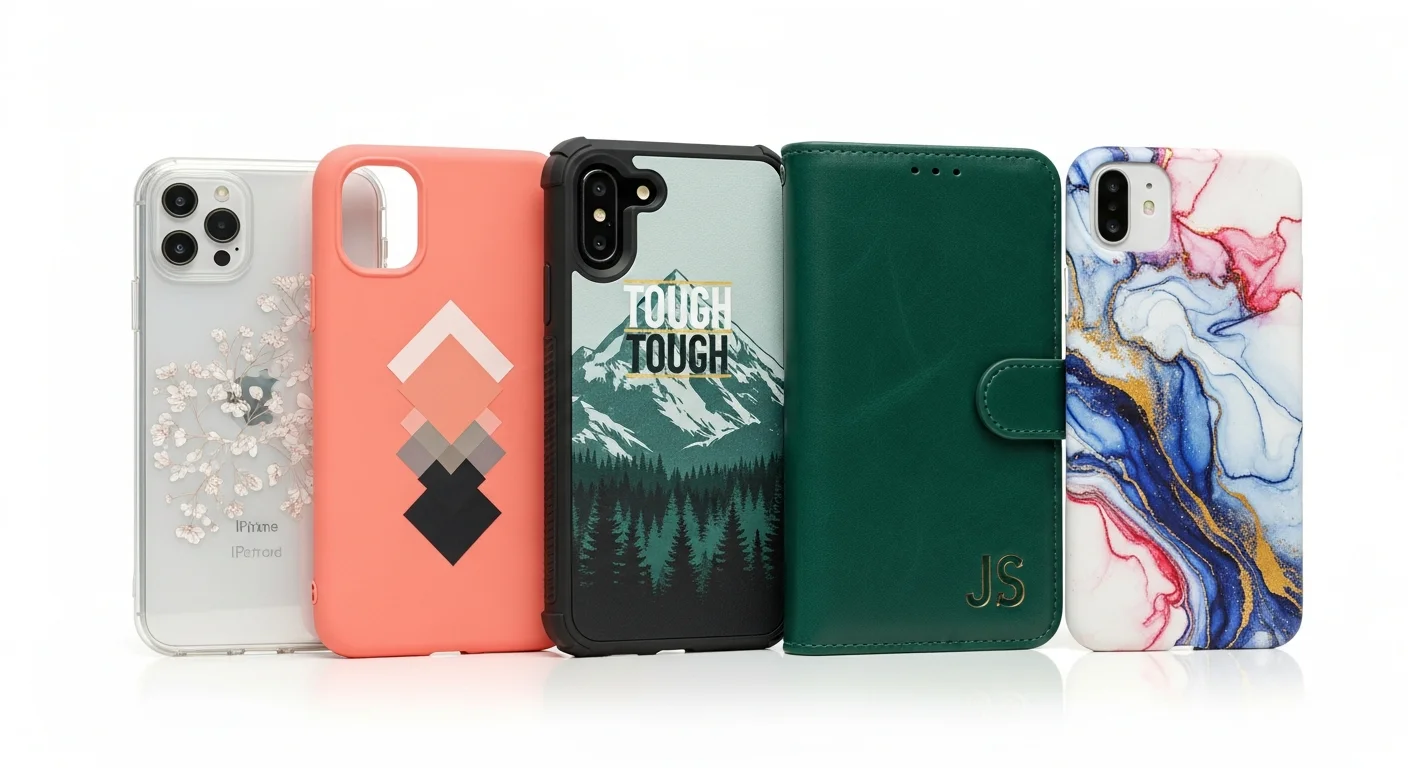
| iPhone 16 Pro | 45 | 22.5% | Slim, Tough, Clear | Most popular model |
| iPhone 16 | 35 | 17.5% | Slim, Tough, Clear | Standard size |
| iPhone 15 Pro Max | 20 | 10% | Slim, Tough | Previous generation |
| Samsung Galaxy S25 | 30 | 15% | Slim, Tough | Flagship Android |
| Samsung Galaxy S25 Ultra | 25 | 12.5% | Slim, Tough, Clear | Premium model |
| Google Pixel 9 | 15 | 7.5% | Slim, Tough | Check camera bar fit |
| Other Models | 30 | 15% | Varies | Confirm availability |
Add a buffer of five to ten percent extra units for popular models to account for last-minute additions, replacements for defective units, or new hires who join after the initial survey. This inventory planning phone cases buffer is far less expensive than placing a second small order after the bulk run is complete, which typically costs two to three times the per-unit price of the original bulk order.
Design Preparation for Bulk Orders
Design preparation for a bulk custom phone case order requires more precision than a single-unit order because errors multiply across every case in the run. A slightly off-center logo or a color that prints darker than expected on one case becomes a problem on two hundred cases. The goal is to create production-ready design files that are verified, approved, and locked before the manufacturing run begins.
Start with your source artwork. For logos and vector graphics, provide files in SVG or AI format at the highest available resolution. For photographs and raster images, ensure a minimum resolution of 300 DPI at the final print size. If your design includes text, convert all fonts to outlines or paths to prevent font substitution issues on the production system. Specify exact Pantone colors for any brand-critical elements — RGB and CMYK values can shift between monitors and printers, but Pantone references provide a universal color standard that production facilities can match precisely.
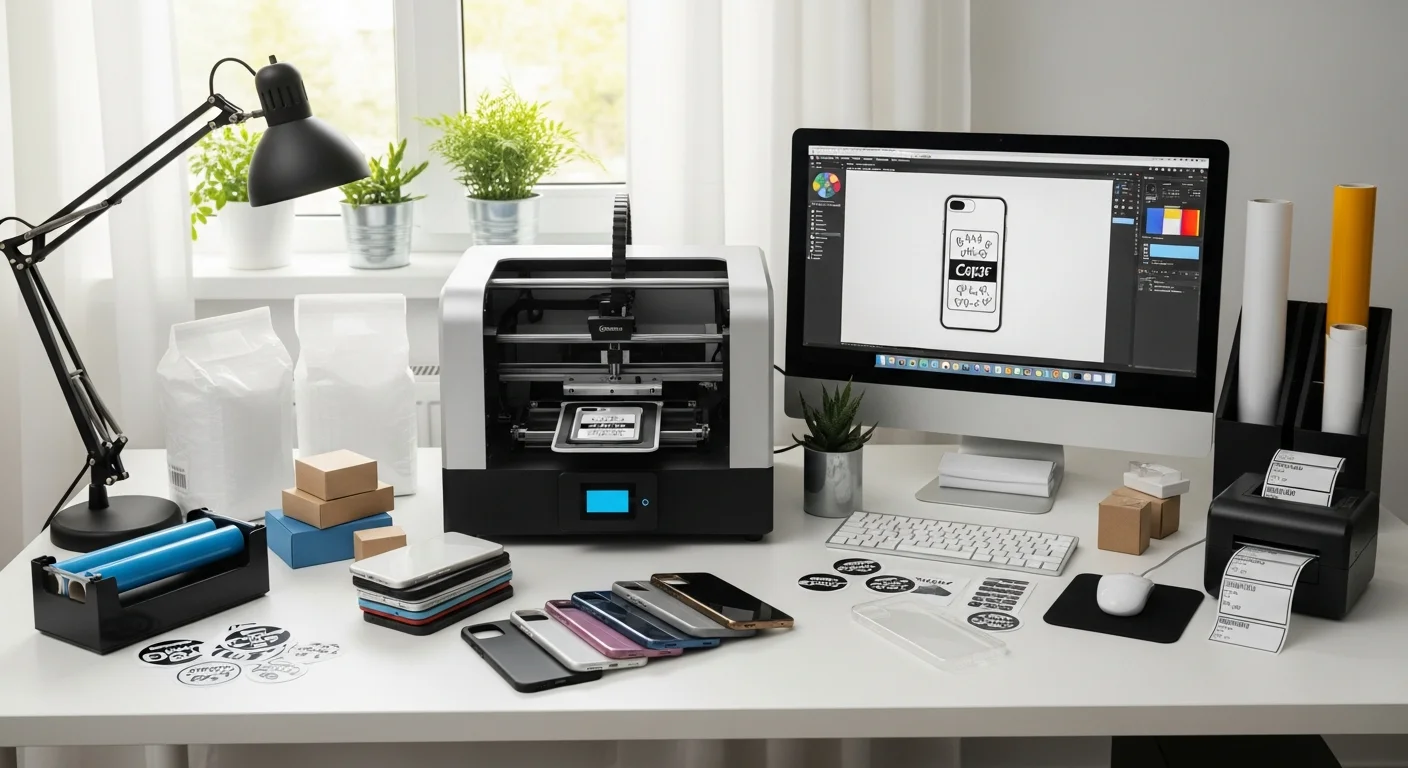
Each phone model has a slightly different printable area, camera cutout position, and button opening layout. Your design files need to be adapted for each model in your order. A logo that sits perfectly centered on an iPhone 16 case may appear slightly off-center on a Samsung Galaxy S25 case due to the different camera module position. Professional production facilities provide model-specific templates that show the exact printable boundaries, safety zones around cutouts, and bleed areas. Download templates for every model in your order and verify that your design works correctly on each one. For guidance on typography and layout principles that work across multiple case formats, see our fonts and design guide.

Proofing and Sample Approval Process
Never approve a bulk custom phone case order based solely on a digital mockup. Physical proofing samples are essential for verifying color accuracy, print alignment, material feel, and overall quality before committing to a full production run. The phone case proofing process typically involves ordering two to five sample units representing your most popular models and design variants.
When reviewing physical samples, evaluate them against a structured checklist. First, compare the printed colors to your Pantone or brand color reference under multiple lighting conditions — daylight, fluorescent office light, and incandescent light all affect how colors appear. Second, verify that the design is correctly positioned relative to the camera cutout, button openings, and case edges on each model. Third, check the case fit on the actual phone to ensure button alignment, charging port access, and camera module clearance are all correct. Fourth, test the surface finish — is it matte or glossy as specified? Does the printed surface feel smooth and even, or are there raised edges or texture inconsistencies? Fifth, perform a basic durability check by rubbing the printed area firmly with your thumb for thirty seconds to confirm the ink adhesion is adequate.
Document any issues with photographs and specific descriptions, then communicate them to the supplier for correction before approving the full run. Reputable suppliers will produce revised samples at no additional charge for legitimate quality concerns. The phone case proofing process typically adds three to five business days to the overall timeline, but this investment prevents the far more costly scenario of receiving a full bulk order with consistent defects that require reprinting.
Volume Pricing and Budget Planning
Bulk ordering custom phone cases at volume unlocks significant per-unit savings compared to single-unit pricing. Understanding volume pricing tiers and planning your budget accurately ensures you maximize these savings while avoiding hidden costs that can erode your margins. For a comprehensive breakdown of pricing structures, review our complete pricing guide.
Volume pricing for wholesale phone cases typically follows a tiered structure where the per-unit cost decreases as order quantity increases. The most significant price breaks usually occur at 25, 50, 100, 250, and 500 units. Below 25 units, bulk discounts are modest — typically five to ten percent off single-unit pricing. At 50 to 99 units, discounts reach 15 to 25 percent. Orders of 100 to 249 units see 25 to 35 percent savings. And orders above 250 units can achieve 35 to 50 percent reductions from retail pricing. These percentages vary by case material, printing method, and design complexity, but the general pattern holds across most suppliers.
| Order Quantity | Estimated Per-Unit Cost | Savings vs Single Unit | Total Order Cost |
|---|---|---|---|
| 1-9 units | $18-25 | 0% | $18-225 |
| 10-24 units | $15-22 | 5-12% | $150-528 |
| 25-49 units | $12-18 | 15-28% | $300-882 |
| 50-99 units | $10-15 | 25-40% | $500-1,485 |
| 100-249 units | $8-12 | 35-52% | $800-2,988 |
| 250-499 units | $6-10 | 45-60% | $1,500-4,990 |
| 500+ units | $5-8 | 55-68% | $2,500+ |
Beyond the per-unit case cost, your budget should account for several additional line items that buyers frequently overlook. Sample and proofing costs typically run $25 to $75 for a set of two to five physical samples. Design setup fees may apply if the supplier needs to prepare your artwork for multiple phone models — this can range from $0 for simple single-design orders to $50 to $150 for complex multi-model, multi-design setups. Packaging upgrades such as individual poly bags, branded boxes, or gift packaging add $0.50 to $3.00 per unit. And shipping costs for bulk orders vary dramatically based on weight, destination, and speed — ground shipping for 200 cases within the continental United States typically costs $30 to $80, while expedited two-day shipping for the same order can reach $150 to $300.
Create a budget spreadsheet that accounts for every cost category: case units (broken down by model and tier), proofing samples, design setup, packaging, shipping, and a ten percent contingency buffer for unexpected expenses. This comprehensive approach prevents budget surprises and helps you make informed decisions about where to invest and where to save. For instance, choosing slim cases over tough cases saves $2 to $4 per unit on materials, which compounds significantly across a 200-unit order.
Production Timeline and Scheduling
Understanding the production timeline bulk cases require is critical for meeting your deadline without paying rush fees. A standard bulk custom phone case order follows a predictable sequence of stages, each with its own duration and dependencies. Rushing any stage increases the risk of errors that are expensive to correct after the full run is complete.
The typical production timeline for a bulk order of 50 to 250 custom phone cases breaks down as follows. Order processing and file verification takes one to two business days. Proofing and sample production requires three to five business days. Sample shipping and client review adds two to four business days depending on shipping method and client response time. Production of the full order takes five to ten business days depending on quantity, number of unique designs, and printing method. Quality control inspection requires one to two business days. Packaging takes one to two business days. And shipping adds two to seven business days depending on destination and service level.
Adding these stages together, a bulk order requires a minimum of fifteen to thirty-two business days — roughly three to seven calendar weeks — from initial order placement to delivery. For orders exceeding 250 units or requiring complex multi-model setups, add an additional five to ten business days to the production phase. Holiday seasons, particularly November through mid-January, can extend timelines by 30 to 50 percent due to industry-wide demand surges. If your bulk order is intended for a holiday gift program, place it no later than the first week of October to ensure delivery by early December.

Quality Control Checklist for Bulk Orders
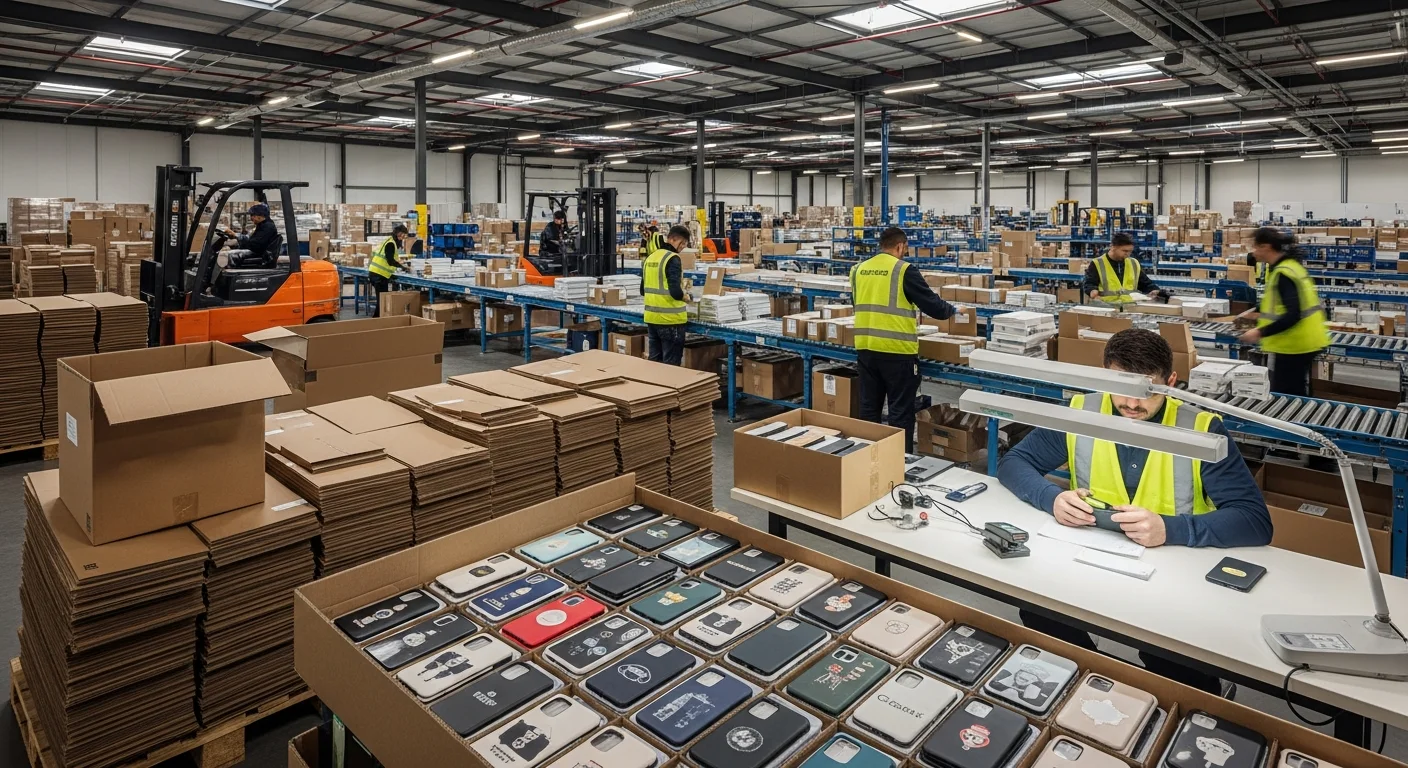
Quality control phone cases in bulk requires a systematic inspection process that catches defects before the order ships. Unlike a single-unit order where you can visually inspect one case in seconds, a bulk order requires sampling methodology, acceptance criteria, and documentation to ensure consistent quality across the entire run.
Professional quality control follows the AQL (Acceptable Quality Level) sampling methodology used across the manufacturing industry. For a bulk phone case order, a typical AQL level of 2.5 means that in a random sample of cases pulled from the finished order, no more than 2.5 percent can have defects for the batch to pass inspection. For a 200-unit order, this means inspecting a random sample of approximately 32 cases and accepting no more than two defective units in the sample. If the defect rate exceeds this threshold, the entire batch should be reinspected or reprinted.
Your quality control checklist should cover six categories: print quality (color accuracy, resolution, registration), fit and finish (case dimensions, button alignment, camera cutout clearance), surface quality (no scratches, smudges, fingerprints, or debris under the print), material consistency (same color, flexibility, and weight across all units), packaging integrity (each case properly bagged or boxed without damage), and labeling accuracy (correct model assignment on each case's packaging). Request that your supplier provide inspection photos documenting the QC process and share any units that were flagged and removed during inspection. Transparent quality control builds confidence and reduces the risk of discovering problems after delivery when corrections become far more expensive.
Packaging Options for Bulk Phone Cases
Packaging decisions for packaging bulk phone cases serve both protective and presentational purposes. The right packaging protects cases during shipping, makes distribution easier, and — for retail or gift applications — enhances the perceived value of the product. Packaging costs can range from nearly zero for basic poly bags to several dollars per unit for premium branded boxes, so your packaging choice should align with both your budget and the intended use of the cases.
The most basic packaging option is individual clear poly bags — transparent plastic sleeves that protect each case from scratches and dust during shipping and storage. Poly bags cost $0.10 to $0.25 per unit and are the standard choice for corporate giveaways, event distributions, and internal team orders where presentation is secondary to protection. A step up is printed kraft paper sleeves or cardboard inserts that add a more polished look while remaining economical at $0.50 to $1.50 per unit. These are popular for retail displays and gift-with-purchase programs.
For premium applications such as client gifts, VIP event favors, or retail products, custom printed boxes with foam inserts or magnetic closures create a memorable unboxing experience. These premium packaging options cost $2.00 to $5.00 per unit but significantly elevate the perceived value of the phone case inside. Some brands find that a $3 packaging upgrade on a $10 wholesale phone case allows them to position the retail price $8 to $12 higher than the same case in basic packaging — making premium packaging a profitable investment rather than an expense.
Shipping and Logistics Planning
Shipping logistics for bulk phone case orders require more planning than single-unit shipments. The total weight, package dimensions, destination, and delivery timeline all affect cost and carrier selection. A 200-unit phone case order typically weighs 25 to 40 pounds depending on case material and packaging, and occupies one to three standard shipping boxes.
For domestic orders within the United States, ground shipping through UPS, FedEx, or USPS is the most economical option, typically costing $30 to $80 for standard delivery in five to seven business days. Expedited two-day shipping runs $150 to $300 for the same order, while overnight delivery can exceed $400. For international orders, factor in customs duties, import taxes, and longer transit times. Shipping to Canada or the European Union typically takes seven to fourteen business days and costs $80 to $200 for a 200-unit order, with an additional 10 to 25 percent in customs fees depending on the destination country's tariff schedule for phone accessories.
If your bulk order is being distributed to multiple locations — for example, shipping 50 cases to each of four regional offices — discuss drop-shipping options with your supplier. Many wholesale phone cases suppliers offer split-shipment services where they package and ship sub-orders directly to multiple addresses from the production facility, saving you the time and cost of receiving the entire order at one location and reshipping. Drop-ship services typically add $5 to $15 per additional destination but save significant time and reduce handling damage compared to consolidating and redistributing yourself. For questions about shipping logistics for your specific order, contact our team for a customized shipping plan.

Start Planning Your Bulk Phone Case Order Today
A well-planned bulk custom phone case order saves money, reduces stress, and produces results that impress recipients and reinforce your brand. The checklist approach outlined in this guide — from audience analysis and model mix planning through design preparation, proofing, production, quality control, and shipping — transforms what could be an overwhelming process into a manageable sequence of clear, actionable steps. Whether you are ordering 25 cases for a small team or 500 units for a product launch, the fundamentals remain the same: plan thoroughly, proof carefully, and communicate clearly with your production partner.
Ready to start your bulk order? Use our free design tool to create your custom phone case design, then reach out to discuss volume pricing and production timelines. Our team has managed bulk custom phone case orders for companies ranging from startups to Fortune 500 corporations, and we are ready to help you navigate the process from first concept to final delivery. Explore our full range of custom phone cases to see the case styles, materials, and printing options available for your bulk order.
Related Articles
Share this article
Written by
Terrence Okafor
Head of Production at RareCustom with 20+ years in commercial printing. Terrence's production logistics expertise ensures bulk phone case orders are managed efficiently from design to delivery.