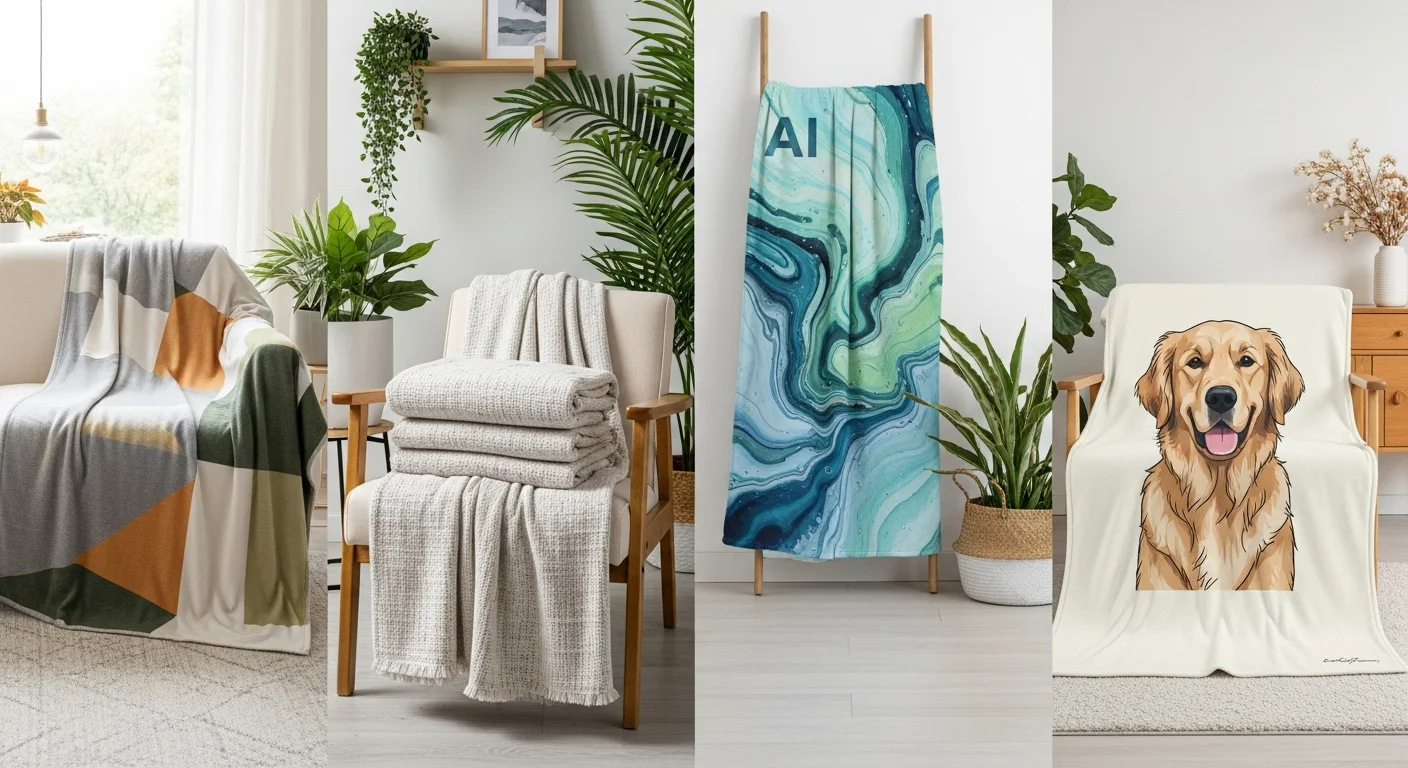
Fleece vs Sherpa vs Woven: Which Custom Blanket Material Is Best?
Compare fleece, sherpa, and woven custom blankets. Covers warmth, softness, print quality, durability, and price. Choose the best material for your personalized blanket.
Aisha Patel
Head of Materials Science & Sustainability at RareCustom. M.S. in Textile Engineering from NC State with AATCC certification and ISSP Sustainability Practitioner certification. 7+ years evaluating fabrics, materials, and eco-friendly production processes.
Choosing the right material is the single most important decision when ordering a custom blanket. The fabric determines how soft the blanket feels, how warm it keeps you, how vibrant your printed design appears, how long the blanket lasts through years of washing, and how much you will pay. With five primary material options — fleece, sherpa, woven, minky, and cotton — understanding the strengths and trade-offs of each ensures you select the perfect foundation for your personalized design.
This comprehensive blanket material comparison examines every factor that matters: softness, warmth, print quality, durability, weight, price, care requirements, and ideal use cases. Whether you are ordering a photo blanket for Grandma, a corporate gift for 200 employees, or a nursery blanket for a newborn, this blanket fabric guide gives you the data to choose with confidence.
Why Blanket Material Matters for Custom Printing
The relationship between material and print quality is critical because different fabric surfaces interact with printing processes in fundamentally different ways. A sublimation blanket fabric like polyester fleece accepts sublimation dyes at a molecular level, producing vibrant, permanent, full-color designs. A natural fiber like cotton requires different printing methods (DTG or screen printing) that produce excellent results but with different color characteristics. A woven blanket recreates designs using colored yarns rather than dyes, producing a completely different aesthetic.
Material also affects tactile experience — and for a product that is literally held against the body, touch matters as much as appearance. A recipient who expects cloud-like softness will be disappointed by a stiff woven tapestry blanket, just as someone expecting heirloom quality will find a thin fleece throw underwhelming. Matching material to expectation is the foundation of a successful custom blanket project.
Beyond printing and feel, material choice impacts practical considerations like blanket weight comparison, packability for shipping, care requirements, and longevity. A heavy woven tapestry blanket costs more to ship than a lightweight fleece throw. A delicate embroidered sherpa blanket requires gentler care than a rugged fleece stadium blanket. Understanding these trade-offs upfront prevents surprises after your order arrives.
Fleece — The All-Around Favorite
The fleece blanket is the most popular material for custom printing, and for good reason: it offers the best combination of softness, print quality, affordability, and durability among all blanket fabrics. Standard custom fleece blankets use 100% polyester microfiber, typically in the 200-300 GSM blanket weight range, creating a lightweight yet cozy blanket that works year-round.
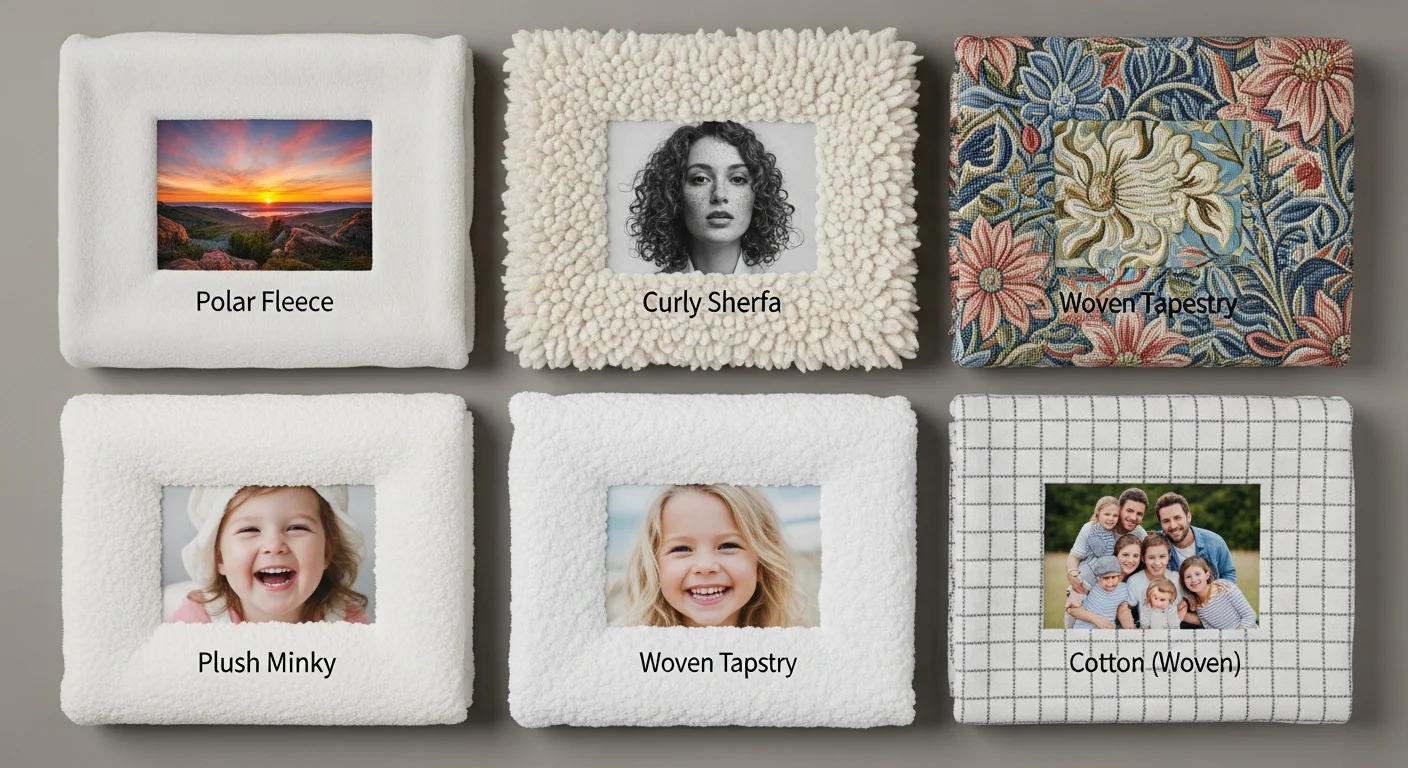
Two primary fleece types dominate the custom blanket market. Polar fleece is the standard variety — medium-weight, consistently soft, and excellent for sublimation printing. It produces sharp, vibrant full-color images with smooth color gradients and crisp text. Coral fleece is a denser, plushier variant with a slightly raised nap that feels exceptionally soft but may produce marginally less sharp fine details in printed designs due to its textured surface.
Modern anti-pill fleece technology has eliminated the primary historical complaint about fleece blankets — pilling (those annoying little fabric balls that form from friction and washing). Quality custom blanket providers use anti-pill fleece as standard, ensuring the blanket surface remains smooth through dozens of wash cycles. Blanket pilling is virtually nonexistent with properly constructed modern fleece.
Fleece excels in print quality because sublimation dyes bond permanently with polyester fibers, creating designs that will not crack, peel, fade, or wash off. The blanket color fastness of sublimation-printed fleece is exceptional — vibrant colors maintain their intensity through 50+ machine wash cycles with proper care. This print permanence, combined with fleece's inherent machine washable blanket durability, makes it the go-to choice for everyday-use custom blankets.
For blanket edge finishing, fleece blankets typically come with hemmed blanket edges (clean folded-over stitching) or whipstitch blanket edging (decorative thread wrapping). Both finishing methods are durable and attractive. Fleece is the most versatile material for custom printing, suitable for photo blankets, collage designs, corporate logos, text-based personalization, and full-bleed graphic prints. Learn more about the beginner's process in the custom blankets beginner's guide.

Sherpa — Premium Dual-Texture Comfort
The sherpa blanket delivers a premium dual-texture experience that has made it one of the fastest-growing material choices in custom blanket ordering. A sherpa blanket features a smooth polyester front (where the custom design is printed via sublimation) and a fuzzy, wool-like sherpa fleece backing that provides exceptional warmth and a luxurious hand feel.
The faux sherpa backing is made from 100% polyester engineered to mimic the texture of real sheepskin — soft, fluffy, and deeply insulating. This double-sided blanket construction means recipients get the visual impact of a printed design on one side and the cozy comfort of plush fleece on the other. The reversible blanket design makes sherpa blankets equally appealing displayed design-side-up on a couch or wrapped sherpa-side-in for maximum warmth.
Sherpa blankets are heavier than standard fleece (typically 350-500 GSM), providing a substantial, weighted feel that many people prefer for winter use, evening relaxation, and sleeping. The added weight also gives sherpa blankets a premium quality perception — recipients immediately recognize the difference in hand feel compared to a lighter fleece throw.
Print quality on the smooth front face of a sherpa blanket is comparable to standard fleece — sublimation produces vibrant, detailed, full-color designs. The key consideration is that only the front face is printed; the sherpa backing remains its natural off-white or cream color. This makes sherpa ideal for gifts, holiday presents, and premium personalized keepsakes where the combination of visual impact and tactile luxury creates a wow-factor unboxing experience.
Sherpa blankets require slightly gentler care than standard fleece — machine wash cold, tumble dry on low, and avoid high heat which can mat the sherpa fibers. With proper care, the sherpa backing maintains its fluffy texture through years of regular use.

Woven Blankets — Heirloom-Quality Keepsakes
A woven blanket represents the pinnacle of custom blanket craftsmanship. Unlike printed blankets where dye is applied to a pre-made fabric surface, a jacquard woven blanket recreates the design using colored yarns during the weaving process itself. The image becomes literally woven into the fabric structure, creating a textured, tapestry-like finish with a visual depth and permanence that no printing process can match.
The woven tapestry blanket aesthetic is distinctive — photos and designs take on an artistic, impressionist quality as the jacquard loom translates continuous-tone images into a grid of colored yarn intersections. Fine details soften slightly, colors blend organically, and the overall effect is more "fine art reproduction" than "photographic print." This unique character is precisely what draws buyers to woven blankets — they want a keepsake that looks and feels like a treasured family heirloom rather than a commercial printed product.
Woven blankets are the heaviest and most substantial option, typically exceeding 500 GSM. They have excellent blanket drape quality, hanging beautifully over furniture or displayed on a blanket ladder. Edge finishing for woven blankets almost always features fringed blanket edges — the unwoven warp threads at top and bottom are left as decorative fringe, adding to the heirloom aesthetic.
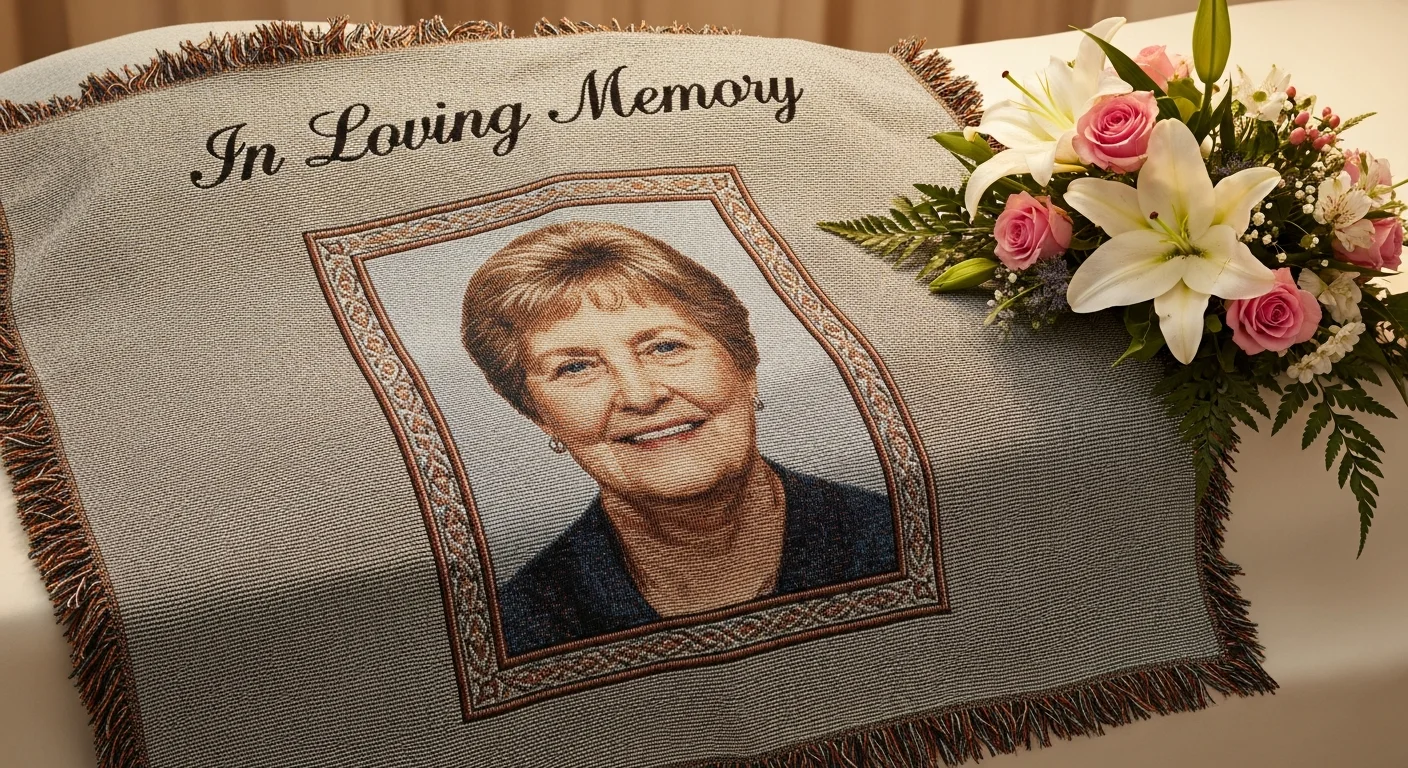
Because the design is part of the fabric's structure, woven blanket blanket durability is exceptional. There is no printed layer to crack, peel, or fade — the colored yarns maintain their appearance essentially forever with proper care. This makes woven blankets the ultimate choice for memorial blankets, wedding keepsakes, milestone anniversary gifts, and any occasion where the blanket is intended to be passed down through generations.
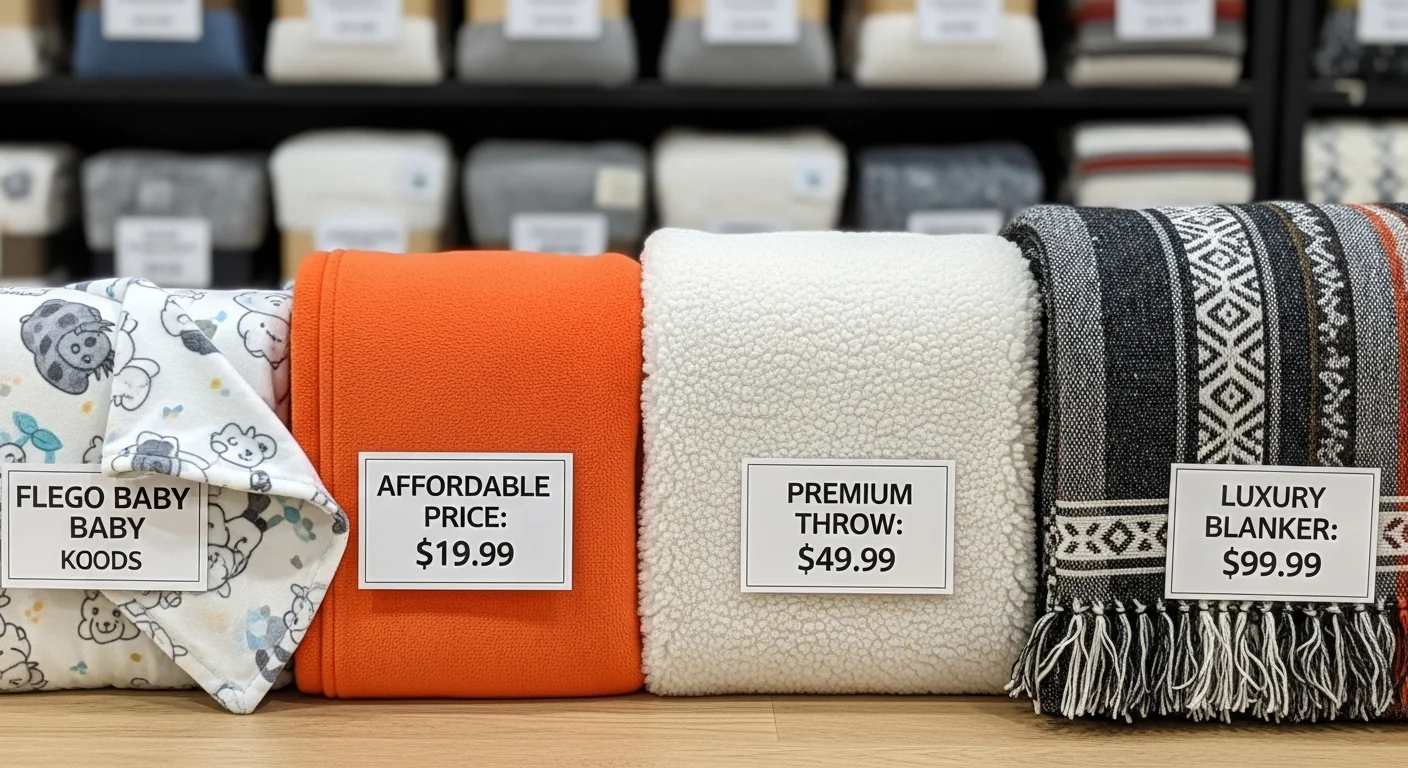
The trade-offs are cost and production time. Woven blankets are the most expensive custom blanket option (typically 2-3x the price of fleece) due to the specialized jacquard loom setup and slower production process. Lead times of 2-4 weeks are standard compared to 5-7 days for sublimation-printed fleece.

Minky — Ultra-Soft Plush for Babies and Kids
The minky blanket is defined by one overwhelming characteristic: extraordinary softness. Minky fabric (also called "cuddle fabric" or "plush minky") is a high-pile polyester with a raised, velvety texture that is softer to the touch than any other blanket material. This makes minky the default choice for baby blankets, children's comfort blankets, and any project where the tactile experience is the primary consideration.
Minky comes in smooth and textured varieties. Smooth minky has a flat, velvet-like surface that produces the sharpest printed designs. Dot minky features embossed dots on one or both sides, adding visual and tactile interest but slightly reducing print sharpness on the textured surface. For photo blankets, smooth minky is recommended; for solid-color name and monogram blankets, either variety works beautifully.
The ultra-soft texture of minky makes it a natural fit for baby blanket personalized gifts — nursery blankets, security blankets (loveys), and stroller blankets. Minky is hypoallergenic blanket material, resistant to dust mites, and gentle on sensitive baby skin. It is also inherently warm despite being relatively lightweight, making it suitable for year-round use in climate-controlled nurseries. For a complete guide to baby blanket options and safety considerations, see the personalized baby blankets guide.
Adults who prioritize softness above all else also gravitate toward minky blankets. Minky throws are popular for meditation spaces, reading corners, and anywhere a luxuriously soft sensory experience is desired. The higher pile height means minky blankets are slightly bulkier when folded compared to fleece, but the softness premium justifies the trade-off for most buyers.
Cotton — Breathable and Natural
The cotton blanket serves buyers who prefer natural fibers, breathability, and a lighter-weight blanket suitable for warm weather and warmer climates. 100% cotton blankets have a crisp, clean feel with excellent blanket breathability — they wick moisture and allow air circulation, preventing the overheating that polyester blankets can cause for hot sleepers.
Cotton blankets accept screen printing and DTG (direct-to-garment) printing rather than sublimation, which requires polyester fibers. Screen-printed cotton produces bold, durable designs with solid colors and clean lines — ideal for text, logos, and graphic patterns. DTG printing on cotton produces softer, more integrated prints where the ink absorbs into the cotton fibers rather than sitting on the surface.
The trade-off with cotton is that photographic detail and color vibrancy are typically lower than sublimation on polyester. Cotton fibers absorb ink differently, producing a slightly muted, vintage-inspired color palette rather than the saturated, vivid tones of sublimation-printed fleece. For buyers who prefer this softer aesthetic, cotton blankets have a natural, artisanal character that polyester cannot replicate.
Cotton blankets are prone to some blanket shrinkage (typically 3-5% on the first wash), so pre-shrunk cotton or sizing slightly larger than needed is recommended. Cotton is the most breathable option, making it the best choice for summer blankets, lightweight throws, and blankets for blanket for outdoor use like picnics and beach outings where warmth retention is not the priority.
Material Comparison Chart
This side-by-side comparison helps you quickly evaluate each material across the factors that matter most for custom blanket projects.
| Factor | Fleece | Sherpa | Woven | Minky | Cotton |
|---|---|---|---|---|---|
| Softness | Soft | Very Soft (back) | Structured | Ultra-Soft | Crisp/Smooth |
| Warmth | Medium | High | Medium-High | Medium-High | Low-Medium |
| Print Quality | Excellent | Excellent (front) | Artistic | Very Good | Good |
| Weight (GSM) | 200-300 | 350-500 | 500+ | 300-400 | 200-350 |
| Durability | High | High | Very High | Medium-High | Medium |
| Price Range | $ | $$ | $$$ | $$ | $-$$ |
| Best For | Everyday, gifting | Premium gifts | Heirloom keepsakes | Baby, kids | Summer, natural |
| Print Method | Sublimation | Sublimation | Jacquard weaving | Sublimation | DTG/Screen |
| Machine Washable | Yes | Yes (gentle) | Yes (cold) | Yes (gentle) | Yes |

How Material Affects Print Longevity
Blanket print quality by material is not just about initial appearance — it is about how the design holds up through years of use and washing. Print longevity varies significantly across materials and printing methods.
Sublimation-printed fleece and sherpa offer the best combination of initial vibrancy and long-term blanket color fastness. Because sublimation dyes bond at a molecular level with polyester fibers, the design is essentially part of the fabric itself. There is no surface coating to crack, peel, or wear away. Properly cared for, sublimation prints on fleece maintain their color intensity through 50+ wash cycles — and many users report minimal fading even after 100+ washes. For detailed photo optimization tips, visit the photo blankets tips for stunning prints guide.
Woven blankets have the longest print longevity of any custom blanket type because the design is literally woven into the blanket structure using dyed yarns. There is no printed layer to degrade — the colors are inherent in the yarns themselves. Woven blankets maintain their appearance essentially indefinitely, which is why they are the preferred choice for heirloom pieces intended to be passed down through generations.
Cotton blankets with DTG or screen printing have good but more moderate longevity. Screen-printed designs are durable but may gradually fade after 30-40 washes. DTG prints on cotton are softer and more integrated with the fabric but can lighten more noticeably over time. Washing cotton blankets inside-out on cold extends print life significantly.

Choosing the Right Material for Your Occasion
The best material depends not just on personal preference but on the specific context — who the blanket is for, how it will be used, and what impression you want to create.
Everyday personal use: Fleece is the standard recommendation. Lightweight, cozy, vibrant prints, machine washable, and affordable. A fleece throw is the blanket you reach for every evening.
Premium gift giving: Sherpa elevates the gift experience with its dual-texture luxury. The visible quality difference between a fleece and sherpa blanket communicates thoughtfulness and investment. Sherpa is the top choice for holiday gifts, milestone birthdays, and occasions where the unboxing experience matters.
Weddings and anniversaries: Woven blankets are the heirloom choice for significant milestones — wedding gifts, 25th and 50th anniversaries, and memorial tributes where permanence and artistry matter most. For more wedding blanket ideas, see the custom blankets for weddings and anniversaries guide.
Baby gifts: Minky is the default for nursery blankets, newborn gifts, and children's comfort items. Ultra-softness, hypoallergenic properties, and gentle warmth make it the safest and most appreciated choice for babies. Read more in the personalized baby blankets guide.
Corporate and bulk orders: Fleece provides the best value for large-quantity orders — excellent print quality at the lowest per-unit cost. For premium corporate gifts where budget allows, sherpa upgrades the perceived value significantly. See the corporate branded blankets guide for detailed B2B strategies.
Outdoor and summer use: Cotton blankets are the breathable, lightweight choice for picnics, beach trips, and warm-weather décor. Their natural fiber content appeals to eco-conscious buyers. For pricing details across all materials and sizes, consult the custom blanket pricing and size guide.

Weight, Packaging, and Shipping Considerations
Blanket weight comparison affects not just the user experience but also shipping costs, packaging presentation, and storage. Lightweight fleece blankets (200-300 GSM) fold compactly, ship economically, and store easily in closets and storage bins. Heavier sherpa (350-500 GSM) and woven (500+ GSM) blankets require larger packaging, cost more to ship, and take up more storage space — but their substantial weight contributes to a premium unboxing experience.
For gift presentation, heavier blankets have an inherent advantage — the weight in the recipient's hands immediately communicates quality. Many providers offer custom packaging options including branded boxes, ribbon wrapping, and gift bags that enhance the presentation. If you are ordering blankets as corporate gifts or wedding favors, consider the packaging as part of the overall gift strategy.
Shipping costs for blankets vary significantly by material and size. A single fleece throw typically ships for $5-$8 in standard packaging. A sherpa blanket in gift packaging may cost $10-$15 to ship due to weight and box dimensions. Woven blankets, being the heaviest, carry the highest shipping cost per unit. For large corporate or event orders, bulk shipping rates can reduce per-unit shipping costs by 40-60%.
Find Your Perfect Custom Blanket Material
Now that you understand the strengths and trade-offs of each material, you are ready to choose the perfect foundation for your personalized design. Whether you prioritize softness (minky), print vibrancy (fleece), premium luxury (sherpa), heirloom quality (woven), or natural breathability (cotton), RareCustom offers all five material options with custom blankets designed to meet every need and budget.
Use the free online design tool to preview your design on different materials before ordering. Upload your photos, add your text, and switch between material options to see how each fabric affects the look and feel of your finished blanket. With no minimum order requirements, free digital proofs, and a satisfaction guarantee, there is no risk in finding your perfect match. For memorial gift ideas, see the custom memorial and sympathy blankets guide.
Frequently Asked Questions
Which blanket material is softest? Minky is the softest blanket material available. Its high-pile plush texture is significantly softer than fleece, sherpa, or cotton. Sherpa backing is the second-softest option, followed by coral fleece. If softness is your top priority — especially for baby blankets or comfort blankets — minky is the clear choice.
Which material produces the best photo prints? Fleece produces the sharpest, most vibrant photo reproduction. Its smooth polyester surface accepts sublimation dyes perfectly, creating crisp details and saturated colors. Sherpa's printed front face is comparable to fleece. Woven blankets create an artistic, textured photo effect rather than photographic precision. Minky is slightly less sharp on textured varieties but still produces excellent results.
Are custom blankets machine washable? Yes, all five material types are machine washable. Fleece and cotton are the most resilient to washing. Sherpa, minky, and woven blankets benefit from cold water, gentle cycle settings to preserve their texture and print quality long-term. All blankets should be tumble dried on low or air dried.
Which material is best for outdoor use? Cotton is the best choice for warm-weather outdoor use due to its breathability and lightweight feel. For cold-weather outdoor events (tailgating, stadium games), heavy fleece or sherpa provides the most warmth. Woven blankets can be used outdoors but are better preserved for indoor display and use.
How long do printed designs last on each material? Sublimation prints on fleece and sherpa maintain vibrancy through 50+ washes. Woven designs last essentially forever since the design is part of the fabric structure. DTG/screen prints on cotton typically maintain their appearance through 30-40 washes before gradual fading begins.
Related Articles
Share this article
Written by
Aisha Patel
Head of Materials Science & Sustainability at RareCustom. M.S. in Textile Engineering from NC State with AATCC certification and ISSP Sustainability Practitioner certification. 7+ years evaluating fabrics, materials, and eco-friendly production processes.