UV Printing vs Pad Printing for Custom Golf Balls: Complete Comparison
Compare UV printing and pad printing for custom golf balls. Covers color options, durability, cost per ball, production speed, and when to use each method for best results.
Terrence Okafor
Head of Production at RareCustom with 20+ years in commercial printing. Terrence's deep expertise in UV and pad printing helps customers choose the right method for custom golf balls.
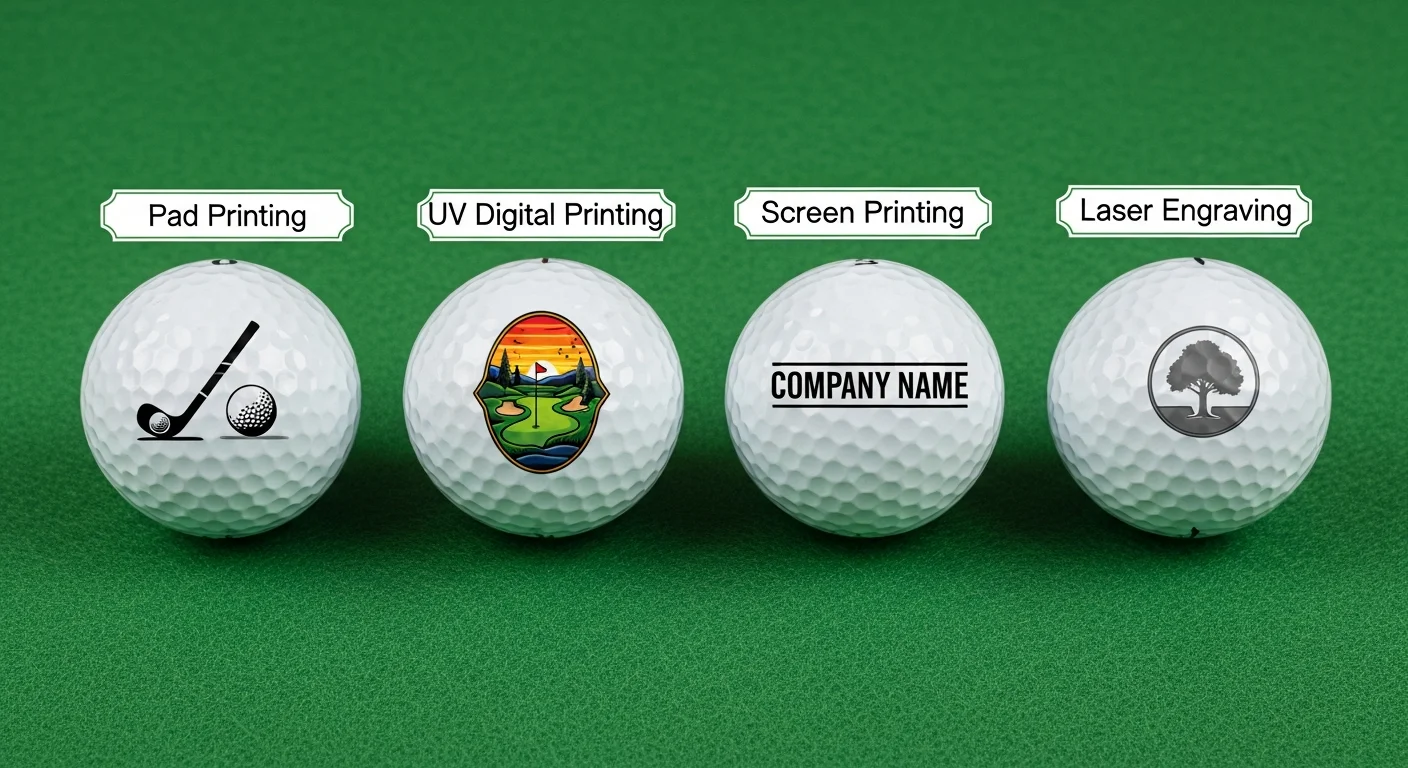
The printing method you choose determines everything about your custom golf balls — from color vibrancy and detail resolution to how many rounds the design survives before showing wear. The two dominant technologies in golf ball printing today are UV printing and pad printing, and each excels in different scenarios. UV printing delivers full-color, photo-quality results with zero setup cost, while pad printing offers unmatched durability and precise PMS color matching for single- and dual-color logos. Choosing the wrong method wastes budget and produces disappointing results; choosing the right one means your custom golf balls look exactly as intended for as long as possible.
This comprehensive golf ball printing comparison breaks down both methods across every factor that matters — color capability, durability, cost structure, production speed, print resolution, and surface compatibility. Whether you are ordering 24 personalized golf balls for a wedding party or 5,000 branded golf balls for a national sales conference, this guide gives you the data to make a confident decision.
What Is UV Printing for Golf Balls?
UV printing is a digital inkjet process that applies full-color CMYK ink directly onto the golf ball surface, then instantly cures (hardens) the ink using ultraviolet LED light. The ball is placed in a precision jig that positions it precisely beneath the print head. In a single-pass printing operation, the inkjet nozzles deposit microscopic droplets of cyan, magenta, yellow, and black (plus white as a base layer on colored balls) to reproduce any image, photograph, gradient, or multi-color logo.
Because UV printing is entirely digital, there are no plates, screens, or physical setup required. The design file goes directly from computer to printer, which eliminates the setup fee that pad printing requires. This makes UV printing the cost-effective choice for small batches and one-off personalized orders. A typical UV printer equipped with a golf ball jig can process approximately 108 balls per batch in roughly 8-10 minutes, depending on design complexity and coverage area.
The UV LED curing process is what sets this technology apart from traditional inkjet. Standard inkjet inks remain wet and smudge-prone after application. UV inks contain photoinitiators that polymerize (harden) instantly when exposed to UV light, creating a durable, scratch-resistant film within milliseconds of printing. This instant cure allows balls to be handled immediately after printing and stacked without design transfer. Modern UV inks also offer improved flexibility, which helps the printed layer conform to the ball's dimple pattern without cracking or peeling.

What Is Pad Printing for Golf Balls?
Pad printing (also called tampography) is an indirect offset printing process that has been the golf industry's standard decoration method for over 75 years. Every brand-stamped golf ball you have ever purchased — from Titleist to Callaway to Bridgestone — uses pad printing for its stock logo and numbering. The process involves three components: an etched steel or polymer plate called a cliché, a soft silicone transfer pad, and specially formulated ink.
The printing sequence works as follows: ink is flooded across the cliché, a doctor blade scrapes excess ink from the flat surface leaving ink only in the etched design cavities, the silicone pad presses down onto the cliché to pick up the ink image, then lifts and presses onto the golf ball to deposit the ink. The silicone pad's softness allows it to conform to the ball's curved surface and navigate the dimple pattern without distortion. Each color in the design requires a separate cliché and a separate printing pass — a multi-pass pad printing run with four colors means four separate press operations per ball.
The cliché creation process adds a one-time setup cost of $20-$42 per plate, depending on the plate material (polymer for short runs, steel for high-volume production). This setup fee golf ball cost is amortized across the order quantity — a $35 cliché spread across 600 balls adds only $0.06 per ball, but spread across 24 balls it adds $1.46 per ball. This cost structure makes pad printing increasingly economical at higher volumes.

Color Capabilities — Full Spectrum vs Spot Colors
Color capability is the most significant practical difference between UV and pad printing. Full color golf ball printing via UV technology reproduces unlimited colors in a single pass — photographs, gradients, rainbows, detailed illustrations, and complex multi-color logos all print identically to the source file. The CMYK golf ball color model means any color reproducible by standard CMYK printing can appear on the ball, including subtle shading, skin tones, and photographic detail.
Pad printing operates on a spot color golf ball model, where each color is a separately mixed ink applied in its own pass. One-color logos (the most common corporate application) require a single cliché and pass. Two-color designs need two clichés and two passes. Three and four-color designs are possible but rare, as each additional color adds setup cost, alignment complexity, and production time. The advantage of spot color is precision — inks are mixed to exact PMS (Pantone) specifications, ensuring brand-critical colors match identically from batch to batch and year to year.
For logos with three or fewer solid colors and brand-mandated PMS values, pad printing delivers superior color consistency. For photographs, gradients, full-color artwork, or designs with more than four colors, UV printing is the only viable option. This distinction is the single most important factor in choosing a printing method for your custom golf balls.
Print Durability and Longevity
Golf ball ink durability matters because golf balls endure extreme physical stress — driver impacts at 150+ mph, iron strikes, bunker sand abrasion, cart path bounces, and wedge scrapes around the green. The durability of the printed design determines how many rounds the ball looks presentable before the custom artwork begins to fade, chip, or wear off.
Pad printing has the durability advantage due to decades of ink chemistry optimization for the golf industry. Pad-printed inks penetrate the ball's cover material at a molecular level, creating a bond that is essentially part of the ball's surface rather than a layer on top of it. In standardized abrasion test golf ball evaluations, pad-printed logos typically survive 15-25 rounds of heavy play with minimal visible wear. This is why every major golf ball manufacturer uses pad printing for their stock branding.
UV printing durability has improved dramatically in recent years. Modern UV inks combined with proper golf ball surface preparation (isopropyl alcohol cleaning and optional primer coat golf ball treatment) and a protective UV varnish golf ball clear coat produce designs that withstand 8-15 rounds under normal playing conditions. The golf ball clear coat adds a transparent protective layer over the printed design, significantly extending golf ball print longevity and improving scuff resistance print performance against wedge impact durability challenges.
| Durability Factor | UV Printing | Pad Printing |
|---|---|---|
| Rounds before visible wear | 8-15 rounds | 15-25 rounds |
| Scuff resistance | Good (with clear coat) | Excellent |
| Bunker sand abrasion | Moderate | High |
| Cart path impact | Moderate | High |
| Wedge scraping | Low-Moderate | Moderate-High |
| UV fade resistance | Excellent | Excellent |

Cost Comparison — Per Ball Economics
Understanding the true cost per ball for each method requires looking beyond the sticker price to account for setup fees, ink costs, labor, and volume discounts. The golf ball ink cost per ball for UV printing is remarkably low — approximately $0.001-$0.003 per ball, since digital inkjet uses only the ink needed for the specific design. Pad printing ink cost is higher at approximately $0.03-$0.05 per ball, as ink is applied in a flood-and-scrape process that wastes more material.
The decisive cost factor is the setup fee. UV printing has zero setup cost — the digital file goes straight to the printer. Pad printing requires a cliché plate ($20-$42 per color), which must be manufactured before the first ball is printed. For a two-color logo, that is $40-$84 in setup fees regardless of quantity. This fixed cost is what makes pad printing expensive for small orders but increasingly competitive at scale.
| Cost Factor | UV Printing | Pad Printing (2-color) |
|---|---|---|
| Setup / cliché cost | $0 | $40-$84 |
| Ink cost per ball | ~$0.002 | ~$0.04 |
| Labor per 600 balls | ~$45 | ~$60 |
| Total cost (24 balls) | ~$28 | ~$70-$110 |
| Total cost (144 balls) | ~$95 | ~$130-$160 |
| Total cost (600 balls) | ~$340 | ~$300-$350 |
| Break-even point | ~400-500 balls (varies by design) | |
At approximately 400-500 balls, the per-unit economics cross over and pad printing becomes the more cost-effective option for simple 1-2 color designs. Below that threshold, UV printing wins on total cost. For a more detailed pricing analysis across different order sizes and design complexities, see the custom golf ball pricing guide.

Production Speed and Turnaround Times
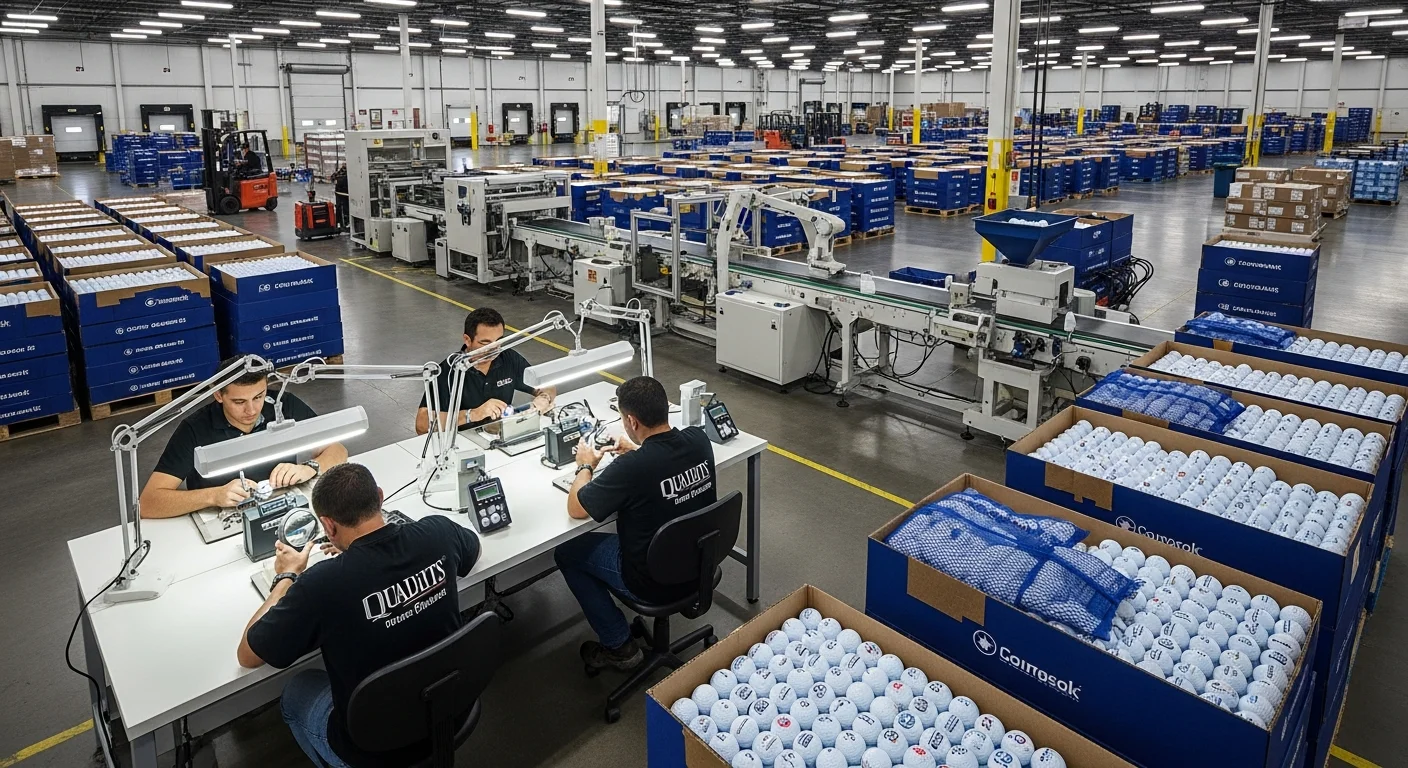
Golf ball production speed differs significantly between the two methods, primarily because of setup requirements. UV printing starts immediately from the digital file — no plates to manufacture, no ink to mix, no registration to align. Upload the design file, load the balls into the jig, and printing begins within minutes. A UV printer can produce 108 balls in a batch with cycle times of 8-10 minutes, meaning 600+ balls can be completed in a single production shift.
Pad printing requires 1-2 hours of setup before the first ball is printed. The cliché must be manufactured or retrieved, ink mixed to PMS specifications, the press registered for alignment, and test prints run to verify quality. Once setup is complete, however, pad printing throughput is comparable to UV — modern automated pad printers handle 500-800 balls per hour for single-color designs. Multi-color designs slow the process because each color requires a separate pass through the press.
Standard turnaround for both methods is 5-7 business days from proof approval to shipment. Rush production (2-3 business days) is generally easier to accommodate with UV printing because there is no cliché lead time. For time-sensitive corporate events, UV printing's zero-setup advantage can mean the difference between receiving your custom golf balls on time or scrambling for a backup plan.
Print Area and Detail Resolution
The golf ball print area is approximately 25mm in diameter per pole (the maximum circular area on the ball's surface that can be printed in a single orientation). Both UV and pad printing can address this full area, but their resolution capabilities within that space differ considerably.
UV printing resolution is measured in DPI (dots per inch), and modern golf ball UV printers operate at 720-1440 DPI. At this resolution, fine text as small as 4-point type is legible, QR codes are scannable, and photo quality golf ball reproduction captures facial features, pet fur textures, and scenic landscape details. The golf ball print resolution of UV is limited primarily by the dimple pattern — ink deposited into dimple cavities appears slightly different from ink on the flat lands between dimples, creating a subtle texture in the printed image. This dimple interference printing effect is most noticeable in solid color fills and gradients.
Pad printing resolution depends on the cliché etching depth and the silicone pad's ability to pick up and transfer fine details. In practice, pad printing excels at bold, clean-edged logos, solid text, and simple graphics but struggles with fine lines below 0.5mm, small text below 6-point, and any photographic detail. The silicone pad's physical interaction with the ball's dimple pattern can also cause minor inconsistencies in ink coverage across dimpled areas, though this is generally imperceptible for typical logo applications.

Surface Preparation Requirements
Proper golf ball surface preparation directly affects print adhesion golf ball quality and longevity for both printing methods. Golf ball covers arrive from the manufacturing process with release agents, mold residue, and surface oils that can prevent ink from bonding properly. Both methods require cleaning, but the specific preparation protocols differ.
For UV printing, the standard preparation involves wiping each ball with isopropyl alcohol cleaning to remove surface contaminants, followed by an optional adhesion-promoting primer coat golf ball treatment. The primer creates a micro-textured surface that gives UV ink better mechanical adhesion. After printing, a UV varnish golf ball clear coat is often applied as a protective layer. The entire surface preparation adds 15-30 seconds per ball but significantly improves print longevity.
Pad printing surface preparation involves similar cleaning with isopropyl alcohol, and some cover materials require flame treatment or corona discharge to increase surface energy and improve ink wetting. Surlyn covers generally accept pad printing ink readily due to their ionic molecular structure. Urethane covers can be more challenging for pad printing adhesion because the softer, more flexible surface may absorb ink unevenly. For a detailed exploration of how cover materials affect print results, read the surlyn vs urethane golf ball covers guide.
Which Method Should You Choose?
The decision matrix below summarizes when each printing method is the optimal choice for your project. In general, the complexity and color count of your design, combined with your order quantity, determines the answer.
Choose UV printing when: Your design includes photographs, gradients, or more than 2 colors. You need a small quantity (under 400 balls). You want zero setup fees and fast turnaround. You are printing photo golf balls, multi-color event artwork, or complex illustrations. You need quick turnaround without cliché manufacturing time.
Choose pad printing when: Your design is a 1-2 color logo or text. You are ordering 500+ balls and prioritize durability. Brand color accuracy via PMS matching is critical. You need the print to survive heavy tournament play. You are producing annual repeat orders with the same design (reuse the cliché).
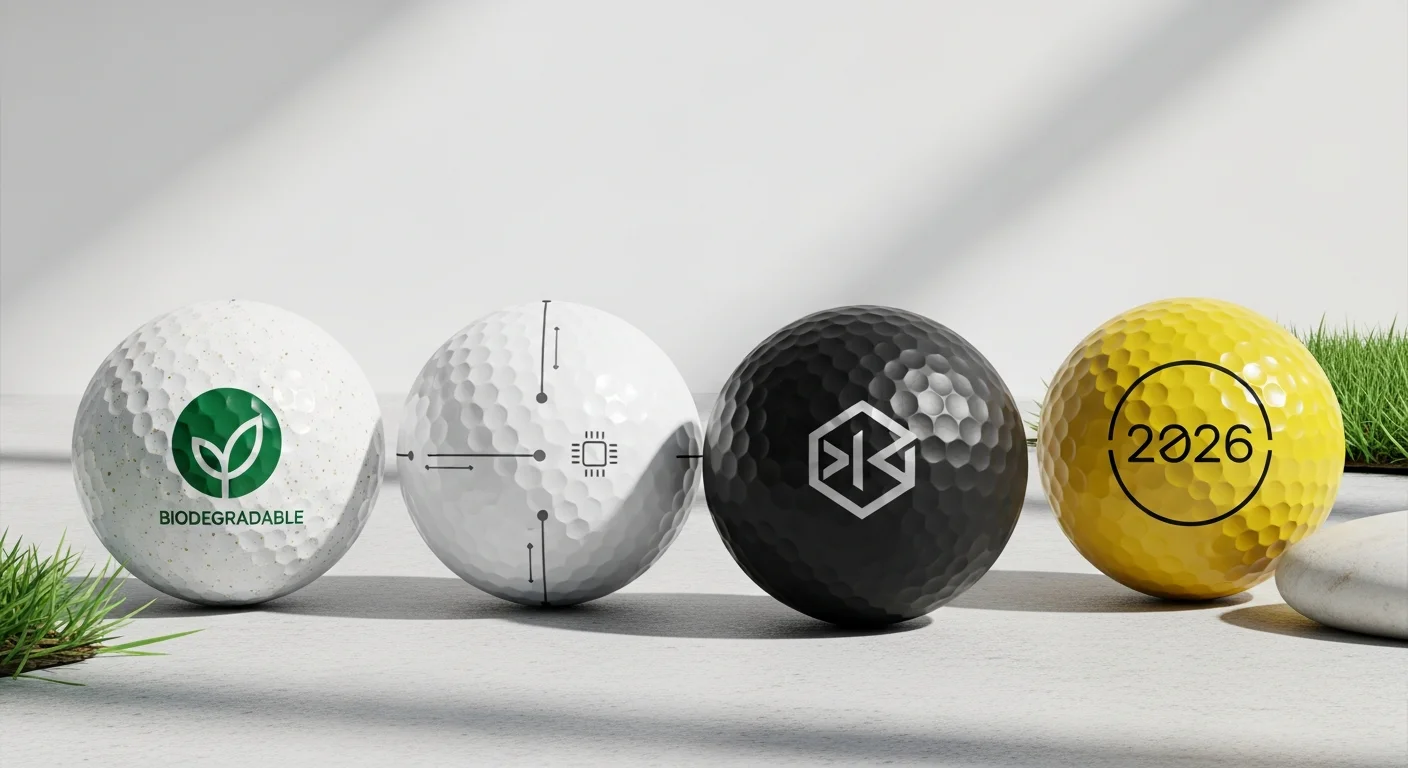
Consider combining both methods for the best of both worlds on premium orders. Some providers offer a pad-printed primary logo (for maximum durability) with UV-printed secondary artwork (for color complexity) on the opposite pole. This hybrid approach is growing in popularity for high-end corporate golf balls and premium gift sets. To explore other emerging approaches, check out the custom golf ball design trends for 2026.
The Future of Golf Ball Printing Technology
Golf ball printing technology continues to evolve rapidly. UV ink adhesion chemistry has improved significantly in the past three years, with newer formulations offering 30-40% better scuff resistance than first-generation UV golf ball inks. Several equipment manufacturers are developing 360-degree printing systems that rotate the ball during printing, allowing seamless wrap-around designs that cover the entire ball surface — not just the traditional single-pole or two-pole areas.
Hybrid printing approaches that combine the durability of pad printing with the color flexibility of UV printing are gaining traction. Some systems apply a pad-printed primer or base coat, then overprint with UV inkjet for full-color detail — delivering pad-level durability with UV-level visual complexity. These hybrid systems are currently more expensive but are expected to reach mainstream pricing within 2-3 years.
Digital workflow improvements are also reducing turnaround times. Cloud-based digital proof golf ball systems allow customers to approve designs from any device, and automated press setups minimize the labor gap between UV and pad printing. The overall trend points toward faster, more durable, and more affordable custom golf ball printing across both technologies.
Start Printing Your Custom Golf Balls
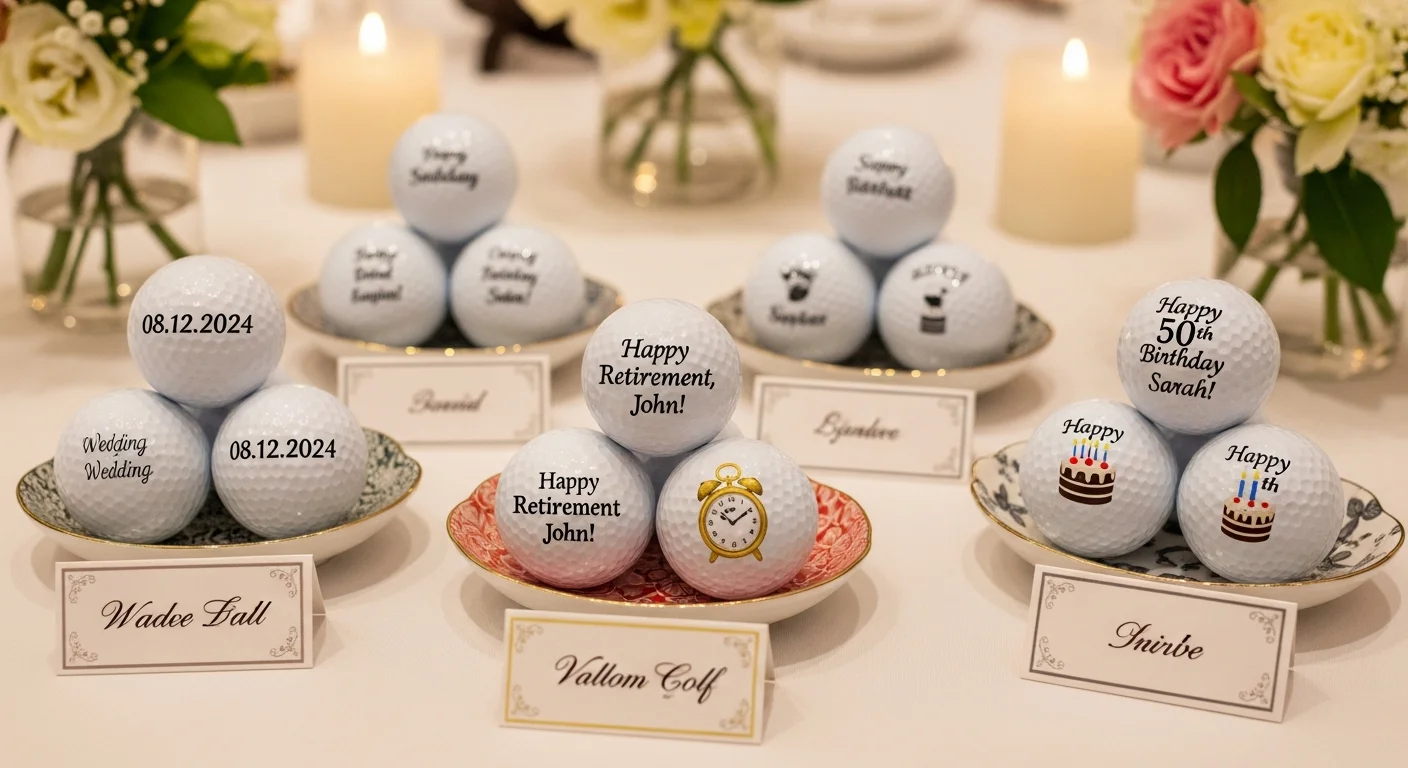
Now that you understand the strengths of each printing method, it is time to bring your design to life. Whether you choose UV printing for a full-color family photo or pad printing for a crisp corporate logo, custom golf balls from RareCustom deliver professional results with fast turnaround and competitive pricing. Use the free online design tool to upload your artwork, preview it on a realistic golf ball mockup, and place your order in minutes. No minimum quantities on UV-printed orders, free digital proofs, and satisfaction guaranteed on every ball.
Related Articles
Share this article
Written by
Terrence Okafor
Head of Production at RareCustom with 20+ years in commercial printing. Terrence's deep expertise in UV and pad printing helps customers choose the right method for custom golf balls.