50+ Custom Sticker Design Ideas to Inspire Your Next Project
Discover 50+ custom sticker design ideas across minimalist, retro, kawaii, botanical, typography, and brand styles. Get creative inspiration and practical design tips for standout stickers.
Jordan Reeves
Brand Experience Strategist at RareCustom. BFA in Graphic Design from Parsons School of Design with 8+ years helping brands craft visual identities. Specialist in color theory, layout composition, and design systems.
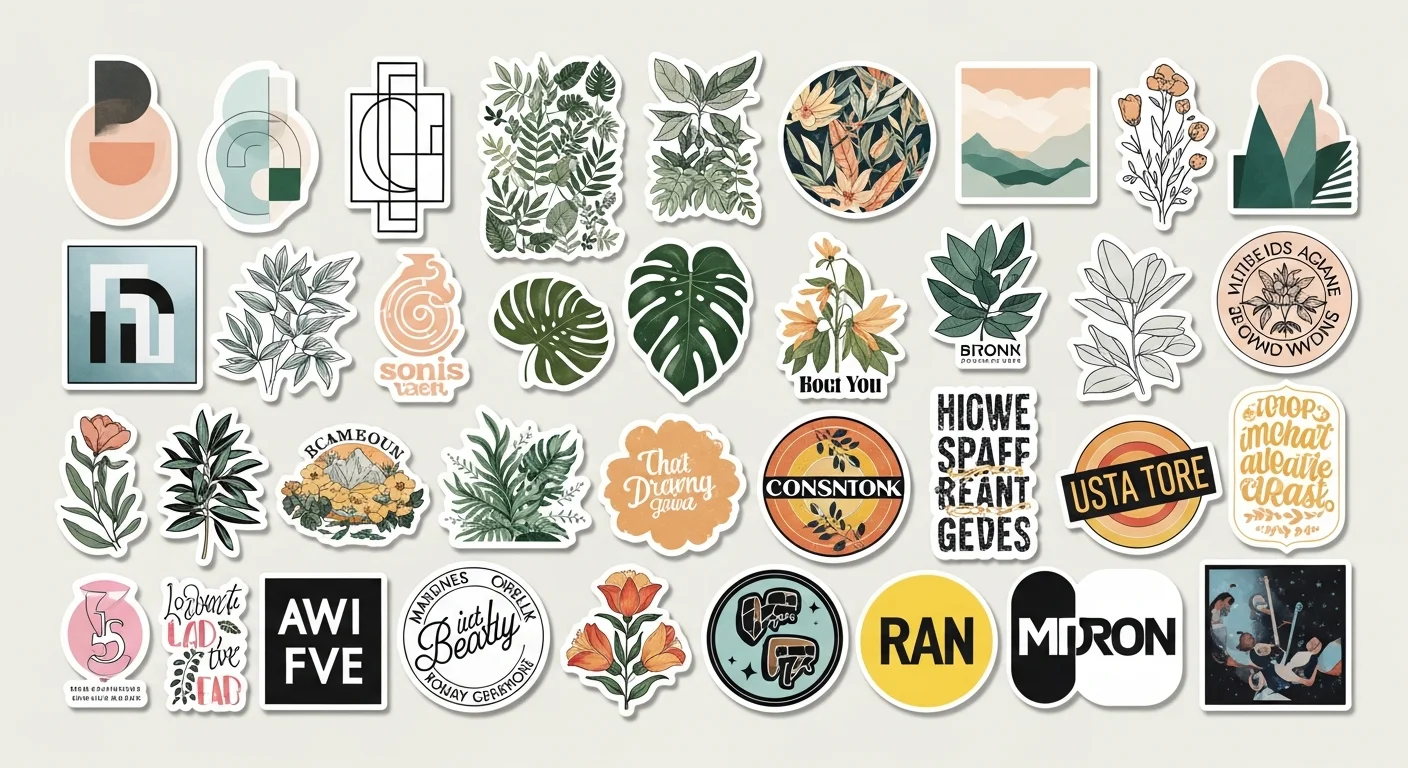
Finding the right custom sticker design starts with inspiration — a spark of creativity that transforms a vague idea into a specific concept worth printing, peeling, and sticking on everything in sight. Whether you are designing stickers for personal expression, brand promotion, retail sales, or event giveaways, the best sticker design inspiration comes from understanding what makes certain designs irresistible while others get lost in a drawer. This gallery of 50+ creative sticker ideas spans every major style category — from minimalist sticker design and retro sticker aesthetic to kawaii sticker art and typography sticker compositions — with practical notes on how to execute each concept for the best print results.
The custom sticker market has exploded in recent years, with Etsy alone hosting over 2.5 million active sticker listings and platforms like Redbubble and Society6 processing millions of sticker orders annually. This growth means that standing out requires more than a basic logo on a circle. The most successful sticker designs combine unique sticker concepts with intentional color palettes, thoughtful composition, and material choices that enhance the design. This guide provides the sticker design inspiration you need to create something that people actually want to stick on their laptops, water bottles, journals, and phone cases — not because they were given the sticker for free, but because the design itself is worth displaying. If you are new to the custom sticker design process, start with the complete beginner's guide to custom stickers before exploring these design ideas.
Minimalist and Clean Line Art
Minimalist sticker design is one of the most enduring and commercially successful approaches in the sticker market. The principle is simple: reduce the design to its essential elements and let negative space do the heavy lifting. A simple logo sticker rendered in one or two colors, a clean line art sticker of a mountain silhouette, or a single-weight continuous line drawing of a face — these designs communicate instantly and look sophisticated on any surface.
The appeal of minimalism for stickers goes beyond aesthetics. A clean line art sticker with limited colors is less expensive to produce because it can be screen printed or spot-color printed rather than requiring full-color digital printing. It reproduces well at any size — the same design works at 1 inch for a phone sticker and 4 inches for a laptop sticker without losing clarity. And it pairs beautifully with any surface because the simplicity prevents visual clutter even on busy backgrounds. Popular minimalist sticker concepts include single-line portraits, geometric animal silhouettes, simple plant illustrations, architectural landmarks, constellation patterns, and icons representing hobbies or professions.
For execution, minimalist designs work best as die-cut stickers with a thin white border (1 to 2mm) on white vinyl. The white border frames the design cleanly and ensures visibility on dark surfaces. Matte finish enhances the sophisticated quality of minimalist artwork, while a glossy finish adds contrast and vibrancy to the limited color palette. The key design principle is restraint — if removing an element does not change the meaning or impact of the design, remove it.

Retro and Vintage Aesthetic
The retro sticker aesthetic draws from the visual language of the 1960s through 1990s — bold color palettes, hand-lettered typography, sunburst patterns, halftone dot textures, and nostalgic cultural references. Vintage sticker design taps into a powerful emotional appeal: nostalgia. Research shows that nostalgic design elements increase perceived warmth and trustworthiness, making retro stickers particularly effective for food brands, outdoor recreation companies, and lifestyle products.
70s sticker style features warm earth tones (burnt orange, avocado green, mustard yellow, brown), bubble lettering, rainbow arcs, and psychedelic pattern work. 80s sticker style leans into neon colors (hot pink, electric blue, lime green), grid patterns, chrome effects, and geometric shapes inspired by Memphis Design and early video games. 90s sticker style combines grunge textures, skate culture graphics, bright primary colors, and bold sans-serif typography with ironic slogans.
The key to successful retro sticker design is authenticity in the details. Use era-appropriate color palettes rather than modern approximations. Incorporate genuine halftone dot patterns, wear textures, and aged paper effects rather than clean digital reproductions. Research actual vintage designs from the target era for reference — posters, album covers, product packaging, and travel decals from the period provide the most authentic inspiration. For stickers, die-cut shapes that echo vintage formats — circular travel badges, shield-shaped emblems, pennant flags — reinforce the throwback aesthetic.

Kawaii and Character Design
Kawaii sticker art — the Japanese-inspired aesthetic centered on cuteness, charm, and playful personality — is one of the highest-demand sticker design categories globally. Cute character stickers featuring food with faces, animals with oversized heads, and everyday objects with expressions consistently rank among the top-selling designs on sticker marketplaces. The appeal crosses age groups, cultures, and use cases: kawaii stickers are equally at home on a college student's water bottle, a child's lunchbox, and a professional's planner.
Successful kawaii character design follows several principles. Proportion is everything: characters typically have heads that are 50 to 70 percent of total body height, creating the oversized-head "chibi illustration sticker" look that triggers a nurturing response in viewers. Eyes are large, round, and placed low on the face. Bodies are simplified — short limbs, minimal detail, soft curves. Expressions convey personality: a blushing cheek, a tiny smile, closed happy eyes, a surprised "O" mouth. Each expression tells a micro-story that makes the character feel alive.
For sticker-specific execution, kawaii designs excel as die-cut stickers that follow the character's silhouette. The irregular shape adds dimension and makes each sticker feel like a collectible figure rather than a flat printed image. Kiss-cut sticker sheets with 6 to 12 character variations — different poses, expressions, or outfits of the same character — are popular as retail products and subscription box inclusions. When designing a cohesive sticker set, maintain consistent line weight, color palette, and proportion rules across all characters to create a sticker collection theme that feels unified.
Botanical and Nature-Inspired
Botanical sticker design has experienced sustained growth, fueled by the houseplant trend, cottagecore aesthetic, and a broader cultural emphasis on nature connection. Floral sticker art ranges from photorealistic flower portraits to stylized line-art botanicals, and the category includes nature illustration sticker concepts like mushrooms, leaves, succulents, trees, landscapes, wildlife, and celestial imagery.
The most commercially successful botanical stickers fall into two style camps. Detailed watercolor botanicals feature soft color gradients, delicate line work, and realistic plant anatomy — these appeal to adult audiences, gardening enthusiasts, and customers who use stickers in journals and planners. Stylized flat-illustration botanicals use bold outlines, limited color palettes, and simplified shapes — these have broader appeal and reproduce more reliably at small sticker sizes.
For material and finish selection, botanical stickers particularly benefit from clear vinyl, which allows the transparent background to blend seamlessly with whatever surface the sticker is applied to. A watercolor flower on clear vinyl appears to be painted directly on the laptop or water bottle, creating a more integrated and premium look than the same design on white vinyl. Matte finish complements the organic, natural quality of botanical artwork, while holographic finish adds an unexpected magical element that makes botanical stickers stand out in a crowded market. Die-cut shapes that follow the natural contour of leaves, flowers, and branches create the most visually striking botanical stickers.

Typography and Quote Stickers
Typography stickers and quote stickers occupy a unique space in the sticker market because they communicate a specific message or value statement. A well-designed lettering sticker design is not just decorative — it is a form of self-expression that tells others something about the person who displays it. "Be kind," "Adventure awaits," "Plant lady" — these short phrases resonate because they align with the viewer's identity or aspirations.
Effective typography sticker design requires font selection that matches the tone of the message. Motivational quotes pair well with bold sans-serif or modern script fonts. Humorous phrases work best with playful, hand-drawn lettering. Professional affirmations (industry-specific phrases, role titles) benefit from clean, structured typography. The font itself becomes the primary design element, so every curve, weight, and spacing decision matters significantly more than in designs where type supports an illustration.
Layout composition for typography stickers follows specific rules. Hierarchy is essential: the most important word or phrase should be visually dominant through size, weight, or color. Secondary text can be smaller, lighter, or positioned in a supporting role. Mixing two to three fonts creates visual interest, but more than three fonts creates chaos. Color contrast with the intended surface is critical — a white text sticker on clear vinyl looks stunning on dark laptops but disappears on white surfaces. Consider offering popular typography designs in both light and dark colorways to cover both use cases.

Brand and Business Sticker Ideas
Brand sticker ideas extend beyond the standard logo-on-a-circle format. The most effective branded stickers treat the design as a promotional sticker design that people want to display, not an advertisement they tolerate. Companies like Patagonia, The North Face, and Yeti have turned their stickers into coveted collectibles that customers actively request and proudly display — not because they are paid to, but because the sticker design itself has aesthetic value.
Successful brand sticker concepts include icon-based designs (a simplified symbol from your logo or product line), tagline stickers (your brand's slogan in compelling typography), pattern stickers (a brand-colored geometric or illustrative pattern), mascot stickers (a character that represents your brand personality), and packaging sticker concepts that double as promotional items (a seal that is attractive enough to peel off and re-apply elsewhere).
For businesses exploring custom sticker merchandising, consider creating sticker pack designs with 4 to 8 variations that include a mix of logo stickers, icon stickers, typography stickers, and illustrative stickers. This variety allows customers to choose which designs resonate with them and increases the likelihood that at least one sticker from the pack gets displayed. Cohesive sticker set design — where all stickers share a unified color palette, illustration style, and brand voice — reinforces brand identity while providing enough variety to appeal to diverse tastes. For comprehensive branding strategies, see the custom stickers for business branding and packaging guide.

Pop Culture and Fandom
Pop culture stickers tap into existing communities of passionate fans who use stickers to signal their affiliations and interests. Laptop sticker ideas in this category draw from television shows, movies, video games, anime, music, books, and internet culture. The key to successful fandom sticker design is creating original interpretations rather than direct reproductions of copyrighted imagery. A stylized illustration inspired by a character, a clever quote set in original typography, or an abstract representation of a fictional universe provides fan appeal while maintaining creative originality.
Fandom stickers are among the most socially shared sticker types because they function as conversation starters and community identifiers. A sticker referencing a niche show or game attracts attention from fellow fans, creating instant social connection. This community-building quality makes fandom stickers particularly effective as retail products, convention merchandise, and subscription box inclusions. Seasonal and event-timed releases (new season premieres, game launches, movie releases) drive urgency and collectibility.
For production, fandom stickers typically perform best as die-cut vinyl with a glossy finish because fans expect vivid, durable stickers worthy of their favorite laptop or water bottle. Holographic finish adds a collectible, premium quality that justifies a higher retail price point. Sticker sheets with 6 to 10 themed designs create a sticker pack design format that encourages collecting and trading within fan communities.
Seasonal and Holiday Designs
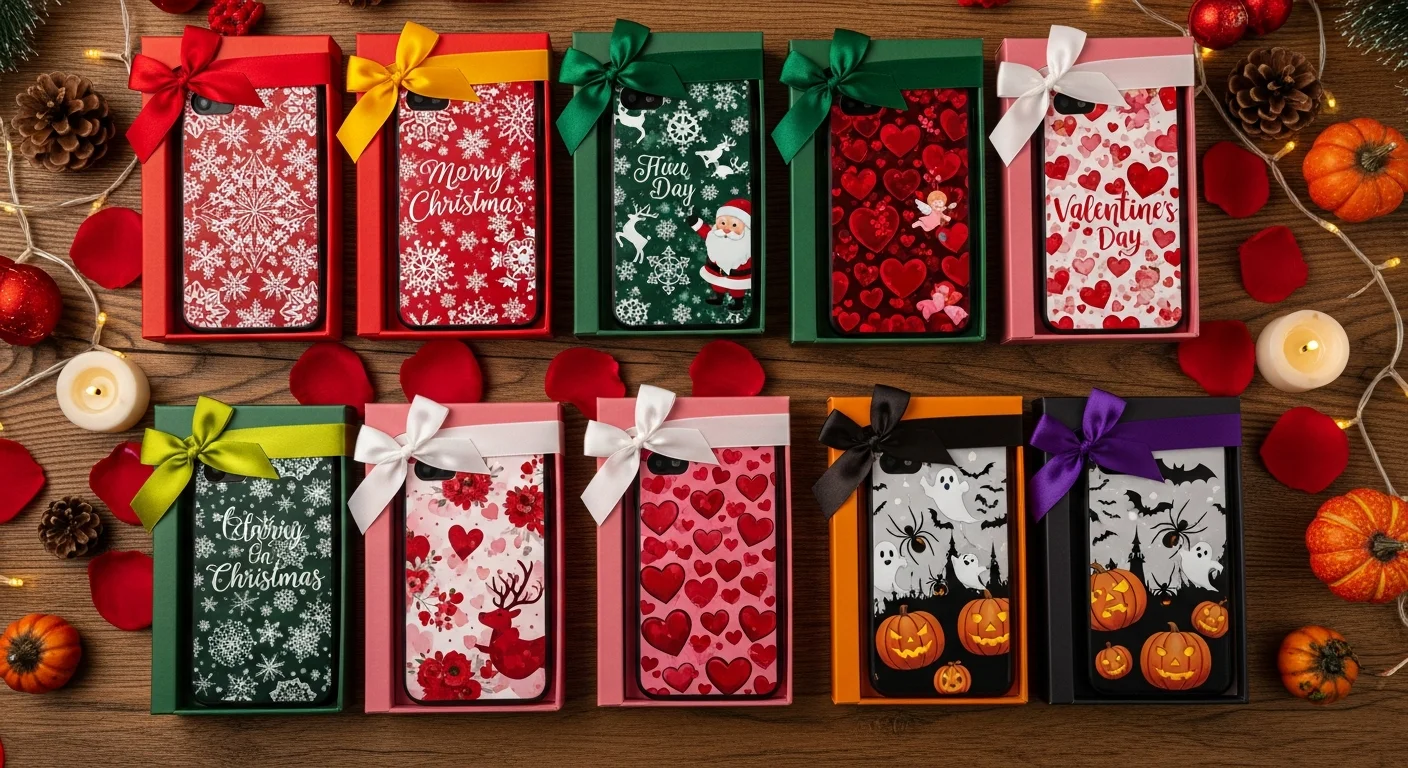
Seasonal stickers address time-sensitive demand spikes that occur throughout the year — holidays, back-to-school, summer activities, and cultural events. Holiday sticker designs include Christmas, Halloween, Valentine's Day, Easter, Hanukkah, and Thanksgiving themes. Seasonal stickers capture the visual language of spring (flowers, pastels), summer (beach, tropical), autumn (leaves, pumpkins, warm tones), and winter (snowflakes, cozy imagery).
The commercial advantage of seasonal stickers is built-in urgency. Customers purchase holiday stickers for gift wrapping, party decorations, card embellishments, and seasonal packaging — all with a clear deadline that drives immediate purchasing decisions. Businesses can use seasonal stickers to refresh their packaging on a quarterly basis without redesigning their entire label system. A Christmas edition sticker on standard packaging creates a holiday-themed unboxing experience with minimal additional cost.
Design tips for seasonal stickers: use era-appropriate cultural imagery (not stereotypes), create designs that work both as standalone stickers and as packaging accents, and plan production timelines 6 to 8 weeks before the holiday to ensure delivery. Seasonal stickers have a short selling window, so order conservatively to avoid excess inventory. Small batch stickers of 100 to 250 units per design allow you to test multiple seasonal concepts without overcommitting.
Planner and Journal Stickers
The planner and journaling community represents one of the largest and most dedicated sticker consumer segments. Planner stickers serve a functional purpose — marking appointments, categorizing tasks, decorating weekly spreads, and tracking habits — while journal stickers add creative embellishment to memory keeping, scrapbooking, and art journaling. This dual function means that planner stickers must be both aesthetically appealing and practically sized to fit standard planner layouts (typically based on the Happy Planner, Erin Condren, or Hobonichi grid systems).
Popular planner sticker categories include functional stickers (to-do checkboxes, appointment headers, meal planning icons, weather trackers), decorative stickers (washi tape strips, floral borders, seasonal embellishments), and motivational stickers (weekly affirmations, goal reminders, celebration markers). Kiss-cut sticker sheets are the standard format for planner stickers because they allow multiple designs of varying sizes on a single sheet — a typical planner sticker sheet contains 20 to 40 individual stickers.
For material selection, paper stickers with a matte or semi-gloss finish are the standard for planner use because they accept pen and marker ink for additional handwriting. Repositionable adhesive is preferred by many planner users because it allows stickers to be moved between pages or adjusted without tearing the planner paper. Water bottle sticker designs and phone sticker art in matching styles allow planner enthusiasts to coordinate their stickers across personal items for a cohesive aesthetic.
Design Tips for Standout Stickers
Regardless of style category, several universal principles separate exceptional sticker designs from forgettable ones. Color palette discipline is the most impactful: limit your design to 3 to 5 colors that create clear contrast and visual hierarchy. Too many colors create visual noise that reduces impact at sticker sizes. Use a dominant color for 60 percent of the design, a secondary color for 30 percent, and an accent color for 10 percent.
Outline weight matters more on stickers than almost any other print product. Because stickers are viewed at arm's length and often at angles, outlines must be bold enough to define shapes clearly. Minimum outline weight for stickers under 3 inches is 1 to 1.5 points; for stickers over 3 inches, 0.75 to 1 point works well. Hand-drawn sticker aesthetics — intentionally imperfect lines, slight variations in stroke width — add warmth and personality that perfectly uniform digital lines cannot replicate.
Design for the die-cut shape. The most impactful stickers treat the sticker's physical outline as part of the composition. Rather than designing artwork inside a predetermined shape, let the artwork define the shape. An illustration sticker style where the character, object, or composition determines the cut path creates a more dynamic, three-dimensional appearance than artwork constrained inside a circle or rectangle. Digital art sticker designs with interesting silhouettes — a character riding a bicycle, a coffee cup with steam rising, a plant in a pot — produce die-cut shapes that are visually interesting even before the colors and details are visible.
Test at actual print size. View your design at 100 percent scale on screen before ordering. Details that look clear at monitor resolution may become muddy at 2 inches. Text that feels appropriately sized in a design application may be unreadable when printed. Print a test on regular paper, cut it out, and hold it at arm's length to simulate the real-world sticker viewing experience. For comprehensive guidance on font selection, color theory, and layout composition, see the best fonts, colors, and layouts for sticker design guide.
Bring Your Ideas to Life
The best sticker design idea is the one that gets made. With the variety of materials, finishes, and cut types available today, virtually any concept — from a minimalist line drawing to a complex illustrated character to a bold typographic statement — can be turned into a professional-quality custom sticker. No minimum orders mean you can prototype a single sticker to test the concept before committing to a larger run, and free digital proofs ensure the finished product matches your vision before production begins.
Open the free sticker design tool to start creating your design using the built-in templates, illustration tools, and real-time mockup previews. Upload existing artwork or build something entirely new from scratch. Or browse all custom sticker options to explore the full range of materials, finishes, and sizes available for your project. For the latest emerging styles and design movements, check out the custom sticker design trends for 2026.
Related Articles
Share this article
Written by
Jordan Reeves
Brand Experience Strategist at RareCustom. BFA in Graphic Design from Parsons School of Design with 8+ years helping brands craft visual identities. Specialist in color theory, layout composition, and design systems.