Custom Sticker Trends 2026: The Designs, Materials, and Styles Dominating This Year
Explore the top custom sticker design trends for 2026 including holographic finishes, AI-generated art, Y2K revival, smart stickers, and complex die-cut shapes reshaping the industry.
Camille Dupont
Creative Director at RareCustom. BFA from RISD with 9+ years in graphic design. Camille tracks emerging design trends and translates them into actionable inspiration for custom apparel.
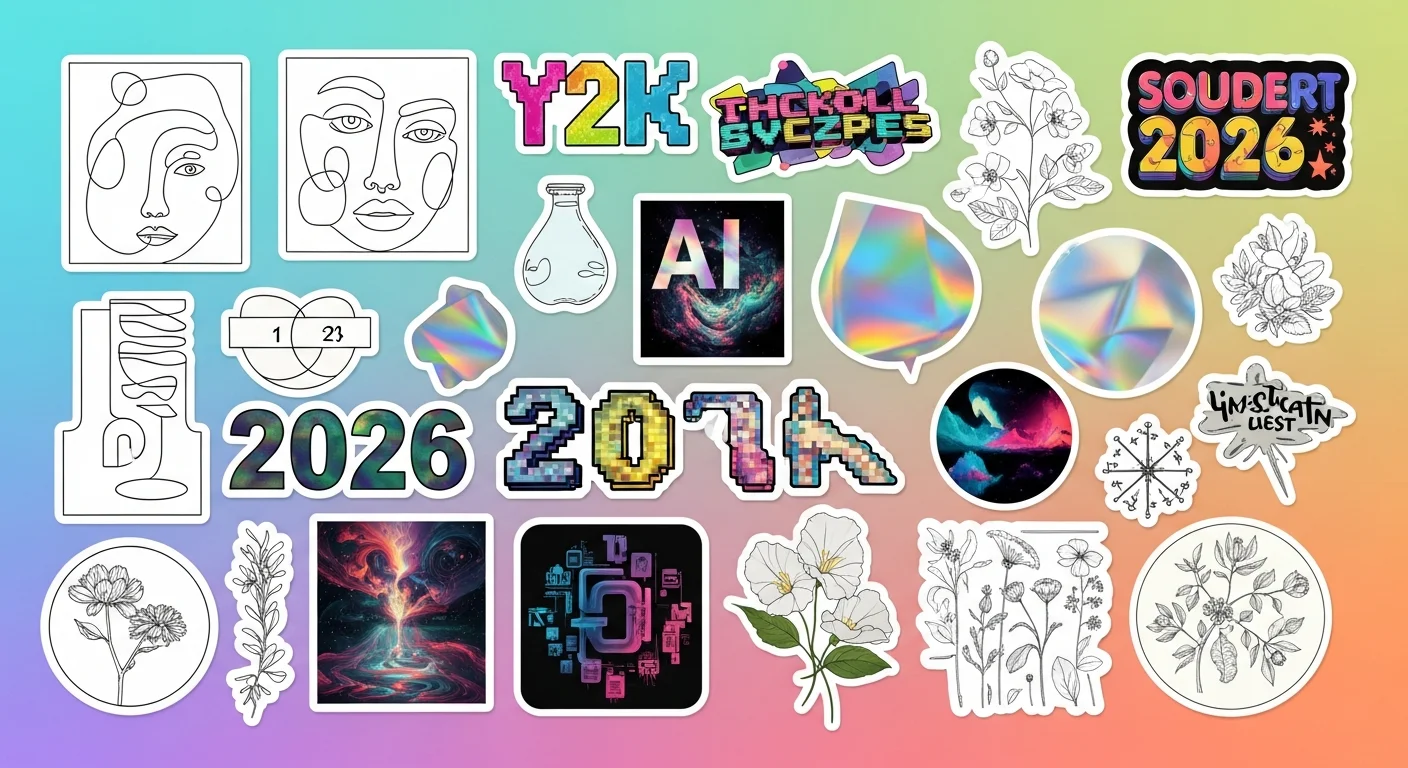
The custom sticker industry moves fast, and 2026 has introduced some of the most exciting sticker design trends in years. From the holographic sticker trend that has dominated social media feeds to the rise of AI-generated sticker art and the nostalgic return of Y2K sticker aesthetics, this year's trending sticker styles reflect broader cultural shifts toward self-expression, technology integration, and environmental consciousness. Popular sticker designs in 2026 are bolder, more interactive, and more technically sophisticated than anything the industry has produced before — and the materials and finishes available to creators have expanded dramatically to meet demand for unique, premium-feeling products.
Whether you are a brand looking to refresh your sticker marketing strategy, an independent artist building a sticker line for retail, or a hobbyist who wants to create stickers that feel current and exciting, understanding the trends shaping this year's market gives you a significant creative advantage. This article examines the eight most impactful custom sticker trends of 2026, explains why each trend resonates with today's consumers, and provides practical guidance for incorporating these trending sticker styles into your own projects. For foundational design principles that underpin all of these trends, review our sticker design guide and design ideas gallery.
Trend 1: Holographic Everything
The holographic sticker trend has exploded from a niche specialty into one of the most requested finishes in the entire custom sticker market. Iridescent sticker popularity has surged across every category — brand logos, product labels, artist prints, laptop stickers, and collectible designs. The prismatic sticker effect creates a shifting rainbow of colors that catches light from every angle, delivering an unmistakable premium feel that photographs beautifully for social media content.

What makes holographic particularly powerful in 2026 is the expansion of holographic substrate options. Beyond traditional full-surface holographic film, designers can now specify selective holographic effects — applying the prismatic finish only to specific design elements while keeping other areas in standard glossy or matte. This selective application creates striking visual contrast and allows for more sophisticated branding applications. Holographic die-cut stickers and holographic vinyl overlays have become especially popular for limited-edition product runs and premium merchandise. For a deep dive into holographic production methods and design tips, see our holographic and specialty finish guide.
Trend 2: AI-Generated Custom Art
AI-generated sticker art has transformed from a novelty into a legitimate creative tool that is reshaping how stickers are designed. AI design tools for stickers — including Midjourney, DALL-E, and Stable Diffusion — enable creators to generate unique illustrations, patterns, and compositions that would be prohibitively expensive or time-consuming to produce through traditional illustration. The Midjourney sticker aesthetic, characterized by hyper-detailed illustrations, surreal compositions, and painterly textures, has become one of the most recognizable popular sticker designs of 2026.

The key to using AI-generated sticker art effectively is treating AI as a starting point rather than a finished product. The most successful sticker creators in 2026 use AI to generate initial concepts and then refine them in vector software — adjusting colors, simplifying complex areas for clean printing, and ensuring the design works within die-cut boundaries. AI is particularly effective for generating pattern fills, background textures, and character concepts that can be vectorized for production. Brands using AI-generated art for commercial stickers should verify that their AI tool's terms of service permit commercial use and consider the intellectual property implications of their workflow. The democratization of AI art tools has also expanded who creates stickers — entrepreneurs and small business owners who previously lacked illustration skills can now produce professional-quality designs that compete with traditional artists, fundamentally reshaping the competitive landscape of the custom sticker market.
Trend 3: Y2K and Retro Revival
The Y2K sticker aesthetic — characterized by chrome effects, bubble lettering, pastel gradients, and cyber-inspired motifs — has moved from a subtle undercurrent to a full-blown retro futurism sticker movement in 2026. This 2000s nostalgia sticker trend draws on the visual language of early internet culture, early-2000s pop design, and the optimistic futurism of the turn of the millennium. Think metallic silvers, hot pinks, electric blues, and graphic elements that look like they belong on a 2002 Geocities page — but rendered with modern printing technology and premium materials.

The Y2K revival resonates strongly with Gen Z consumers who are discovering this aesthetic for the first time and millennials who experience genuine nostalgia. For sticker designers, the Y2K trend offers rich visual vocabulary: chrome text effects, star and heart motifs, translucent overlapping shapes, and gradient backgrounds in candy-colored palettes. Clear stickers work exceptionally well for Y2K designs because the transparent substrate enhances the airy, futuristic quality of the aesthetic. Pair Y2K designs with holographic or metallic finishes for maximum trend impact.
Trend 4: Interactive and Smart Stickers
Interactive stickers represent one of the most technically innovative sticker design trends of 2026. QR code stickers, NFC stickers, and AR stickers bridge the gap between physical products and digital experiences, transforming a simple sticker into a gateway for engagement, information, and commerce.

QR code sticker integration has matured significantly — rather than slapping a generic QR code onto a design, today's trending sticker styles incorporate QR codes as design elements, using custom-styled QR patterns that match the overall aesthetic while remaining scannable. NFC sticker technology embeds a tiny chip in the sticker substrate that triggers a smartphone action when tapped — opening a URL, connecting to a Wi-Fi network, or launching a specific app experience. AR sticker designs use the sticker as a visual trigger that activates augmented reality content when viewed through a phone camera, adding animation, 3D models, or interactive information layers to a physical sticker.
Brands are using interactive stickers for product authentication, loyalty programs, contest entries, and immersive marketing campaigns. The cost of NFC chips has dropped to under $0.15 per unit at volume, making smart sticker integration feasible even for mid-range product lines. Interactive stickers are particularly powerful for events, limited editions, and products where the unboxing experience drives social sharing.
Trend 5: Eco-Materials Go Mainstream
The eco-friendly sticker trend has crossed from early adopter territory into mainstream demand in 2026. Sustainable sticker demand is no longer limited to health food brands and eco-boutiques — major consumer brands, tech companies, and fashion labels are specifying recycled, compostable, and plastic-free label materials for their sticker and label orders. Retailers are increasingly requiring that product labels meet specific sustainability standards before granting shelf placement, creating a market-driven incentive that accelerates adoption far beyond what consumer preference alone would achieve.
The most popular eco materials in 2026 include recycled kraft paper with a raw, unfinished aesthetic; FSC-certified smooth paper for premium printing; sugarcane-based bioplastic films that mimic vinyl performance; and compostable clear films made from plant-based cellulose. The visual language of eco stickers has evolved beyond brown kraft — designers are creating vibrant, full-color sustainable stickers that do not telegraph "eco" through their appearance alone. Print quality on recycled and plant-based substrates has improved dramatically, closing the visual gap between sustainable and conventional materials. Brands that previously hesitated to switch due to quality concerns are finding that modern eco-friendly substrates deliver results virtually indistinguishable from traditional petroleum-based films. For a comprehensive guide to materials and certifications, read our eco-friendly stickers guide.
Trend 6: Complex Die-Cut Shapes
The die-cut shaped sticker trend has pushed beyond simple circles and rectangles into truly complex shapes that showcase design skill and production precision. Custom silhouette stickers — where the sticker's edge follows an intricate contour — have become a hallmark of premium sticker products in 2026. Artists create designs where the shape itself tells part of the story: a mountain range skyline, a botanical leaf form, an architectural silhouette, or a character pose with flowing hair and outstretched limbs that define the sticker boundary.
Advances in digital die-cutting technology have made complex shapes more accessible and cost-effective. Laser cutting and precision digital die-cutting can follow extremely detailed contours without the tooling costs associated with traditional die-cut manufacturing. This has democratized access to custom shapes, allowing even small-batch orders to feature intricate die-cut profiles. The trend extends to sticker sheets where each individual sticker on the sheet has its own unique complex shape, creating a curated collection feel that drives the sticker collecting trend. Designers working with complex shapes should ensure their cut lines maintain a minimum width of 0.25 inches at the narrowest point to prevent tearing during peeling and application — a technical consideration that separates professional-quality complex die-cuts from amateur attempts.
Trend 7: Sticker Collecting and Trading
The sticker collecting trend has grown into a full-blown community phenomenon in 2026, driven by social media platforms, artist collaborations, and limited-edition releases. Sticker trading communities have emerged on Discord, Reddit, and TikTok, where collectors swap designs, hunt for rare releases, and showcase their collections in curated displays and journals. This sticker community culture has created a secondary market for sought-after designs, with limited-run stickers from popular artists commanding premium resale prices that far exceed their original retail cost.
For sticker creators and brands, the collecting trend presents significant opportunities. Limited-edition numbering, seasonal releases, collaboration series, and "mystery pack" formats drive urgency and repeat purchases. The trading dynamic means that even stickers given away for free as promotional items can gain perceived value if the design is compelling and the run is limited. Brands that release collectible sticker series see increased social media engagement, organic brand exposure through the trading community, and customer loyalty through anticipated release schedules. The kawaii sticker trend intersects strongly with collecting culture, as cute character sticker designs and anime-inspired sticker art generate some of the most passionate collector communities online. Artists who establish a consistent illustration style and release designs in cohesive series build dedicated followings that treat each new release as an event.
Trend 8: Textured and Tactile Finishes
The textured sticker finish trend in 2026 goes beyond visual aesthetics to engage the sense of touch. Embossed sticker effects — raised design elements that you can feel with your fingertips — add a luxury dimension that flat printing cannot achieve. Tactile sticker finishes include embossing, debossing, raised UV spot varnish, soft-touch laminate, and textured substrates that mimic canvas, linen, or felt.
The appeal of tactile stickers is rooted in sensory marketing research showing that touch engagement increases brand recall by 30–40%. When someone runs their finger over an embossed logo or feels the contrast between a smooth holographic area and a matte texture, they form a stronger cognitive connection to the brand. Textured finishes work particularly well for premium product labels, luxury brand stickers, collectible artist prints, and any application where the sticker needs to communicate quality and craftsmanship. The combination of textured sticker finish with holographic or metallic elements creates a multi-sensory experience that stands out in any collection.
Production techniques for textured stickers have become more accessible in 2026, with many printers offering raised UV varnish as a standard finishing option rather than a premium add-on. This democratization means that even small sticker runs can incorporate tactile elements without prohibitive setup costs. Soft-touch laminate — which gives the sticker surface a velvety, matte feel — is particularly popular for sticker packs and collectible sets where the unboxing experience matters. The contrast between a soft-touch matte background and glossy raised elements creates a sophisticated, high-end impression that justifies premium pricing and elevates the perceived value of any sticker product.
How to Apply These Trends to Your Projects
Understanding sticker design trends 2026 is valuable, but the real impact comes from applying them strategically to your specific sticker projects. Here are practical recommendations for incorporating trending sticker styles into your work.
- Choose one or two trends, not all eight: The most effective designs reference current trends without looking like a trend checklist. A holographic die-cut sticker with a retro Y2K palette is powerful. Adding AI art, QR codes, embossing, and eco materials to the same sticker is chaotic
- Match trends to your audience: Y2K aesthetics resonate with Gen Z and younger millennials. Textured finishes appeal to luxury and premium segments. Eco-materials matter most to health-conscious and environmentally aware consumers. Interactive stickers attract tech-forward audiences
- Test before committing: Order small test batches of trending designs before placing large production runs. Trends move quickly, and what dominates in January may feel dated by December
- Combine physical trends with digital strategy: Trending sticker styles gain the most visibility when they are shared on social media. Design with "share-ability" in mind — holographic finishes, complex die-cuts, and collectible formats all generate organic social content
- Invest in quality execution: Trends only work when the execution is flawless. A poorly printed holographic sticker or an imprecise complex die-cut undermines the premium perception that makes these trends effective
- Balance trend with timelessness: The most commercially successful sticker designs in 2026 blend one trending element — holographic finish, complex die-cut shape, or retro palette — with timeless design fundamentals like clean typography, balanced composition, and purposeful color selection. This approach keeps your designs feeling current without becoming dated when the trend cycle moves on
- Study what is selling, not just what is trending: Social media virality and actual sales are different metrics. A sticker design trend that generates millions of views but few purchases is less valuable than a quieter trend driving strong sales conversion. Cross-reference social media trend data with marketplace bestseller lists to identify trends that translate to revenue
For foundational design principles that apply regardless of trends, review our fonts, colors, and layouts guide for sticker design best practices that never go out of style.
Design a Trending Custom Sticker
The sticker design trends of 2026 offer unprecedented creative possibilities — from the mesmerizing shimmer of holographic finishes and the creative power of AI-generated sticker art to the nostalgic charm of Y2K revival aesthetics and the innovative potential of interactive smart stickers. Each trend reflects genuine consumer preferences and cultural movements, making them powerful tools for connecting with your audience through popular sticker designs that feel fresh, relevant, and premium. The convergence of improved production technology, lower material costs for specialty finishes, and a cultural moment that celebrates self-expression through physical products has created the most exciting sticker design landscape in the industry's history.
RareCustom offers every material, finish, and production technique needed to bring these trending sticker styles to life. Our holographic substrates, precision die-cutting, eco-friendly material options, and specialty finishes give you the tools to create custom stickers that capture the spirit of 2026's most exciting design movements. Whether you are exploring the iridescent sticker popularity of holographic finishes, experimenting with AI design tools for stickers, or building a sticker collection around kawaii character designs and anime-inspired sticker art, our production capabilities support every trend covered in this guide. Start designing your trend-forward stickers with our free online design tool and turn this year's inspiration into stickers that stand out, get shared, and drive results for your brand or creative projects.
Related Articles
Share this article
Written by
Camille Dupont
Creative Director at RareCustom. BFA from RISD with 9+ years in graphic design. Camille tracks emerging design trends and translates them into actionable inspiration for custom apparel.