Custom Sweatshirt Pricing Explained: What Drives Cost and How to Save
Understand what goes into custom sweatshirt pricing. Garment costs, decoration fees, setup charges, bulk discounts, and strategies to get the best value on your order.
Rohan Mehta
Head of Marketing at RareCustom. Rohan brings his journalism background to making complex pricing transparent and easy to understand for every customer.
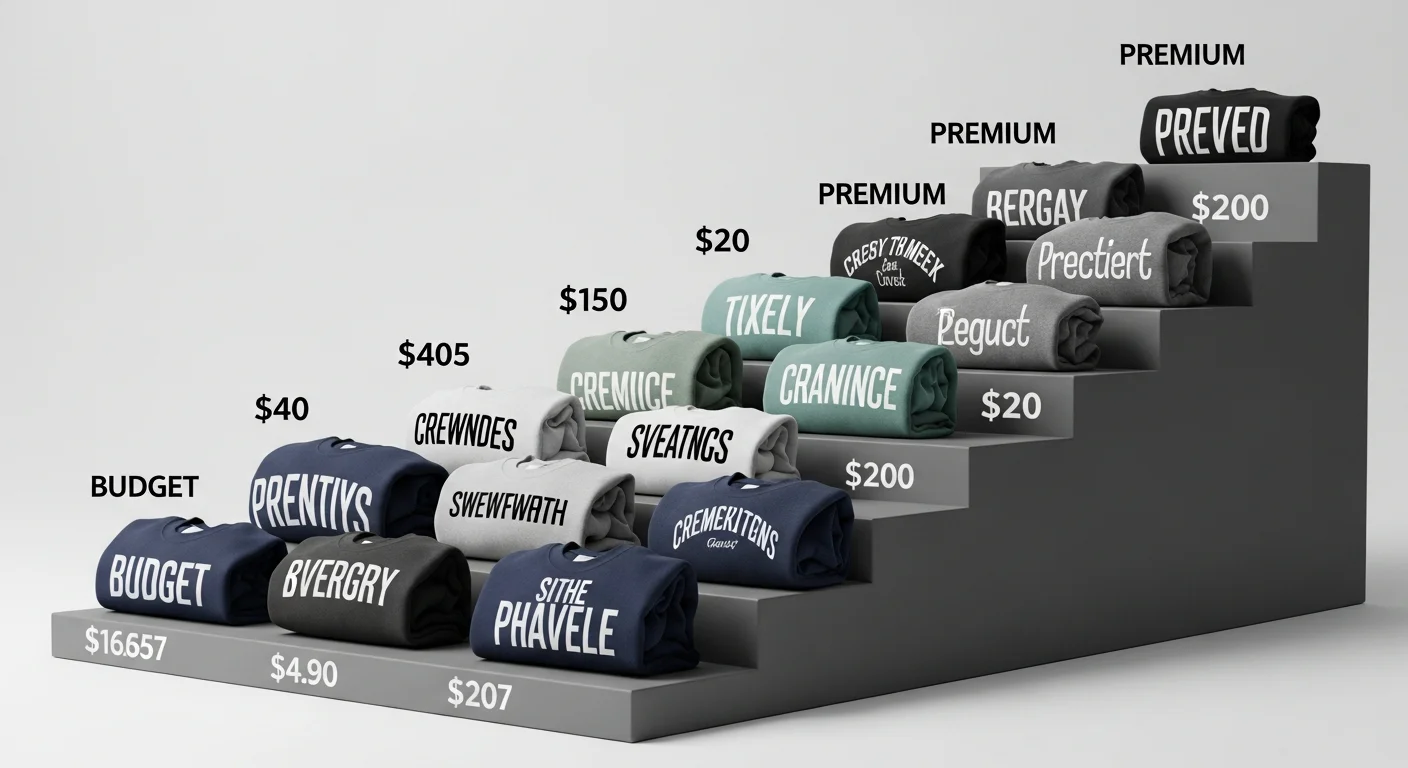
Custom sweatshirt pricing can feel opaque if you do not understand the components that drive the final number. Unlike buying off-the-rack garments where the price is the price, custom crewnecks have multiple variables that stack together: the blank garment, the decoration method, the number of print locations, the order quantity, and any premium upgrades. Understanding each component puts you in control of your budget.
This guide breaks down every cost factor so you can make informed decisions, set accurate budgets, and find the sweet spots where value meets quality for your project.
Component 1: Base Garment Cost
The blank sweatshirt is your starting point. Standard cotton/polyester blend crewnecks from brands like Gildan start around six to eight dollars per unit. Premium options like Bella+Canvas Sponge Fleece or Champion Eco run ten to fifteen dollars. Heavyweight, garment-dyed, or organic cotton blanks from brands like Comfort Colors can reach fifteen to twenty-two dollars per unit.
The blank alone represents 30 to 50 percent of your total per-unit cost. Choosing a standard blank versus a premium blank is the single biggest lever for controlling your budget.
Component 2: Decoration Cost by Method
Screen printing has fixed setup costs (screen creation) of twenty to forty dollars per color, plus per-unit printing costs of two to five dollars depending on color count. At volume, the per-unit cost drops significantly because the setup cost is amortized across more pieces.
DTG printing has no setup fees, making it ideal for small quantities. Per-unit costs typically run five to twelve dollars depending on design complexity and garment color (dark garments cost more due to white under-base requirements).
Embroidery charges by stitch count. A standard left-chest logo (5,000 to 8,000 stitches) runs four to seven dollars per unit after a one-time digitization fee of twenty to forty dollars. Larger embroidered designs with 15,000 or more stitches can reach twelve to twenty dollars per unit.

Component 3: Number of Print Locations
Each additional print location adds to the cost. A front-only design is the most affordable. Adding a back design typically adds three to six dollars per unit. Sleeve prints add two to four dollars each. Neck-tag printing adds one to two dollars. Multi-location designs look impressive but multiply costs, so prioritize the placements that matter most for your design concept.
Component 4: Quantity Tiers and Bulk Discounts
Volume is your best friend for lowering per-unit costs. Typical pricing tiers show meaningful drops at 12, 24, 48, 72, 100, and 250 units. A crewneck that costs twenty-eight dollars per unit at 12 pieces might drop to twenty-two dollars at 48 and eighteen dollars at 100. These tiers apply primarily to screen printing, where setup costs are spread across more units.

Component 5: Premium Upgrades
Garment-dyed blanks add three to six dollars per unit. Organic cotton adds two to five dollars. Heavyweight (12 oz) fabrics add two to four dollars. Specialty inks (metallic, glow-in-the-dark, puff) add one to three dollars. Individual name or number personalization adds two to five dollars per piece. Each upgrade adds value but also cost, so choose the upgrades that align with your audience's expectations.
Component 6: Shipping and Rush Fees
Standard shipping for custom apparel runs five to fifteen dollars for small orders and is often free for orders over seventy-five dollars. Rush production (needed faster than the standard three to four week timeline) typically adds 20 to 40 percent to the total order cost. Planning ahead eliminates rush fees entirely.
How to Maximize Value
Consolidate print locations: A single front design costs less than front plus back plus sleeve. Choose the placement that gives you the most impact per dollar. Optimize your quantity: If you need 20 crewnecks, consider ordering 24 to hit the next price tier. The marginal cost of four extra units is often less than the per-unit savings across the full order.
Compare pricing on similar projects for custom hoodies in our companion pricing guide to see how the cost structures differ between garment types.
Frequently Asked Questions
Why are custom sweatshirts more expensive than custom t-shirts?
Sweatshirts use more fabric per garment, heavier fabric weights, and more complex construction (ribbed cuffs, waistband, neck). The blank garment alone costs two to three times more than a comparable t-shirt blank.
Is embroidery more expensive than screen printing?
For small logos and low stitch counts, embroidery and screen printing are comparable in cost. For larger designs, screen printing is typically more cost-effective. Embroidery cost scales with design size (stitch count), while screen printing cost scales with color count, not design size.
What is the most affordable way to order custom sweatshirts?
Standard cotton/polyester blend blank, single-color screen print on one location, order quantity of 48 or more. This combination typically produces the lowest per-unit cost for custom crewneck sweatshirts without sacrificing quality.
Share this article
Written by
Rohan Mehta
Head of Marketing at RareCustom. Rohan brings his journalism background to making complex pricing transparent and easy to understand for every customer.