MagSafe & Functional Phone Case Features: What You Need to Know
Explore MagSafe compatibility, Qi2 wireless charging, kickstands, wallet card slots, crossbody straps, and drop protection features for custom phone cases. Complete feature comparison and design integration guide.
Priya Shankar
Customer Success Lead at RareCustom. CCXP certified with 6 years in education. Priya helps customers navigate MagSafe and functional phone case features for the best user experience.
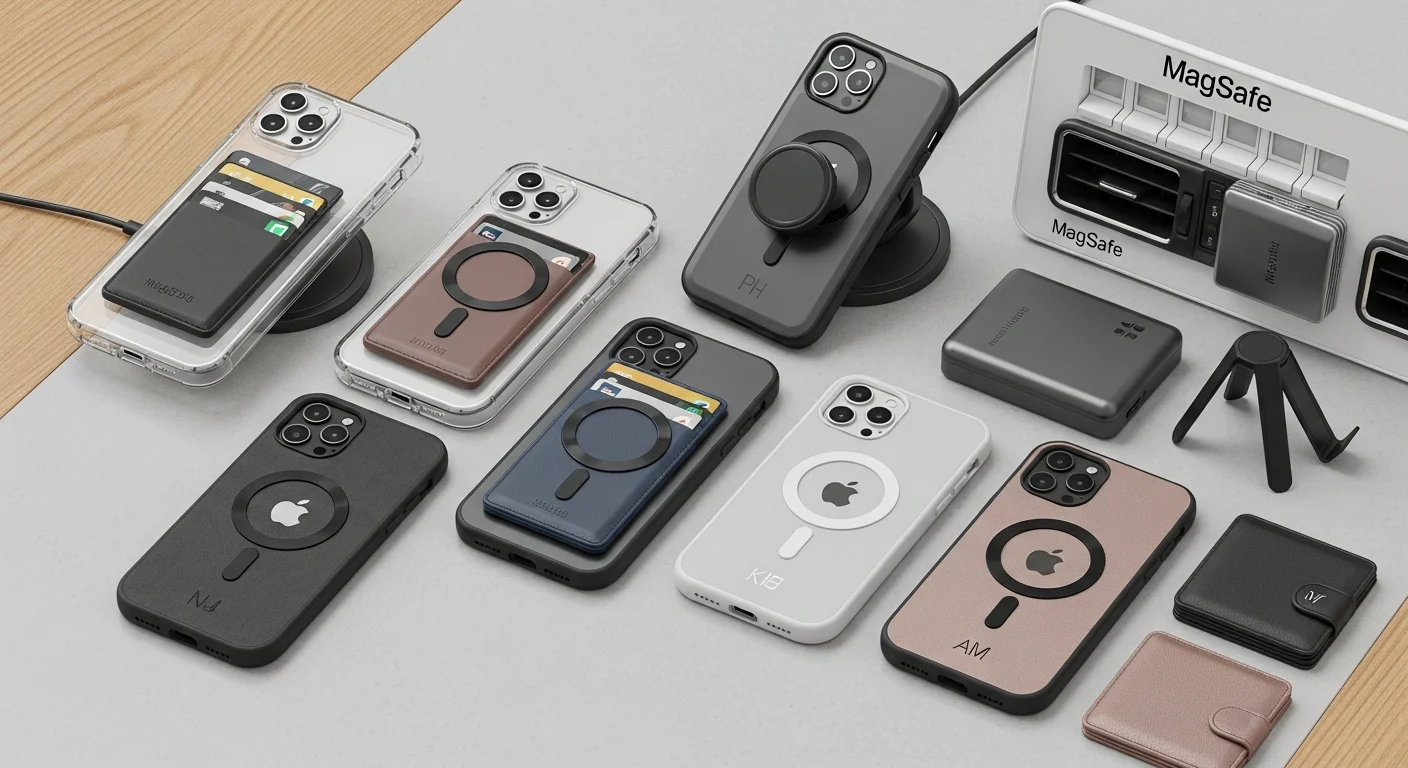
The modern custom phone case has evolved far beyond simple protection and decoration. Today's cases integrate functional features — magnetic mounting systems, wireless charging compatibility, built-in kickstands, card wallets, crossbody straps, and advanced drop protection — that transform a passive accessory into an active tool that enhances how you use your phone every day. Among these features, MagSafe has emerged as the most transformative technology in phone case design since the transition from rubber bumpers to full-body shells. Originally introduced by Apple in 2020 for the iPhone 12, MagSafe has grown into an ecosystem spanning chargers, wallets, mounts, battery packs, and tripods — all of which depend on the phone case having properly aligned magnets. Understanding which features are available, how they interact with custom printing, and which combinations deliver the best experience is essential for making an informed custom phone case purchase.
This guide covers every major functional feature available in custom phone cases, from MagSafe and Qi2 wireless charging to kickstands, wallet attachments, crossbody systems, and protection technologies. Each section explains how the feature works, which phone models support it, how it affects custom print design, and whether you can combine it with other features. Whether you are a MagSafe power user who mounts their phone in the car, charges wirelessly at the desk, and carries a magnetic wallet, or someone who simply wants the best anti-drop phone case with a kickstand for watching videos, this guide helps you navigate the growing landscape of functional custom case options.
MagSafe Explained: How Magnetic Phone Case Technology Works
MagSafe is Apple's proprietary magnetic alignment and charging system, built around a ring of magnets embedded in the back of the iPhone that align with corresponding magnets in compatible accessories. The system uses an array of precisely positioned N52-grade neodymium magnets arranged in a circle with a diameter of approximately 56 millimeters, creating a magnetic field strong enough to securely hold accessories weighing up to 100 grams while maintaining perfect alignment for wireless charging coil positioning. The technology has seen +340% MagSafe growth in accessory sales since its 2020 introduction, making it the fastest-growing smartphone accessory standard in history.
The genius of MagSafe is alignment precision. Traditional Qi wireless charging pads required careful manual positioning of the phone on the charging surface — misaligning by even a few millimeters could result in slow charging or no charging at all. MagSafe's magnets snap the phone into the exact correct position every time, ensuring optimal coil alignment for 15-watt wireless charging (compared to 7.5 watts for standard Qi). This alignment also enables a growing ecosystem of magnetic accessories: wallets that snap onto the back of the phone, car mounts that hold the phone magnetically without clamps, battery packs that attach and charge simultaneously, and tripod mounts for photography and video creation.
A MagSafe compatible custom phone case must include a precisely positioned ring of magnets that aligns with the iPhone's internal magnet array. The case's magnets must be strong enough to maintain secure attachment to accessories through the case material (typically 1.5 to 3 millimeters of TPU or polycarbonate), while the case itself must be thin enough in the charging coil area to allow wireless power transfer without excessive energy loss. This is why not all cases are MagSafe compatible — cases that are too thick, made from materials that interfere with magnetic fields, or lack the embedded magnet ring will not support MagSafe accessories even if they fit the phone correctly. For details on which materials work best with magnetic systems, see our phone case materials comparison.
MagSafe-Compatible Custom Phone Cases: What to Look For
When ordering a MagSafe compatible custom phone case, several specifications determine whether the case will deliver a full MagSafe experience or a compromised one. First, check for an embedded magnet ring rather than just "MagSafe compatible" labeling. Some cases claim MagSafe compatibility because they are thin enough for MagSafe accessories to work through the case via the phone's own magnets, but without an embedded magnet ring in the case itself, the magnetic connection is significantly weaker — accessories will attach but may slide or disconnect during use.
Second, verify the magnet strength rating. High-quality MagSafe cases use N52-grade magnets (the strongest commercially available neodymium magnets) with a combined pull force of 1,200 to 1,800 grams. Budget cases often use N35 or N42 magnets with pull forces below 800 grams, resulting in wallets that slide off, chargers that disconnect when the phone vibrates, and car mounts that drop the phone during turns. Third, check the case thickness in the charging coil area. MagSafe charging efficiency drops rapidly when the distance between the phone's coil and the charger's coil exceeds 3 millimeters. A case that is 2.5 millimeters thick with 0.5 millimeters of magnet ring adds up to a total distance of approximately 3 millimeters — right at the threshold. Premium MagSafe cases are designed to keep this total distance at 2.5 millimeters or less for reliable 15-watt charging.
Qi2 and Universal Wireless Charging Compatibility
Qi2 (pronounced "chee two") is the next-generation universal wireless charging standard developed by the Wireless Power Consortium (WPC), the same organization behind the original Qi standard. Qi2 adopts MagSafe's magnetic alignment technology as an open standard, meaning that the same ring-of-magnets approach that Apple pioneered is now available to all smartphone manufacturers. Samsung began integrating Qi2 in the Galaxy S24 series, and Google followed with the Pixel 9 series, creating a cross-platform magnetic ecosystem that works the same way regardless of phone brand.
For Qi2 phone case buyers, this standardization is excellent news: a Qi2-compatible case for a Samsung Galaxy S25 will work with the same magnetic chargers, mounts, and wallets as a MagSafe case for an iPhone 16, because the magnet ring specifications are identical across both standards. The charging power output differs slightly — Qi2 currently supports up to 15 watts (matching MagSafe) with a roadmap to 30 watts in future iterations — but the physical magnetic alignment is interchangeable. When ordering a custom case with wireless charging compatibility, specifying "Qi2 compatible" ensures the case works with both Apple MagSafe and the broader Qi2 ecosystem.

Kickstand Phone Cases: Hands-Free Viewing and Video Calls
Kickstand phone case designs integrate a fold-out or pop-out stand mechanism that props the phone at a viewing angle without requiring a separate stand or leaning the phone against objects. The kickstand feature has surged in popularity alongside the growth of video calls (Zoom, FaceTime, Teams), streaming video on mobile, and recipe-following in the kitchen — all use cases where holding the phone for extended periods causes hand fatigue. Modern kickstand cases offer adjustable viewing angles (typically 45 to 75 degrees from horizontal), fold completely flat when not in use, and are designed to support both portrait and landscape orientations.

The challenge with kickstand phone case designs in the custom case context is the kickstand mechanism's placement on the back of the case, which directly competes with the printable design surface. A fold-out kickstand occupies approximately 20 by 40 millimeters of the case back, creating a raised area where the kickstand panel sits. Custom printing can extend over the kickstand panel (the design is printed before the kickstand mechanism is installed), but the slight elevation change at the panel's edges can create a visible line in the print. Premium custom kickstand cases address this by recessing the kickstand panel flush with the case surface, creating a seamless printed appearance with no visible line or texture change.
Wallet and Card Slot Phone Cases
Wallet phone case designs combine phone protection with everyday carry convenience by integrating one to three card slots, a cash pocket, or a magnetic card holder directly into the case. For users who want to leave their traditional wallet at home, a wallet case provides enough capacity for an ID, a credit card, and a transit pass — the essentials for a day's errands. The wallet phone case category breaks down into two main types: folio-style cases with a front cover that folds open to reveal card slots, and back-mount cases with a rear card holder that sits flat or attaches magnetically.
Folio-style wallet cases offer the most card capacity (three to five slots plus a cash pocket) and provide screen protection when closed, but they are bulkier and less convenient for quick phone access. Back-mount wallet cases (like Apple's MagSafe Wallet) are slimmer and more accessible but hold fewer cards (one to three) and do not protect the screen. For custom printing, folio cases offer two additional design surfaces — the inside of the front cover and the card slot panel — that can feature complementary designs, interior branding, or personalized details like the owner's name. Back-mount magnetic wallets can be custom printed on the exterior face, creating a coordinated look with the phone case when attached.

Crossbody and Strap Phone Cases
Crossbody phone case designs have emerged as one of the fastest-growing phone case categories, driven by the convergence of fashion and function. A crossbody case features attachment points (typically reinforced loops or anchor mounts at the corners) that connect to a removable strap, allowing the phone to be worn around the neck or across the body like a small purse. The style has become particularly popular at festivals, concerts, travel destinations, and urban environments where keeping the phone accessible while keeping hands free is essential.
For custom case design, crossbody strap attachment points are usually placed at the bottom two corners of the case, keeping the top of the case (and the design's most prominent area) free from hardware. The attachment loops are typically metal or reinforced nylon, adding minimal visual disruption to the design. Custom crossbody cases can be paired with straps in complementary colors or materials — leather straps for professional settings, woven fabric straps for casual use, beaded or chain straps for fashion-forward looks. The strap itself can be swapped without replacing the case, allowing users to change the look of their carry system while keeping the same custom-printed case.
Protection Features: Raised Bezels, Corner Bumpers, and Drop Ratings
Protection features in custom phone cases range from basic scratch prevention to military-grade drop resistance, and understanding the hierarchy helps you choose the right level of protection for your use case. The most fundamental protection feature is the raised bezel protection — a lip of case material that extends 0.5 to 1.5 millimeters above the screen surface and camera module, preventing direct contact with flat surfaces when the phone is placed face-down or camera-down. This simple feature prevents the most common type of phone damage: screen scratches from being placed on tables, countertops, and other surfaces.
Corner bumpers add reinforced material at the four corners of the case — the areas most likely to absorb impact during a drop. Anti-drop phone case designs typically use air-cushion technology (hollow cavities in the corner material that compress and absorb energy on impact) or additional TPU padding at the corners. The most protective cases carry MIL-STD-810G or MIL-STD-810H certification, indicating they have passed the US military's standard drop test protocol (26 drops from 48 inches onto plywood over concrete). For users who want maximum protection with custom printing, hybrid cases (polycarbonate outer shell bonded to TPU inner liner) offer the best combination of print surface quality and drop protection — the rigid PC shell provides a smooth, high-quality printing surface while the flexible TPU liner absorbs and disperses impact energy.
Combining Functional Features with Custom Design
The most compelling custom phone cases combine functional features with personalized design in a way that feels cohesive rather than compromised. The key principle is designing around the functional elements rather than ignoring them. A kickstand panel can be incorporated into a geometric pattern where the panel's rectangular shape becomes a deliberate design element. MagSafe magnet rings can be highlighted with a printed circle or mandala design that frames the magnetic area. Wallet card slots can feature individual printed labels or decorative borders that turn a functional component into a design feature.
When combining multiple features, consider the interaction between them. A MagSafe-compatible case with a kickstand must position the kickstand outside the magnet ring area to avoid interfering with magnetic accessories. A wallet attachment on a MagSafe case must be thin enough to maintain wireless charging capability. A crossbody case with raised bezels must ensure the strap attachment points do not create additional bulk that makes the phone uncomfortable in a pocket. Understanding these interactions is the basis for selecting the best combination of features for your needs. For compatibility details on which features work with your specific phone model, our compatibility guide covers model-specific considerations.

Feature Comparison Table: Finding the Right Combination
Use this comparison table to evaluate which functional features align with your priorities. Each feature is rated on its impact on case thickness, design surface availability, compatibility with other features, and typical cost premium.
| Feature | Thickness Impact | Design Area Impact | MagSafe Compatible | Qi2 Compatible | Cost Premium | Best For |
|---|---|---|---|---|---|---|
| MagSafe magnets | +0.3–0.5 mm | None (embedded) | Yes (native) | Yes | +$3–$6 | Charging, mounts, wallets |
| Kickstand | +0.5–1.0 mm | -15% (panel area) | Yes (if positioned correctly) | Yes | +$2–$5 | Video calls, streaming |
| Card wallet (back-mount) | +3–5 mm | -30% (wallet area) | Magnetic attachment | Blocks charging | +$5–$10 | Minimalist carry |
| Card wallet (folio) | +5–8 mm | +100% (inside cover) | Usually no | Usually no | +$8–$15 | Maximum card capacity |
| Crossbody strap | +0 mm (case) | -5% (anchor points) | Yes | Yes | +$3–$8 | Hands-free carry, travel |
| Raised bezels (standard) | +0.5–1.0 mm | None | Yes | Yes | Included | Basic screen protection |
| Corner air cushions | +0.5 mm (corners) | None | Yes | Yes | +$1–$3 | Drop protection |
| MIL-STD-810G armor | +2–3 mm | None (outer shell) | Some models | Some models | +$5–$10 | Maximum drop protection |
The most popular feature combination for everyday use is MagSafe magnets plus raised bezels plus corner air cushions — a configuration that adds minimal bulk while providing wireless charging compatibility, magnetic accessory support, and solid everyday drop protection. For power users who want maximum functionality, MagSafe plus kickstand plus crossbody strap creates a versatile system for hands-free viewing, magnetic mounting in the car, and hands-free carry on the go. For guidance on selecting the best fonts and designs to pair with functional features, our design guide covers typography and layout strategies that work around kickstand panels and other functional elements. To see how these features align with current design trends, explore our 2026 design trends analysis.
Explore Functional Custom Phone Case Options
Functional phone case features have transformed the custom case from a decorative shell into a multi-purpose tool that enhances daily phone use. MagSafe and Qi2 magnetic systems provide seamless charging and accessory attachment. Kickstands enable hands-free viewing for video calls and streaming. Wallet integrations reduce what you need to carry. Crossbody straps keep your phone accessible and secure. And advanced protection features — raised bezel protection, corner cushions, and military-grade armor — ensure your phone survives the inevitable drops and bumps of daily life. The best part is that all of these features can be combined with custom printing, allowing you to create a case that is uniquely yours in both design and function.
Try the design tool to explore functional custom phone case options, preview your design on MagSafe-compatible cases, and configure the exact combination of features that fits your lifestyle.
Related Articles
Share this article
Written by
Priya Shankar
Customer Success Lead at RareCustom. CCXP certified with 6 years in education. Priya helps customers navigate MagSafe and functional phone case features for the best user experience.