How to Design Custom Embroidered Hats: Complete Beginner's Guide
Learn how to design custom embroidered hats from scratch. Covers hat anatomy, choosing decoration methods, preparing artwork for embroidery digitizing, selecting hat styles, and placing your first order with confidence.
Camille Dupont
Creative Director at RareCustom. BFA from RISD with 9+ years in graphic design. Camille creates beginner-friendly design guides that make custom apparel accessible to everyone.
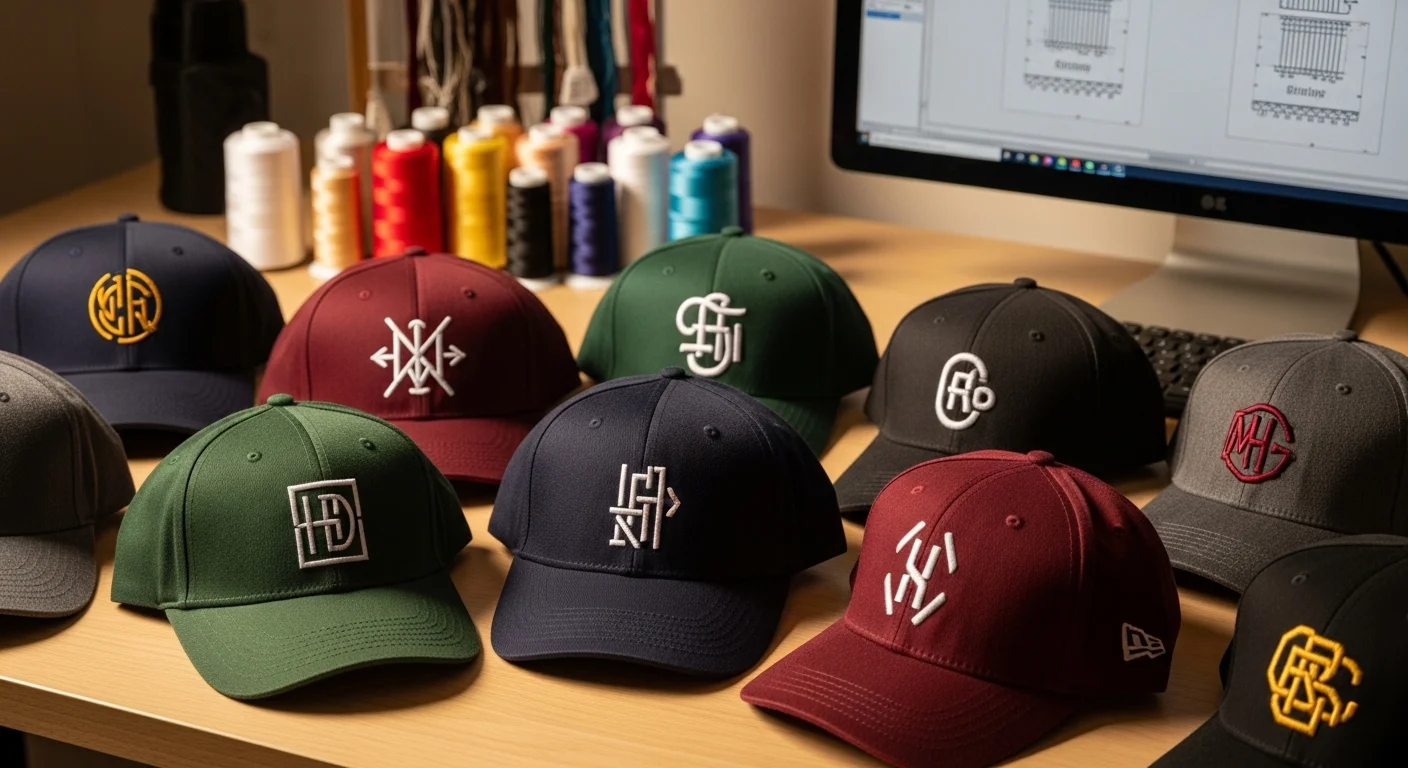
Designing custom hats combines creativity with technical knowledge that most beginners underestimate. Unlike flat-surface printing on custom t-shirts, hat decoration involves curved panels, structured brims, and materials that behave differently under an embroidery needle or heat press. This guide covers every decision — from choosing a hat style to preparing artwork for digitizing to reviewing proofs — so the first custom hat order arrives exactly as envisioned.
The custom headwear market has grown 18% year-over-year since 2023, driven by demand for branded corporate merchandise, team sideline gear, wedding accessories, and small-batch fashion labels. Whether the goal is 24 embroidered caps for a company retreat or 500 trucker hats for a product launch, understanding the fundamentals of hat construction and decoration prevents costly mistakes and ensures professional results from day one.
Understanding Hat Anatomy: Panels, Crown, Brim, and Closure
Every structured hat is built from distinct components, and each component affects where and how a design can be placed. The crown is the upper portion of the hat that covers the top of the head, typically constructed from five or six triangular panels sewn together at the top. A six-panel cap is the most common construction — it creates the classic baseball cap shape with a front seam running vertically between the two front panels. This front seam is critical for embroidery placement because a centered logo must straddle the seam without the stitching pulling the panels apart.
The front panels are where most embroidered designs live. On a standard six-panel cap, each front panel measures approximately 4 inches wide by 2.5 inches tall in the usable embroidery area. Combined, the two front panels give roughly 4 inches wide by 2.5 inches tall of centered design space — though the actual maximum depends on the hat's profile (low, mid, or high) and the stiffness of the front buckram backing. The side panels offer secondary placement for smaller logos, text, or numbers, typically limited to 2 inches wide by 1.5 inches tall.
The brim (also called the visor or bill) is the flat or curved projection that shades the face. Brims are constructed with a stiff internal board sandwiched between two layers of fabric. Embroidery on the brim is possible but limited to simple designs because the needle must penetrate the thick layered material. Brim embroidery adds $1.50-$3.00 per hat depending on complexity. The closure at the back — snapback, strapback, fitted, or flexfit — determines adjustability and affects the available embroidery area on the back panels.

Choosing a Decoration Method: Embroidery, Patches, or DTF
The three primary decoration methods for custom hats each serve different design goals. Flat embroidery is the industry standard for professional headwear — thread is stitched directly into the hat fabric creating a clean, durable, textured design that lasts the lifetime of the hat. Flat embroidery works best for logos, text, and simple graphics with clean lines. Stitch counts typically range from 5,000 to 15,000 for a standard front-panel logo, with pricing calculated per 1,000 stitches ($0.50-$1.00 per thousand).
3D puff embroidery adds a foam layer beneath the stitching that raises the design approximately 3-4 millimeters above the hat surface, creating a premium, tactile look popular with sports teams and streetwear brands. Puff embroidery costs 20-40% more than flat embroidery and works best with bold, simple shapes — fine details and thin lines collapse the foam and look messy. For a detailed comparison of all three methods, read the decoration methods comparison guide.
Patches — including woven, embroidered, leather, and PVC — are produced separately and then sewn or heat-pressed onto the hat. Patches offer crisp edges, consistent colors, and a premium artisan aesthetic. Leather patches in particular have surged in popularity, adding a rustic, outdoor-lifestyle vibe that embroidery alone cannot achieve. DTF (Direct-to-Film) transfers allow full-color photographic designs with unlimited colors and gradients, printed on a thin film and heat-pressed onto the hat. DTF excels for complex multi-color artwork but lacks the textured, premium feel of embroidery.
Preparing Artwork for Embroidery Digitizing
Embroidery does not work like inkjet printing — a machine cannot simply reproduce a JPEG on fabric. The artwork must be digitized, meaning converted into a stitch file that tells the embroidery machine exactly where to place each stitch, in what direction, at what density, and in what sequence. This conversion process is called digitizing, and the quality of digitizing directly determines the quality of the finished embroidery.
Submit artwork as a high-resolution vector file (AI, EPS, or SVG) whenever possible. Vector files scale infinitely without losing detail and give the digitizer clean paths to follow. If only a raster file is available (PNG, JPEG), ensure it is at least 300 DPI at the final embroidery size and has clean, well-defined edges. Blurry, pixelated, or low-contrast artwork produces poor digitizing results because the software cannot distinguish design boundaries from background noise.
Keep designs simple for best embroidery results. Text should use sans-serif fonts at minimum 0.25-inch letter height — anything smaller risks illegible stitching where individual letters merge together. Limit the design to eight colors maximum, as each color requires a thread change that adds $0.50-$1.00 per additional color beyond the first. Avoid thin lines under 1mm width, isolated dots, and photographic gradients — these elements do not translate well to thread-based reproduction.

Selecting the Right Hat Style for Your Design
The hat style must match both the intended audience and the design complexity. Structured baseball caps with buckram-lined front panels provide the stiffest, flattest embroidery surface — ideal for detailed logos and multi-color designs. The rigid front keeps the embroidery taut and prevents puckering. This is the most popular choice for corporate branding, making up approximately 45% of all custom hat orders.
For a comprehensive breakdown of every hat style with sizing data and trend analysis, read the baseball caps vs. trucker hats vs. snapbacks vs. dad hats style guide. Trucker hats feature a structured foam front with mesh back panels, offering a retro-casual aesthetic popular for outdoor brands, breweries, and summer events. The foam front provides an excellent embroidery surface, and the mesh back keeps the hat cool in warm weather. Dad hats are unstructured with a soft, relaxed crown — they require lighter embroidery because the lack of buckram means heavy stitch counts can distort the soft fabric.
Snapback caps feature a flat brim, structured crown, and adjustable snap closure, targeting a younger streetwear demographic. Flexfit hats use an elastic sweatband for a stretch-to-fit design with no visible closure, creating a clean, professional look preferred for corporate and athletic programs. Bucket hats and beanies round out the options for seasonal and fashion-forward custom headwear, each with unique embroidery considerations covered in the style guide.
Understanding Stitch Counts, Thread Types, and Color Matching
The stitch count determines both the visual quality and the cost of embroidered headwear. A simple one-color text logo might use 3,000-5,000 stitches, while a detailed multi-color emblem can reach 12,000-20,000 stitches. Higher stitch counts produce denser, more vibrant coverage but increase production time and cost. Most manufacturers price embroidery in tiers: under 7,500 stitches (standard), 7,500-12,000 (moderate), and 12,000+ (complex), with each tier adding $0.50-$2.00 per hat.
Thread quality matters for longevity. Polyester thread is the industry standard for hat embroidery — it resists UV fading, holds color through repeated washing, and maintains tension without shrinking. Rayon thread offers a slightly shinier, more luxurious appearance but fades faster in direct sunlight, making it better suited for indoor-use hats. Metallic thread adds a reflective shimmer for premium designs but is more brittle and prone to breakage during production, increasing reject rates and cost.
Color matching is handled through the Pantone Matching System (PMS) for brand-critical applications. Thread manufacturers like Madeira and Isacord produce hundreds of colors mapped to PMS references, allowing accurate brand color reproduction. Request a PMS color match if brand guidelines specify exact colors — the setup fee is typically $15-$25 per color. For non-critical applications, manufacturers offer standard thread color charts with 200+ options that cover most design needs without additional cost.
Reviewing Your Proof and Placing the Order
Before production begins, the manufacturer provides a digital mockup showing the embroidered design on the selected hat style, color, and position. Review every detail: logo centering relative to the front seam, text legibility at the specified size, color accuracy against brand standards, and overall design proportions on the hat shape. Request mockups from multiple angles — front, left side, right side, and back — to verify secondary placements.
For orders exceeding 100 units, request a physical sample. A pre-production sample costs $25-$50 and takes five to seven business days, but it reveals issues that digital mockups cannot — thread tension, bobbin pull-through on the hat interior, fabric puckering around dense stitch areas, and color appearance under different lighting. This investment prevents costly full-run reprints.
Minimum order quantities vary by decoration method. Standard embroidery typically starts at 12-24 hats, while 3D puff embroidery may require 24-48 minimums due to the additional setup. Patch orders often have separate minimums for the patches themselves (50-100 pieces) plus the hats. DTF transfers have the lowest minimums, often as few as 6-12 hats. For exact pricing breakdowns and volume discount tiers across all decoration methods, consult the pricing guide. Before committing to a large order, check the sizing guide to ensure every recipient gets a comfortable fit.
Start Designing with Confidence
Designing custom embroidered hats becomes straightforward once the fundamentals are understood: choose a hat style that matches the audience, select a decoration method that fits the design complexity and budget, prepare artwork at the right resolution with clean lines and limited colors, and review proofs carefully before approving production. The free online design tool simplifies the entire process by letting users upload artwork, preview it on 3D hat mockups, and place orders directly — no design software or embroidery knowledge required.
Frequently Asked Questions
What file format works best for custom hat embroidery?
Vector files (AI, EPS, SVG) produce the best embroidery results because they provide clean, scalable paths for the digitizer. If only a raster file is available, use a PNG at minimum 300 DPI with a transparent background. JPEG files with compression artifacts produce poor digitizing results because the software cannot distinguish design edges from compression noise.
How many colors can an embroidered hat have?
Most manufacturers support up to 15 thread colors per design, though 3-6 colors is the practical sweet spot for balancing visual impact with cost. Each color requires a thread change during production, adding $0.50-$1.00 per additional color beyond the base price. Designs with more than 8 colors should be evaluated for potential simplification or alternative methods like DTF printing.
What is the minimum text size for hat embroidery?
The minimum recommended letter height is 0.25 inches (approximately 6mm) for sans-serif fonts. Serif fonts require a slightly larger minimum of 0.30 inches because the thin serifs can merge or break during stitching. For best legibility, use bold or medium-weight fonts at 0.35 inches or larger. Script and decorative fonts generally require 0.40 inches minimum to remain readable after embroidery.
How long does a custom hat order take to produce?
Standard embroidered hat orders take 10-15 business days from proof approval to shipment. Rush production is available from most manufacturers for a 20-30% surcharge, reducing turnaround to 5-7 business days. Orders with custom patches add 5-7 days for patch production before the hats can be decorated. For detailed timeline and shipping information, including expedited options, check the shipping page.
Share this article
Written by
Camille Dupont
Creative Director at RareCustom. BFA from RISD with 9+ years in graphic design. Camille creates beginner-friendly design guides that make custom apparel accessible to everyone.