Sublimation vs. Screen Printing for Custom Jerseys: Which Method Wins?
Compare sublimation and screen printing for custom sports jerseys. Learn which method delivers better durability, breathability, color range, and value for your team order.
Terrence Okafor
Head of Production at RareCustom with 20+ years in commercial printing. SGIA certified with mastery of sublimation and screen printing methods for performance athletic wear.
Choosing the right printing method is the single most important decision you will make when ordering custom jerseys. The method determines how your design looks, how long it lasts, how the jersey feels during play, and how much you pay. For sports jerseys specifically, the choice usually comes down to two contenders: sublimation printing and screen printing.
If you have ordered custom t-shirts before, you are probably familiar with screen printing and DTG. But jerseys play by different rules. The fabrics are different (polyester mesh versus cotton), the print areas are larger (full-body coverage versus a front chest graphic), and the durability demands are higher (weekly games and washes versus occasional wear). Here is how each method stacks up for athletic jerseys.
How Sublimation Printing Works
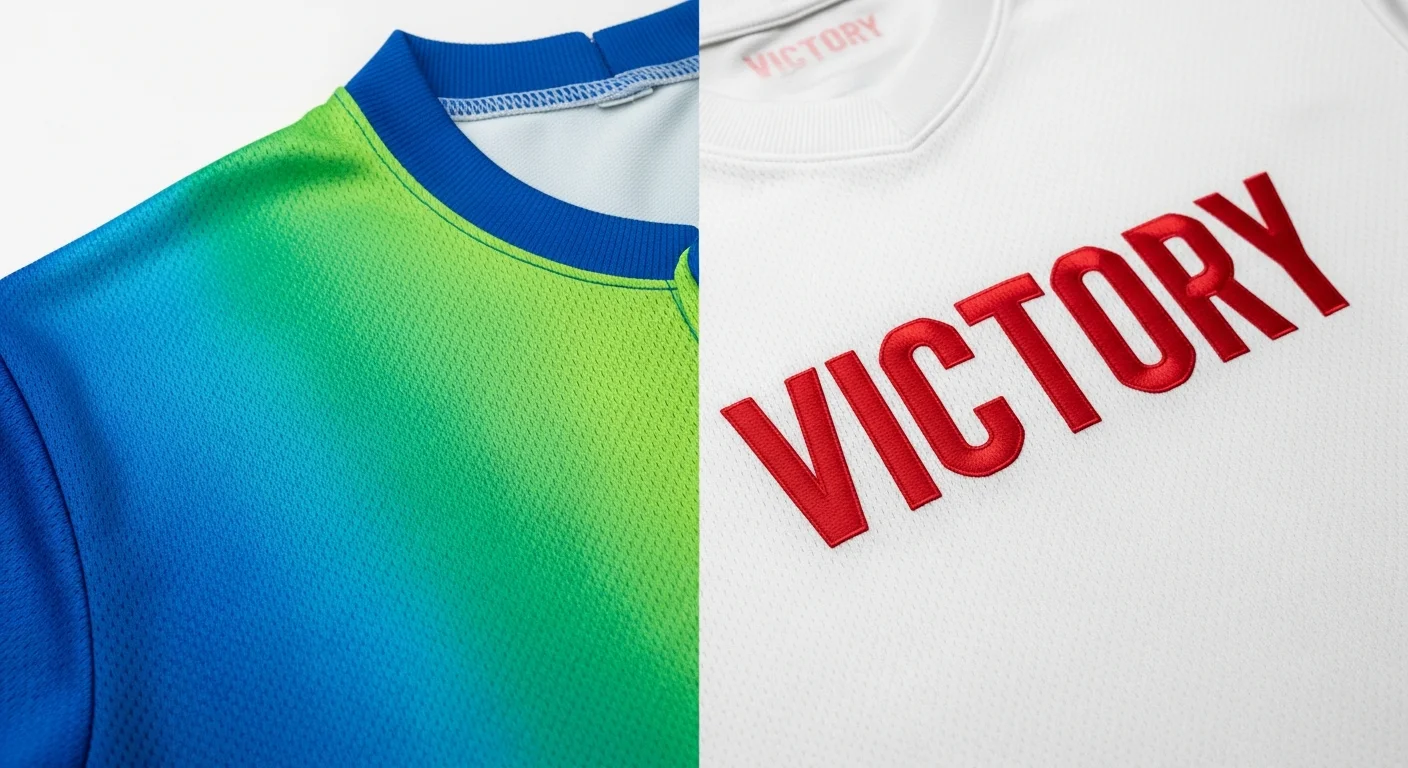
Sublimation uses heat to turn special inks into gas, which then bonds permanently into the fibers of polyester fabric. The design becomes part of the jersey — not a layer sitting on top. This means zero texture difference between printed and unprinted areas. The jersey feels exactly the same whether it has a simple logo or an all-over pattern covering every inch of fabric.
This is why sublimation dominates professional and collegiate athletics. The design never cracks, peels, or fades, even after hundreds of washes. And because there is no ink layer on the surface, the fabric retains its full moisture-wicking and breathability properties.

How Screen Printing Works
Screen printing pushes thick ink through a mesh screen directly onto the fabric surface. Each color requires a separate screen, so a four-color design needs four individual screens and four print passes. The ink sits as a raised layer on top of the fabric, which you can feel when you run your hand over the design.
Screen printing works beautifully on cotton and cotton-blend garments — it is still the go-to method for custom t-shirts. But on polyester mesh jerseys, screen printing has significant limitations that affect performance and longevity.
Head-to-Head Comparison for Jerseys
Durability
Sublimation wins decisively. Because the ink is embedded in the fibers, it cannot crack or peel regardless of how many times the jersey is washed or how roughly it is handled during play. Screen-printed ink sits on the surface and gradually breaks down with repeated washing, stretching, and abrasion — especially in high-stress areas like under the arms and around the collar.
Breathability and Comfort
Sublimation preserves the fabric's original breathability because no ink layer blocks the mesh pores. Screen printing fills mesh holes with ink, reducing airflow and making the jersey heavier and hotter. For athletes playing in warm conditions, this difference is meaningful.
Design Freedom
Sublimation allows unlimited colors, gradients, photographic images, and full-body coverage at no additional cost per color. Screen printing adds cost for each color and struggles with gradients and fine details. If your design includes a subtle gradient fade or a complex crest, sublimation handles it effortlessly while screen printing would require compromises.
Fabric Compatibility
Sublimation requires polyester or high-polyester-blend fabrics and works best on white or light-colored base materials. Screen printing works on virtually any fabric including cotton, but since performance jerseys are already polyester, this limitation rarely matters for athletic applications.
Cost
For multi-color jersey designs, sublimation is often more cost-effective because there are no per-color charges. Screen printing is cheaper only for very simple, one-color designs on stock jerseys. For full custom jerseys, sublimation typically costs between $35 and $65 per unit depending on volume.

When to Choose Sublimation
Choose sublimation when you need full custom jerseys with complex designs, unlimited colors, all-over prints, or maximum durability. This covers the vast majority of team jersey orders — from youth basketball to adult soccer leagues. Sublimation is also the better choice when ordering reversible jerseys since the ink does not add weight or texture to either side.
When to Choose Screen Printing
Choose screen printing when you are decorating stock jerseys with a simple one-color or two-color logo. If you already purchased blank jerseys and just need a team name and number added, screen printing or tackle twill (cut fabric letters and numbers sewn on) is the practical choice. It is also the right method if you are working with cotton practice jerseys.
What About Tackle Twill and Heat Transfer?
Tackle twill involves cutting letters and numbers from fabric and sewing them directly onto the jersey. It creates a premium, textured look common in professional baseball and hockey jerseys. Heat transfer vinyl is a budget option for small orders but lacks durability for competitive play. Read our jersey fabric guide for more on material and decoration pairings.
Frequently Asked Questions
Does sublimation printing crack or peel over time?
No. Sublimation ink becomes part of the fabric fibers rather than sitting on the surface. It will not crack, peel, or fade even after years of regular washing and athletic use.
Can you screen print on mesh jersey fabric?
Technically yes, but the results are suboptimal. Ink fills the mesh holes, reducing breathability and creating a stiff feel. Sublimation is the recommended method for mesh performance fabrics.
Is sublimation more expensive than screen printing for team jerseys?
For multi-color designs, sublimation is often cheaper per unit because there are no per-color setup fees. Screen printing is only more economical for very simple, single-color designs on stock jerseys.
Which method do professional sports teams use?
Most professional and collegiate teams use sublimation for their game jerseys because it offers unmatched durability, design freedom, and performance fabric compatibility.
Share this article
Written by
Terrence Okafor
Head of Production at RareCustom with 20+ years in commercial printing. SGIA certified with mastery of sublimation and screen printing methods for performance athletic wear.