Custom Jersey Fabric Guide: Mesh, Moisture-Wicking Polyester & Performance Materials
Understand the performance fabrics used in custom sports jerseys. Compare mesh types, polyester weights, moisture-wicking tech, and learn which fabric is best for your sport.
Aisha Patel
Head of Materials Science & Sustainability at RareCustom. M.S. in Textile Engineering from NC State with AATCC certification and ISSP Sustainability Practitioner certification. 7+ years evaluating fabrics, materials, and eco-friendly production processes.
The fabric of a custom jersey determines how it feels during play, how well it handles sweat, how durable the print will be, and ultimately whether your team loves wearing it or dreads suiting up. Unlike hoodies and sweatshirts that use fleece and French terry for warmth, jerseys are engineered for performance with polyester-based fabrics designed to wick moisture, maximize airflow, and withstand the rigors of competitive sport.
Understanding fabric weight, weave, and performance properties helps you make an informed choice. The right fabric keeps your team cool, dry, and comfortable — the wrong one turns a sixty-minute game into an uncomfortable ordeal.
Performance Mesh: The Gold Standard for Jerseys
Performance mesh is the most common jersey fabric across all major sports. It is a polyester knit with an open weave that creates tiny pores in the fabric, allowing air to circulate freely between the body and the outside. Most performance meshes are 100% polyester, though some blends include 5-10% spandex for added stretch.
The open construction of mesh makes it the most breathable option for athletic wear. Heat and moisture escape through the pores rather than being trapped against the skin. This is critical during high-intensity sports where body temperature management directly affects performance and safety.

Types of Mesh Fabric
Tricot Mesh (140-160 GSM)
The lightest commonly used mesh, tricot is smooth on one side and slightly textured on the other. It is ideal for basketball, volleyball, and soccer jerseys where minimal weight and maximum breathability are priorities. Tricot mesh drapes well and accepts sublimation printing beautifully.
Pin-Dot Mesh (180-240 GSM)
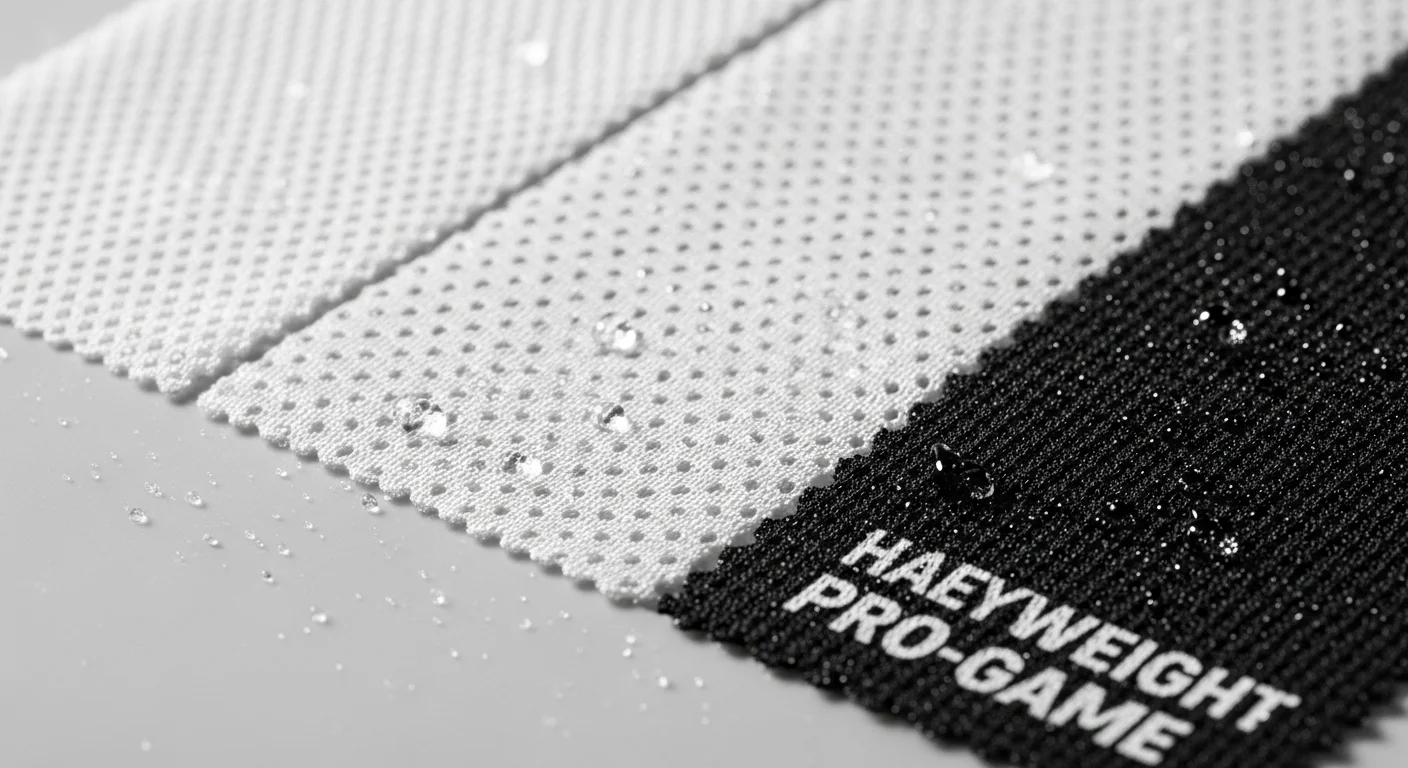
A heavier interlock mesh with a distinctive dot-pattern texture. Pin-dot mesh offers excellent moisture management with proprietary treatments like Maxdri. Many pin-dot meshes include UPF 50+ sun protection, making them excellent for outdoor sports like football, lacrosse, and baseball. The heavier weight provides additional durability for contact sports.
Pro-Game Mesh (200-240 GSM)
The heaviest mesh option, commonly used for football jerseys. Pro-game mesh often blends polyester with spandex for four-way stretch that accommodates shoulder pads and physical play. Reinforced at stress points, this fabric withstands the grabbing and pulling that happens during contact sports.
Moisture-Wicking Technology
All quality jersey fabrics include moisture-wicking properties, but the technology varies. Basic wicking uses the hydrophobic nature of polyester to push sweat from the inner surface to the outer surface where it evaporates. Advanced treatments like DryFit or ClimaCool add chemical finishes that accelerate moisture transport.
The key performance metric is dry time. A good moisture-wicking jersey should feel noticeably drier within five to ten minutes of activity. Lower GSM fabrics generally dry faster because there is less material to hold moisture, which is why lightweight basketball jerseys dry faster than heavyweight football jerseys.
Additional Performance Properties
Anti-Microbial Treatments
Some jersey fabrics include silver-ion or other antimicrobial treatments that prevent odor-causing bacteria from building up. This is especially valuable for jerseys worn in hot conditions or for teams that practice multiple times between washes.
UV Protection
Outdoor sport jerseys benefit from UPF-rated fabrics. A UPF 50+ rating blocks 98% of UV radiation. This matters for sports like soccer, baseball, and lacrosse where players spend extended periods in direct sunlight. Indoor sport jerseys do not need UV protection.
Four-Way Stretch
Fabrics with spandex content (typically 5-15%) stretch in both horizontal and vertical directions, returning to their original shape. This is essential for football jerseys worn over pads and useful for any sport involving overhead throwing or reaching motions.

Fabric Weight Guide by Sport
Choosing the right fabric weight ensures your jersey performs as expected. Lighter is not always better — contact sports need heavier, more durable fabrics that withstand physical play.
For basketball and volleyball, choose 140-160 GSM tricot mesh. For soccer, choose 130-160 GSM lightweight polyester. For football and lacrosse, choose 180-240 GSM pin-dot or pro-game mesh. For hockey, choose 200+ GSM Airknit. For baseball, choose 160-200 GSM polyester mesh or double knit depending on the jersey style.
How Fabric Choice Affects Printing
Sublimation printing — the standard for custom jerseys — works exclusively on polyester or polyester-dominant blends (65%+ polyester). The dye molecules bond to polyester fibers, so the higher the polyester content, the more vibrant the print. Cotton-blend fabrics will produce faded, washed-out sublimation results. For a full comparison of printing methods, read our sublimation versus screen printing guide.
Frequently Asked Questions
What fabric is best for basketball jerseys?
Tricot mesh at 140-160 GSM is ideal for basketball. It is the lightest and most breathable option, providing maximum comfort during the constant running and jumping that basketball demands.
Is polyester better than cotton for sports jerseys?
Yes. Polyester wicks moisture, dries quickly, resists shrinking, and holds sublimation prints permanently. Cotton absorbs sweat and becomes heavy, takes longer to dry, shrinks in the wash, and cannot be sublimation printed. Polyester is the clear choice for performance jerseys.
What does GSM mean for jersey fabric?
GSM stands for grams per square meter — it measures fabric weight. Lower GSM (130-160) means lighter, more breathable fabric ideal for indoor and warm-weather sports. Higher GSM (200-240) means heavier, more durable fabric suited for contact sports and cold weather.
Can I feel the sublimation print on a mesh jersey?
No. Sublimation ink becomes part of the polyester fibers, adding zero texture or weight. A fully sublimated jersey feels identical to an unprinted one. This is one of sublimation's biggest advantages over screen printing, which creates a noticeable raised layer.
Share this article
Written by
Aisha Patel
Head of Materials Science & Sustainability at RareCustom. M.S. in Textile Engineering from NC State with AATCC certification and ISSP Sustainability Practitioner certification. 7+ years evaluating fabrics, materials, and eco-friendly production processes.