Cotton Twill vs. Acrylic vs. Performance Mesh: Custom Hat Fabric Guide
Compare the most popular custom hat fabrics — cotton twill, acrylic wool, polyester performance mesh, nylon ripstop, and blended materials — by comfort, durability, embroidery compatibility, and seasonal suitability.
Aisha Patel
Head of Materials Science & Sustainability at RareCustom. M.S. in Textile Engineering from NC State with AATCC certification and ISSP Sustainability Practitioner certification. 7+ years evaluating fabrics, materials, and eco-friendly production processes.
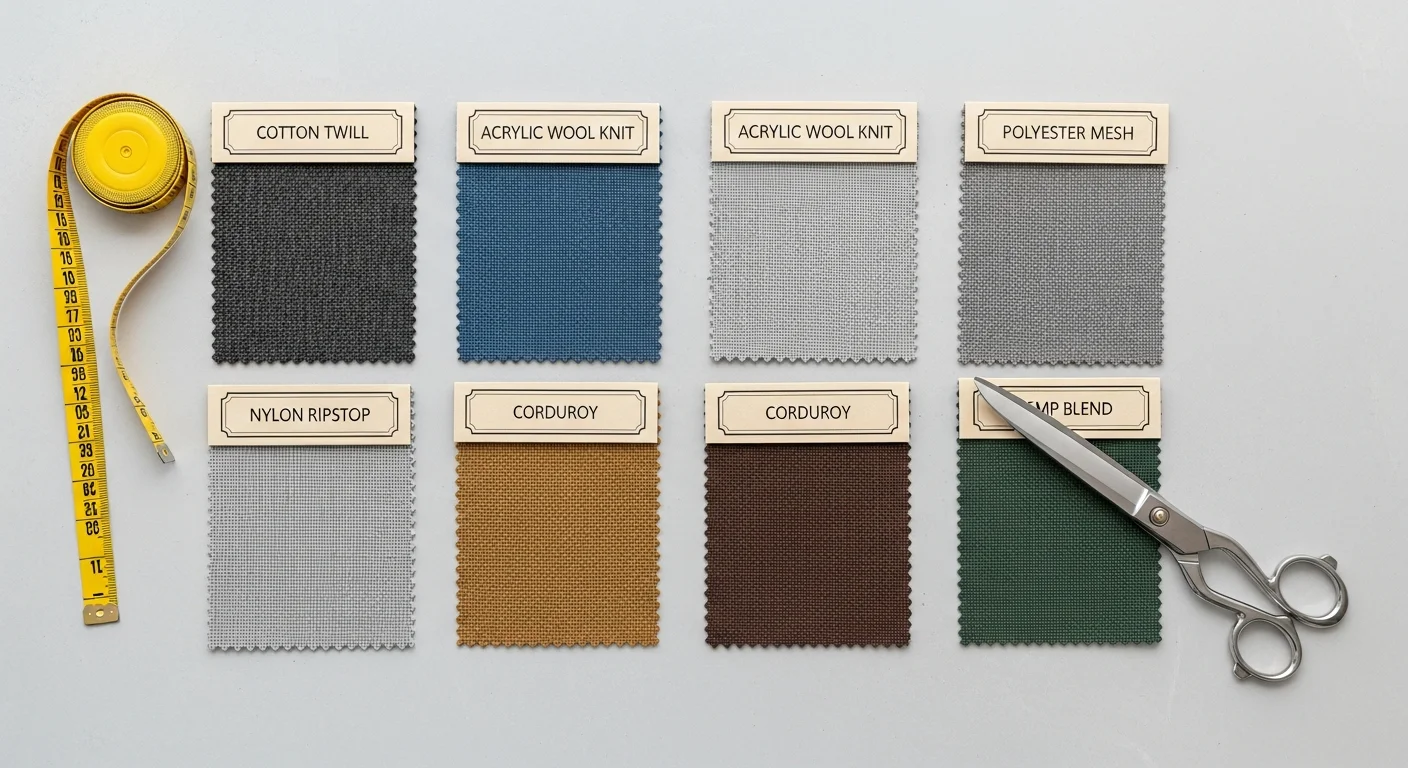
The fabric of a custom hat determines how it feels on the head, how it holds its shape over time, how well it accepts embroidery or other decoration, and how comfortable it is in different weather conditions. Choosing the wrong fabric for the climate or use case results in hats that are too hot in summer, too stiff for casual wear, or too soft to hold a structured embroidered design. This guide covers every major hat fabric — cotton twill, acrylic wool, polyester mesh, nylon ripstop, and popular blends — with practical guidance on matching fabric to purpose.
Unlike fabric selection for custom t-shirts or custom hoodies, where the fabric primarily affects comfort and drape, hat fabric selection also affects structural integrity. A hat must hold its shape on the head, support the weight of embroidery or patches, resist stretching from repeated wear, and maintain its profile after exposure to sweat, rain, and sun. These structural demands make fabric choice a technical decision as much as an aesthetic one.
Cotton Twill: The Classic All-Purpose Fabric
Cotton twill is the most widely used fabric for custom headwear, found in approximately 50% of all baseball caps, dad hats, and five-panel caps. Twill is a woven fabric with a distinctive diagonal rib pattern created by passing the weft thread over one and under two (or more) warp threads. This weave structure makes cotton twill durable, moderately stiff, and resistant to wrinkling — properties that translate directly into well-constructed hats.
The standard weight for hat-grade cotton twill is 8-10 ounces per square yard, heavy enough to hold structure but light enough for comfortable all-day wear. Cotton twill accepts embroidery exceptionally well — the tight weave provides a stable surface for the needle, and the diagonal rib pattern helps hide minor bobbin pull-through on the hat interior. Colors are rich and saturated because cotton absorbs dye deeply into the fibers rather than coating the surface.
Cotton twill has two primary limitations. First, it absorbs and retains moisture — a cotton hat worn during vigorous activity becomes sweat-soaked and heavy, taking hours to dry completely. Second, cotton fades with UV exposure over time, which some brands embrace as a "vintage" look but others consider a defect. Washing cotton twill hats in cold water and air-drying them extends color life significantly. For event hats, corporate merchandise, and everyday casual wear in moderate climates, cotton twill remains the best all-around choice.

Acrylic Wool: Warmth and Structure
Acrylic wool is a synthetic fiber that mimics the look and warmth of natural wool at a fraction of the cost. In custom headwear, acrylic is used primarily for beanies, knit caps, and cold-weather structured hats. The fiber is soft, lightweight, hypoallergenic (unlike natural wool), and retains its shape through repeated washing without shrinking or felting.
For beanies, acrylic yarn comes in weights ranging from fine (2-ply) for thin fashion beanies to chunky (5-ply) for thick, insulating winter caps. The standard custom beanie uses medium-weight (3-ply) acrylic knit in a 2×2 rib or waffle stitch pattern, providing stretch, warmth, and a snug fit. Acrylic beanies accept cuff embroidery and sewn-on patches, though the stretchy knit requires stabilizer backing to prevent puckering during embroidery.
Some structured caps use acrylic wool blends (typically 85% acrylic, 15% wool) for a premium hand-feel that retains the durability and shape-holding properties of acrylic. These blended caps target the mid-to-premium market, costing $1-$3 more per blank than pure cotton twill but offering a denser, richer appearance that photographs well for fashion and retail applications.
Polyester Performance Mesh: Athletic and Moisture-Wicking
Polyester mesh appears in two primary hat applications: as the back panels of trucker hats and as the primary fabric of performance athletic caps. In trucker hats, the mesh is an open-weave structure that maximizes airflow, keeping the head cool in warm weather. Trucker mesh is typically a heavier, stiffer polyester mesh (sometimes nylon) that holds its shape and provides visible texture contrast against the solid foam front panels.
In performance caps, the mesh is a tighter, more refined weave — often called "athletic mesh" or "sport mesh" — that wicks moisture away from the skin while allowing air circulation through micro-perforations. Performance cap fabrics often incorporate proprietary technologies: moisture-wicking treatments that pull sweat to the exterior surface for evaporation, antimicrobial treatments that prevent odor buildup, and UPF 30-50 sun protection coatings.
Polyester mesh has excellent embroidery compatibility on solid panels — the synthetic fibers hold thread tension cleanly and resist puckering. However, embroidery directly on open-weave mesh (like trucker hat back panels) is not recommended because the large gaps in the weave cannot support stitch density. For back-panel branding on mesh hats, use a small sewn-on patch or a printed tag. Performance caps with solid polyester panels accept all decoration methods including DTF transfers, which bond exceptionally well with polyester due to the heat-activated ink chemistry.
Nylon Ripstop and Specialty Fabrics
Nylon ripstop is a lightweight, tear-resistant fabric originally developed for military applications and now popular in outdoor and technical headwear. The fabric features a grid of thicker reinforcing threads woven at regular intervals, creating a distinctive crosshatch pattern visible at close range. Ripstop prevents small tears from spreading across the fabric, making it ideal for adventure, hiking, and travel hats that encounter rough conditions.
Nylon ripstop hats are typically unstructured five-panel caps or packable hats that can be folded and stored in a pocket or bag. The fabric is extremely lightweight (1-3 ounces per square yard) and quick-drying, making it the top choice for water sports, travel merchandise, and outdoor festival headwear. Embroidery on ripstop requires careful stabilizer selection — the lightweight fabric needs a firm backing to prevent the needle from pulling and distorting the thin material.
Other specialty fabrics include canvas (heavier than twill, extremely durable, popular for workwear hats), corduroy (textured ribbed fabric trending in fashion headwear since 2024), denim (casual Americana aesthetic), and hemp blends (sustainable, naturally antimicrobial, growing in the eco-conscious market). Each specialty fabric brings a unique texture and brand association that helps custom hats stand out in a crowded market. For sustainable material options, see the eco-friendly custom hats guide.

Matching Fabric to Climate and Use Case
Climate and intended use should drive fabric selection before aesthetic preferences. For hot weather and outdoor summer events, performance polyester or trucker-style mesh hats keep wearers cool and comfortable. For cold weather and winter events, acrylic beanies or wool-blend structured caps provide insulation without bulk. For year-round everyday wear, cotton twill offers the best balance of comfort, structure, and visual appeal across seasons.
For athletic and active use (running clubs, golf tournaments, sports teams), performance polyester with moisture-wicking and UV protection is essential. For outdoor adventure brands, nylon ripstop provides durability and packability. For fashion and retail, specialty fabrics like corduroy, canvas, and hemp blends create distinctive products that command premium pricing. The fabric tells part of the brand story before the logo is even seen.
The custom hats product page offers the full range of available hat blanks across all fabric types. Use the free design tool to preview how different hat styles and fabrics complement your artwork before committing to a specific combination.
Frequently Asked Questions
Which hat fabric is best for embroidery?
Cotton twill provides the best overall embroidery surface due to its tight weave, moderate stiffness, and ability to hold thread tension without puckering. Polyester performance fabric is a close second, with the added benefit of moisture-wicking during active wear. Acrylic knit (beanies) and nylon ripstop require stabilizer backing to support embroidery, which adds $0.25-$0.50 per hat in material cost and slightly increases production time.
What fabric is most durable for outdoor hats?
Nylon ripstop is the most tear-resistant and weather-resistant hat fabric, originally designed for military use. For everyday durability with a softer hand-feel, heavy-weight cotton twill (10+ oz) or canvas provides excellent longevity. Polyester performance fabrics resist UV fading better than cotton, maintaining color vibrancy after extended sun exposure — making them the best choice for hats worn primarily outdoors.
Are there eco-friendly hat fabric options?
Yes. Recycled polyester (rPET) made from post-consumer plastic bottles is the most widely available sustainable hat fabric, offering identical performance to virgin polyester at a 10-15% cost premium. Organic cotton twill eliminates pesticide use during cultivation. Hemp and hemp-cotton blends offer naturally antimicrobial, biodegradable fabric with excellent durability. For a comprehensive look at sustainable options, read the eco-friendly custom hats guide.
Share this article
Written by
Aisha Patel
Head of Materials Science & Sustainability at RareCustom. M.S. in Textile Engineering from NC State with AATCC certification and ISSP Sustainability Practitioner certification. 7+ years evaluating fabrics, materials, and eco-friendly production processes.