Eco-Friendly Custom Hats: Sustainable Materials and Production Methods
Explore sustainable custom hat options including recycled polyester, organic cotton, hemp blends, cork visors, and eco-conscious production methods. Learn how to order planet-friendly branded headwear without sacrificing quality.
Aisha Patel
Head of Materials Science & Sustainability at RareCustom. M.S. in Textile Engineering from NC State with AATCC certification and ISSP Sustainability Practitioner certification. 7+ years evaluating fabrics, materials, and eco-friendly production processes.
Sustainability has moved from a niche preference to a mainstream purchasing factor in the custom merchandise industry. A 2025 survey by the Promotional Products Association International (PPAI) found that 68% of consumers view a brand more favorably when it uses eco-friendly promotional products, and 42% are willing to pay a 15-20% premium for sustainable alternatives. For custom hats, this shift has created a growing market for headwear made from recycled materials, organic fibers, and responsibly sourced fabrics — without sacrificing the quality, durability, or aesthetic appeal that buyers expect.
This guide covers the full spectrum of sustainable hat materials, eco-conscious production methods, certification standards to look for, and practical strategies for ordering planet-friendly custom headwear. Whether the order is for a corporate sustainability initiative, an outdoor brand, a nonprofit, or a personal project, sustainable custom hats offer a tangible way to align merchandise with environmental values.
Recycled Polyester (rPET): The Most Accessible Sustainable Option
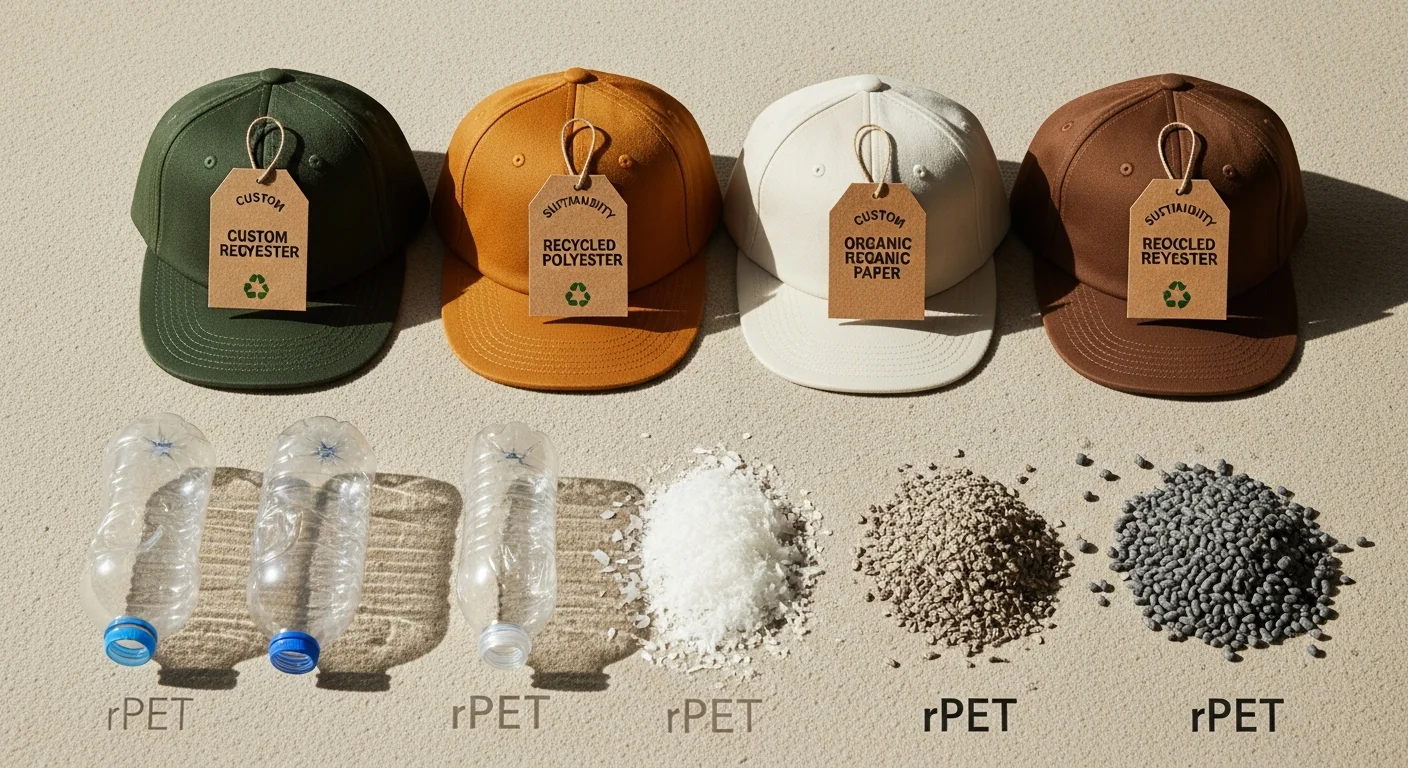
Recycled polyester, commonly labeled rPET, is manufactured from post-consumer plastic bottles that are collected, cleaned, shredded into flakes, melted, and extruded into new polyester fibers. The resulting fabric is functionally identical to virgin polyester — same moisture-wicking properties, same UV resistance, same durability, same color vibrancy — but diverts plastic waste from landfills and oceans. Each recycled polyester hat diverts approximately 3-5 plastic bottles from the waste stream.
rPET hat blanks are available from major manufacturers including Richardson (Eco series), Pacific Headwear (rPET caps), and Econscious. Pricing is 10-15% higher than equivalent virgin polyester blanks — typically $5-$8 per blank compared to $4-$6 for standard polyester. The modest premium makes rPET the most cost-effective entry point for sustainable custom headwear programs. The fabric accepts all decoration methods (embroidery, patches, DTF) with identical results to virgin polyester, so no design compromises are necessary.
For performance and athletic applications, rPET is especially compelling because the recycled fiber inherits the moisture-wicking, quick-drying, and lightweight characteristics of polyester — making it suitable for sports team hats and outdoor events where performance matters as much as sustainability credentials.

Organic Cotton: Chemical-Free Cultivation
Organic cotton is grown without synthetic pesticides, herbicides, or fertilizers, using natural pest management and crop rotation methods certified by organizations like GOTS (Global Organic Textile Standard) or OCS (Organic Content Standard). Organic cotton farming uses 91% less water from water sources and produces 46% fewer greenhouse gas emissions compared to conventional cotton farming, according to the Textile Exchange 2024 Organic Cotton Market Report.
Organic cotton hat blanks feel identical to conventional cotton — the same soft hand-feel, the same natural breathability, the same excellent embroidery compatibility. The visual and tactile quality is indistinguishable from standard cotton twill hats, which means buyers can upgrade to organic without any perceivable tradeoff in product quality. Pricing runs 15-25% higher than conventional cotton blanks — typically $5-$9 per blank compared to $3-$6 for standard cotton twill.
The primary consideration with organic cotton is color range. Organic cotton dyeing uses low-impact dyes with lower chemical saturation, which can result in slightly softer, less vivid colors compared to conventional dyeing. The difference is subtle — most consumers cannot distinguish organic-dyed from conventional-dyed cotton — but brands with strict Pantone color requirements should request sample swatches before committing to a large order.
Hemp and Hemp Blends: Natural Durability
Hemp is one of the most environmentally sustainable fibers available. It grows rapidly without pesticides, requires minimal irrigation, and actually improves soil health through nitrogen fixation. Hemp fabric is naturally antimicrobial (inhibiting bacterial and fungal growth), UV-resistant, and exceptionally durable — hemp fibers are 2-3 times stronger than cotton fibers by weight, meaning hemp hats maintain their shape and structure longer than cotton equivalents.
Pure hemp fabric has a coarser, more textured hand-feel than cotton, which some consumers perceive as rough. The most popular solution is hemp-cotton blends (typically 55% hemp, 45% organic cotton) that combine hemp's durability and sustainability with cotton's softness. These blends are available in structured caps, five-panel hats, and dad hats from manufacturers like Hemptopia and Recreator. Pricing is premium — $8-$14 per blank — positioning hemp hats in the luxury sustainable segment.
Hemp hats accept embroidery well, though the coarser weave requires slightly lower stitch density settings to prevent thread bunching. Leather patches pair exceptionally well with hemp fabric, creating a natural-materials aesthetic that resonates with outdoor, wellness, and farm-to-table brands. For a complete overview of hat fabric options and their sustainability profiles, read the fabric guide.
Cork, Bamboo, and Emerging Materials
Cork fabric is harvested from the bark of cork oak trees without harming the tree, which regenerates its bark over 9-12 years. Cork is naturally waterproof, antimicrobial, hypoallergenic, and lightweight. In custom headwear, cork is used primarily for brim coverings, patches, and accent panels rather than full hat construction. A cork-brim trucker hat or a cork patch on a recycled polyester cap creates a distinctive, eco-forward aesthetic unlike any other material combination.
Bamboo fiber is derived from bamboo pulp processed into a viscose-type fiber. Bamboo grows rapidly without pesticides and requires minimal water, making it one of the fastest-renewable plant resources. Bamboo fabric is exceptionally soft (often compared to silk), moisture-wicking, and naturally UV-protective. However, the chemical processing required to convert bamboo pulp into usable fiber (typically using sodium hydroxide) raises questions about the net environmental benefit. Look for bamboo fabrics processed using closed-loop systems that recover and reuse 99% of the processing chemicals.
Seaqual yarn is an emerging material made from ocean-recovered plastic — fishing nets, bottles, and other debris collected from coastlines and ocean cleanup programs. Seaqual hats carry a powerful sustainability narrative because the material directly addresses ocean plastic pollution, making them especially compelling for marine conservation nonprofits, coastal brands, and sustainability-focused corporate programs.
Eco-Conscious Production and Certifications
Sustainable materials are only one component of an eco-friendly custom hat. The production process — embroidery, sewing, packaging, and shipping — also contributes to the environmental footprint. Look for manufacturers that implement these practices:
Water-based inks and dyes: DTF transfers and printed hats should use water-based or eco-solvent inks rather than traditional plastisol or solvent-based inks, which release VOCs (volatile organic compounds) during curing. Water-based inks produce comparable color vibrancy with significantly lower environmental impact.
Minimal packaging: Reducing or eliminating individual poly bags, cardboard inserts, and excessive packaging material for each hat. Bulk packaging in recycled cardboard boxes rather than individual retail-style packaging can reduce packaging waste by 70-80% per order.
Carbon-neutral shipping: Some manufacturers offer carbon offset programs that neutralize the shipping emissions of each order. The typical carbon cost is $0.10-$0.25 per hat, which can be absorbed by the manufacturer, split with the buyer, or passed to the end customer as a small line item.
Key certifications to look for: GOTS (Global Organic Textile Standard) for organic cotton, GRS (Global Recycled Standard) for recycled content, OEKO-TEX Standard 100 for harmful substance testing, and bluesign for responsible chemical management throughout the supply chain. These third-party certifications verify sustainability claims with independent auditing.
Order Sustainable Custom Hats
Eco-friendly custom hats demonstrate environmental commitment through tangible, wearable merchandise that recipients value and keep. From recycled polyester performance caps to organic cotton dad hats to hemp trucker hats with cork patches, sustainable headwear options now span every style, every price point, and every decoration method. The free online design tool lets users preview designs on sustainable hat blanks before ordering, ensuring the final product meets both aesthetic and environmental standards.
Frequently Asked Questions
Are recycled polyester hats as durable as regular polyester?
Yes. Recycled polyester (rPET) has identical physical properties to virgin polyester — same tensile strength, same UV resistance, same moisture-wicking performance, same color retention through washing. The recycling process melts and re-extrudes the polymer without degrading the molecular structure, so the resulting fiber is functionally indistinguishable from newly manufactured polyester in terms of durability and performance.
How much more do eco-friendly hat blanks cost?
Recycled polyester blanks cost 10-15% more than standard polyester ($5-$8 vs. $4-$6). Organic cotton costs 15-25% more than conventional cotton ($5-$9 vs. $3-$6). Hemp and hemp blends are 50-100% more than cotton ($8-$14 vs. $3-$6). At volume pricing (100+ units), these premiums decrease as manufacturers offer better per-unit rates on sustainable products to encourage adoption.
Can eco-friendly hats be embroidered the same as regular hats?
Yes. Recycled polyester, organic cotton, and hemp-blend fabrics all accept standard embroidery, patches, and DTF transfers without modification. Hemp's coarser weave may require minor digitizing adjustments (slightly lower stitch density), but the finished embroidery quality is equivalent. No design compromises are necessary when switching from conventional to sustainable hat blanks.
Share this article
Written by
Aisha Patel
Head of Materials Science & Sustainability at RareCustom. M.S. in Textile Engineering from NC State with AATCC certification and ISSP Sustainability Practitioner certification. 7+ years evaluating fabrics, materials, and eco-friendly production processes.