Custom Embroidered Hats for Business Branding: Logo Placement Strategies That Work
Learn how to use custom embroidered hats as powerful branding tools. Covers logo placement strategies, color psychology for headwear, industry-specific approaches, employee programs, and measuring brand visibility ROI.
Rohan Mehta
Head of Marketing at RareCustom. Rohan combines data-driven strategy with storytelling to help businesses maximize brand visibility through custom embroidered headwear programs.
A custom embroidered hat is one of the most cost-effective branding investments a business can make. Unlike a business card that sits in a drawer or a digital ad that disappears in seconds, a branded hat worn in public generates thousands of visual impressions over its lifespan. Industry research estimates that a single branded hat generates 3,400 impressions per year — more than any other promotional product category except bags. The cost per impression over a two-year hat lifespan drops to less than $0.002, making headwear one of the highest-ROI branding channels available.
But a branded hat only works if the design is professionally executed. A poorly placed logo, clashing color combination, or wrong hat style can damage brand perception rather than enhance it. This guide covers logo placement strategies, color psychology for headwear, industry-specific design approaches, employee hat programs, and how to measure the branding ROI of custom headwear — turning every hat into a walking billboard that builds recognition and trust.
Front-Center Logo Placement: Maximum Visibility
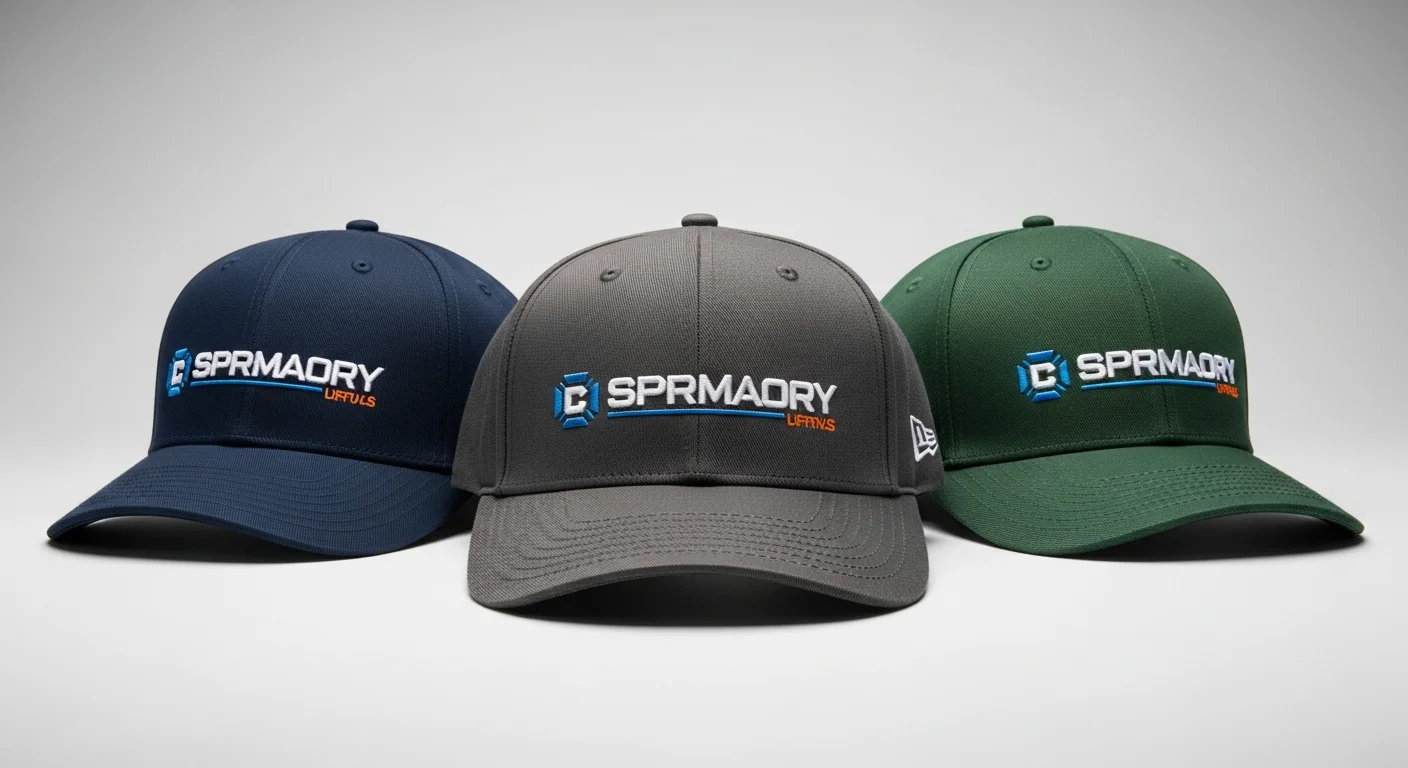
The front-center position is the primary real estate on any hat and the standard placement for corporate logos. This placement spans the two front panels, centered on the vertical seam, positioned approximately 0.5 inches above the brim edge. The standard maximum size for front-center embroidery is 4 inches wide by 2.25 inches tall on a standard structured cap, with minor variations depending on hat style and crown height.
Front-center placement works best for horizontal logos — designs that are wider than they are tall. Horizontal logos naturally fit the shape of the hat's front panels and maintain legibility from a distance. Stacked logos (text above text) work if kept within the height constraint. Tall, vertical logos should be resized or reformatted for hat proportions — simply shrinking a vertical logo to fit the height constraint often makes it too small to read. For guidance on optimizing logo proportions for different hat positions, see the logo placement optimization guide.
For businesses with both a logo mark (icon) and a logotype (text), the most effective front-center approach is the logo mark centered on the front with the logotype on the back or side. This prevents the front from feeling cluttered while using secondary positions for the full brand name.

Side and Back Placements for Complete Branding
Side panel embroidery adds a secondary branding element visible in profile — when the hat wearer is viewed from the left or right side. Common side-panel content includes website URLs, taglines, founding years, or small secondary logos. The usable space on a side panel is approximately 2 inches wide by 1.5 inches tall, which limits content to short text or small marks. Side embroidery adds $1.50-$3.00 per hat per side depending on stitch count.
Back panel embroidery utilizes the space above the closure. On snapback and strapback hats, this area is approximately 2.5 inches wide by 1 inch tall — enough for a website URL, small logo, or short tagline. Back embroidery creates a branding impression from behind, which matters in environments where the back of the head is frequently visible (office settings, outdoor events, spectator seating). On fitted hats with no closure, the full back panel is available, offering up to 3.5 inches wide by 2 inches tall.
Complete branding that uses front, side, and back placements creates a 360-degree brand experience — the hat broadcasts the brand identity from every viewing angle. A structured baseball cap with the main logo embroidered front-center, the website on the right side, and a small tagline on the back achieves maximum visibility per unit without appearing overly branded or cluttered. This approach works especially well when paired with other branded merchandise like custom t-shirts and custom hoodies for a complete brand uniform.
Color Psychology for Branded Headwear
The hat color and thread color combination communicates brand personality before the logo design is consciously processed. Dark hats (navy, black, charcoal) convey professionalism, authority, and sophistication — they are the default for corporate, law, finance, and tech companies. White and light hats project cleanliness, modernity, and approachability — popular with healthcare, wellness, and consumer brands. Earth tones (olive, tan, brown) signal outdoor lifestyle, sustainability, and authenticity — the go-to palette for food and beverage brands, outdoor retailers, and agriculture companies.
Thread color should create sufficient contrast against the hat fabric to ensure the logo is visible from a distance. White or cream thread on navy or black hats provides the highest contrast and the most universally readable combination. Gold metallic thread on black or navy conveys luxury and premium positioning. Tonal embroidery — using thread that is one or two shades lighter or darker than the hat — creates a subtle, sophisticated effect popular with fashion brands that value understated elegance over maximum visibility. For a deep dive into tonal and minimalist embroidery trends, read the 2026 hat trends article.
Avoid color combinations that create visual vibration or strain: red on green, blue on orange, or purple on yellow. These complementary color pairs create an optical effect where the edges of the embroidery appear to shimmer or vibrate, reducing legibility and creating an amateurish appearance. Stick to analogous, monochromatic, or high-contrast neutral pairings for the most professional results.
Industry-Specific Branding Approaches
Construction and trades: High-visibility safety colors (orange, lime green) with reflective thread or patches. Structured or trucker styles that fit under hard hats or stand up to jobsite conditions. Simple one-color logos with heavy stitch counts for maximum durability.
Food and beverage: Earth-toned trucker hats with leather patches for craft brands. Clean structured caps with flat embroidery for restaurants and catering companies. Mesh-back styles for kitchen and production staff who need breathability during long shifts.
Technology and startups: Dad hats or relaxed five-panel caps with minimal, modern embroidery. Tech companies increasingly favor the casual hat aesthetic over corporate structured caps, using lightweight embroidery that complements the relaxed dress code culture.
Real estate and finance: Structured baseball caps in navy, charcoal, or white with clean flat embroidery. The polished, professional look of a structured cap with a simple logo communicates competence and trustworthiness — essential qualities for client-facing industries.
Healthcare and wellness: Performance caps in white or light colors with small, understated embroidery. Healthcare brands benefit from the clinical, clean association of light-colored headwear, and performance fabrics provide the moisture-wicking and antimicrobial properties relevant to medical environments.
Employee Hat Programs and Brand Ambassadors
Providing branded hats to employees transforms every team member into a brand ambassador during their daily commute, lunch breaks, gym visits, and weekend activities. An employee hat program works best when employees genuinely want to wear the hats — which means investing in quality blanks, attractive designs, and styles that employees would choose to buy themselves.
The most successful employee programs offer 2-3 hat style options (structured cap, dad hat, beanie) so each employee can choose the style that fits their personal aesthetic. This increases wear frequency by 40-60% compared to single-style programs. Budget $8-$15 per hat for quality blanks and professional embroidery — the marginal cost difference between a cheap promotional hat ($3-$5) and a quality branded hat ($8-$15) is small relative to the dramatically higher wear rate and brand impression quality.
Track the branding impact of employee hat programs by surveying customers and leads: "How did you hear about us?" responses that mention seeing the brand on someone's hat provide direct attribution data. Companies that implement employee hat programs report 15-25% increases in unaided brand awareness within their local market over a 6-month period, according to industry promotional products research.
Measuring Branded Hat ROI
The ROI calculation for branded hats is straightforward when broken into impressions and cost per impression. A branded hat worn 3-4 times per week for two years generates approximately 6,800-8,500 impressions (each outing averages 25-50 casual observers). At a total cost of $10-$15 per hat (blank + embroidery), the cost per impression is $0.001-$0.002 — significantly cheaper than social media advertising ($0.50-$2.00 per impression) or print advertising ($5-$15 per thousand impressions).
Maximize ROI by distributing branded hats at high-visibility events: trade shows, conferences, community sponsorships, and customer appreciation programs. Hats distributed at events have a 85% retention rate (compared to 65% for t-shirts and 50% for pens), making them one of the most effective promotional products for long-term brand exposure. Visit the custom hats product page to explore all branding options and start designing through the free online design tool.
Frequently Asked Questions
What is the best hat style for corporate branding?
Structured baseball caps are the most popular corporate branding choice, offering a professional appearance with the best embroidery surface for detailed logos. Performance caps are ideal for athletic or outdoor companies. Dad hats work well for tech companies and creative agencies that want a more casual brand image. The style should match the company culture — formal industries benefit from structured caps while casual industries suit relaxed styles.
How many branded hats should a company order?
For employee programs, order one hat per employee plus 15-20% extra for new hires and replacements. For trade show distribution, estimate 60-70% of expected attendees (not everyone takes promotional items). For retail or customer gifting, start with a 100-piece test order to gauge demand before committing to larger volumes. Volume discounts typically begin at 48-72 hats, with significant price breaks at 144+ and 500+ units.
Should the company website be on the hat?
Including the website URL on the hat (typically on the back or side panel) provides a direct call-to-action for brand-curious observers. Use a clean, short URL — the primary domain without "www" or path extensions. If the URL is long, consider a branded short URL or QR code printed on a hangtag rather than embroidered on the hat. The website URL is most effective on hats intended for external distribution rather than employee wear.
Share this article
Written by
Rohan Mehta
Head of Marketing at RareCustom. Rohan combines data-driven strategy with storytelling to help businesses maximize brand visibility through custom embroidered headwear programs.