How to Wash & Care for Custom Printed Jerseys: Make Them Last All Season
Keep your custom jerseys looking fresh all season with proper washing and care. Learn how to handle sublimated prints, remove grass stains, maintain moisture-wicking, and store jerseys.
Aisha Patel
Head of Materials Science & Sustainability at RareCustom. M.S. in Textile Engineering from NC State with AATCC certification and ISSP Sustainability Practitioner certification. 7+ years evaluating fabrics, materials, and eco-friendly production processes.
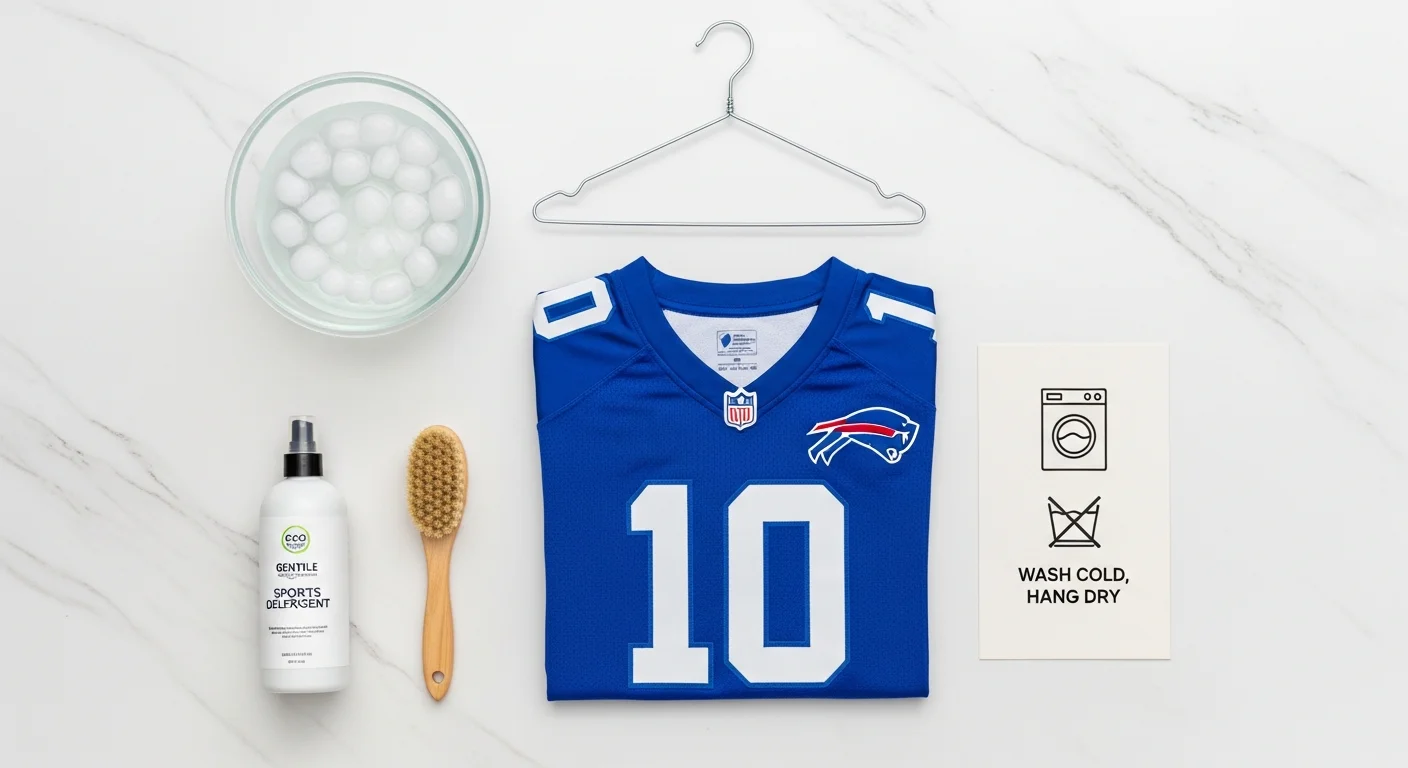
A set of custom jerseys represents a significant investment for any team. The design looks flawless on day one, but without proper care, colors can fade, prints can deteriorate, and performance fabrics can lose their moisture-wicking properties. The good news: with the right washing and storage habits, your custom jerseys will look and perform like new through an entire season and beyond.
Jersey care differs from caring for custom t-shirts or hoodies because jersey fabrics are performance polyester with specialized treatments that require specific handling to maintain. Here is everything your team needs to know.
The Golden Rules of Jersey Washing
These five rules apply to virtually every custom jersey regardless of sport or printing method. Follow them and your jerseys will maintain their appearance and performance throughout the season.
Cold water only. Hot water breaks down both sublimation ink bonds and moisture-wicking treatments. Always wash jerseys in cold water (60°F or below). This single rule prevents more jersey damage than all others combined.
Turn inside out. Flip jerseys inside out before washing. This protects the outer printed surface from friction against other garments and the washing machine drum. It also exposes the inner surface — where most sweat and odor accumulate — directly to the detergent and water.
Gentle cycle. The gentle or delicate cycle reduces mechanical agitation that can stress seams and distort printing. Performance mesh fabrics are lighter than cotton and do not need aggressive washing action to get clean.
No fabric softener. Fabric softener coats fibers with a waxy residue that blocks the moisture-wicking channels in performance polyester. A jersey treated with fabric softener will trap sweat against the skin instead of pulling it away. Use a sports-specific detergent instead.
Hang dry or lay flat. Heat from a dryer can damage sublimation prints, shrink polyester mesh, and destroy elastic properties. Air-drying is the safest option. Hang jerseys on a wide hanger or lay flat on a clean surface away from direct sunlight.

Stain Removal for Athletic Jerseys
Grass Stains
Grass stains are the bane of soccer, football, and baseball jerseys. Pre-treat with a paste of baking soda and cold water applied directly to the stain. Let it sit for 15-20 minutes, then gently rub with a soft brush before washing. Avoid bleach — it damages sublimation prints and can yellow white polyester.
Mud and Dirt
Let mud dry completely before attempting removal. Brush off the dried mud with a stiff brush, then soak the jersey in cold water with a mild detergent for 30 minutes before washing normally. Never rub wet mud into the fabric — this pushes particles deeper into the weave.
Blood
Cold water is critical for blood stains — hot water sets blood permanently. Soak the stained area in cold water immediately. Apply hydrogen peroxide or a salt paste to the stain, let sit for 10 minutes, then wash in cold water. The sooner you treat blood stains, the better the results.
Sweat Odor
Performance fabrics can develop persistent odor even after washing. Add one cup of white vinegar to the wash cycle to neutralize odor-causing bacteria. For severe cases, soak jerseys in a vinegar and cold water solution (1:4 ratio) for one hour before washing.
Maintaining Moisture-Wicking Performance
The moisture-wicking treatment on performance jerseys degrades when exposed to fabric softener, dryer sheets, high heat, and harsh detergents. To maintain wicking performance throughout the season, use cold water, skip the fabric softener, air-dry exclusively, and use a sport-specific detergent formulated for synthetic fabrics.
If your jerseys start feeling less breathable mid-season, a vinegar soak can strip residue buildup from the fibers and partially restore wicking properties.
Season-End Storage
At the end of the season, wash all jerseys one final time using the rules above. Make sure they are completely dry before storing — even slight dampness can cause mildew. Fold jerseys (do not hang long-term, as hangers can stretch the shoulder area) and store in a cool, dry location. Avoid plastic bags or sealed containers that trap moisture. A breathable fabric storage bag or open shelf is ideal.

Sublimation Print Care vs. Screen Print Care
Sublimated jerseys are more care-friendly than screen-printed jerseys because the ink is part of the fabric rather than a surface layer. Sublimation prints will not crack, peel, or fade from washing when proper cold-water techniques are used. Screen-printed jerseys require even more careful handling since the ink layer can crack under mechanical stress and heat.
For a comparison of printing methods and their durability characteristics, see our sublimation vs screen printing guide.
Distributing Care Instructions to Your Team
The best jersey care protocol is useless if players do not follow it. Include a printed care instruction card with every jersey. For youth teams, send the care instructions directly to parents since kids rarely do their own laundry. Consider adding a care reminder to the team communication channel at the start of the season.
Frequently Asked Questions
Can you iron sublimated jerseys?
It is best to avoid ironing sublimated jerseys. If wrinkles are an issue, use a steamer on a low setting held several inches from the fabric. Direct iron contact at high temperature can damage sublimation prints and melt performance mesh fabrics.
How often should game jerseys be washed?
Wash jerseys after every game or heavy practice session. Allowing sweat to dry in the fabric between washes promotes bacterial growth and permanent odor. A quick cold-water wash cycle is sufficient for post-game cleaning.
Will washing fade sublimation prints?
No, when washed properly in cold water. Sublimation ink is embedded in the polyester fibers and does not wash out. Fading typically only occurs from prolonged direct sunlight exposure or use of bleach.
How do I remove grass stains from white polyester jerseys?
Apply a baking soda paste directly to the stain, let sit for 20 minutes, then gently brush and wash in cold water with a sport-specific detergent. Avoid bleach, which can yellow white polyester and damage prints. For stubborn stains, repeat the treatment before drying.
Share this article
Written by
Aisha Patel
Head of Materials Science & Sustainability at RareCustom. M.S. in Textile Engineering from NC State with AATCC certification and ISSP Sustainability Practitioner certification. 7+ years evaluating fabrics, materials, and eco-friendly production processes.