Custom Pillow Printing: Sublimation vs Embroidery vs DTG Compared
Compare the top custom pillow printing methods — sublimation, embroidery, DTG, screen printing, and heat transfer vinyl. Learn which technique delivers the best quality, durability, and value for your project.
Terrence Okafor
Head of Production at RareCustom. Terrence manages pillow printing across sublimation, DTG, and embroidery methods, ensuring quality and durability for every custom pillow order.
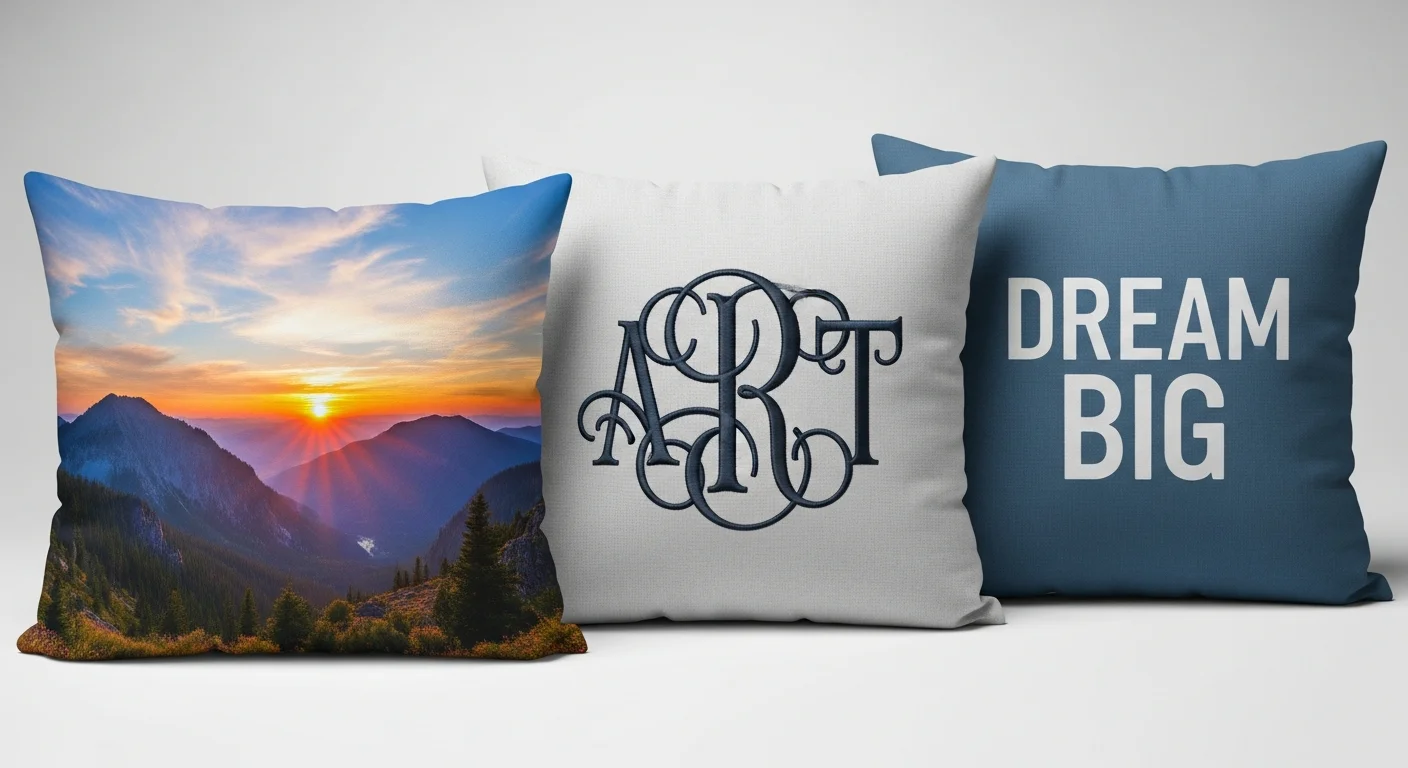
The printing method you choose for your custom pillows affects everything — color vibrancy, tactile texture, wash durability, cost per unit, and which design types are even possible. A photographic pet portrait requires a completely different technique than a monogrammed initial, and a bold corporate logo has different needs than a delicate watercolor illustration.
This guide breaks down the five most common pillow decoration methods, compares them head-to-head on the metrics that matter, and helps you match the right technique to your specific design. Whether you are ordering a single gift pillow or one thousand branded cushions for a hotel chain, understanding printing methods saves you money and ensures the finished product meets your expectations.
Overview of Pillow Printing Methods
Before we dive into each method individually, here is a high-level summary of the five main techniques used to decorate custom pillows:
Sublimation printing uses heat to transfer dye directly into polyester fabric fibers, producing permanent, full-color, edge-to-edge designs. It is the most popular method for photo pillows and all-over prints.
Direct-to-garment (DTG) printing uses specialized inkjet printers to spray water-based ink directly onto fabric. It handles complex multi-color designs well and works on both natural and synthetic fabrics.
Embroidery uses threaded needles to stitch designs into the pillow fabric. It creates a premium, textured finish ideal for monograms, logos, and text-based designs.
Screen printing pushes ink through a stenciled mesh screen onto fabric. It excels at bold, high-contrast designs with limited colors and is cost-effective at higher volumes.
Heat transfer vinyl (HTV) uses pre-cut vinyl shapes adhered to fabric with a heat press. It works best for simple text and single-color graphics.
Sublimation Printing Explained
Sublimation is the gold standard for custom photo pillows and the most widely used method for personalized pillow printing. The process works by heating solid dye particles until they convert directly to gas (skipping the liquid phase entirely — hence "sublimation"), which then bonds permanently with polyester fibers at the molecular level.
How it works: Your design is first printed on a special transfer paper using sublimation ink. The paper is then placed face-down on the polyester pillow cover and pressed at approximately 400 degrees Fahrenheit for 45 to 60 seconds. The heat causes the ink to vaporize and penetrate the fabric fibers, creating a permanent bond that becomes part of the fabric itself.
Pros: Unlimited color range with photographic quality. The print covers the entire surface edge to edge with no visible borders. Colors are vibrant and remain crisp through hundreds of machine washes because the dye is inside the fiber, not sitting on top of it. There is no added texture — the pillow feels identical to unprinted fabric.
Cons: Only works on polyester or polyester-blend fabrics (minimum 65% polyester content). Light-colored fabrics only — sublimation ink is transparent, so it cannot produce white or light colors on dark fabric. Setup is minimal, making it cost-effective even for single-unit orders.
Best for: Photo pillows, full-color artwork, all-over patterns, pet portraits, landscape prints, and any design with gradients or photographic elements.

DTG Fabric Printing
Direct-to-garment printing adapts inkjet technology for fabric. Instead of printing on paper, a specialized printer sprays water-based textile ink directly onto the pillow cover fabric. DTG has gained significant ground in recent years as printer technology has improved and ink formulations have become more durable.
How it works: The pillow cover is pre-treated with a bonding solution and loaded onto the printer's flatbed. The inkjet heads spray CMYK (and often white) ink directly onto the fabric surface in a single pass. After printing, the fabric is heat-cured at 320 to 340 degrees Fahrenheit to set the ink permanently.
Pros: Works on cotton, linen, and other natural fabrics that sublimation cannot handle. Prints white ink, enabling full-color designs on dark fabrics. Handles complex, multi-color designs with fine detail. No minimum order quantities — equally cost-effective for one pillow or fifty.
Cons: The ink sits on top of the fabric rather than bonding into the fibers, so it can fade faster than sublimation over many wash cycles. Print area is limited by the printer bed size — full edge-to-edge coverage is more difficult to achieve. Colors on natural fabrics may appear slightly more muted than sublimation on polyester.
Best for: Designs on cotton or linen pillow covers, artwork with white elements on dark backgrounds, and custom pillows where natural fabric feel is a priority over maximum color vibrancy.

Embroidery and Monogramming
Embroidery is the oldest pillow decoration method and remains the gold standard for a certain category of designs — monograms, text, logos, and simple graphic elements where a premium, tactile finish matters more than photographic detail.
How it works: A computerized embroidery machine uses one or more threaded needles to stitch your design directly into the pillow fabric. The design is first digitized — converted from a graphic file into a stitch file that tells the machine exactly where to place each stitch, in what direction, and with what thread color.
Pros: Creates a raised, textured finish that looks and feels premium. Extremely durable — embroidered designs outlast every other decoration method. Thread colors are consistent and do not fade with washing. Works on virtually any fabric type including velvet, linen, canvas, and leather. Perceived value is higher than any print method.
Cons: Limited to designs with solid areas and relatively simple shapes. Cannot reproduce photographs or complex gradients. Thread color changes increase cost — each additional color adds setup time and thread cost. Design size is limited by the embroidery hoop (typically 12x12 inches maximum). Per-unit cost is higher than print methods, especially for designs with many colors.
Best for: Monogrammed initials, family names, corporate logos with 1-4 colors, decorative text, simple icons, and premium gift pillows where tactile quality justifies higher cost. For a detailed breakdown of fabric compatibility, see our custom pillow fabric guide.

Screen Printing on Fabric
Screen printing — also called silk screening — is a versatile technique that works well for medium to large production runs of pillow covers with bold, limited-color designs.
How it works: A fine mesh screen is coated with a light-sensitive emulsion and exposed to UV light through a film positive of your design. The unexposed areas wash away, creating a stencil. Ink is then pushed through the open areas of the screen onto the fabric using a squeegee. Each color requires a separate screen and pass.
Pros: Produces thick, opaque ink layers with vibrant colors that pop against any fabric color. Extremely cost-effective at volume — the per-unit cost drops dramatically after the initial screen setup. Ink is highly durable and wash-resistant. Works on cotton, polyester, and blended fabrics.
Cons: Screen setup costs make it expensive for small orders (typically 25+ unit minimum to be cost-effective). Each color requires a separate screen, so multi-color designs get expensive quickly. Cannot reproduce photographic detail or smooth gradients — designs must use solid areas of color. Registration (alignment between colors) requires precision.
Best for: Bulk orders of branded pillows with 1-4 color designs, event giveaway pillows, promotional merchandise, and designs featuring bold text or simple logos. If cost is your primary concern, check our guide on budget-friendly custom pillow options.
Heat Transfer Vinyl for Pillows
Heat transfer vinyl (HTV) is a popular DIY and small-batch method that uses pre-cut vinyl shapes applied to fabric with a heat press or household iron.
How it works: Your design is cut from a sheet of colored vinyl using a cutting machine (like a Cricut or Silhouette). The cut vinyl is weeded (excess material removed), positioned on the pillow fabric, and pressed with heat and pressure for 10 to 15 seconds. The adhesive backing bonds the vinyl permanently to the fabric.
Pros: Extremely affordable for simple, single-color designs. No minimum orders — perfect for one-off projects. Wide range of specialty vinyl finishes including glitter, metallic, holographic, and flocked textures. Equipment costs are low, making it accessible for home crafters and small businesses.
Cons: Limited to solid-color shapes and text — no gradients, photos, or complex multi-color artwork. Vinyl adds a noticeable layer to the fabric that changes the texture and feel. Can peel or crack over time with frequent washing, especially lower-quality vinyl. Design complexity is constrained by the cutting machine's ability to handle fine details.
Best for: DIY projects, personalized name pillows, single-word or short-phrase designs, and situations where specialty finishes (glitter, metallic) are desired.
Which Method for Which Design Type
Matching the printing method to your design type is the single most important decision in custom pillow production. Here is a quick reference guide:
Photographs and photo-realistic images: Sublimation (on polyester) or DTG (on cotton/linen). Sublimation delivers superior color vibrancy; DTG offers fabric flexibility.
Monograms and single initials: Embroidery. The raised texture adds a premium touch that no flat print method can replicate.
Corporate logos with 1-4 spot colors: Screen printing for bulk orders (50+ units), embroidery for premium small batches, or sublimation for full-color logos at any quantity.
Text-heavy designs (quotes, names, phrases): Sublimation or DTG for multi-line text with decorative fonts. Embroidery for short text (1-3 words) where texture matters. HTV for simple single-line names in specialty finishes.
All-over patterns (geometric, floral, abstract): Sublimation is the only practical method for true edge-to-edge pattern coverage.
For step-by-step guidance on preparing your design file for any of these methods, see our how to design a custom pillow guide.
Cost Comparison by Method
Pricing varies by method, design complexity, pillow size, and order quantity. Here are realistic 2026 price ranges for a standard 18x18 inch custom pillow cover:
Sublimation: $12 to $22 per unit for single orders, $8 to $15 per unit at 50+ quantities. Setup cost: minimal (digital file only). Best value for full-color designs at any quantity.
DTG: $15 to $28 per unit for single orders, $10 to $18 per unit at 50+ quantities. Setup cost: minimal. Slightly higher than sublimation due to pre-treatment and slower print speeds.
Embroidery: $20 to $45 per unit for single orders, $15 to $30 per unit at 50+ quantities. Setup cost: $25 to $50 for digitizing. Cost increases with stitch count and number of thread colors.
Screen printing: $25 to $40 per unit for small orders (under 25), $6 to $12 per unit at 100+ quantities. Setup cost: $25 to $40 per color screen. Most cost-effective at high volumes.
Heat transfer vinyl: $8 to $15 per unit for DIY single orders. Equipment investment: $200 to $400 for a cutting machine plus heat press. Lowest per-unit material cost but highest labor per piece.
Durability and Wash Testing Results
How well does each printing method hold up over time? We tested each technique by washing printed pillow covers in a standard home washing machine on warm with regular detergent, then tumble drying on medium heat. Here are the results after incremental wash cycles:
Sublimation: No visible fading or degradation after 100 washes. Colors remained vibrant and fabric texture was unchanged. The dye is embedded in the fiber, making it virtually permanent under normal use conditions.
DTG: Slight softening of colors after 50 washes, more noticeable fading after 75 to 100 washes. Turning the pillow cover inside out before washing extends print life significantly. Pre-treatment quality is the biggest variable — better pre-treatment means better longevity.
Embroidery: No visible degradation after 200+ washes. Thread colors remained consistent and stitching stayed tight. Embroidery is the most durable decoration method available for fabric products.
Screen printing: Minimal fading after 75 washes with plastisol ink. Water-based screen printing ink showed moderate fading after 50 washes. Plastisol creates a thicker, more durable print layer but adds more texture to the fabric surface.
Heat transfer vinyl: Began showing edge lifting after 25 to 30 washes. Noticeable cracking in detailed areas after 40 to 50 washes. HTV is the least wash-durable method and is best suited for decorative pillows that are not washed frequently.

The right printing method depends on your priorities. For most consumers ordering personalized custom pillows with photos or colorful artwork, sublimation offers the best combination of quality, durability, and value. For premium branded or monogrammed designs, embroidery justifies its higher cost with unmatched texture and longevity. And for large-volume orders with simple designs, screen printing delivers the lowest per-unit cost without compromising durability.
Share this article
Written by
Terrence Okafor
Head of Production at RareCustom. Terrence manages pillow printing across sublimation, DTG, and embroidery methods, ensuring quality and durability for every custom pillow order.