Poster Paper Types & Materials: Matte, Glossy, Canvas & More Explained
Understand every poster material option — matte, glossy, satin, canvas, metal, vinyl, foam board, and acrylic. Learn which paper type and material works best for your custom poster project and display environment.
Aisha Patel
Materials Science & Sustainability Specialist at RareCustom. Aisha evaluates poster paper stocks, finishes, and eco-friendly options to help customers choose the ideal material.
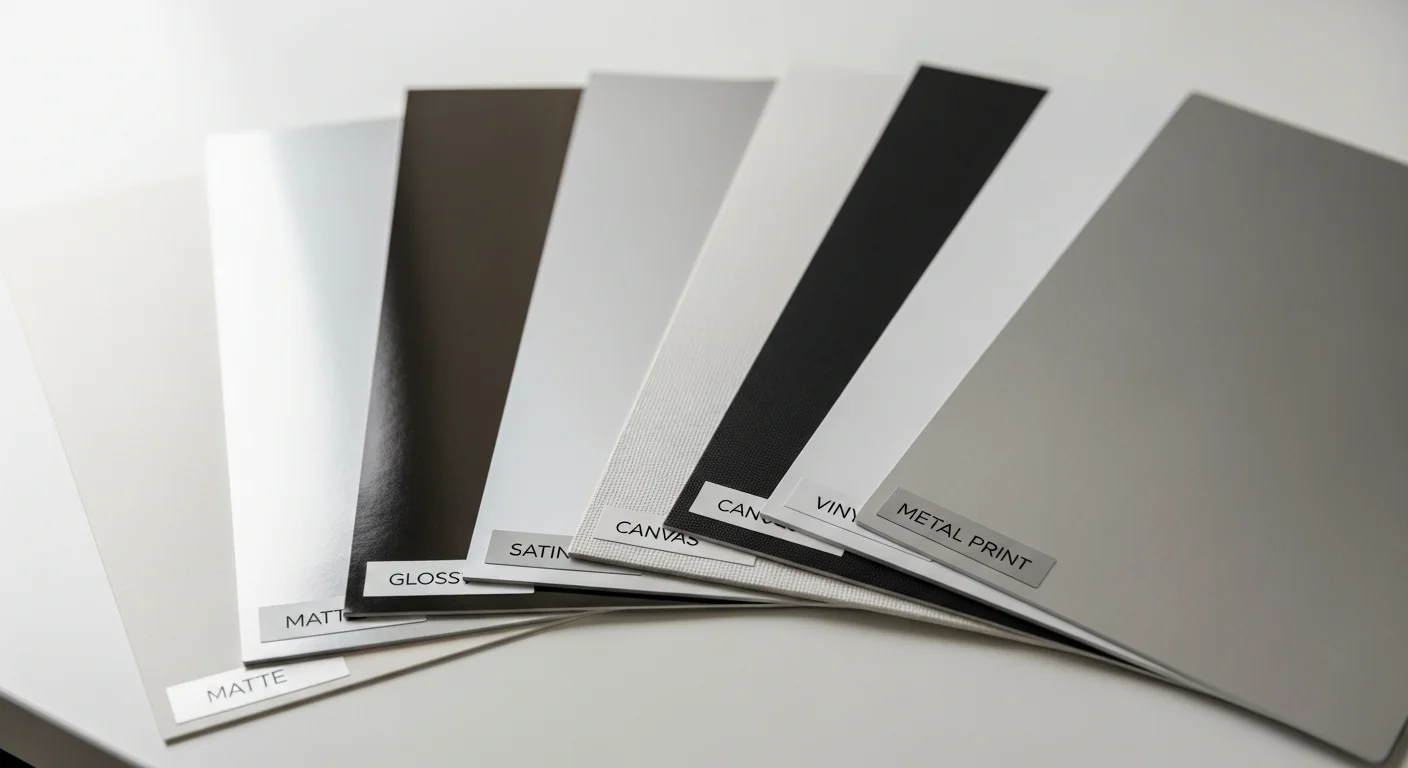
The material you print on affects your custom poster as much as the design itself. A vivid photograph printed on matte paper creates a completely different mood than the same image on glossy paper or brushed aluminum. Understanding the characteristics, strengths, and ideal use cases of each poster material empowers you to choose the right surface for your specific project.
This guide covers every major poster material available for custom printing, with practical advice on when to use each one. From affordable paper options to premium metal and acrylic, find the material that brings your vision to life.
Matte Paper Posters
Matte paper has a smooth, non-reflective surface that eliminates glare under any lighting condition. Colors on matte paper appear slightly softer and more subdued compared to glossy, with a natural, fine-art quality. Blacks are deep but not as intense as glossy blacks.
Best for: Text-heavy designs, photography viewed under direct lighting (no glare), fine art reproductions, professional and corporate environments, and posters that will be framed behind glass (matte eliminates the double-reflection issue that glossy paper creates behind glass).
Not ideal for: Designs that rely on maximum color saturation and contrast, such as vivid product photography or pop art. If you need colors to "pop," glossy or satin is a better choice.
Paper weight: Standard matte poster paper ranges from 170-250 gsm (grams per square meter). Heavier weights feel more premium and resist curling better. For framed posters, 200+ gsm is recommended.

Glossy Paper Posters
Glossy paper has a shiny, reflective surface that maximizes color vibrancy and contrast. Colors appear more saturated, blacks are deeper and richer, and the overall image has more visual punch. The reflective surface catches light and creates a dynamic, attention-grabbing presentation.
Best for: Photography (especially landscapes, portraits, and product shots), pop art and vibrant illustrations, concert and event posters, movie posters, and any design where maximum color impact matters. Photo posters for home decor are often printed on glossy for the most vivid results.
Not ideal for: Environments with strong direct lighting (the reflective surface creates glare hotspots), text-heavy designs (glare interferes with reading), and posters that will be framed behind glass (double reflection).
Paper weight: Glossy poster paper typically ranges from 200-300 gsm. The coating adds weight compared to uncoated matte paper, resulting in a heavier, more substantial feel.
Satin (Semi-Gloss) Paper Posters
Satin finish — also called semi-gloss, semi-matte, or luster — splits the difference between matte and glossy. It has a subtle sheen that enhances colors without the aggressive reflection of full glossy. Many professional photographers consider satin the ideal poster paper because it combines the color vibrancy of glossy with the reduced glare of matte.
Best for: Professional photography, mixed media designs (combining photos with text), gallery and exhibition prints, and situations where you want vibrant colors without glare. Satin is the "safe choice" that works well in virtually every display environment.
Paper weight: Similar to glossy at 200-300 gsm. The semi-gloss coating provides the same premium weight and rigidity.
Canvas Posters
Canvas posters are printed on cotton or poly-cotton fabric with a textured surface that resembles traditional artist's canvas. The texture adds depth and dimension to printed images, creating a distinctly fine-art feel that paper cannot replicate. Gallery-wrapped canvas is stretched over a wooden stretcher frame and arrives ready to hang without a frame.
Best for: Fine art reproductions, artistic photography, home decor statement pieces, gifts, and any project where you want the poster to look like gallery art rather than a printed poster. Canvas is the most popular material for custom quote posters intended as permanent home decor.
Not ideal for: Designs with very fine detail or small text (the canvas texture slightly softens sharp edges), budget-constrained projects (canvas costs 2-3x more than paper), and temporary displays.
Surface options: Matte canvas is the standard, providing a traditional fine-art look. Glossy canvas (also called gloss varnish canvas) adds sheen and color vibrancy while retaining the canvas texture. Most customers prefer matte for its authentic gallery feel.

Metal (Aluminum) Posters
Metal posters are printed directly onto specially coated aluminum panels using dye-sublimation or UV printing technology. The metallic substrate creates a unique visual effect: areas of the image without ink show through as a subtle metallic sheen, making highlights glow and giving the overall image a luminous, three-dimensional quality.
Best for: Modern and contemporary spaces, automotive and motorcycle art (the metallic sheen complements mechanical subjects), architectural photography, bold graphic designs, and ultra-modern home or office decor. Custom car posters are particularly stunning on metal.
Not ideal for: Designs with large white areas (the metallic sheen can be distracting in white spaces), traditional or rustic aesthetics, and budget projects (metal is the most expensive standard material).
Mounting: Metal posters arrive with a built-in float mount on the back that spaces the panel 0.5-0.75 inches from the wall. This creates a modern floating effect with no visible hardware. No framing needed.
Vinyl Posters
Vinyl is a durable, flexible, synthetic material designed for environments where paper would fail. Vinyl posters are waterproof, UV-resistant, and tear-resistant, making them the only viable option for outdoor and harsh-environment displays.
Best for: Outdoor signage, storefront windows, event banners in open-air venues, construction site graphics, and any display exposed to weather, moisture, or rough handling. Vinyl is the standard for business and retail signage in challenging environments.
Not ideal for: Home decor (vinyl has a commercial look and feel), close-up viewing (print quality is slightly lower than paper or canvas), and projects where a premium fine-art feel is desired.
Finishing options: Grommets (metal rings) at the corners for rope or bungee hanging, pole pockets (top and bottom hems for dowels), and hemmed edges for durability. For large format vinyl banners, wind slits can be added to reduce sail effect in outdoor installations.
Foam Board Posters
Foam board (foam core) is a lightweight rigid substrate consisting of polystyrene foam sandwiched between smooth surfaces. Foam board posters are either direct-printed or have a paper poster adhesive-mounted to the board surface. The rigidity allows self-standing display without frames.
Best for: Event signage, trade show displays, point-of-sale retail graphics, presentation boards, real estate displays, and any application requiring rigid, self-standing signs. Foam board excels at poster board signs for events.
Not ideal for: Long-term displays (foam board can warp over months in humid environments), outdoor use (moisture and UV cause deterioration), and shipping (large foam boards can snap during transit if not properly packaged).
Thickness options: 3/16" (economy, lighter weight), 3/8" (standard, good rigidity), and 1/2" (premium, maximum rigidity for large signs).

Acrylic Posters
Acrylic posters are printed on or behind clear acrylic (plexiglass) panels, creating a sleek, modern display with exceptional depth and clarity. The transparency of the acrylic creates a glowing, backlit quality even in normal room lighting. Acrylic is the most premium poster material available.
Best for: Luxury interiors, executive offices, high-end retail, photography showcases, and statement pieces where you want the poster to feel like a premium art object rather than a print. Acrylic adds instant sophistication to any space.
Not ideal for: Budget projects (acrylic is the most expensive material), temporary displays, large sizes (acrylic becomes very heavy above 36x48), and environments with children or pets (acrylic can crack if impacted).
Mounting: Acrylic posters typically use standoff mounts (metal posts that space the panel from the wall) for a floating effect, or they can lean on shelves for a gallery-style display.
Which Material for Which Use Case
Here is a quick decision guide:
Home decor (permanent): Canvas or metal for statement pieces. Matte or satin paper in frames for gallery walls. Acrylic for ultra-modern spaces.
Home decor (rotating/affordable): Matte or glossy paper. Easy to swap out and affordable enough to refresh seasonally.
Events and parties: Foam board for self-standing signs. Paper posters on easels for budget events.
Business signage (indoor): Foam board or acrylic for professional environments. Paper in frames for office decor.
Business signage (outdoor): Vinyl. No other material matches its weather resistance.
Photography and art: Satin paper for the best all-around results. Canvas for fine-art presentation. Metal for modern, vivid displays.
Gifts: Canvas or metal for premium gifts. Framed paper posters for classic, affordable gifts.
Start Choosing Your Poster Material
Now that you understand the characteristics of each material, head to our free design tool to start creating your custom poster. Select your design, choose your material, pick your size, and preview the final result before ordering. RareCustom offers all six materials with no minimum orders and free shipping on orders $75+. For help choosing the right material for your specific project, contact our team — we print thousands of posters every week and can recommend the perfect material for your needs. For size guidance, check our poster sizes guide, and for cost considerations, see our budget printing tips.

Share this article
Written by
Aisha Patel
Materials Science & Sustainability Specialist at RareCustom. Aisha evaluates poster paper stocks, finishes, and eco-friendly options to help customers choose the ideal material.