Custom Rug Design Trends 2026: What's New in Personalized Floor Art
Discover the top custom rug design trends for 2026 including warm neutrals, sustainable materials, AI-powered design, pet portraits, and washable rug innovations.
Camille Dupont
Creative Director at RareCustom. BFA from RISD with 9+ years in graphic design. Camille tracks emerging design trends and translates them into actionable inspiration for custom apparel.
The custom rug industry is evolving faster in 2026 than at any point in its history. Advances in printing technology, the rise of AI-powered design tools, growing demand for sustainable materials, and shifting consumer aesthetics are reshaping what personalized floor art looks like, how it is created, and who is buying it. Whether you are a homeowner refreshing your living space, a business owner upgrading your storefront branding, or a designer seeking inspiration, understanding the custom rug trends shaping this year's market positions you to make better, more forward-looking design decisions.
This guide explores the most significant personalized rug trends 2026 — from color palettes and texture innovations to sustainable material breakthroughs and the transformative impact of artificial intelligence on the design process. Each trend includes practical takeaways you can apply directly to your next custom rug project. By the end, you will know not just what is trending, but why it matters and how to incorporate these ideas into your personalized floor art.
Warm Neutral Palettes Dominate

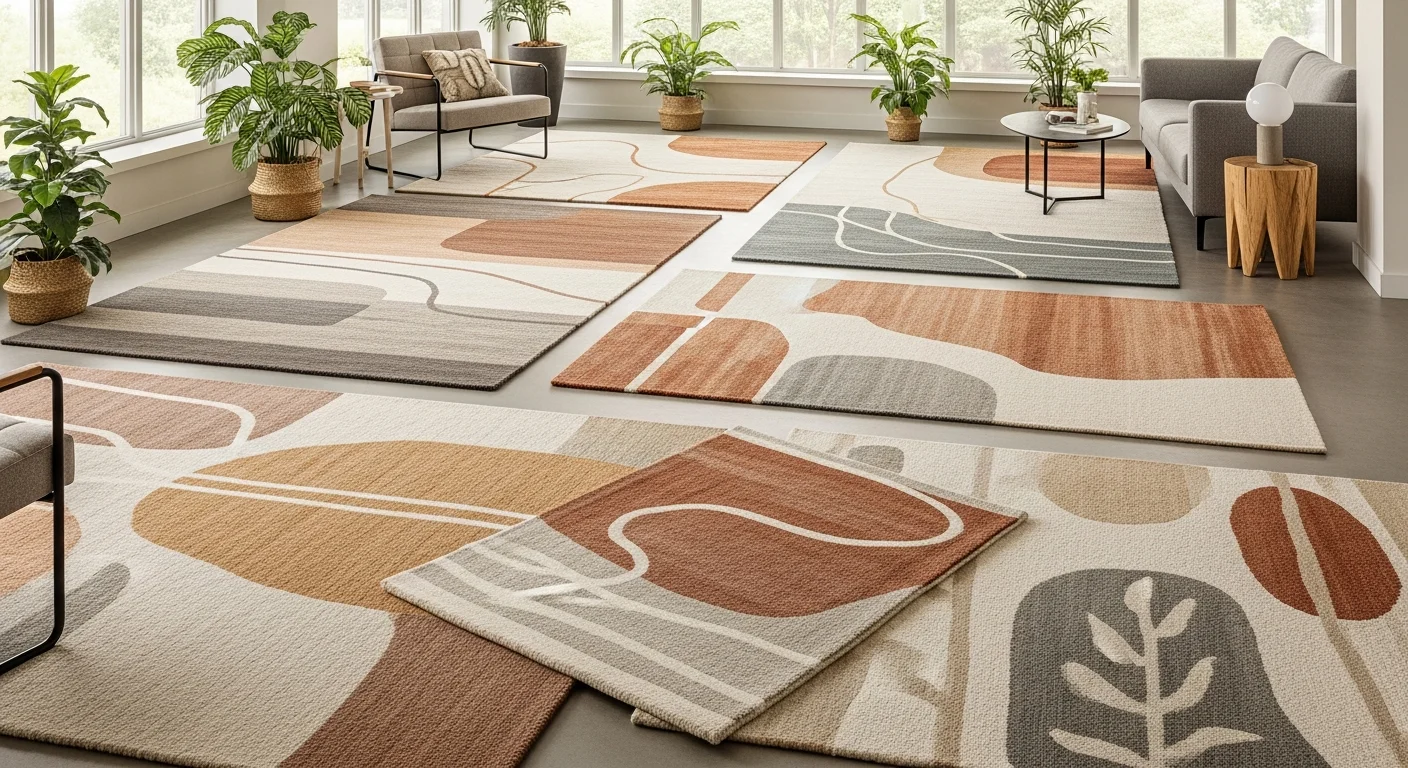
The dominant color story of 2026 is the continued reign of warm neutral rug palette combinations. Cool grays and stark whites that defined the previous decade of interior design are giving way to warmer, more organic tones — terracotta rug shades, sandy beiges, cream, soft clay, mushroom, and warm taupe. These colors create environments that feel grounded, comforting, and connected to the natural world, reflecting a broader cultural desire for warmth and authenticity in living spaces.
Earth tone rug palettes — olive greens, rust oranges, warm browns, and sun-bleached yellows — complement the warm neutral foundation. These colors draw inspiration from landscapes, geological formations, and natural materials (wood, stone, clay, dried botanicals), creating rugs that feel like organic extensions of the environment rather than manufactured décor items. The sage green rug has emerged as a particular standout, offering a calming, nature-connected hue that pairs beautifully with both warm and cool secondary tones.
For custom rug designers, the warm neutral trend opens a wide creative lane. Monochromatic designs in graduating shades of a single warm neutral (cream to caramel to espresso) create sophisticated, gallery-worthy pieces. Two-tone combinations (terracotta and cream, sage and sand, rust and charcoal) deliver visual interest without the complexity of multi-color palettes. These restrained color approaches also ensure that the rug integrates seamlessly into diverse interior styles — from Scandinavian minimalism to mid-century modern to boho eclectic.
The practical advantage of warm neutral rugs extends beyond aesthetics. Earth-toned and warm neutral colors are exceptionally forgiving of everyday wear, hiding minor stains, foot traffic marks, and dust far better than white, light gray, or bright-colored alternatives. For buyers seeking a rug that maintains its visual appeal with minimal maintenance, the warm neutral trend delivers both style and practicality.
Texture Over Color
A defining shift in 2026 rug design innovation is the growing emphasis on texture as a design element equal to — or even more important than — color. Textured rug printing technologies now allow designers to create visual texture effects that mimic woven, embossed, brushed, and layered surfaces through printing alone, without altering the physical construction of the rug.
Digital printing techniques can now simulate the appearance of hand-knotted weaves, linen crosshatching, concrete surface texture, brushed metal finishes, and watercolor paper grain. These printed textures add visual depth and tactile illusion to flat-printed surfaces, making a polyester rug appear far more complex and artisanal than its production method would suggest. The result is a product that delivers the visual richness of a handcrafted rug at the price point and convenience of digital printing.
The texture-over-color trend aligns naturally with the warm neutral palette dominance. When a rug relies on subtle texture rather than bold color for visual interest, it stays versatile across room changes, furniture swaps, and seasonal décor rotations. A textured rug in cream with a simulated linen weave pattern works in a living room with teal accents today and gold accents next year — the neutral texture serves as a universal foundation.
For designers creating custom rugs, incorporating printed texture effects is straightforward with the right source files. High-resolution texture photographs, digitally created texture overlays, and even scanned natural materials (wood grain, stone surface, fabric swatches) can be incorporated into rug designs as background layers or pattern elements. The custom rug design tips guide covers layout and composition techniques that apply directly to texture-driven designs.
Sustainable Materials

Sustainability has evolved from a niche consumer preference to a mainstream purchasing criterion, and the custom rug industry is responding with measurable innovations. Eco-friendly rug materials are no longer limited to rough-textured, visually compromised alternatives — modern sustainable custom rug options deliver the same print quality, color vibrancy, and durability as conventional materials while reducing environmental impact.
Recycled polyester rug fabric, produced from post-consumer PET bottles and reclaimed polyester waste, has reached quality parity with virgin polyester in both print performance and physical durability. A rug made from recycled polyester accepts dye sublimation printing identically to conventional polyester, producing vibrant, fade-resistant colors with no visible quality difference. The environmental benefit is significant — each recycled polyester rug diverts plastic waste from landfills and oceans while consuming less energy and water than virgin polyester production.
Water-based inks and dyes represent another sustainability advancement in rug printing technology. Traditional solvent-based inks release volatile organic compounds (VOCs) during printing and curing. Water-based alternatives achieve comparable color results with dramatically reduced chemical emissions, making the production process safer for workers and less impactful on air quality. Leading custom rug manufacturers are transitioning to water-based sublimation inks that maintain the color depth and permanence buyers expect while meeting stricter environmental standards.
For buyers who prioritize sustainability, the key is to ask providers about their material sourcing and production practices. Certifications like OEKO-TEX Standard 100 (confirming the product is free of harmful chemicals), GRS (Global Recycled Standard), and GOTS (Global Organic Textile Standard) provide third-party validation of environmental claims. RareCustom's commitment to responsible production practices aligns with the growing demand for eco-friendly rug materials that look and perform as well as conventional alternatives. For similar sustainability trends in other product categories, see the custom blanket design trends 2026 guide.
AI-Powered Design

Artificial intelligence is fundamentally changing how custom rugs are designed, and 2026 marks the year AI transitions from experimental novelty to practical creative tool. AI rug design tool capabilities now allow users to describe their vision in natural language — "a warm terracotta rug with subtle geometric patterns and a sage green border" — and receive multiple design options generated in seconds. This democratizes rug design, making professional-quality compositions accessible to buyers who lack traditional design skills or artistic training.
Generative art rug designs created by AI models produce patterns, color combinations, and compositions that no human designer would conceive — organic, algorithmically complex, visually arresting. These AI-generated designs are particularly striking for abstract and geometric rug styles, where the AI's ability to create infinitely complex, mathematically precise patterns produces results that feel both futuristic and timeless.
Text-to-image rug technology has matured to the point where a buyer can type a detailed description — "minimalist Scandinavian design, cream background, thin black geometric lines, asymmetric composition" — and receive a production-ready design file. The AI interprets style references, color preferences, compositional intentions, and spatial relationships to generate designs that match the buyer's vision without requiring them to use graphic design software.
Rug personalization technology powered by AI extends beyond design generation. AI-assisted color matching ensures that the colors in a screen design translate accurately to printed fabric. AI-powered upscaling can enhance low-resolution images to print-ready quality, expanding the range of source photos viable for photo rug production. AI layout optimization can automatically balance visual weight, adjust margins, and recommend composition improvements based on design principles — offering real-time design coaching to first-time rug creators.
Statement Rugs as Focal Points

The concept of the statement rug focal point is accelerating in 2026 as homeowners and interior designers increasingly treat the floor as a primary art surface rather than a background element. Instead of choosing a rug that quietly complements the furniture, the statement rug approach reverses the hierarchy — the rug is selected first, and the rest of the room is designed around it.
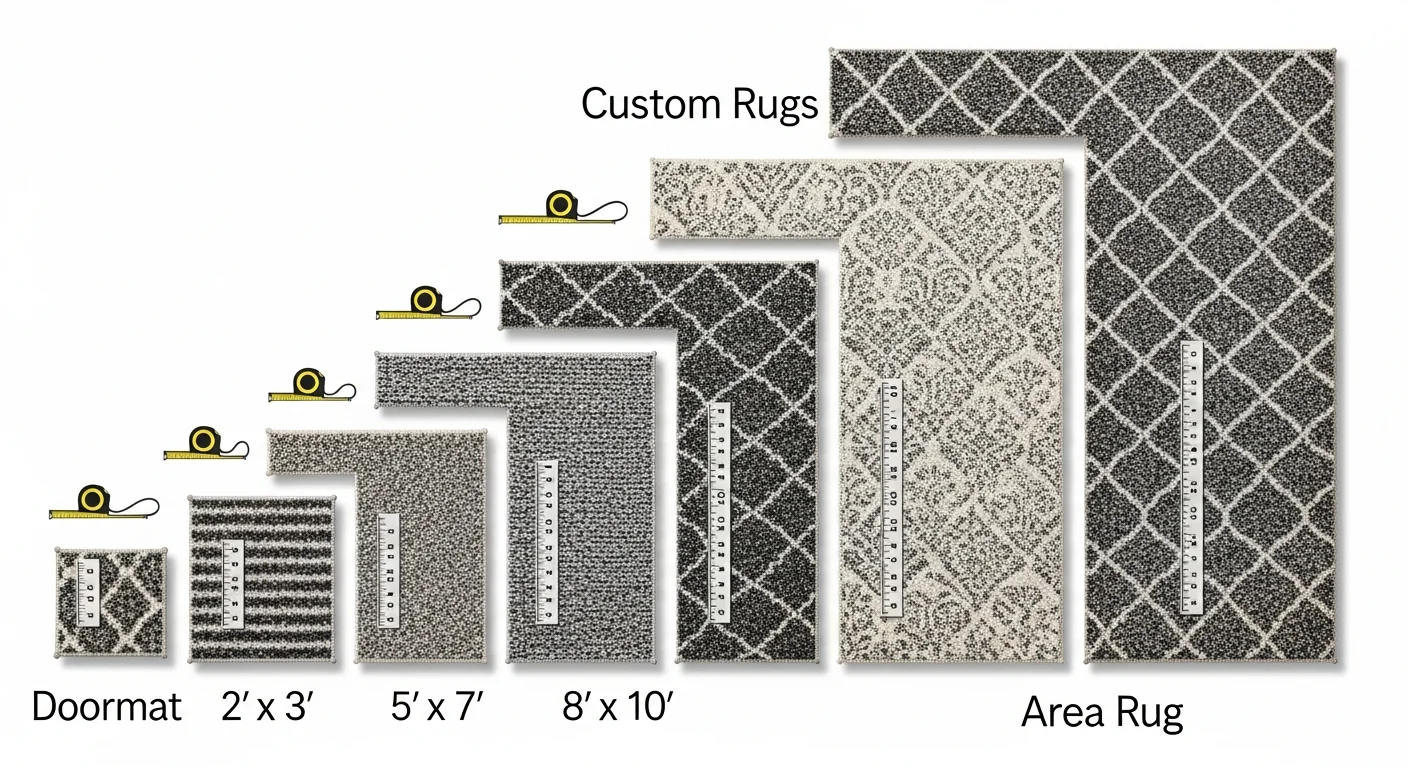
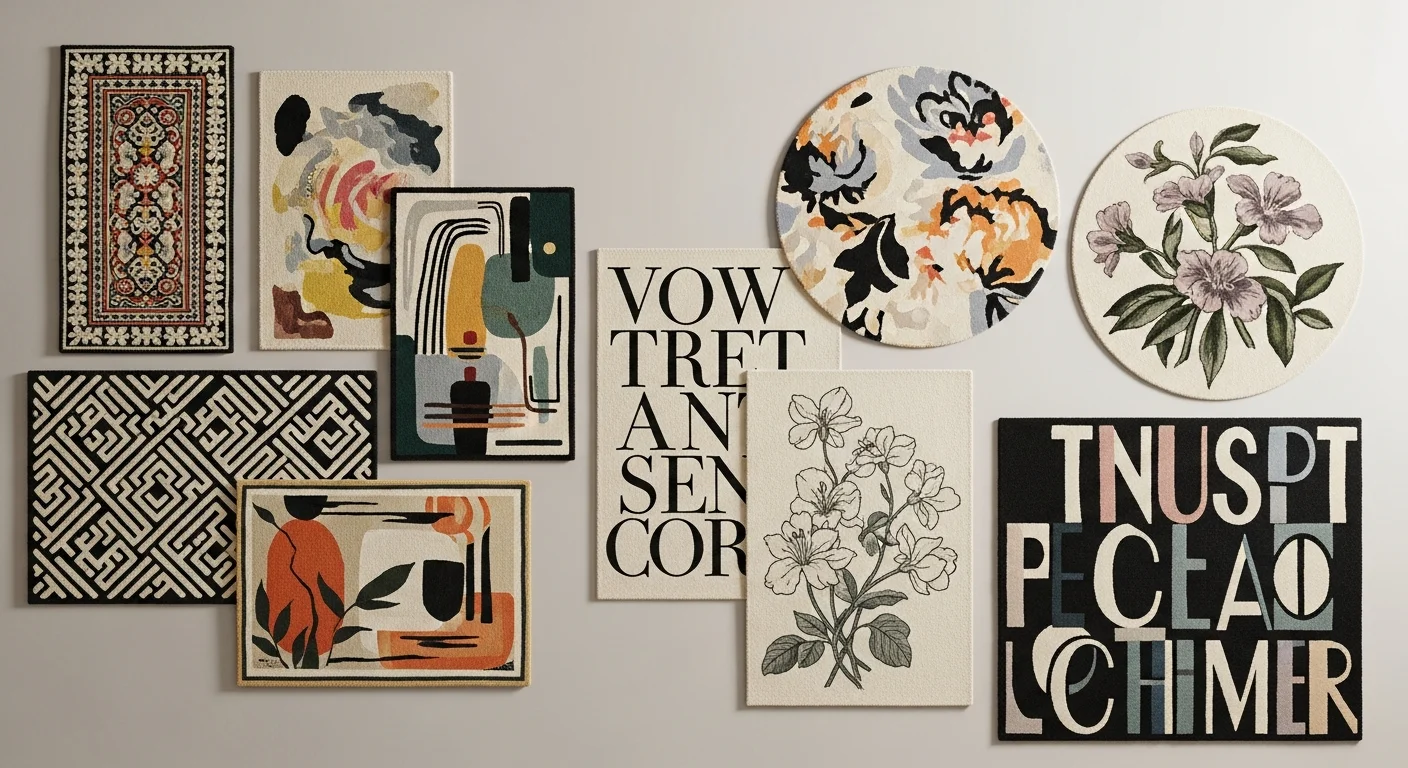
Statement rugs feature bold colors, oversized patterns, photographic imagery, or artistic compositions that command attention and define the room's personality. A large-scale abstract art piece, a dramatic pet portrait, a vivid landscape photograph, or a geometric pattern in contrasting colors all function as statement pieces when executed at room-defining scale (5×7 feet or larger).
The rise of the statement rug trend reflects a broader shift in interior design philosophy — away from safe, neutral, play-it-safe décor and toward expressive, personality-driven spaces. Custom rugs are the ideal vehicle for this trend because they allow unlimited creative expression. Unlike mass-produced statement rugs limited to a manufacturer's existing catalog, a custom rug can feature any image, any color palette, any pattern, and any text that the buyer envisions.
Practically, a statement rug requires restraint in the surrounding décor. If the rug features bold colors, keep the furniture and wall colors neutral to avoid visual competition. If the rug features a complex pattern, pair it with simple, solid-colored upholstery. The statement rug principle works only when the rug has room to breathe — cluttering the space with equally bold competing elements diminishes the impact of every piece, including the rug.
Biophilic Design
Biophilic rug design — incorporating natural elements, organic shapes, and nature-inspired imagery — is one of the strongest emerging trends in 2026 personalized floor art. Biophilic design connects interior spaces to the natural world, creating environments that reduce stress, improve mood, and enhance cognitive function. Custom rugs serve as an accessible and impactful entry point for biophilic design because they occupy significant visual and physical space in a room.
Nature-inspired rug designs take many forms. Botanical prints — leaves, ferns, flowers, vines — bring living-room spaces to life with organic shapes and green tones. Water imagery — ocean waves, river patterns, rain ripples — adds a calming, meditative quality. Earth textures — stone, sand, moss, bark — ground a space in the physical world. Abstract interpretations of natural phenomena — wind patterns, topographic maps, geological strata — deliver biophilic benefits through suggestion rather than literal representation.
The color palettes associated with biophilic design align seamlessly with the warm neutral and earth tone trends already dominating 2026. Sage green, forest green, ocean blue, sandstone, terracotta, and moss create a nature-connected palette that works across design styles from modern to rustic. A biophilic rug does not require a literal nature photograph — even an abstract composition in natural colors achieves the psychological benefits of nature connection through color association.
For custom rug buyers, the biophilic trend offers a rich creative direction that is both on-trend and timeless. Nature-inspired designs never truly go out of style because their appeal is rooted in human biology rather than fashion cycles. A rug featuring a botanical pattern or earth-tone abstract composition will feel as relevant in five years as it does today — making it a sound investment for buyers who want their custom piece to age gracefully.
Pet Portrait Rugs

The pet portrait rug trend has exploded in 2026, driven by the growing recognition that pets are full family members who deserve personalized representation in the home. Pet portrait rugs rank among the top-selling custom rug categories across every major provider, and the creative approaches to pet portraiture on rugs have expanded dramatically beyond simple photo reproductions.
Realistic photo portraits remain popular, especially for large-format rugs where the pet's face fills the entire surface with lifelike detail. But the trend has expanded to include stylized interpretations — pop art treatments that render the pet in bold, flat colors inspired by Andy Warhol, watercolor-style paintings generated from photographs, illustrated line-art portraits that capture personality through minimal strokes, and even abstract representations where the pet's silhouette or characteristic shape becomes the design motif.
Memorial pet rugs continue to be one of the most emotionally resonant product categories. A pet memorial rug provides comfort and daily connection for owners grieving the loss of a companion animal. These rugs often include the pet's name, birth and passing dates, and a brief tribute alongside the portrait — creating a permanent, visible memorial that occupies a meaningful place in the home.
For buyers interested in the pet portrait trend, source photos matter enormously. Well-lit, high-resolution photos where the pet faces the camera directly produce the most impactful rug designs. Outdoor photos with natural lighting generally outperform indoor flash photos for color accuracy and warmth. The pet's characteristic expression — a goofy grin, an intense gaze, a relaxed lounging pose — is what makes the portrait feel alive on the rug surface. For detailed photo selection and preparation guidance, see the beginner's guide to custom rugs.
Rug Layering and Mixing
Rug layering — placing two or more rugs on top of each other to create a multi-dimensional floor arrangement — has evolved from a niche boho styling trick into a mainstream interior design technique in 2026. Custom rugs are particularly well-suited for layering because buyers can design complementary pieces specifically intended to work together, with coordinated colors, proportions, and visual weight.
The classic layering approach places a larger, simpler base rug (neutral color, subtle texture) underneath a smaller, more visually complex top rug (bold pattern, photographic image, or statement design). The base rug provides a frame and spatial definition, while the top rug delivers the personality and focal-point impact. This approach works especially well in living rooms, where a large neutral area rug under a sofa grouping provides warmth and structure, and a smaller statement rug positioned in front of the seating adds artistic interest.
A boho rug revival aesthetic drives much of the layering trend, mixing patterns, textures, and colors in a deliberately eclectic style. Custom rug buyers can design layered sets with intention — coordinating the color palettes of both rugs while varying their pattern styles (geometric base with organic top, solid base with patterned top) to create a layered look that feels curated rather than chaotic.
Practically, rug layering works best when the base rug is flat-weave with a low pile and the top rug is light enough to lay flat without excessive bunching. Both rugs should have anti-slip backing, and the top rug's edges should be well within the base rug's boundaries (at least six inches from the edge on all sides) to prevent tripping hazards. When ordered as a coordinated set, custom rug providers can ensure color matching between the layers for a polished, professional result.
Washable Custom Rugs
The washable rug trend continues to gain momentum in 2026, driven by practical demand from households with children, pets, and active lifestyles. Machine-washable custom rugs eliminate the friction between wanting a beautiful personalized floor piece and worrying about spills, stains, and daily wear destroying it. The ability to toss a rug in the washing machine and restore it to near-new condition makes custom rugs a low-anxiety purchase for the first time.
Dye sublimation printing on polyester is inherently washable because the dye is chemically bonded to the fibers rather than sitting on the surface. Sublimation-printed rugs withstand cold-water machine washing on gentle cycles repeatedly without color loss, fading, cracking, or peeling. This durability makes polyester sublimation the ideal combination for buyers who want both customization and washability — which is the vast majority of residential buyers in 2026.
The washable trend is particularly relevant for families with young children and pet owners — two of the largest custom rug buyer demographics. A nursery rug, playroom mat, or pet-area rug that can be cleaned as easily as a bath towel removes the hesitation that prevents many buyers from investing in a custom piece for high-use areas. When a spill happens (and it will), the rug goes in the machine rather than the trash — protecting both the financial investment and the emotional value of the personalized design.
Care best practices for washable custom rugs include using cold water, gentle or delicate cycle settings, mild detergent without bleach, and air drying flat rather than tumble drying on high heat. These simple steps preserve both the print quality and the fabric integrity across dozens of wash cycles. Properly cared for, a washable sublimation-printed custom rug maintains its visual quality for five to seven years of regular residential use.
What These Trends Mean for You
The convergence of these 2026 trends creates an exciting landscape for anyone considering a custom rug purchase. Warm neutral rug palette options make it easier than ever to choose colors that integrate with existing décor. Texture printing adds visual depth without design complexity. Sustainable custom rug options let environmentally conscious buyers align their purchases with their values. AI tools lower the barrier to creating professional-quality designs. Statement rugs empower personal expression. And washable construction removes the practical barriers that previously made custom rugs feel like fragile luxury items.
The practical takeaway is that 2026 is an ideal time to invest in a custom rug. The technology is more advanced, the materials are more sustainable, the design tools are more accessible, and the product quality is higher than at any previous point. Whether you are drawn to the warm neutrals, the biophilic botanicals, the pet portrait possibilities, or the AI-generated abstracts, there has never been a better moment to transform your floor space into personalized art.
For buyers who want to stay on the leading edge, combining multiple trends in a single rug creates the most contemporary result. A warm neutral palette with biophilic botanical elements printed on recycled polyester, designed with AI assistance and ordered in a washable construction, embodies every major 2026 trend in a single piece. That is not just a rug — it is a statement about where home décor is heading. Complementary custom products like personalized blankets can extend your trend-forward aesthetic across your living space.
Stay Ahead with RareCustom
RareCustom stays at the forefront of rug design innovation by incorporating the latest printing technologies, sustainable materials, and design tools into every custom rug order. Our free online design tool makes it simple to experiment with trending color palettes, create statement designs, upload pet portraits, and preview your rug before production. Every rug is printed using professional-grade dye sublimation on premium polyester — vibrant, washable, and built to last.
Whether you are following the warm neutral trend, exploring AI-generated designs, or creating a pet portrait masterpiece, explore our custom rug options and start designing your trend-forward floor art today. No minimums, free shipping, and quality guaranteed on every order.
Related Articles
Share this article
Written by
Camille Dupont
Creative Director at RareCustom. BFA from RISD with 9+ years in graphic design. Camille tracks emerging design trends and translates them into actionable inspiration for custom apparel.