How to Design Custom Rugs: A Complete Beginner's Guide
Learn how to design custom rugs from scratch. Covers material selection, file preparation, printing options, sizing, and ordering. Start creating your personalized rug today.
Natalie Voss
Founder & CEO of RareCustom. MBA from Stanford with 8 years in e-commerce operations. Natalie's comprehensive guides help beginners navigate every step of the custom rug process.
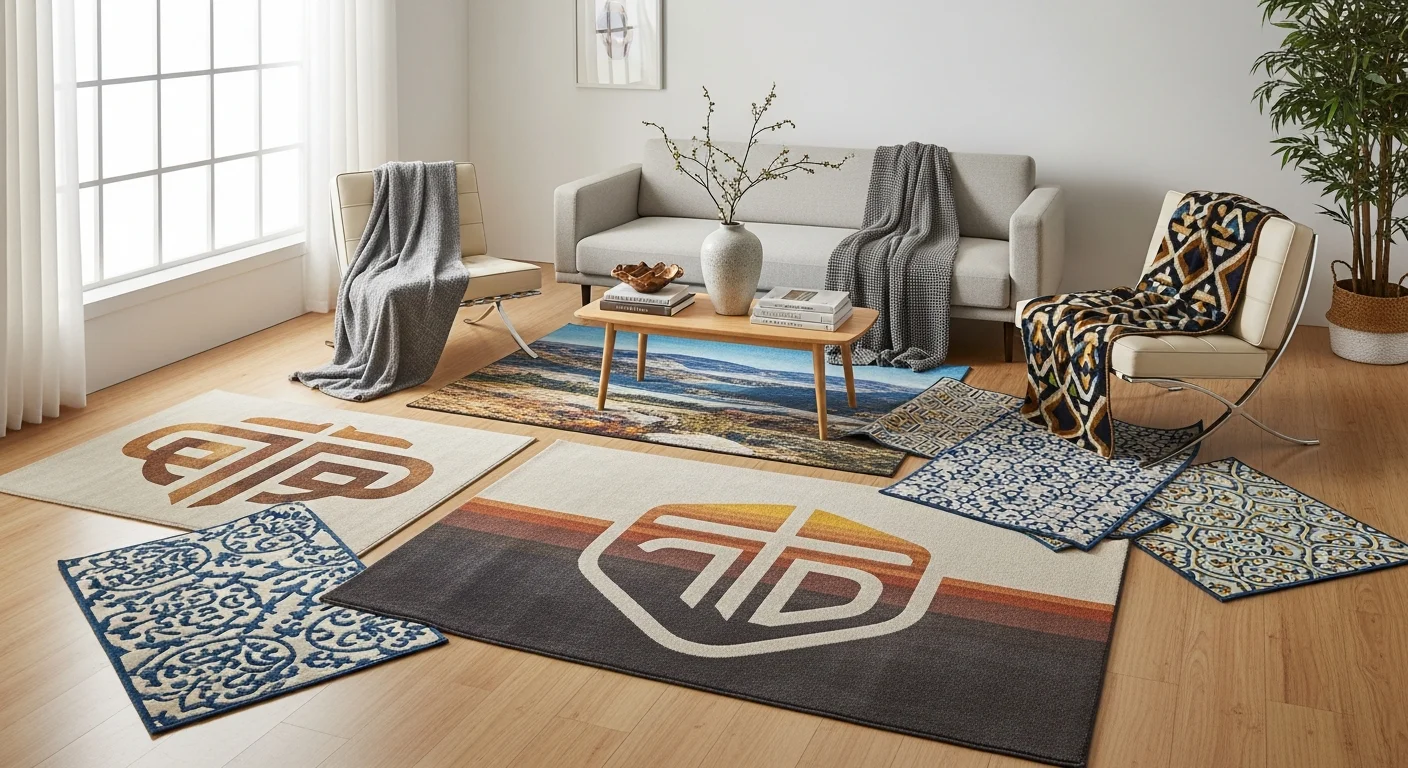
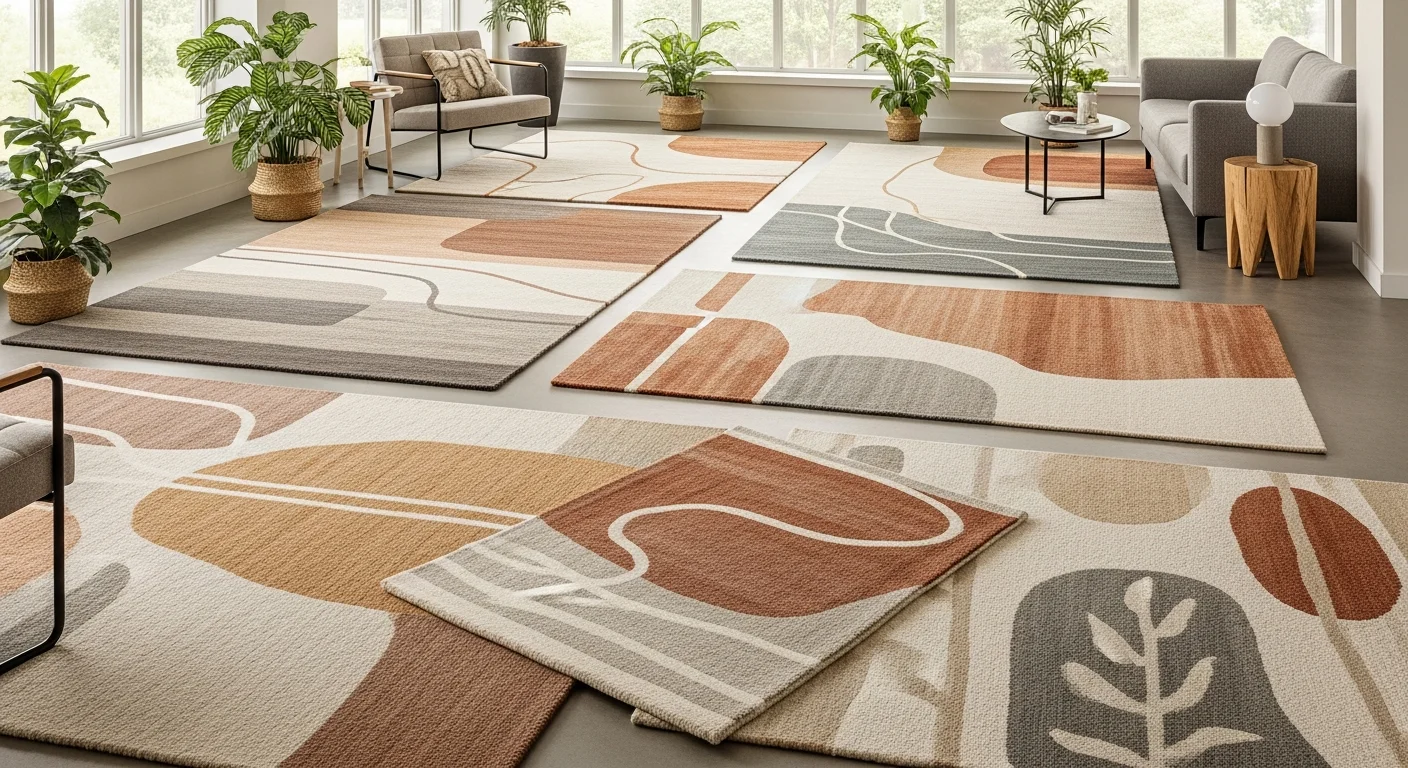
A custom rug transforms any floor space into a personal statement — whether you are showcasing family photos in your living room, branding your business entrance, or creating a one-of-a-kind art piece. Unlike mass-produced area rugs limited to stock patterns, personalized rugs let you control every detail from artwork to exact dimensions. The custom home-goods market has expanded rapidly thanks to advances in digital printing technology, making it easier and more affordable than ever to produce professional-quality rugs featuring your own designs, photographs, logos, and text.
This beginner's guide walks through every decision you will face when designing custom rugs for the first time. You will learn about rug materials, printing methods, file preparation, sizing options, ordering logistics, care instructions, and creative ideas that make personalized rugs unforgettable additions to any space. By the end, you will have the confidence to design your own rug and place an order that arrives exactly as you envisioned it.
Why Custom Rugs Are Worth the Investment
Custom rugs occupy a unique position among personalized products because they serve both a functional and aesthetic purpose. A well-designed custom area rug anchors furniture, defines zones within an open floor plan, absorbs sound, and protects flooring — all while displaying a design that is uniquely yours. Whether you need a branded entrance mat for your retail store or a nursery rug printed with your child's name, the ability to specify exact colors, dimensions, and imagery gives you creative control that off-the-shelf options simply cannot match.
The emotional value of a personalized rug is equally significant. A photo rug featuring a beloved pet portrait, a wedding photograph, or a child's hand-drawn artwork creates a daily touchpoint with memories that matter. A logo rug at the entrance of a business communicates professionalism and brand identity to every visitor who walks through the door. These are not generic decorative items — they are custom-crafted expressions of identity and purpose.
From a practical standpoint, custom floor mats often cost less than buyers expect. Advances in dye sublimation and digital inkjet printing have driven per-unit costs down, and many providers — including RareCustom — offer no minimum order rug policies, meaning you can order a single piece without bulk pricing penalties. Combined with durability that rivals or exceeds mass-market rugs, the value proposition is compelling for both personal and commercial buyers.
Quality is another area where custom rugs shine. Because each piece is printed to order using industrial-grade equipment, the color vibrancy, print resolution, and material quality are tightly controlled. A fade-resistant rug produced through dye sublimation can maintain its visual impact for five to seven years or more with proper care, making it a long-term investment rather than a disposable purchase.
Understanding Custom Rug Materials
The material you choose affects everything about your finished rug — softness, durability, print quality, weight, and price. Understanding the differences between rug fabrics ensures you select the right foundation for your design and intended use case.
Polyester rug options are the most popular choice for custom printed rugs. Polyester is lightweight, stain-resistant, and accepts dye sublimation printing beautifully, producing vibrant, edge-to-edge color reproduction with exceptional detail. Standard polyester rugs use fibers at 200–400 GSM (grams per square meter), providing a comfortable feel underfoot without excessive weight. Polyester is also highly durable, machine washable, and resistant to fading — making it ideal for both indoor decorative use and moderate-traffic areas.
A nylon custom rug is the go-to choice when durability is the top priority. Nylon fibers are stronger than polyester and excel in high-traffic environments like commercial lobbies, retail entrances, and gym floors. Nylon rugs resist crushing, matting, and wear far better than other synthetic options, and they clean up easily with standard vacuuming and spot treatment. The tradeoff is that nylon typically costs more per square foot and may produce slightly less vibrant colors than polyester under sublimation printing.
A chenille rug offers an ultra-soft, plush texture that is perfect for low-traffic decorative applications like bedrooms, nurseries, and reading nooks. Chenille's tufted construction creates a velvety hand feel that makes it one of the most comfortable rug materials available. Print quality on chenille is excellent, though the textured surface can soften very fine details compared to a flatweave polyester surface. For a comprehensive comparison of every material option, read the polyester vs nylon vs chenille custom rug materials guide.
Velvet rugs represent the premium tier of custom rug materials, offering a luxurious shimmer and rich color depth that creates a true statement piece. Velvet's smooth, dense pile produces some of the most visually stunning print results, with colors appearing deeper and more saturated than on any other material. Velvet rugs are best suited for formal living rooms, executive offices, and display areas where visual impact matters more than heavy-duty durability.

Printing Methods Explained
The rug printing process you select determines color vibrancy, print permanence, and how your design interacts with the fabric surface. Two primary methods dominate the custom rug industry, each with distinct strengths suited to different materials and design requirements.
Dye sublimation rug printing is the most popular method for polyester-based custom rugs. The process works by printing your design onto transfer paper using specialized sublimation inks, then applying heat and pressure (375–400°F) to convert the solid ink into a gas that bonds permanently with the polyester fibers. The result is a print that is literally part of the fabric rather than a layer sitting on top — meaning it will not crack, peel, chip, or fade under normal use conditions. Dye sublimation produces the most vibrant colors, smoothest gradations, and richest blacks of any rug printing method.
Digital inkjet rug printing offers greater material versatility, working on polyester, nylon, chenille, cotton blends, and other fabrics that sublimation cannot reach. High-resolution inkjet heads spray dye directly onto the pre-treated rug surface, pushing ink into the fibers for good adhesion and color penetration. Inkjet printing excels at reproducing fine details, thin lines, and intricate text — making it the preferred choice for logo rug applications where brand mark precision is critical. For a detailed comparison of both methods, see the dye sublimation vs digital printing for custom rugs guide.
Both methods support 200 DPI rug printing at full rug dimensions, producing sharp, professional results. The choice between them typically comes down to your selected material (sublimation requires polyester) and the balance between color vibrancy (sublimation wins) and material flexibility (inkjet wins).
Choosing the Right Rug Size
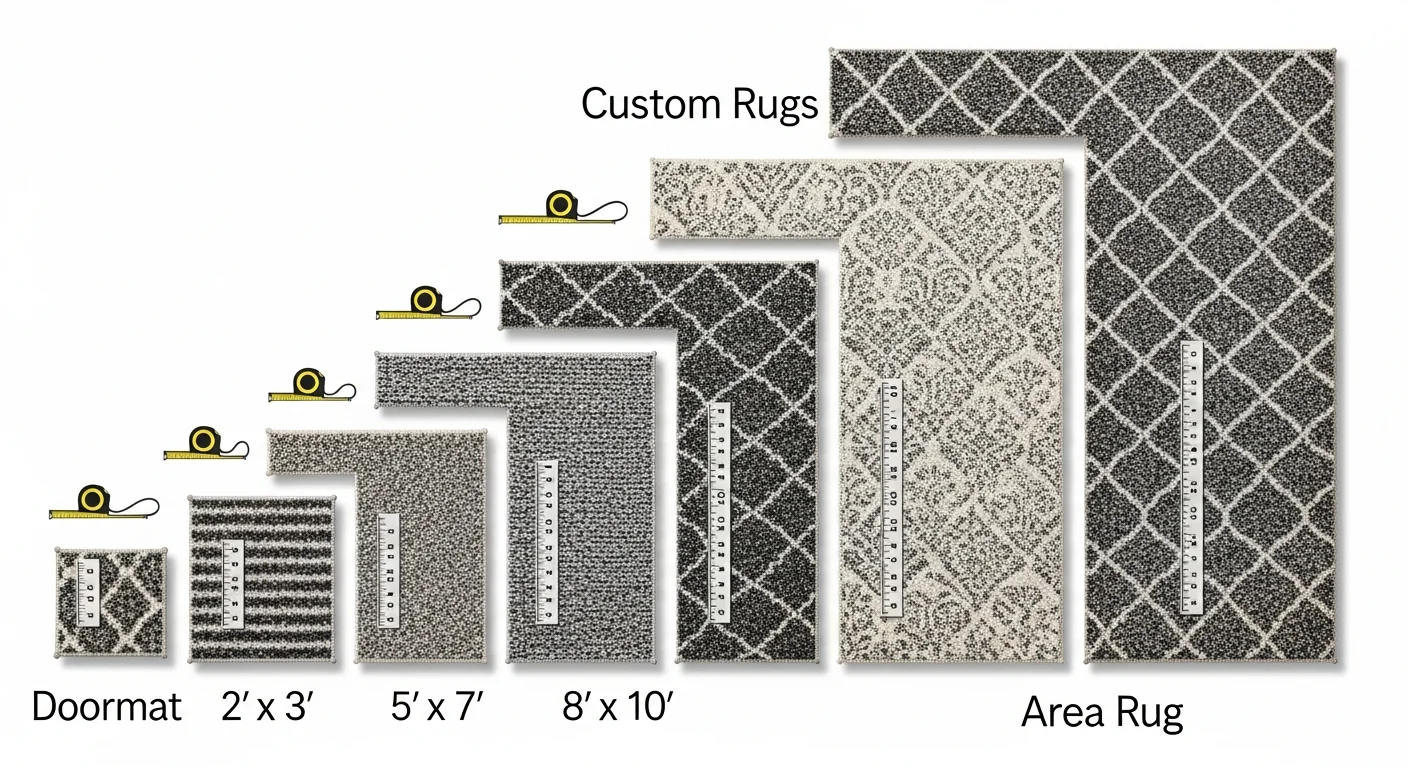
Selecting the correct rug size ensures your custom piece fits its intended space perfectly. Ordering a rug that is too small for a room or too large for an entryway creates a visual mismatch that undermines the entire design. A reliable rug sizing guide starts with measuring your space and understanding standard size categories.
Doormat sizes (18" x 30" or 2' x 3') are designed for entryways, welcome areas, and covered porches. A custom entryway mat at this size is the most affordable way to add branded or personalized flooring to any entrance. These compact mats work perfectly for monograms, welcome messages, family names, and small business logos.
Accent rug sizes (3' x 5') serve bedside areas, kitchens, hallways, and small seating zones. This mid-range size provides enough surface area for detailed photo prints and multi-element designs while remaining easy to move, clean, and store. A custom runner rug (typically 2.5' x 7' or 2' x 8') fills long, narrow spaces like hallways, corridors, and behind kitchen counters — adding color and personality to areas that standard area rugs cannot cover.
Full area rug sizes (5' x 7' and 8' x 10') anchor living rooms, dining areas, offices, and conference rooms. These larger formats provide maximum visual impact and can display complex designs, photo collages, or large-scale artwork at full resolution. Custom dimensions are also available for non-standard spaces — odd-shaped rooms, curved walls, or oversized lobbies that demand precise measurements. For detailed pricing by size, see the custom rug sizing and pricing guide.

Preparing Your Design Files
Proper file preparation is the single most important factor in achieving a professional-quality custom rug. The rug design file requirements are straightforward, but cutting corners on resolution or file format will produce disappointing results that no printing method can fix.
Resolution is the critical variable. For optimal results, your design file should be at least 200 DPI at the final print size. For a 5' x 7' rug, this translates to approximately 12,000 x 16,800 pixels — a large file, but well within the capability of modern cameras and design software. As a practical minimum, aim for at least 3,000 pixels on the longest side for acceptable quality on smaller rugs. A high-resolution rug print starts with a high-resolution source file — there is no substitute.
For file formats, PNG rug upload is preferred because PNG preserves full color information without the compression artifacts that degrade JPEG files. JPG and TIFF formats are also accepted, and SVG is ideal for vector-based logo rug designs that need to scale perfectly to any rug dimension. Avoid using screenshots, social media downloads, or heavily compressed images as source files — these contain insufficient resolution data for large-format rug printing.
Color space matters for accurate reproduction. Submit files in sRGB color space for the most predictable results with sublimation printing. CMYK files will be converted during production, which can introduce minor rug color options shifts. Always request a digital rug mockup or rug proof approval before production begins to verify that colors, placement, and bleed areas match your expectations.

Step-by-Step Ordering Process
The rug ordering process is simpler than most first-time buyers expect. Modern custom rug providers have streamlined the workflow into a handful of intuitive steps that guide you from concept to finished product.
Step one is selecting your rug material and size. Based on the guidance above, choose the fabric that best fits your use case — polyester for vibrant prints, nylon for commercial durability, chenille for soft luxury, or velvet for premium aesthetics. Then select a standard size or enter custom dimensions for non-standard spaces.
Step two is uploading your design, photo, or logo. Most platforms accept PNG, JPG, TIFF, and SVG formats. Upload the highest resolution file available and let the custom rug design tool handle the scaling and positioning.
Step three is arranging your layout using the online design tool. Position, scale, and rotate your artwork within the rug template. Add custom text rug elements like names, dates, or messages. Apply background colors, borders, or decorative frames to complete the design. The RareCustom design tool provides a real-time preview so you can see exactly how your finished rug will look before ordering.
Step four is reviewing your digital proof. Verify colors, placement, bleed areas, and overall composition. This is your last opportunity to catch errors before production begins. Step five is placing your order — you will receive a production timeline and shipping estimate at checkout. Most custom rugs ship within 5–10 business days, depending on size, material, and current demand. For more details on the full process, visit the how it works page.

Indoor vs Outdoor Custom Rugs
Understanding the difference between indoor custom rug and outdoor custom rug applications ensures you select the right materials and printing for your environment. Indoor and outdoor rugs face fundamentally different conditions, and choosing the wrong specification for your setting will shorten the rug's lifespan significantly.
Indoor custom rugs enjoy a controlled environment — stable temperature, limited UV exposure, and relatively clean foot traffic. This means you can prioritize aesthetics over weather resistance, choosing softer materials like chenille or velvet, higher pile heights for plush comfort, and delicate design elements that would not survive outdoor exposure. Indoor rugs in low-traffic areas (bedrooms, home offices) can last seven years or more with minimal care.
Outdoor custom rugs must withstand sun exposure, rain, temperature swings, and heavier foot traffic from shoes that track in dirt and debris. Outdoor-rated rugs use UV-stable inks that resist fading under direct sunlight, weather-resistant backing that prevents moisture from pooling beneath the rug, and durable synthetic fibers (typically polyester or polypropylene) that resist mold and mildew. Use cases include patios, decks, covered porches, pool areas, and commercial building entrances.
Indoor-outdoor crossover rugs offer a middle ground — durable enough for covered outdoor spaces while soft enough for indoor comfort. These hybrid options are popular for sunrooms, screened porches, and high-traffic indoor areas like mudrooms and kitchens where spills and dirt are common concerns.
Rug Backing and Non-Slip Options
The backing of your custom rug determines how it grips the floor surface, resists movement, and holds up over time. Rug backing options are an often-overlooked detail that significantly affects both safety and user experience.
Anti-slip rug backing is the most common option for residential and light commercial use. This latex-sponge backing provides excellent grip on hard floors like tile, wood, and laminate, preventing the rug from sliding or bunching when walked on. Anti-slip backing also adds a small amount of cushioning underfoot, making the rug more comfortable to stand on for extended periods.
Rubber-backed rugs provide the heaviest-duty grip and are the standard choice for commercial applications, high-traffic entrances, and safety-critical environments. Rubber backing lies completely flat against the floor surface, eliminating trip hazards and ensuring ADA compliance for businesses that must meet accessibility standards. Rubber-backed custom rugs are also the best option for kitchens, bathrooms, and laundry rooms where moisture on the floor creates slip risks.
Jute binder backing adds structural rigidity to the rug without adding significant weight. This option is popular for larger area rugs that need to maintain their shape and lie flat without curling at the edges. For additional grip on any rug type, a separate rug pad placed beneath the rug provides extra cushioning and prevents movement on any floor surface. A hemmed rug with finished edges completes the professional look and prevents fraying over time.
Custom Rug Care and Maintenance
Proper rug care instructions extend the life of your custom rug and maintain the vibrancy of the printed design for years. The good news is that modern custom rugs are engineered for easy maintenance, and most routine cleaning can be done at home without professional equipment.
Regular vacuuming is the foundation of rug care. Use a suction-only setting or a vacuum with adjustable brush height — avoid aggressive beater bars on the printed side, as they can accelerate surface wear on the fibers. For flatweave and low-pile rugs, a standard vacuum on the hard-floor setting works perfectly. For plush or high-pile rugs, use the upholstery attachment to avoid snagging.
Spot cleaning handles most spills and stains effectively. Blot the affected area immediately with a clean, damp cloth — never rub, as rubbing pushes the stain deeper into the fibers and can damage the print surface. Apply a small amount of mild detergent mixed with cold water, blot again, and allow the area to air dry completely. Avoid bleach, harsh chemical cleaners, and solvent-based products that can degrade both the fibers and the printed design.
Many custom rugs — especially polyester sublimation rugs — are fully washable custom rug products. Machine wash on a cold, gentle cycle and air dry flat to maintain shape and print integrity. Avoid high heat in the dryer, as excessive heat can affect the dimensional stability of synthetic fibers. With proper care, a quality fade-resistant rug produced through dye sublimation will maintain its visual impact for five to seven years of regular use, and rug print durability is excellent across all professional-grade printing methods.
Custom Rug Ideas for Every Use Case
The versatility of custom rugs means there is an application for virtually every setting — residential, commercial, and event-based. Exploring the full range of possibilities helps you identify creative uses you might not have considered.
For home décor, custom rugs serve as statement pieces in living rooms, cozy accents in bedrooms, playful additions to nurseries, and practical runners in kitchens and hallways. A custom rug gift featuring family photos, a meaningful quote, or a pet portrait makes an unforgettable housewarming or holiday present. For room-by-room inspiration, read the custom rugs home décor room-by-room guide.
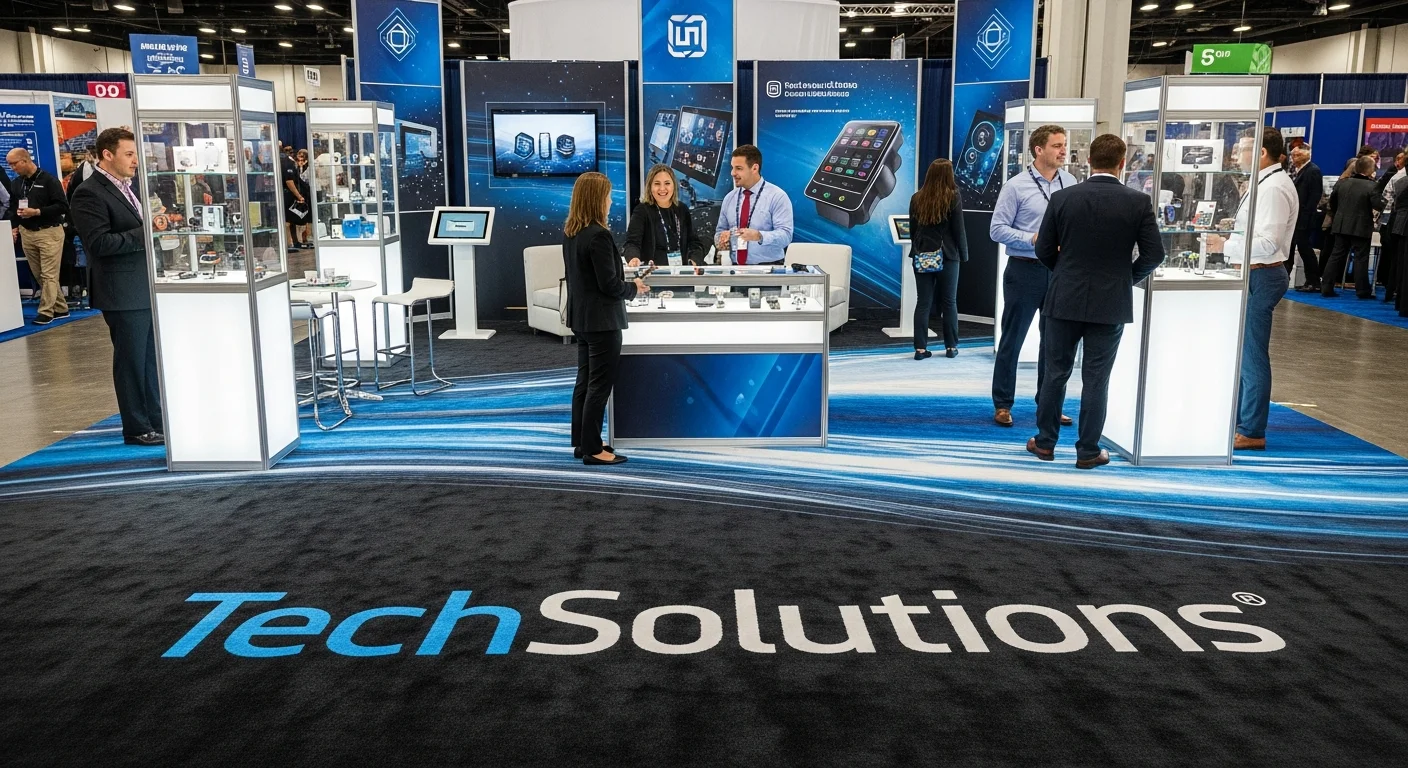
For business applications, corporate rug installations include logo entrance mats, branded reception area rugs, gym floor mats, and retail display rugs. A custom logo rug at your front door communicates professionalism and brand awareness to every visitor. For detailed guidance on business branding with rugs, see the custom logo rugs for business guide.
For events, custom rugs elevate trade show booths, pop-up shop displays, wedding aisles, and conference welcome areas with branded or themed flooring that sets your space apart. Portable custom rugs can be rolled up, transported easily, and reused across multiple events. For photo-specific projects, turning your favorite images into floor art creates a conversation piece that doubles as functional décor — explore the custom photo rugs guide for tips on image selection and preparation.
For gifts, monogram rug designs, pet portrait rugs, kids' artwork rugs, and commemorative event rugs are all popular options that combine personalization with practicality. Custom rugs also pair beautifully with other personalized home goods — consider combining a custom rug with a custom blanket for a coordinated home gift set.

Design Your Custom Rug with RareCustom
Ready to bring your vision to life? RareCustom's custom rug collection offers premium materials, professional-grade printing, and an intuitive online design tool that makes creating your perfect rug effortless. Upload your design, choose your material and size, and preview your finished rug in real time — all with no minimum order requirements and free shipping on every order.
Whether you are designing a custom entryway mat with your family name, a branded floor mat for your business lobby, or a photo rug featuring your favorite memories, the free online design tool walks you through every step. Start with a blank canvas or use one of our design templates, customize to your exact specifications, and approve your digital proof before production begins. Your custom rug ships within 5–10 business days and arrives ready to transform any floor space into something extraordinary.
For design inspiration and advanced techniques, explore the custom rug design tips guide covering layout composition, color theory, and pattern selection for stunning results.
Related Articles
Continue exploring custom rug topics with these in-depth guides:
Share this article
Written by
Natalie Voss
Founder & CEO of RareCustom. MBA from Stanford with 8 years in e-commerce operations. Natalie's comprehensive guides help beginners navigate every step of the custom rug process.