Custom Rugs for Events, Trade Shows & Pop-Ups: Stand Out on the Floor
Learn how custom rugs boost branding at trade shows, pop-up shops, weddings, and corporate events. Covers booth design, portability, materials, and ordering tips.
Rohan Mehta
Head of Marketing at RareCustom. Former business journalist at Retail Dive. Rohan combines event marketing expertise with data-driven strategy to help exhibitors maximize brand impact with custom floor branding.
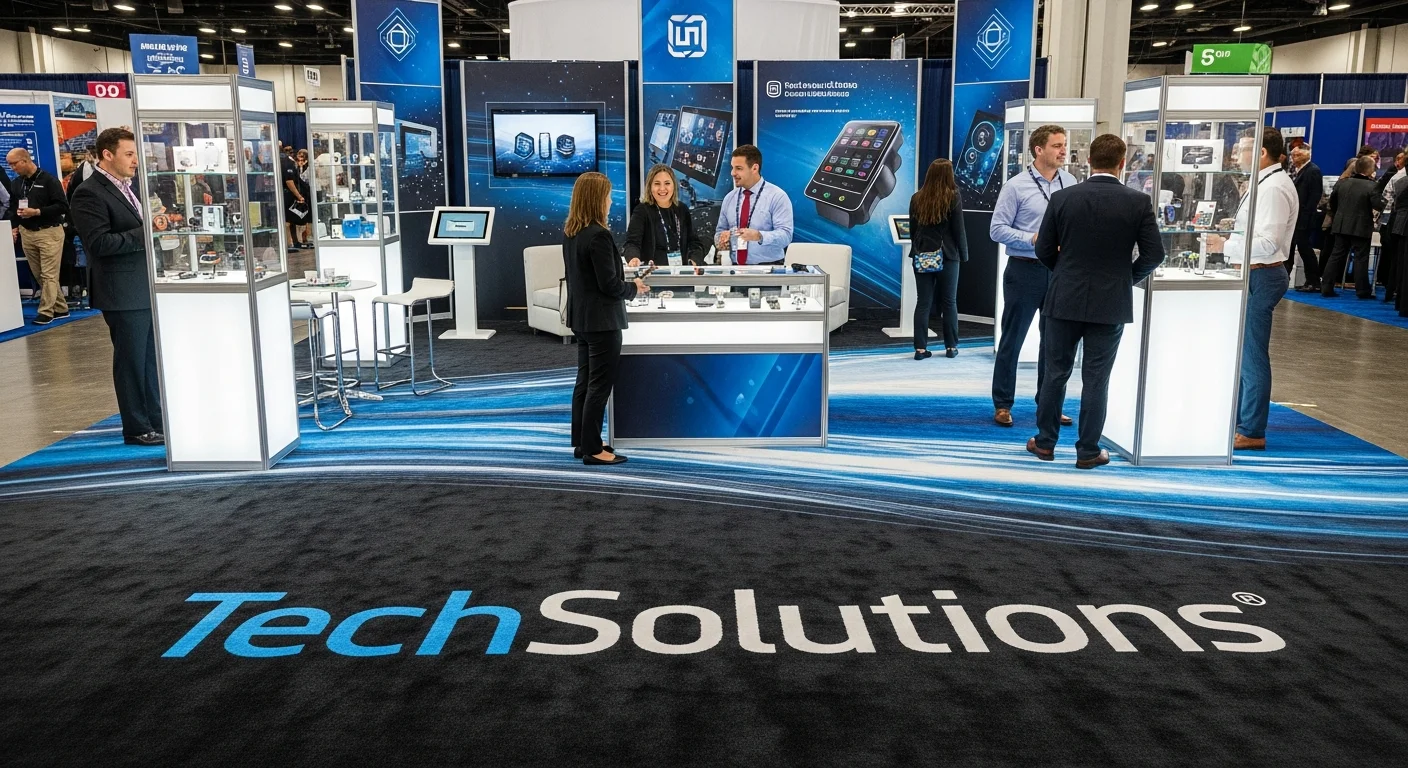
At any event — trade show, pop-up shop, wedding, or corporate conference — brands invest heavily in banners, signage, backdrops, and table displays. But most overlook the largest untapped branding surface in any booth or venue: the floor. A trade show rug printed with your logo, brand colors, or event messaging transforms dead floor space into an active branding asset that visitors see, walk across, and remember. Floor-level branding is distinctive precisely because so few exhibitors use it, making a custom floor piece an instant competitive differentiator.
This guide covers every aspect of using custom rugs at events — from trade show booth design and pop-up retail applications to weddings, corporate conferences, and product launches. You will learn how to design for maximum visual impact, choose materials that withstand event conditions, size and order efficiently, and transport rugs between venues. By the end, you will have a complete playbook for integrating event floor branding into your next appearance.
Why Floor Branding Matters at Events
Events are crowded, noisy, visually competitive environments where every exhibitor fights for attention. Banners hang at eye level where they blend with dozens of other banners. Table displays require visitors to approach closely to engage. Digital screens compete with every other screen in the hall. But the floor is different — it occupies peripheral vision constantly, it is experienced physically (visitors walk across it), and it is vastly underutilized as a branding channel.
A trade show booth rug achieves several marketing objectives simultaneously. It defines your physical territory, creating a clear visual boundary that separates your booth from the generic convention carpet on all sides. It reinforces brand identity through logos, colors, and messaging that visitors absorb subconsciously as they walk through and around your space. It adds perceived professionalism — a booth with coordinated floor branding reads as more polished, more established, and more invested than a booth standing on bare convention carpet.
Trade show ROI data supports the value of differentiated booth elements. Industry research consistently shows that exhibitors with visually distinctive booths attract 30–50 percent more foot traffic than those with standard setups. A branded floor rug contributes to that distinctiveness at a relatively low cost compared to custom booth structures, lighting rigs, or interactive technology installations. The booth visitor engagement lift from floor branding compounds across multi-day events where repeated visual exposure deepens brand recall.
Foot traffic branding also creates a unique psychological dynamic. When visitors physically step onto your branded surface, they have entered your space — crossing a boundary that creates an implicit commitment to engage. This threshold effect is well-documented in retail psychology and translates directly to the event context. A branded floor runner leading from the aisle into your booth literally guides visitors across that threshold.
Custom Rugs for Trade Show Booths

Designing a trade show booth rug requires thinking about the floor as part of a complete spatial design rather than an isolated element. The rug should integrate with your backdrop, banner stands, table displays, and product presentations to create a unified brand experience from floor to ceiling.
For standard 10×10-foot booth spaces (the most common trade show allocation), a custom rug covering the full floor area creates maximum impact. Full-coverage floor branding eliminates the generic convention carpet entirely, replacing it with your brand colors, logo, and messaging. If a full-coverage rug exceeds your budget, a 5×7 or 6×8 rug centered in the booth provides a strong visual anchor while the convention carpet remains visible around the perimeter.
Booth flooring custom options extend beyond flat-printed rugs. Some exhibitors pair a branded rug at the booth entrance (the "welcome zone") with plain comfort-mat flooring throughout the rest of the booth for staff and visitor comfort during long show hours. This hybrid approach delivers branding impact at the critical first-impression point while providing practical comfort where visitors stand for extended conversations.
Design-wise, trade show booth rugs should feature high-contrast logo placement visible from six to ten feet away — the distance at which aisle traffic decides whether to approach. Bold, clean logos with minimal surrounding detail perform best because they communicate the brand identity quickly and unambiguously. Supporting text (tagline, website URL, booth number) should be secondary in size and positioned where visitors will read it as they enter the booth rather than from the aisle. For detailed design strategy, see the custom logo rugs for business guide.
Pop-Up Shops and Retail Events

Pop-up shops present a unique challenge: creating a complete retail environment in a temporary space, often with minimal infrastructure. A pop-up shop custom rug solves multiple problems at once. It defines the retail footprint, establishes brand presence, adds visual warmth to bare warehouse or gallery floors, and creates a memorable shopping atmosphere that distinguishes the pop-up from a generic market stall.
For pop-up retail, floor branding serves double duty as both marketing and wayfinding. A branded floor runner leading from the entrance to the checkout area guides customer flow through the space. Branded rugs positioned under product display areas anchor the merchandise and create visual zones that organize the shopping experience. An event welcome mat at the entrance signals professionalism and sets the tone before visitors engage with the products.
Craft fair custom rug applications follow similar principles on a smaller scale. A 3×5 or 4×6 branded rug placed in front of a vendor table transforms a generic folding-table setup into a branded retail presence. The rug communicates the vendor's identity, differentiates them from neighboring tables, and provides a conversation-starting visual element that draws curious shoppers closer.
Vendor booth rug designs for markets and fairs should prioritize the brand name or logo at large scale, with supporting elements (social media handles, website URLs, taglines) kept small and positioned where close-range visitors will see them. The rug must withstand outdoor conditions if the event is held outdoors — choose weather-resistant backing and fade-resistant printing for rugs that will be exposed to sunlight and moisture. For complete sticker and branding strategies that complement floor branding at events, see custom stickers for business branding.
Wedding and Special Events

Weddings, milestone birthdays, anniversary celebrations, and other personal events offer creative opportunities for custom rug applications that go far beyond commercial branding. A wedding aisle runner custom printed with the couple's monogram, wedding date, or a meaningful quote creates a dramatic entrance that photographs beautifully and becomes a keepsake after the ceremony.
Reception décor benefits from custom rugs as well. A personalized rug placed under the head table, on the dance floor, or at the photo booth station adds a layer of customization that coordinated napkins and centerpieces cannot match. Guests notice floor-level details — especially in photographs — and a custom rug bearing the couple's names or a design that complements the wedding theme ties the entire visual package together.
For milestone events — 50th birthdays, retirement parties, anniversary celebrations — a custom rug printed with a photo collage, a timeline of achievements, or a commemorative message serves as both décor and a lasting memento. After the event, the rug transitions to the honoree's home as a permanent reminder of the celebration and the people who shared it.
Corporate event rug applications bridge the personal and professional. Company retreats, holiday parties, awards ceremonies, and product launches all benefit from branded floor elements that reinforce corporate identity while adding visual sophistication to the venue. A product launch rug featuring the new product's branding creates a strong visual anchor for press photography and social media content, ensuring the product name appears in every floor-level shot.
Corporate Events and Conferences
Corporate events and industry conferences represent high-stakes branding opportunities where every detail contributes to the company's perceived professionalism and market position. A conference booth branding strategy that includes floor-level elements signals investment, attention to detail, and brand consistency that resonates with potential clients, partners, and industry peers.
A conference room rug placed at the registration desk, in the main session hall, or at the company's exhibition booth reinforces brand presence throughout the event venue. For conferences where the company is a sponsor, sponsorship floor branding — rugs placed at key venue locations (registration, hallway intersections, breakout rooms) — maximizes visibility and demonstrates sponsorship commitment in a format that is distinctive and memorable.
Breakout sessions, workshop rooms, and VIP lounges offer targeted branding opportunities where a custom rug creates an intimate, branded environment for smaller groups. A well-designed rug in a breakout room transforms a generic hotel conference space into a branded experience that attendees associate with the hosting company long after the event concludes.
For companies that attend multiple events throughout the year, investing in durable, portable custom rugs pays dividends through repeated use. A single high-quality trade show rug that travels to six or eight events per year amortizes its cost across dozens of brand impressions and thousands of visitor interactions. The key is choosing materials and construction that withstand repeated rolling, transport, setup, and teardown — a topic covered in detail below.
Designing for Maximum Event Impact

Event rug design operates under different rules than home décor rug design. Events are visually noisy, viewed from greater distances, and experienced briefly. Your event branding strategy on the floor must communicate instantly and boldly — subtlety gets lost in the chaos of a busy exhibition hall or event venue.
High contrast is essential. Dark logos on light backgrounds or light logos on dark backgrounds create the strongest visual separation from any distance. Avoid mid-tone-on-mid-tone combinations (gray on blue, tan on olive) that read as muddy blobs from ten feet away. Your brand colors should be the starting point, but if your brand palette lacks inherent contrast, consider adding a contrasting background field or border to boost visibility.
Scale the logo or primary message to fill at least 50 percent of the rug's visible surface area. Event rugs viewed from aisle distance need dramatically larger design elements than home décor rugs viewed from sofa distance. If your logo looks "too big" on screen, it is probably the right size for an event rug. If it looks "just right" on screen, it is probably too small for the floor.
Text readability follows the same scale-up principle. Event rug text must be legible from six to ten feet away, which means minimum letter heights of three to four inches for primary text and two inches for secondary text. Sans-serif fonts in bold weights reproduce most clearly on fabric at event-viewing distances. Avoid script fonts, thin weights, and small point sizes that disappear into the rug's weave when viewed from standing height. Pair your floor branding with other branded elements — custom t-shirts for staff and booth volunteers create a cohesive team presence that multiplies the impact of your booth branding.
Portability and Reusability

An event rug's value multiplies with reuse. A rug purchased for a single trade show costs its full price per impression. That same rug used at ten events over two years reduces the cost per impression by 90 percent. Designing and selecting materials for portability and durability makes multi-event reuse practical and cost-effective.
A portable custom rug should roll tightly without cracking the print, resist creasing and fold marks, and lay flat without curling at the edges after transport. Polyester rugs with anti-slip latex backing meet these requirements well — they roll easily, resist permanent creasing, and flatten within minutes of unrolling at the event site. Heavier nylon rugs also transport well but add weight that may complicate airline luggage requirements for traveling exhibitors.
A rollable branded rug stored in a protective carrying tube or bag maintains its condition between events. Avoid folding custom rugs for storage — fold lines create visible creases that detract from the professional appearance. If folding is unavoidable due to luggage constraints, choose a lightweight event rug in polyester that releases fold marks more readily than heavier materials.
Between events, store rolled rugs in a cool, dry environment away from direct sunlight. Extended UV exposure during storage can fade colors over time, even on fade-resistant sublimation-printed rugs. A cloth or canvas storage bag protects the printed surface from dust, moisture, and abrasion during transport and storage.
Material Selection for Events
Event environments differ dramatically from home settings, and the material you choose should match the specific demands of event use. Foot traffic volume, setup frequency, indoor vs outdoor conditions, and transport requirements all influence the optimal material choice.
Polyester is the most versatile event rug material. It is lightweight (easier to transport), accepts vibrant sublimation printing (critical for brand color accuracy), resists stains from spilled beverages and food, and costs less per square foot than other options. For indoor trade shows, conferences, and pop-up events, polyester delivers the best combination of visual quality, durability, and portability at the most affordable custom rug price point.
Nylon is the heavy-duty alternative for events expecting extreme foot traffic — large public exhibitions, multi-day festivals, outdoor events with unpredictable weather. Nylon's crush resistance means the rug maintains its appearance even after thousands of visitors walk across it over several days. The trade-off is increased weight, slightly less vibrant colors compared to sublimation on polyester, and higher cost. For permanent installations at trade show venues or retail spaces that double as event locations, nylon's longevity justifies the premium.
Anti-slip backing is non-negotiable for event rugs. A rug that shifts, bunches, or curls at the edges creates a tripping hazard that exposes the exhibitor to liability concerns. Every event rug should include either built-in rubber or latex anti-slip backing or be paired with a separate rug gripper pad. Safety trumps aesthetics — if the rug cannot lay flat and secure on the venue floor, it should not be used. For the full breakdown of rug sizing and cost for events, see the custom rug sizing and pricing guide.
Sizing and Ordering for Events
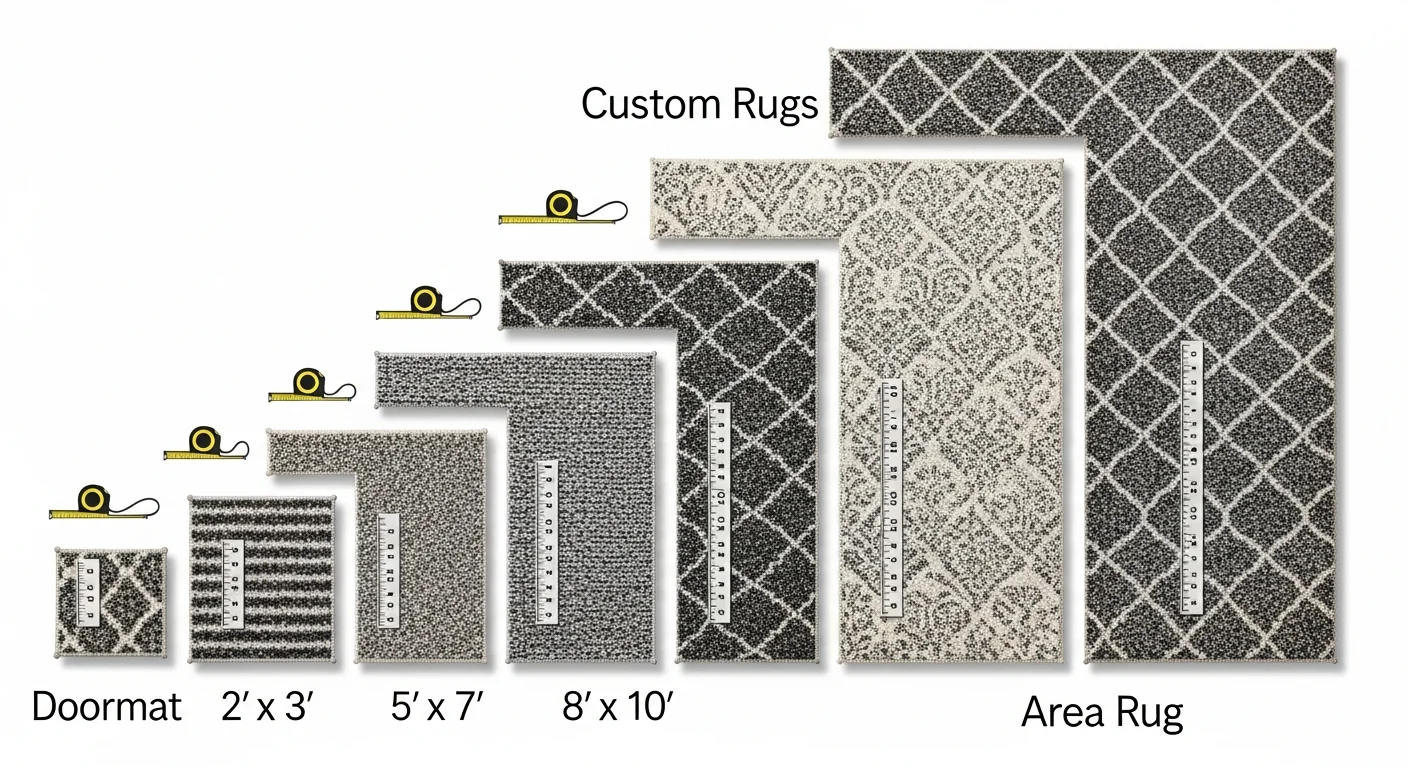
Event rug sizing depends on the booth or venue dimensions and the intended coverage strategy. Full-coverage booth rugs that fill a standard 10×10-foot trade show space require a rug of approximately 9×9 feet (slightly undersized to prevent edge curling against the booth walls). Partial-coverage options — 5×7 or 6×8 center-floor rugs — provide branding impact at a lower cost and lighter weight for transport.
Aisle runners for pop-up shops, wedding ceremonies, and event entryways typically measure 2.5 to 3 feet wide and 8 to 20 feet long, depending on the venue space. Custom lengths are readily available for non-standard aisle dimensions. When ordering runners, allow an extra foot of length at each end to tuck under or secure against movement — a runner that is exactly the aisle length will pull short during the event as foot traffic shifts it.
For event timing, allow a minimum of two to three weeks between order placement and event date. This window covers production (three to seven business days), shipping (two to five business days), and a buffer for quality inspection and any necessary adjustments upon delivery. Rush production is available from most providers for time-critical orders, though it typically carries an additional fee.
If you plan to reuse the rug across multiple events throughout the year, invest in a higher-quality material and printing method upfront. The incremental cost of a premium rug that lasts three or more years of active event use is far lower than replacing a budget rug every season. Think of your event rug as a reusable branding asset — like a retractable banner stand — rather than a single-use expense.
Order Your Custom Event Rug
RareCustom produces professional-grade custom event rugs designed for trade shows, pop-up shops, weddings, corporate events, and every occasion where floor-level branding creates impact. Every rug features vibrant dye sublimation printing, anti-slip backing, rolled-edge finishing for safe foot traffic, and free shipping to your event venue or business address.
Use the free online design tool to upload your logo, choose your colors, select your size, and preview a realistic mockup of your event rug before placing your order. No minimum quantities — order a single branded mat for a local craft fair or a full set of coordinated rugs for a multi-booth conference presence. Production begins immediately upon order confirmation, with standard delivery in five to ten business days.
FAQ
What size rug should I get for a 10×10 trade show booth?
A 9×9-foot or 8×10-foot rug provides near-full coverage. If budget is a concern, a 5×7 or 6×8 centered rug still delivers strong branding impact at a lower cost and lighter weight for transport.
Can I use the same rug at multiple events?
Absolutely. Polyester sublimation-printed rugs with anti-slip backing are designed for repeated use. Roll the rug (never fold) between events, store in a protective bag, and the rug will maintain its appearance through dozens of setups. Nylon rugs offer even greater durability for high-frequency event schedules.
Will the rug lay flat on different venue floors?
Yes. Anti-slip backing keeps the rug in place on convention center carpet, concrete, wood, and tile surfaces. Rugs may need a few minutes to relax after unrolling — placing light objects on the corners accelerates the flattening process.
How far in advance should I order for an event?
Allow at least two to three weeks before your event date. This provides adequate production time (three to seven business days), shipping transit (two to five days), and a buffer for inspection. Rush production is available for tighter timelines.
Related Articles
Share this article
Written by
Rohan Mehta
Head of Marketing at RareCustom. Former business journalist at Retail Dive. Rohan combines event marketing expertise with data-driven strategy to help exhibitors maximize brand impact with custom floor branding.