Polyester vs Nylon vs Chenille vs Velvet: Which Custom Rug Material Is Best?
Compare polyester, nylon, chenille, and velvet custom rug materials. Covers durability, softness, print quality, and price to help you choose the best rug fabric.
Aisha Patel
Head of Materials Science & Sustainability at RareCustom. M.S. in Textile Engineering from NC State with AATCC certification and ISSP Sustainability Practitioner certification. 7+ years evaluating fabrics, materials, and eco-friendly production processes.
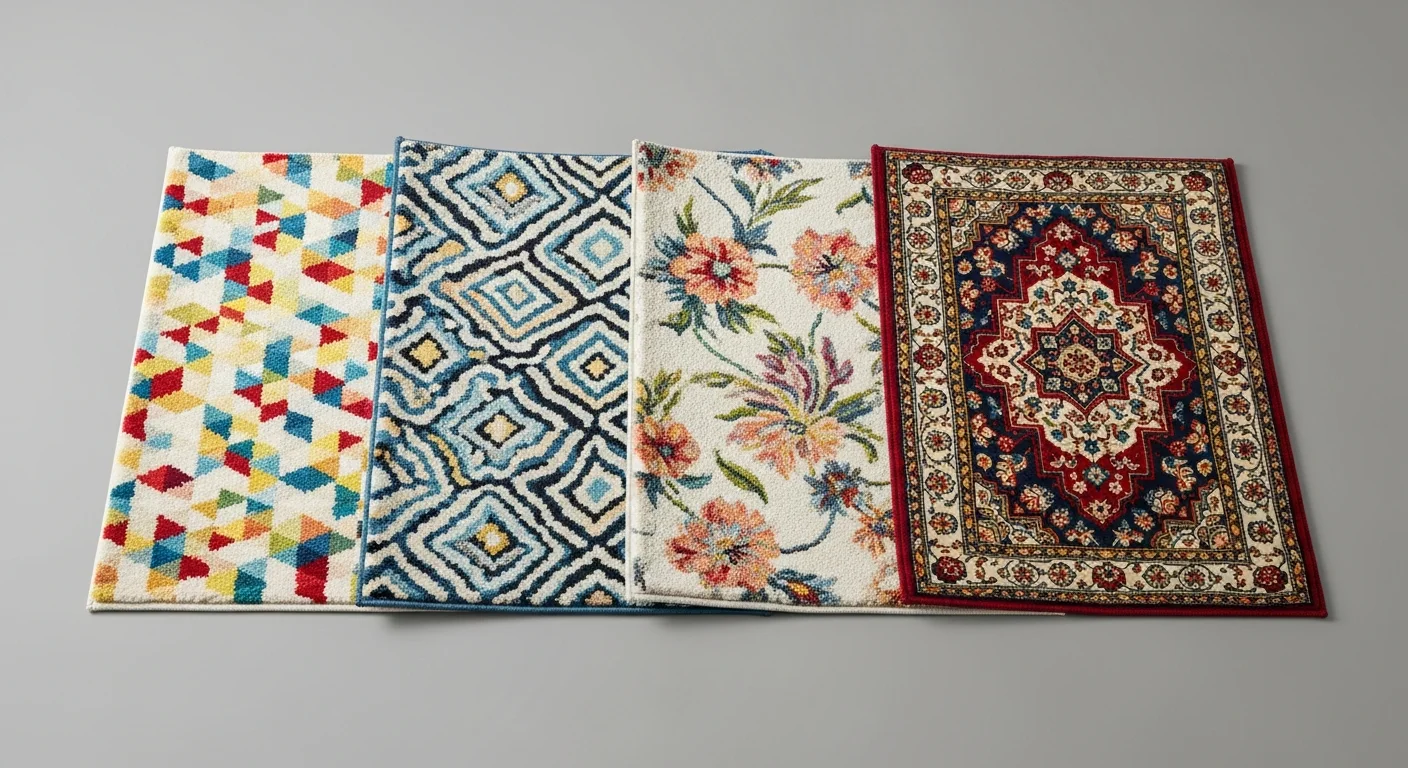
The material you choose for your custom rug affects everything — how it feels underfoot, how long the print lasts, how vibrant the colors appear, how well it handles foot traffic, and how much you pay. With multiple custom rug fabric options available, understanding the strengths and tradeoffs of each material is essential for making a choice you will be happy with for years to come. This guide provides a comprehensive rug material comparison covering the four most popular custom rug fabrics: polyester, nylon, chenille, and velvet.
Each material excels in different areas. Polyester delivers the best print vibrancy at the most affordable price. Nylon dominates in durability for high-traffic environments. Chenille offers unmatched softness for decorative spaces. And velvet creates a premium visual statement with rich, saturated colors. By the end of this guide, you will know exactly which material to select when ordering your custom rug from RareCustom.
Why Material Choice Matters
Choosing the wrong material for your custom rug is one of the most common mistakes first-time buyers make — and one of the most consequential. A plush chenille rug placed in a commercial lobby entrance will mat down and show wear within months. A heavy-duty nylon rug used as a bedroom accent piece will feel unnecessarily stiff and industrial compared to softer alternatives. Material choice determines the entire experience of owning and using your rug, from the moment it arrives to the day it is eventually replaced.
Beyond practical considerations, material choice directly impacts rug color fastness by material — how accurately and vibrantly your printed design appears on the finished product. Each fabric interacts differently with printing inks, accepting and displaying color with varying degrees of saturation, sharpness, and surface texture. A design that looks stunning on polyester may appear slightly different on chenille due to the textured pile affecting how light interacts with the printed surface.
Price is another variable that shifts significantly with material selection. Premium materials like velvet can cost two to three times more per square foot than standard polyester, and durability differences mean the total cost of ownership varies even further when you factor in replacement timelines. Understanding these tradeoffs ensures you invest in the right material for your specific use case, budget, and aesthetic preferences.
Polyester: The All-Rounder
The polyester rug is the most popular choice for custom printed rugs, and for good reason. Polyester combines excellent print quality, durability, stain resistance, and affordability in a single material that works well for the widest range of applications. If you are unsure which material to choose, polyester is almost always the safe default recommendation.
Print quality on polyester is exceptional — particularly with dye sublimation, which bonds permanently with polyester fibers to produce the most vibrant, saturated colors available in custom rug printing. Polyester is a sublimation compatible rug material, meaning the dye becomes part of the fiber structure rather than a surface coating. This molecular bond results in prints that will not crack, peel, fade, or wash out under normal use conditions. Colors appear luminous and rich, gradients are smooth, and photographic reproduction is outstanding.
Durability and maintenance are polyester's strong secondary attributes. Polyester fibers resist stains naturally — liquid spills bead on the surface rather than absorbing immediately, giving you time to blot them clean. The material is fully machine washable on a cold gentle cycle, dries quickly, and maintains its shape and print integrity through dozens of wash cycles. For a washable rug material that combines print permanence with easy care, polyester is unmatched.
The rug feel underfoot of polyester varies by construction. Flatweave rug polyester offers a smooth, thin profile that is easy to clean and ideal for high-traffic areas, doorways, and commercial settings. Low pile rug options add a slight plushness while maintaining sharp print reproduction. Thicker polyester pile heights create softer, more cushioned surfaces suitable for living rooms and bedrooms. Polyester rugs typically range from 150 to 400 GSM (rug weight GSM), with higher weights providing more substance and cushion.

Nylon: The Durability Champion
When durability is the primary requirement, the nylon rug is the undisputed champion among custom rug materials. Nylon fibers are engineered for maximum resilience — they resist crushing, matting, abrasion, and heavy foot traffic far better than any other synthetic rug material. This makes nylon the go-to choice for high-traffic rug material applications including commercial lobbies, retail entrances, hotel corridors, and any location where the rug will endure constant use.
The rug durability rating of nylon exceeds polyester by a significant margin in wear tests. Nylon fibers bounce back from compression, maintaining their upright position and texture even after thousands of footsteps. In a side-by-side comparison, a nylon rug in a high-traffic corridor will look noticeably better after two years of use than a polyester rug under identical conditions. This resilience translates directly into longer useful life and reduced replacement costs for commercial buyers.
Nylon is also a naturally stain-resistant rug material when treated with modern stain-blocking coatings. Spills can be cleaned easily with mild detergent and water, and the fiber structure resists absorbing liquids quickly. Nylon is hypoallergenic rug material that does not harbor dust mites, mold, or mildew when properly maintained — an important consideration for healthcare facilities, schools, and homes with allergy-sensitive occupants.
The tradeoffs with nylon are cost and print vibrancy. Nylon rugs typically cost 25–40% more than comparable polyester options, reflecting the superior fiber engineering. Print quality on nylon is good but not quite as vibrant as polyester sublimation — nylon requires digital inkjet printing rather than sublimation, which produces slightly less color saturation. For applications where durability outweighs print vibrancy as the primary concern, nylon remains the strongest recommendation.

Chenille: Soft Luxury
The chenille rug is defined by its extraordinary softness. Chenille's distinctive tufted construction creates a velvety, plush surface that is among the softest of any rug material — making it the preferred choice for bedrooms, nurseries, reading nooks, and any space where bare-foot comfort is the top priority. The word "chenille" comes from the French word for caterpillar, referring to the soft, fuzzy texture created by the yarn's tufted construction.
Rug softness is chenille's defining characteristic, but the material offers more than just tactile appeal. Chenille's high pile rug construction creates visual depth and dimension, adding a sense of luxury and warmth to any room. The pile catches and reflects light differently from various angles, giving chenille rugs a subtle visual shimmer that flat-surface materials cannot replicate.
Print quality on chenille is very good, though the textured pile surface means ultra-fine details may appear slightly softer than on a smooth polyester flatweave. Photographs, bold graphics, and text with moderate sizing all reproduce beautifully on chenille. The texture actually enhances certain design styles — watercolor effects, impressionistic images, and soft-focus portraits can look even more artistic on chenille's plush surface than on a flat material.
The tradeoff with chenille is durability in high-traffic areas. Chenille's soft pile can mat down under heavy foot traffic and is more susceptible to showing wear patterns than nylon or flatweave polyester. Chenille is best suited for low to moderate traffic areas — bedrooms, formal living rooms, studies, and nurseries where the rug receives gentle use rather than commercial-level punishment. For these applications, chenille provides an unmatched combination of softness, print quality, and decorative appeal. Chenille is also an anti-pill rug material when constructed properly, maintaining its smooth surface texture over time.

Velvet: The Premium Statement
The velvet rug is the premium tier of custom rug materials, creating a visual and tactile statement that elevates any space to a luxury level. Velvet's dense, closely woven pile produces a smooth, lustrous surface with a characteristic shimmer that catches light beautifully. Colors printed on velvet appear deeper, richer, and more saturated than on any other rug material — making velvet the ideal choice for designs where maximum visual impact is the primary goal.
The rug texture of velvet is smooth and dense, with a rug pile height that falls between chenille's plush loft and polyester's compact profile. This middle ground provides a surface that is both visually refined and physically comfortable. Running your hand across a velvet rug reveals a characteristic directional sheen — the pile reflects light differently depending on which direction it is brushed, creating an iridescent quality that adds dimension to the printed design.
Velvet rugs are best suited for formal living rooms, executive offices, art galleries, high-end retail displays, and any setting where visual sophistication matters more than heavy-duty durability. The material handles moderate foot traffic well but is not recommended for commercial entrances or high-wear corridors. Velvet's care requirements are slightly more demanding than polyester — gentle vacuuming, professional spot cleaning for stubborn stains, and avoiding prolonged direct sunlight to preserve the pile's lustrous quality.
The cost of velvet rugs reflects their premium positioning — expect to pay two to three times more per square foot than standard polyester. For buyers who prioritize aesthetic impact and are willing to invest in the finest rug material available, velvet delivers an unmatched combination of color depth, tactile luxury, and visual sophistication that no other material can replicate.

Flatweave vs Plush: Understanding Pile Types
Beyond the base material, the construction style of your rug — flatweave versus plush — significantly affects its appearance, feel, durability, and suitability for different environments. Understanding these pile types helps you make a more informed material decision.
Flatweave rug construction creates a thin, smooth profile with no raised pile. The rug surface is essentially flat, making it easy to clean, resistant to matting, and ideal for high-traffic areas. Flatweave rugs sit flush against the floor, eliminating trip hazards and making them popular for commercial settings, doorways, and under rolling office chairs. Print quality on flatweave surfaces is the sharpest available — every detail is reproduced crisply because there is no pile texture to soften the image.
Plush construction uses raised pile fibers that create a softer, more cushioned surface. Low pile rug options (under 0.5 inches) offer a gentle softness while maintaining good print clarity and moderate durability. High pile rug options (0.5 inches and above) maximize comfort but sacrifice some print sharpness and durability. The choice between flatweave and plush depends on whether you prioritize print clarity and durability (flatweave) or comfort and texture (plush).
For most custom rug applications, a low-to-medium pile height strikes the best balance — soft enough for comfortable barefoot use while maintaining sharp enough print reproduction for photographs and detailed designs. Commercial applications almost always favor flatweave construction for its durability and safety advantages.
Backing Options by Material
The rug backing material works in conjunction with the face fabric to determine how your rug performs on different floor surfaces. Different backing types suit different materials and use cases.
Latex backing rug options are the most common pairing with polyester and chenille face fabrics. Latex provides moderate grip on hard floors, adds cushioning underfoot, and is cost-effective. Latex backing works well for residential applications on tile, hardwood, and laminate floors, though it can leave marks on some sensitive flooring materials if left in place for extended periods without a rug pad.
Rubber backing rug options provide the strongest grip and are the standard choice for nylon commercial rugs, outdoor rugs, and any rug placed in a slip-critical environment. Rubber backing lies completely flat, eliminates trip hazards, and meets ADA compliance requirements for commercial accessibility. The heavier weight of rubber backing also helps the rug resist shifting and bunching under foot traffic.
Jute binder backing adds structural rigidity without excessive weight, helping larger area rugs maintain their shape and lie flat. Jute is often paired with velvet and premium polyester rugs to provide a clean, finished underside. For all backing types, hemmed rug edge finishing provides a clean, professional border that prevents fraying and extends the rug's lifespan.
Print Quality Comparison Across Materials
Print quality varies meaningfully across materials due to differences in fiber structure, pile height, surface texture, and printing method compatibility. Understanding these differences ensures you set realistic expectations for your finished rug.
Polyester with dye sublimation produces the highest print quality overall — the smoothest color gradations, the most vibrant saturation, and the sharpest detail reproduction. This combination is the industry standard for photorealistic rug printing and is recommended for any design where color accuracy and vibrancy are the top priorities.
Nylon with digital inkjet produces very good print quality with slightly less color saturation than polyester sublimation. Fine details and text are reproduced crisply, and colors are accurate — just not quite as luminous as sublimation. For corporate logos, text-heavy designs, and geometric patterns, nylon print quality is excellent.
Chenille's textured pile creates a distinctive artistic quality — photographs take on a slightly impressionistic appearance, and bold colors pop beautifully against the plush background. The softening effect of the pile is a positive feature for many design styles, though it means chenille is not the best choice for designs requiring razor-sharp fine detail.
Velvet produces the richest, deepest colors of any material — prints appear almost backlit due to the way velvet's dense pile interacts with light. The smooth surface maintains good detail reproduction while the pile's directional sheen adds visual complexity. For designs where color depth and visual luxury are paramount, velvet is the superior choice.

Durability and Maintenance by Material
Each material has different care requirements and longevity expectations. Understanding these helps you plan for the long-term ownership experience.
Polyester is the easiest material to maintain — fully machine washable, stain-resistant, and quick-drying. Expect five to seven years of use with proper care. Nylon requires slightly more attention for stain removal but is the most durable under heavy foot traffic — expect five to ten years in commercial settings with professional maintenance. Chenille requires gentle vacuuming and spot cleaning to maintain its plush texture — expect three to five years in low-traffic residential settings. Velvet demands the most careful maintenance — gentle vacuuming in the direction of the pile, professional cleaning for stains, and protection from direct sunlight — expect four to six years with proper care.
All materials benefit from the same basic care principles: regular vacuuming, prompt attention to spills, avoiding harsh chemical cleaners, and periodic rotation to distribute wear evenly. A pet-friendly rug material recommendation would lean toward polyester or nylon — both resist pet hair, clean easily, and handle the occasional accident without permanent damage.
Price Comparison
Material cost is a significant factor in the total price of your custom rug. Here is a general overview of how the four materials compare on a per-square-foot basis.
Polyester is the most affordable option, offering the best value for most buyers. Nylon costs approximately 25–40% more than comparable polyester, reflecting its superior durability engineering. Chenille falls in a similar price range to nylon, with the premium justified by its luxury softness and decorative appeal. Velvet is the most expensive option — two to three times the cost of standard polyester — positioning it as a premium product for buyers who prioritize visual luxury above cost efficiency.
When evaluating price, consider the total cost of ownership rather than just the initial purchase price. A nylon rug that lasts eight years in a commercial lobby may be more cost-effective than a polyester rug that needs replacement after five years, even though the nylon costs more upfront. For residential applications where durability requirements are moderate, polyester offers the most compelling balance of quality, print performance, and value. For detailed pricing information by size and material, read the custom rug sizing and pricing guide.
Which Material Should You Choose?
The right material depends on three primary factors: where the rug will be placed, what kind of design you are printing, and how much you want to invest.
Choose polyester for: the best overall value; the most vibrant print colors; machine washable convenience; residential and moderate-traffic commercial use; photo rugs and designs with rich color gradations.
Choose nylon for: maximum durability in high-traffic environments; commercial lobbies, retail entrances, and hotel corridors; areas where heavy foot traffic will test the rug daily; applications where longevity is more important than maximum color vibrancy.
Choose chenille for: bedrooms, nurseries, and reading nooks where barefoot comfort matters most; decorative applications in low-traffic areas; designs that benefit from a soft, artistic texture; gift rugs where luxury softness creates a memorable impression.
Choose velvet for: formal living rooms, executive offices, and high-end retail displays; designs where maximum color depth and visual luxury are the top priorities; statement pieces that prioritize aesthetic impact above all else; buyers willing to invest in the finest rug material available.
For most first-time custom rug buyers, polyester is the recommended starting point — it delivers the best combination of print quality, durability, ease of care, and affordability. As you explore different applications and develop preferences, the other materials offer compelling upgrades for specific use cases. For a beginner's overview of the entire custom rug process, read the complete beginner's guide to custom rugs.

Explore Materials at RareCustom
Ready to choose your material and start designing? RareCustom's custom rug collection offers polyester, nylon, chenille, and velvet options — each available in multiple sizes with no minimum order requirements and free shipping on every order. Upload your design, select your preferred material, and preview your finished rug in real time using our intuitive online design tool.
Every custom rug is printed to order using professional-grade equipment, ensuring that your selected material and design combination produces the best possible result. Whether you are ordering a durable nylon logo mat for your business entrance or a plush chenille accent rug for your bedroom, the quality and craftsmanship will exceed your expectations. For printing method details that complement your material choice, explore the dye sublimation vs digital printing comparison.
Related Articles
Continue exploring custom rug topics with these in-depth guides:
Share this article
Written by
Aisha Patel
Head of Materials Science & Sustainability at RareCustom. M.S. in Textile Engineering from NC State with AATCC certification and ISSP Sustainability Practitioner certification. 7+ years evaluating fabrics, materials, and eco-friendly production processes.