Custom Sock Design Trends 2026: Bold Patterns, Retro Revival & Sustainable Style
Explore the hottest custom sock design trends for 2026. From bold geometric patterns and retro argyle to mismatched pairs and gender-neutral palettes, discover what styles are driving demand.
Camille Dupont
Creative Director at RareCustom. BFA from RISD with 9+ years in graphic design. Camille tracks emerging design trends and translates them into actionable inspiration for custom apparel.
Socks have evolved from an afterthought hidden inside shoes to a deliberate fashion statement visible above sneakers, under cropped trousers, and styled with sandals. The custom sock market reflects this cultural shift, with search volume for "custom crew socks" climbing 340% since 2022 according to Google Trends data. In 2026, the trends shaping custom sock design are bolder, more expressive, and more inclusive than ever — blending streetwear influence with sustainability consciousness and a healthy dose of nostalgia.
Whether designing socks for a brand launch, a team uniform, a fundraising campaign, or personal style, understanding current trends helps create products that feel relevant rather than dated. These trends parallel what is happening in custom jersey design for 2026, suggesting a broader apparel movement toward individuality, maximalism, and intentional design choices.
Crew Socks: Gen Z's Hottest Accessory
The crew sock — sitting 6 to 8 inches above the ankle — has become Gen Z's signature accessory. Worn pulled up with shorts, visible above chunky sneakers, or deliberately paired with sandals, the crew sock now occupies the same fashion territory that statement sneakers held five years ago. Social media platforms report over 2.8 billion views on sock-styling content, with crew-length socks dominating engagement.
For custom sock designers, this trend means the leg panel — the 4-to-6-inch visible zone between the shoe opening and the cuff — is prime real estate. Designs that maximize visual impact in this zone outperform subtle cuff-only patterns. Full-leg graphics, bold text running vertically down the shin, and wraparound patterns that look striking from every angle are replacing the understated ankle logos of previous years. The crew, ankle, and knee-high style guide breaks down design zones by sock length for maximum impact.
Bold Graphic Patterns: Flames, Abstract Art, and Pop Culture
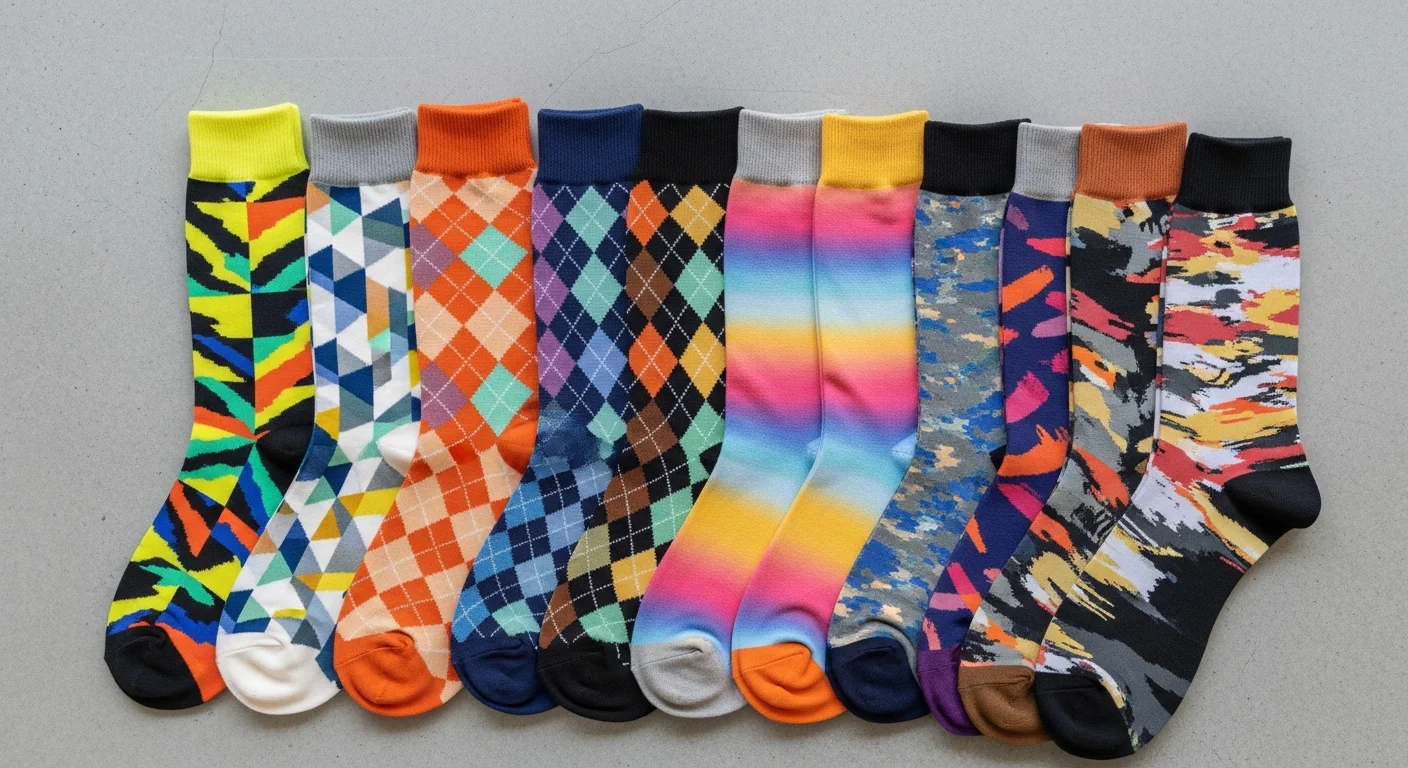
Subtle is out. The dominant aesthetic for 2026 custom socks is unapologetically loud. Flame motifs running up the ankle, abstract paint-splatter patterns covering the entire sock, comic-book-style halftone dots, and pop culture references from anime to retro gaming are driving demand. These designs leverage sublimation printing's ability to produce photographic-quality, edge-to-edge graphics without color limitations.

Geometric patterns have surged in popularity — particularly tessellations, optical illusions, and Escher-inspired impossible shapes. These designs are technically demanding because they must tile seamlessly around the cylindrical sock surface without visible breaks at the heel or toe. Pattern tiles typically need to be 3 to 4 inches wide and repeat 2 to 3 times around the sock circumference for a balanced look. The fonts, patterns, and graphics guide covers the technical requirements for creating seamless repeats on sock templates.
Retro and Vintage Revival: Argyle, Stripes, and Earth Tones
While bold graphics dominate the streetwear segment, a parallel retro revival is drawing equal interest from a slightly older demographic. Classic argyle patterns — reimagined in modern color combinations — are seeing a 180% increase in custom orders compared to 2024. Varsity-style athletic stripes, tube sock aesthetics with triple bands at the cuff, and collegiate lettering evoke 1970s and 1980s sportswear nostalgia.
The earth tone palette reinforces this retro mood: burnt sienna, olive drab, mustard gold, rust, and cream replace the neon brights that dominated the previous cycle. These warm, muted tones pair naturally with the vintage denim, corduroy, and workwear that characterize the broader retro fashion movement. For brands targeting the 25-to-40 age demographic, retro-styled socks with premium materials like merino or bamboo command higher price points and stronger perceived value.
Mismatched Pairs: Intentional Non-Matching
Intentionally mismatched socks — where the left and right sock share a theme but differ in pattern, color, or graphic — have moved from novelty to mainstream. Brands are packaging complementary-but-different designs as deliberate pairs: one sock with a sun and the other with a moon, one with stripes and the other with polka dots in matching colors, or one with a character's face and the other with the same character's back view.
This trend doubles the design work but also doubles the storytelling potential. Each pair becomes a conversation piece. From a production standpoint, mismatched pairs require careful inventory management since every order contains two distinct sock designs that must be correctly paired before packaging. Sublimation printing handles this efficiently since each sock is printed individually anyway. Knit-in production is more complex because two separate programs must run on the knitting machine. Custom personalized face socks have embraced the mismatch trend with different facial expressions on each sock, making them a top-selling gift category.
Metallic and Shimmer Finishes
Metallic yarns woven into sock cuffs and heel panels add a subtle shimmer that catches light without overwhelming the design. Gold, silver, and rose gold metallic threads are being incorporated into both athletic and fashion socks, elevating the perceived value. A metallic cuff on an otherwise simple design creates a premium look at minimal additional cost — typically $0.50 to $1.00 more per pair for metallic yarn integration.
Full metallic socks remain niche due to comfort limitations — metallic fibers are less breathable and can feel scratchy against skin. The sweet spot is accent usage: metallic toe and heel panels, a single metallic stripe at the cuff, or metallic thread woven into logo lettering. These accents work best with knit-in construction where the metallic yarn is integrated during the knitting process rather than printed on the surface.
Gender-Neutral Designs and Inclusive Sizing
The push toward gender-neutral fashion is reshaping custom sock collections. Brands are moving away from pink-for-women, blue-for-men segmentation toward universal color palettes and designs marketed without gender labels. Earth tones, muted pastels (sage, lavender, dusty rose), and bold primaries work across all demographics without reinforcing outdated color associations.

Inclusive sizing extends the standard S-M-L range with XS options for smaller feet and XXL options for larger feet, ensuring every team member, employee, or customer receives a comfortable fit. Brands that offer five or more size options report 23% fewer return requests compared to those offering only three sizes. The additional SKU complexity is manageable when size distribution data is collected upfront during the ordering process.
Minimalist Monochrome vs Maximalist All-Over
Two opposing aesthetics are thriving simultaneously. Minimalist monochrome socks feature a single-color base with a small, tonal logo or subtle texture variation — perfect for corporate settings, luxury branding, and customers who prefer understated elegance. These designs rely on premium materials and construction quality to convey value since the visual design itself is intentionally restrained.
On the opposite end, maximalist all-over print socks cover every square inch with pattern, color, and graphic detail. These designs are statement pieces meant to be seen, photographed, and shared on social media. The maximalist approach works best for event merchandise, brand launches, and youth-oriented markets where visibility and shareability drive engagement. Sublimation printing is the natural choice for maximalist designs since it supports unlimited colors and full-coverage graphics at no additional cost per color.
Color Palette Forecast: Burnt Orange, Lilac, Sage, and Mustard
The dominant color palette for 2026 custom socks blends warm neutrals with soft botanicals. Burnt orange leads as the hero color — vibrant enough to stand out but warm enough to pair with earth tones. Lilac offers a gender-neutral purple alternative that reads softer than violet. Sage green continues its multi-year run as the go-to nature-inspired neutral. Mustard yellow provides a retro-inflected warmth that complements denim and brown leather.
Secondary accent colors include terracotta, dusty blue, warm charcoal, and off-white (cream rather than stark white). These palettes work across printing methods and fabric types, though they are particularly striking on bamboo and merino blends where the natural fiber texture adds depth to the color presentation. When selecting colors, always request a physical swatch or sample to verify how the chosen shade renders on the specific sock material, as polyester, cotton, and bamboo each absorb dye differently.
Frequently Asked Questions
What sock length is most popular in 2026?
Crew length (6 to 8 inches above the ankle) dominates fashion and custom sock orders, accounting for approximately 60% of all custom sock sales. Mid-calf and knee-high lengths are growing in the athletic and outdoor segments, while ankle socks remain popular for casual and athletic use but receive less custom design attention because less surface area is visible.
Are retro sock designs a passing trend or a lasting shift?
Retro aesthetics — argyle, varsity stripes, earth tones — have been building momentum for three consecutive years, suggesting a lasting shift rather than a flash trend. The style aligns with broader fashion movements toward vintage and heritage-inspired clothing. Classic patterns also age well visually, making them safer investments for brands building evergreen collections.
How do sustainable materials affect sock design options?
Sustainable fibers like organic cotton, recycled polyester, and bamboo viscose are fully compatible with sublimation and knit-in printing methods. Color vibrancy may be slightly lower on natural fibers compared to synthetic polyester, but the difference is minimal with modern inks. Sustainable materials add $1 to $4 per pair in cost but are increasingly expected by environmentally conscious consumers, particularly in the 18-to-35 age bracket.
Share this article
Written by
Camille Dupont
Creative Director at RareCustom. BFA from RISD with 9+ years in graphic design. Camille tracks emerging design trends and translates them into actionable inspiration for custom apparel.