Holographic & Specialty Finish Stickers: The Complete Guide to Premium Effects
Explore holographic, metallic foil, glitter, and spot UV sticker finishes — learn how they are made, what they cost, and when to use premium effects for maximum impact.
Priya Shankar
Customer Success Lead at RareCustom. Priya helps customers explore premium holographic and specialty sticker finishes for brands, events, and personal projects.
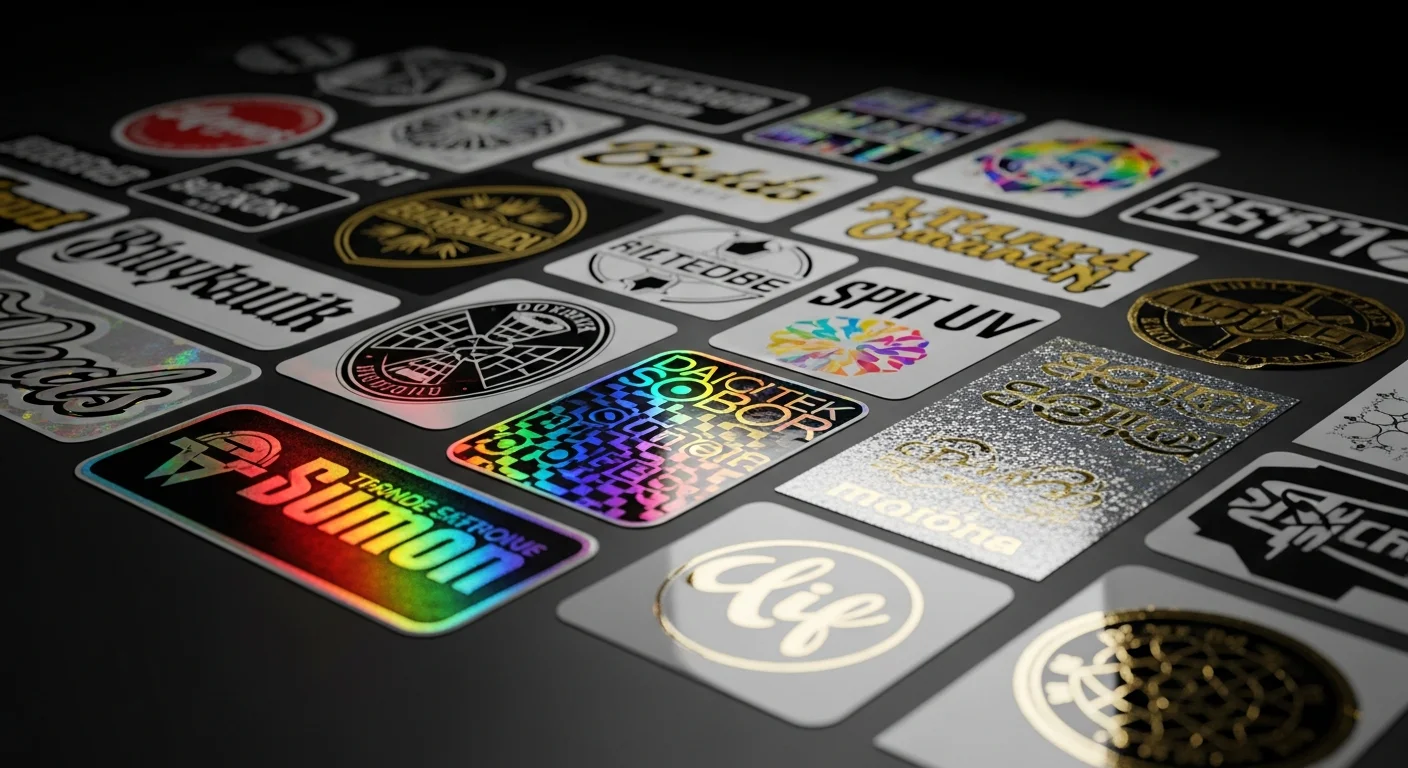
Standard custom stickers communicate through color, shape, and typography. Holographic and specialty finish stickers add a fourth dimension — tactile and optical effects that transform a flat printed surface into something that shimmers, shifts, sparkles, or gleams when light hits it. Holographic sticker printing produces a rainbow effect sticker that diffracts light into a full spectrum of colors, creating an iridescent sticker surface that changes appearance as the viewing angle shifts. Metallic foil sticker finishes add the warm glow of gold foil sticker or silver foil custom sticker accents. Glitter sticker material embeds light-catching particles directly into the vinyl substrate. And spot UV sticker techniques create selective areas of high-gloss coating over a matte background, adding depth and emphasis without any metallic or holographic element at all. These high-end sticker effects elevate a design from professional to premium, creating the kind of visceral, pick-it-up-and-look-closer reaction that standard finishes simply cannot achieve.
Premium sticker finishes serve purposes beyond pure aesthetics. Holographic films are used in tamper-evident holographic labels that reveal manipulation attempts on pharmaceutical and electronics packaging. Security sticker applications use prismatic film patterns that are extremely difficult to counterfeit, making holographic elements a key tool in anti-counterfeit sticker programs. Luxury brand stickers use foil and specialty coatings to signal quality and justify premium pricing — a gold foil seal on a product box communicates exclusivity as effectively as the product description inside. Whether your goal is brand elevation, counterfeit prevention, or simply creating stickers that people cannot resist touching, this guide covers every specialty finish available, how each is produced, what each costs, and how to design artwork that maximizes each effect's visual impact. For foundational material knowledge, see our sticker materials guide first.
What Makes Holographic Stickers Special
Holographic stickers use a light-diffracting sticker material that splits white light into its component colors, producing the characteristic rainbow shimmer that changes as the sticker or the viewer moves. This effect is created by microscopic patterns embossed into a thin metallic film layer — the patterns act as diffraction gratings, bending light at different angles to produce different colors.
The result is an iridescent sticker surface that appears to shift between blue, purple, green, gold, and red depending on the viewing angle and lighting conditions. This dynamic visual quality makes holographic stickers inherently more attention-grabbing than flat-printed stickers — studies in retail environments have shown that holographic packaging elements increase consumer eye fixation time by 23 percent compared to non-holographic equivalents.
Holographic vinyl material is available in several base patterns — linear (parallel rainbow lines), dot matrix (grid of tiny colored dots), and prismatic film (random crystalline pattern). Each pattern produces a different rainbow effect, from subtle linear shimmer to intense prismatic sparkle. The choice of pattern affects both the aesthetic and the printing behavior, as artwork must be designed to complement rather than compete with the underlying holographic effect.
Types of Holographic Sticker Materials
Not all holographic finishes are created equal. Understanding the different types of holographic vinyl material helps you choose the right base for your design.

Linear holographic film: Features parallel rainbow lines that create a subtle, directional shimmer. The linear pattern is less overwhelming than other holographic types, making it suitable for designs where readability is paramount. Text and logos remain legible against the linear pattern because the shimmer follows a predictable, uniform direction.
Dot matrix holographic film: Composed of a grid of tiny holographic dots, each diffracting light independently. The effect is a sparkling, confetti-like shimmer that adds energy and playfulness. Dot matrix works well for stickers where the holographic effect should be the primary visual feature — concert stickers, festival merch, and novelty items.
Prismatic film: Features large, irregular geometric shapes that produce bold, dramatic color shifts. Prismatic holographic is the most visually intense option and is often used for high-impact promotional stickers and premium product seals where the holographic element needs to be visible from several feet away.
Clear holographic overlay: Rather than printing on a holographic base, a clear holographic laminate is applied over standard printed artwork. This adds a subtle rainbow shimmer to the entire surface without obscuring the underlying design. Holographic laminate overlay is the most versatile option because it works with any full-color design.
Prismatic laminate: Similar to clear holographic overlay but with more pronounced prismatic patterns. Prismatic laminate adds a stronger light-diffracting effect while preserving the readability of the printed design beneath.
Metallic Foil Stickers
Metallic foil sticker finishes apply a thin layer of metallic material to specific areas of the sticker design, creating reflective accents that catch light and add luxury appeal. Unlike holographic effects which produce rainbow colors, metallic foil produces a single-color metallic reflection — warm gold, cool silver, or blush rose gold.

Gold foil sticker applications: Gold foil is the most popular metallic finish for premium stickers. It communicates luxury, celebration, and quality — making it ideal for wedding invitation seals, premium product labels, award stickers, and brand marks for high-end consumer goods. Gold foil sticker works best against dark backgrounds (black, navy, burgundy) where the warmth of the gold creates maximum contrast.
Silver foil custom sticker applications: Silver foil conveys modernity, technology, and sophistication. It pairs naturally with cool-toned designs — blues, grays, whites, and blacks. Silver foil custom sticker finishes are popular for tech brands, automotive labels, and contemporary event materials.
Rose gold foil: A warm, pinkish-gold metallic finish that has become extremely popular for feminine branding, beauty products, wedding stationery, and lifestyle brands. Rose gold splits the difference between the warmth of gold and the modernity of silver.
Copper foil: An earthy, warm metallic that complements rustic and artisanal aesthetics. Copper foil works beautifully with kraft paper backgrounds and earth-tone color palettes for craft breweries, organic food brands, and handmade product labels.
Foil application can be full-coverage (entire sticker surface is foil) or selective (foil applied only to specific design elements like text, logos, or borders). Selective foil creates a striking contrast between foil and non-foil areas, drawing the eye to the most important elements of the design.
Glitter and Textured Finishes
Glitter sticker material embeds reflective particles into the vinyl substrate or applies a glitter coating layer on top of the printed design. The result is a sparkle effect sticker that adds physical texture and light-catching dimensionality.
Embedded glitter vinyl: Textured glitter vinyl has glitter particles suspended within the vinyl material itself. This creates a permanently sparkly surface that does not shed glitter particles. The vinyl remains smooth enough for digital printing, though the texture slightly affects fine detail reproduction.
Glitter coating overlay: A transparent glitter layer applied over standard printed artwork. This preserves the clarity of the underlying design while adding a sparkle effect. The coating adds approximately 0.5 mil of thickness and a slightly rough texture.
Textured finishes beyond glitter:
- Soft-touch coating: A velvety, matte coating that invites touch. Creates a tactile sticker finish that feels luxurious. Popular for cosmetics, fashion, and lifestyle brands.
- Sand texture: A fine grit coating that mimics the feel of sandpaper (much subtler). Used for industrial, outdoor, and craft brands that want to convey ruggedness.
- Linen texture: An embossed pattern that replicates the look and feel of woven linen fabric. Elegant and understated, used for wedding stationery and fine art prints.
Spot UV and Selective Coating Effects
Spot UV sticker techniques use selective gloss coating to create areas of high shine against a matte background. The contrast between the glossy spot UV areas and the matte surroundings creates a visual and tactile depth that makes specific design elements "pop" without adding any color or metallic element.

How spot UV works: A print-ready sticker design is first printed in full color on a matte-laminated surface. Then, a clear UV-curable varnish is applied only to selected areas — logos, text, borders, or illustrative elements — using a separate printing plate or digital application head. The varnish is cured instantly under UV light, creating a raised UV varnish layer that is both visually glossy and physically raised about 10 to 15 microns above the matte surface.
Design applications for spot UV:
- Logo emphasis: Apply spot UV to only the logo on a brand sticker, making it catch light and stand out from the rest of the design
- Text highlighting: Selective gloss coating on key words or phrases creates hierarchy without using different font sizes or colors
- Pattern overlay: A subtle geometric or organic pattern in spot UV over a solid color creates a "hidden" design that is only visible when light hits at certain angles
- Full-surface texture: Spot UV applied across the entire sticker surface in a pattern (dots, lines, waves) creates a textured feel while maintaining the visual depth of matte-on-gloss contrast
Spot UV is one of the most sophisticated finishing techniques because it adds premium perceived value without adding bulk, weight, or significant cost. It works on any color palette and any material that accepts lamination.
Designing for Holographic Materials
Designing artwork for holographic and specialty substrates requires different techniques than designing for standard white vinyl. The key challenge is creating designs that complement the dynamic, light-shifting background rather than fighting against it.
White ink on holographic: Because holographic material is metallic and reflective, printed colors appear differently than they would on white vinyl. Areas where you want true, opaque color must be underprinted with a spot white layer — a layer of white ink printed before the color layer. Without the spot white layer, colors will appear transparent and washed out against the holographic background. Opaque vs transparent areas must be carefully planned in the design file.
Leveraging the holographic background: Instead of covering the entire holographic surface with opaque printing, leave areas of the holographic material exposed. A logo printed in solid black or white with the holographic background showing through the negative space creates a stunning effect where the rainbow shimmer becomes part of the design itself.
Design simplification: Complex, multi-color illustrations lose clarity on holographic backgrounds because the shifting colors of the holographic layer compete with the printed colors. Simplify your design to bold shapes, thick outlines, and limited colors when printing on holographic vinyl material. Monochrome designs (single color plus holographic) often produce the most striking results.
File preparation: Specialty finish stickers require additional layers in the design file — a spot white layer to indicate where white ink should print, and optionally a spot varnish layer for selective coating placement. Most specialty sticker printers require these as separate layers in a PDF or AI file, clearly labeled for production. For guidance on sticker typography and layout composition, consult our design guide.
Printing Methods for Specialty Finishes
Not all printing methods can produce specialty finishes. Understanding which printing technologies support which effects helps you choose the right production path.
Digital printing on specialty substrates: Modern wide-format digital printers (UV-flatbed and eco-solvent roll-to-roll) can print directly on holographic vinyl, metallic substrates, and glitter materials. Digital printing offers full-color reproduction with no plate charges, making it cost-effective for short runs of 25 to 500 units. This is the primary method used at RareCustom for holographic sticker printing.
Foil stamping: Hot foil stamping uses heat and pressure to transfer metallic foil from a carrier film to the sticker surface. This process requires a metal die for each design, making it more expensive for small runs but producing an unmatched metallic quality. Cold foil (applied inline during digital printing) offers a cost-effective alternative with slightly less reflectivity.
Screen printing with specialty inks: Screen printing can apply thick, opaque layers of metallic ink, glitter ink, and textured coatings that digital printing cannot replicate. The raised ink deposit creates a tactile sticker finish with genuine physical depth. Screen printing is cost-effective at 500+ units but requires setup costs per color.
UV coating application: Spot UV can be applied via screen printing (for flat, consistent coverage) or digital inkjet (for variable designs and short runs). Digital spot UV is more versatile and cost-effective for small to medium orders, while screen-printed UV produces a thicker, more pronounced raised effect.
Cost Comparison: Standard vs Specialty
Premium finishes add cost, but the magnitude varies significantly by finish type. Here is a realistic cost comparison for a 3-inch die-cut vinyl sticker at a quantity of 500 units.

- Standard matte vinyl: $0.22 – $0.35 per unit (baseline)
- Standard glossy vinyl: $0.22 – $0.35 per unit (same as matte at most vendors)
- Holographic vinyl base: $0.35 – $0.55 per unit (+60–80% over standard)
- Holographic laminate overlay: $0.30 – $0.45 per unit (+35–50% over standard)
- Gold/silver foil stamping: $0.45 – $0.75 per unit (+100–150% over standard)
- Glitter vinyl: $0.35 – $0.50 per unit (+55–70% over standard)
- Spot UV on matte: $0.30 – $0.50 per unit (+35–60% over standard)
- Soft-touch lamination: $0.28 – $0.40 per unit (+25–40% over standard)
At higher quantities (1,000+), the per-unit premium decreases because the specialty material and process costs are amortized more efficiently. At 2,500 units, holographic vinyl stickers typically cost only 30 to 40 percent more than standard vinyl — a much smaller gap than at small quantities. For a complete pricing analysis across all materials and quantities, see our sticker pricing guide.
Best Use Cases for Specialty Stickers
Premium finishes deliver the highest ROI when applied to specific use cases where the visual and tactile impact justifies the additional cost.
Luxury brand stickers: High-end sticker effects like gold foil and spot UV signal quality and exclusivity. Use them on product seals, packaging labels, and VIP membership cards where the sticker reinforces a premium brand positioning.
Premium sticker packaging: Including a holographic or foil sticker as a "bonus" in product packaging creates an unboxing moment that customers photograph and share on social media. The added perceived value far exceeds the $0.30 to $0.50 per-unit cost.
Limited edition merchandise: Holographic and glitter stickers are ideal for limited-run merchandise — band merch, artist collections, and seasonal releases. The specialty finish signals exclusivity and collectibility, encouraging faster purchase decisions.
Security and authentication: Tamper-evident holographic labels and security sticker applications protect products from counterfeiting. Anti-counterfeit sticker programs use custom holographic patterns that are difficult to replicate without the original master hologram, providing visual authentication that consumers and retailers can verify at a glance.
Event and celebration stickers: Wedding invitations, holiday cards, and milestone celebrations benefit from the premium feel of foil accents and holographic shimmer. These applications are inherently special occasions, and the finish elevates the sticker from a utilitarian label to a keepsake.
Retail and point-of-sale: Holographic shelf labels and specialty finish product stickers capture shopper attention in competitive retail environments. The light-catching properties of holographic and foil finishes draw the eye from across store aisles.
Order Your Premium Stickers
Holographic, foil, glitter, and spot UV finishes transform standard stickers into premium brand assets that command attention, inspire social sharing, and communicate quality at first glance. Whether you need a subtle holographic laminate overlay on an existing design or a fully custom gold foil sticker for luxury product packaging, specialty finishes are more accessible and affordable than most people expect.
Start exploring premium finishes with our free design tool — upload your artwork, select your specialty material or finish, and preview the effect before ordering. Or browse our complete custom sticker collection to see all available materials, finishes, and pricing tiers. Premium sticker packaging and luxury brand stickers are just a few clicks away.
Related Articles
Share this article
Written by
Priya Shankar
Customer Success Lead at RareCustom. Priya helps customers explore premium holographic and specialty sticker finishes for brands, events, and personal projects.