Custom T-Shirts for Nonprofits: Fundraising Merch That Actually Sells
Create custom t-shirts that raise funds and awareness for your nonprofit. Design tips, pricing strategies, and real fundraising ideas that work. No minimums.
Marcus Chen
E-Commerce Growth & Merchandising Lead at RareCustom. MBA from Wharton, former Shopify strategist. Marcus has helped 200+ merchants launch custom merchandise lines and specializes in business strategy, bulk ordering, and fundraising programs.
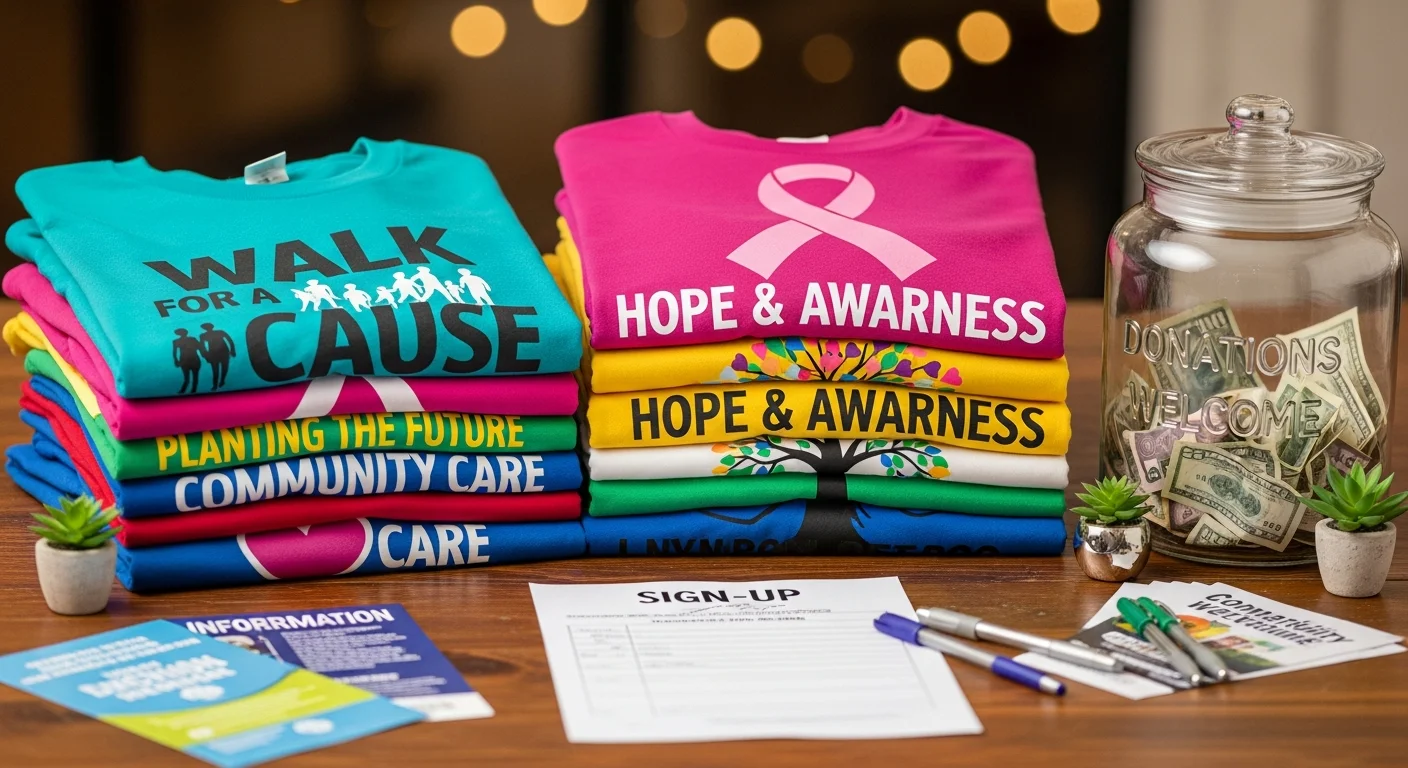
Custom merchandise has become one of the most effective fundraising tools available to nonprofit organizations. Unlike a one-time donation that happens and is forgotten, a well-designed t-shirt turns every supporter into a walking billboard for your cause. It raises money at the point of sale and continues generating awareness every time the wearer puts it on in public. For nonprofits operating on tight budgets with limited marketing resources, few investments deliver as much long-term value as a custom t-shirt program.
The challenge is that most nonprofit merchandise undersells because the designs are uninspired, the pricing is off, or the marketing effort behind it is minimal. This guide addresses all three problems. You will learn how to design shirts that supporters genuinely want to wear, price them to maximize your fundraising margin, and market them effectively through channels you already have. Whether you run an animal shelter, a youth sports league, or an environmental advocacy group, the strategies here apply to any cause-driven organization.
Why Merchandise Works for Nonprofits
Merchandise fundraising has distinct advantages over traditional approaches like galas, auctions, and direct mail campaigns. First, the barrier to participation is low. Asking someone to buy a twenty-dollar shirt is a much easier ask than requesting a hundred-dollar donation. People who might not attend a fundraising dinner or respond to a donation email will happily buy a shirt that supports a cause they care about, especially if the design is something they would wear anyway.
Second, merchandise creates a tangible connection between the supporter and the cause. A t-shirt is a physical object that people interact with repeatedly. Every time they open their closet, fold their laundry, or get dressed for the day, they are reminded of your organization and their decision to support it. That ongoing touchpoint deepens the relationship in a way that a tax receipt never will.
Third, merchandise generates passive marketing. When a supporter wears your nonprofit shirt to the grocery store, the gym, or a family gathering, they are exposing your brand and mission to dozens of people who might never have heard of your organization otherwise. Each shirt becomes an unpaid advertisement that runs indefinitely.
Finally, with no minimum order requirements and print-on-demand fulfillment, the financial risk of launching a merchandise program has essentially been eliminated. You do not need to invest thousands of dollars in inventory upfront. You can set up an online store, promote it to your supporters, and only produce shirts as orders come in.
Designing Shirts That Supporters Actually Want to Wear

The single biggest mistake nonprofits make with merchandise is designing shirts that look like uniforms rather than apparel. A shirt plastered with your organization's logo, full legal name, and website URL across the chest is functionally a staff uniform. Supporters will buy it out of obligation, wear it once to your event, and then relegate it to the back of a drawer.
The shirts that sell well and get worn repeatedly lead with the cause rather than the organization. "Rescue Is My Favorite Breed" is a shirt an animal lover will proudly wear in public. "Protect What You Love" with a striking nature illustration is something an environmentalist will reach for on a Saturday morning. The organization name can be present but should take a secondary position, perhaps on the back, the sleeve, or in small type beneath the main design.
Awareness colors play an important role in nonprofit shirt design. Pink for breast cancer awareness, orange for hunger prevention, green for environmental causes, and blue for mental health advocacy are instantly recognizable signals that communicate the cause before anyone reads the text. Incorporating these colors into your design or garment choice taps into existing cultural associations and makes the shirt feel purposeful.
Typography and graphic style should reflect the personality of your organization. A youth mentoring program might use bold, energetic fonts and vibrant colors. An environmental conservation group might lean into earth tones with hand-drawn botanical illustrations. A veterans support organization might choose clean, strong typography on a classic American-made blank. The design should feel authentic to your mission and resonate with the people who already care about your cause.
Pricing Strategy for Fundraising Margins

Pricing your nonprofit merchandise correctly is the difference between a fundraiser that generates significant revenue and one that barely covers costs. The formula is straightforward but requires honest accounting of all expenses involved.
Start with your base cost per shirt, which includes the blank garment, printing, and any packaging or shipping materials. Then add a fundraising margin that reflects the perceived value of the shirt to your supporters. Most successful nonprofit merchandise programs price their shirts between twenty and thirty-five dollars, with a fundraising margin of eight to fifteen dollars per unit depending on the base cost and the pricing tolerance of their supporter base.
Resist the temptation to price too low. A shirt priced at fifteen dollars might seem like an easy sell, but if your base cost is ten dollars, you are only netting five dollars per unit. At that margin, you need to sell hundreds of shirts to raise meaningful funds. A shirt priced at twenty-eight dollars with a ten-dollar base cost nets eighteen dollars per unit, meaning fifty shirts generate nine hundred dollars for your cause. For a detailed breakdown of how custom t-shirt costs work, our pricing guide walks through every cost component.
Consider offering tiered pricing that includes a built-in donation option. For example, "Buy a shirt for $25" alongside "Buy a shirt + donate an extra $10 for $35." Many supporters will choose the higher tier because the psychological effort of making a separate donation is removed.
Online Store vs Event-Based Selling
Nonprofits have two primary channels for selling merchandise: online stores and in-person events. The most successful organizations use both, but the approach differs for each.
An online store provides a permanent, always-available storefront that supporters can access from anywhere. Print-on-demand fulfillment means you carry zero inventory risk, and the store operates passively once it is set up. Link to your store from your website, email signature, social media profiles, and every donor communication. The convenience of online purchasing, combined with the emotional appeal of supporting a cause, drives consistent low-volume sales throughout the year.
Event-based selling offers higher per-event revenue because the energy of a live gathering creates urgency and social proof. When attendees see other people buying and wearing your shirts, they want one too. Charity walks, galas, community festivals, and volunteer appreciation events are prime opportunities to sell merchandise. For events, pre-ordering is ideal because you can print exactly the number of shirts you need and avoid leftover inventory. Our guide on custom t-shirts for events covers ordering timelines and logistics for event merchandise.
Case Study Examples
Animal Shelter Adoption Drive. A regional animal rescue designed a series of breed-specific shirts featuring hand-drawn illustrations of their most adoptable breeds. Each shirt included the tagline "Adopt Don't Shop" and the rescue's Instagram handle. They sold the shirts for twenty-five dollars through an online store and at weekend adoption events. Over six months, the program raised over twelve thousand dollars and significantly increased their social media following as buyers posted photos wearing the shirts with their newly adopted pets.
Youth Sports League Equipment Fund. A community youth basketball league needed to raise funds for new equipment and court maintenance. They created a series of shirts featuring the league logo with individual team names and colors. Parents, players, and community members purchased shirts at eight dollars above cost, raising enough to cover the entire equipment budget for the season. The shirts also served as spirit wear at games, creating a sense of pride and unity across the league.
Environmental Conservation Nonprofit. An ocean conservation organization launched a seasonal merchandise campaign tied to World Ocean Day. The design featured a striking whale illustration with the message "Protect Our Oceans" on organic cotton blanks. They priced the shirts at thirty-two dollars and donated five dollars from each sale to a marine habitat restoration project. The campaign went viral on social media, selling over four hundred shirts in three weeks and generating substantial awareness beyond their existing supporter base.
Marketing Your Nonprofit Merchandise
Even the best-designed merchandise will not sell itself. Effective marketing is essential, and the good news is that nonprofits already have the most powerful marketing asset: a community of passionate supporters who believe in the mission.
Start with your email list. A dedicated email announcing the merchandise launch, explaining where the funds go, and showing the design in action generates the strongest initial response. Follow up with social media posts that show real people wearing the shirts in real settings. User-generated content from supporters who have already purchased is far more persuasive than studio product shots.
Partner with local businesses to display your shirts in their storefronts or include flyers with their purchases. Ask your board members and volunteers to wear the shirts and share photos on their personal social media accounts. Every nonprofit has a network of advocates who are willing to help spread the word if you make it easy for them.
Seasonal campaigns create urgency. Launch a holiday-themed design in November, an awareness month design in the appropriate month, and a summer campaign tied to your outdoor events. Limited-edition designs with a clear end date drive faster purchasing decisions because supporters know the opportunity will not last forever.
Print-on-Demand vs Bulk Ordering for Nonprofits
The choice between print-on-demand and bulk ordering depends on your organization's risk tolerance, storage capacity, and anticipated demand. Print-on-demand eliminates inventory risk entirely because each shirt is produced only after a customer orders it. This model is ideal for online stores, new merchandise programs, and organizations that cannot afford to invest in unsold inventory.
Bulk ordering reduces the per-unit cost significantly, sometimes by 30 to 50 percent compared to print-on-demand pricing. If you have a predictable demand from events or pre-sale campaigns, bulk ordering maximizes your fundraising margin. The risk is overordering, which leaves you with unsold inventory that ties up funds. The solution is to run pre-sale campaigns where supporters purchase before you print, giving you an exact count.
Many nonprofits use a hybrid approach: print-on-demand for their online store and bulk orders for events where they can predict demand based on registration numbers. This strategy balances cost efficiency with risk management and ensures you are always able to fulfill supporter demand without sitting on excess inventory.
Frequently Asked Questions
How much money can a nonprofit raise selling custom t-shirts?
Revenue depends on your pricing, margin, and audience size. A nonprofit with an email list of one thousand engaged supporters can typically expect a 5 to 15 percent conversion rate on a well-marketed campaign. At a margin of twelve dollars per shirt and one hundred shirts sold, that is twelve hundred dollars from a single design. Organizations with larger audiences and multiple campaigns throughout the year can raise significantly more.
Do nonprofits need to order a minimum number of shirts?
No. Print-on-demand fulfillment eliminates minimum order requirements entirely. You can sell a single shirt to a single supporter without any upfront inventory investment. If you choose to bulk order for events, minimum quantities vary by printer but are often as low as twelve to twenty-four units.
What makes a nonprofit t-shirt design effective?
Effective nonprofit shirt designs lead with the cause rather than the organization. Use emotionally resonant messaging, awareness colors, and compelling graphics that people would be proud to wear in public. The organization name should be present but secondary to the cause-driven message. A shirt that sparks conversations about your mission is more valuable than one that simply displays your logo.
Should nonprofits use print-on-demand or bulk ordering?
Print-on-demand is best for online stores and new programs because it eliminates inventory risk. Bulk ordering is better for events with predictable demand because the lower per-unit cost maximizes your fundraising margin. Many nonprofits use both approaches simultaneously: print-on-demand for their online store and bulk orders for specific events and campaigns.
Can nonprofit t-shirt sales be tax-deductible for buyers?
In most cases, the full purchase price of a nonprofit t-shirt is not tax-deductible because the buyer receives a tangible product in return. However, if the shirt is priced above fair market value and the excess is designated as a donation, the amount above fair market value may be deductible. Consult your organization's accountant or tax advisor for guidance specific to your situation.
Share this article
Written by
Marcus Chen
E-Commerce Growth & Merchandising Lead at RareCustom. MBA from Wharton, former Shopify strategist. Marcus has helped 200+ merchants launch custom merchandise lines and specializes in business strategy, bulk ordering, and fundraising programs.