Custom T-Shirt Pricing Explained: What Affects Cost & How to Save
Understand what drives custom t-shirt pricing. Compare blank shirts, printing methods, volume discounts, and hidden fees. Learn how to save on every order.
Rohan Mehta
Head of Marketing at RareCustom. David brings his journalism background to making complex pricing transparent and easy to understand.
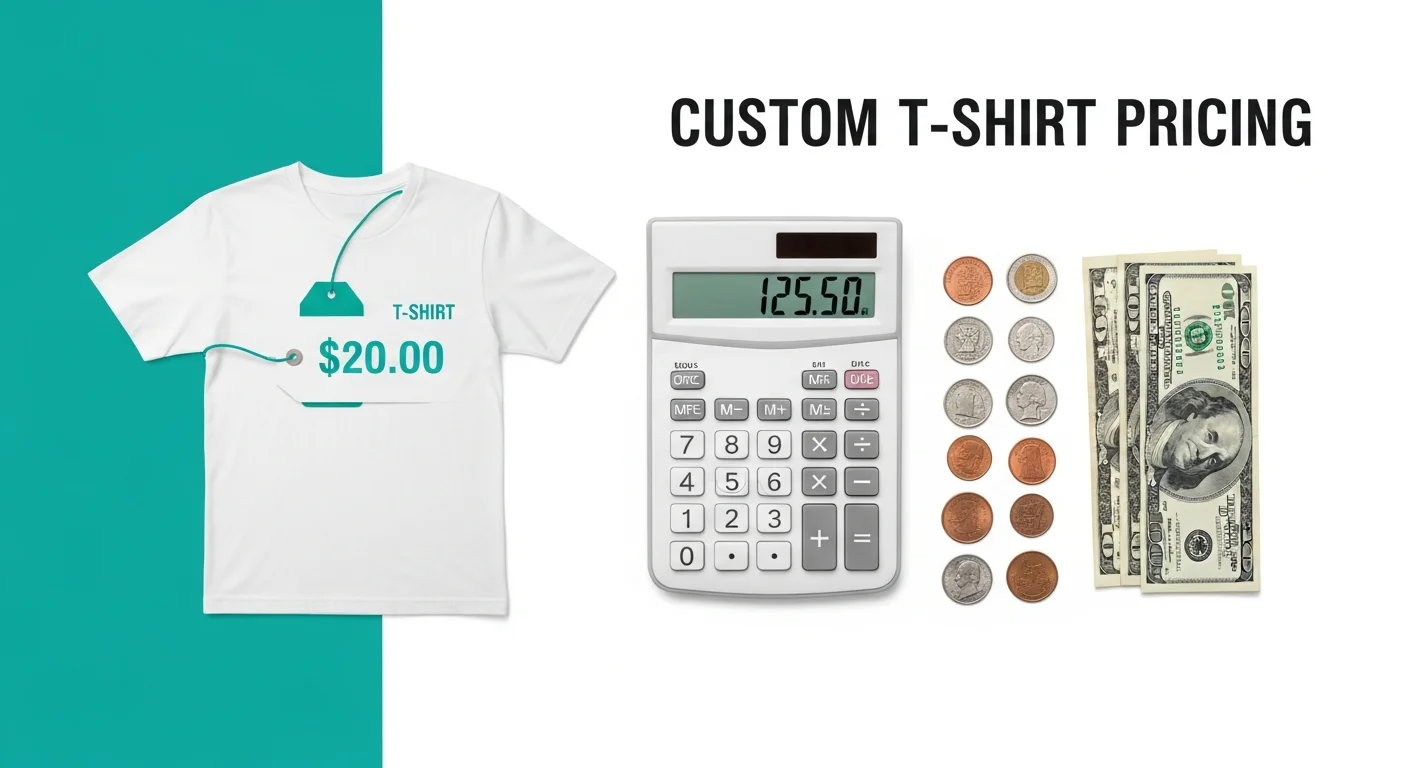
One of the most common questions we hear is "how much do custom shirts cost?" The answer depends on several interconnected factors, from the blank shirt you choose to the printing method, the number of colors in your design, and the quantity you order. Understanding these variables puts you in control of your budget and helps you make informed decisions that balance quality with affordability.
This guide breaks down every factor that affects custom t-shirt pricing so you can plan your order with confidence. Whether you are ordering ten shirts for a birthday party or five hundred for a corporate event, you will know exactly what drives the price per shirt and how to save without sacrificing quality.
What Determines Custom T-Shirt Pricing?
Custom t-shirt cost is not a single number. It is the sum of several components that combine to create your final price per shirt. The six primary factors are the blank shirt itself, the printing method, design complexity, order quantity, shirt color, and any extras or add-ons. Each factor can be adjusted independently, giving you significant control over the total cost.
Think of custom shirt pricing as a recipe. The blank shirt is your base ingredient, and everything else adds flavor and cost. A basic cotton tee with a single-color front print in a large quantity is the most budget-friendly combination. A premium tri-blend shirt with a full-color print on front and back in a small quantity sits at the other end of the spectrum. Most orders fall somewhere in between.
The good news is that understanding these factors lets you optimize your order. You might choose a slightly simpler design to afford a nicer blank shirt, or you might order a few more units to hit a volume pricing breakpoint. Knowledge is savings, and this guide gives you the knowledge to maximize your budget.
Factor 1 - The Blank Shirt

The blank shirt is the foundation of your custom t-shirt cost. Blank shirt cost varies significantly depending on the brand, material, weight, and style. Understanding the differences helps you choose the right base for your needs and budget.
Economy blanks like Gildan Heavy Cotton are the most affordable option, typically starting at a few dollars per unit in bulk. These shirts are durable, widely available in dozens of colors, and work well for events, giveaways, and promotional use where volume matters more than luxury. Gildan vs Bella+Canvas pricing differs by a couple of dollars per shirt, but the feel and fit are noticeably different.
Mid-range blanks like Bella+Canvas 3001 and Next Level 3600 offer a softer hand feel, more modern fit, and better drape. These shirts have become the standard for brands, small businesses, and anyone who wants their custom apparel to feel like something they would buy at a retail store. The modest price premium over economy blanks is often worth it for the perceived quality improvement.
Premium blanks from brands like Comfort Colors, Alternative Apparel, and American Apparel sit at the top of the price range. These shirts feature garment-dyed finishes, heavyweight fabrics, or organic cotton that appeals to customers who prioritize feel and sustainability. Wholesale pricing for premium blanks is higher, but the finished product commands a premium retail price if you are selling.
The style of blank also affects cost. A standard crew neck tee is the most affordable option. V-necks, long sleeves, tank tops, and specialty cuts like crop tops or raglan sleeves each carry small price adjustments. Choose the style that best fits your audience and event, then compare costs across brands to find the sweet spot between quality and budget.
Factor 2 - Printing Method

The printing method is the second-largest cost factor after the blank shirt. Each method has different setup costs, per-unit costs, and cost scaling at different quantities. Choosing the right method for your order size and design can save significant money. For an in-depth comparison of the two most popular methods, read our guide on screen printing vs DTG.
Screen printing cost is characterized by higher setup fees and lower per-unit costs. Each color in your design requires a separate screen, and each screen has a setup charge. This means screen printing becomes increasingly cost-effective as quantities rise. For orders of 50 or more shirts with simple designs of one to three colors, screen printing is almost always the most affordable option.
DTG printing cost follows the opposite curve. There are no setup fees because the printer operates like a large inkjet, printing your design directly onto the fabric. This makes DTG ideal for small orders and one-off prints where screen printing setup fees would inflate the price per shirt. However, DTG cost per unit does not decrease as dramatically with volume, so it becomes less competitive for very large orders.
Embroidery pricing works differently than either printing method. Cost is determined by the stitch count of your design rather than the number of colors. Simple logos with fewer than 10,000 stitches are affordable, while complex designs with high stitch counts can become expensive. Embroidery is typically reserved for polos, hats, and premium apparel where a textured, professional finish is desired.
Heat transfer and vinyl methods fall between screen printing and DTG in both cost and application. They work well for small batches, individual names and numbers, and multi-color designs on performance fabrics where other methods may not adhere well.
Factor 3 - Design Complexity
Design complexity directly impacts your custom t-shirt cost in several ways. The number of colors, the number of print locations, and the physical size of the design all contribute to the final price.
For screen printing, each color in your design requires a separate screen. A one-color design has the lowest screen printing cost, while a six-color design requires six screens and six passes through the press. Multi-color design cost adds up quickly with screen printing, which is why many designers optimize their artwork for fewer colors when ordering in bulk.
DTG printing handles color differently. Because the printer lays down all colors in a single pass using CMYK processing, a photorealistic design with thousands of colors costs the same to print as a simple two-color design. This makes DTG the preferred method for complex, colorful artwork where screen printing would require too many screens to be cost-effective.
Print location pricing adds another layer. A front-only print is the standard and most affordable option. Adding a back print, left chest print, or sleeve print each increases the cost because the shirt must be repositioned and printed again. Some events benefit from a front-and-back design, while others achieve their goals with a single print location.
Design size affects material usage and production time. A standard center-chest print (approximately 10 by 12 inches) is the baseline. Oversized prints that extend close to the seams require more ink and more precise alignment, adding a small premium. All-over prints are the most expensive option due to specialized equipment requirements.
Factor 4 - Order Quantity

Order quantity is one of the most powerful levers for managing your price per shirt. Volume pricing rewards larger orders with lower per-unit costs, and understanding quantity breakpoints helps you decide whether ordering a few extra shirts makes financial sense.
Bulk discount structures vary, but the general principle is consistent: the more you order, the less each shirt costs. This is because fixed costs like design setup, screen preparation, and order processing are spread across more units. A 100-shirt order might cost 30 to 40 percent less per unit than a 10-shirt order, even with identical designs and blanks.
Quantity breakpoints are the thresholds where per-unit pricing drops to the next tier. Common breakpoints occur at 12, 24, 48, 72, 144, and 288 units, though these vary by provider. If your order falls just below a breakpoint, ordering a few extra shirts to cross into the next tier can actually reduce your total cost. For example, ordering 50 shirts might cost less total than ordering 47 because of the volume pricing jump at 48 units.
For businesses and organizations that order regularly, establishing a reorder relationship can unlock additional savings. Repeat orders skip the design setup phase entirely, reducing both cost and turnaround time. This is especially valuable for businesses using custom shirts for branding that reorder uniforms or promotional merchandise quarterly.
Factor 5 - Shirt Color (Light vs Dark)
The color of your blank shirt affects printing cost, particularly for DTG and screen printing methods. Light-colored shirts are generally less expensive to print on than dark-colored shirts, and understanding why helps you make smart color choices.
On light shirts, ink is applied directly to the fabric without any additional base layer. The white or light fabric shows through the transparent areas of the design, creating clean, vibrant results with minimal ink usage. This straightforward process keeps costs low and produces the fastest turnaround times.
Dark shirt surcharge exists because printing on dark fabrics requires an additional step. A white underbase layer must be printed first to prevent the dark fabric from absorbing and muting the design colors. This white underbase adds material cost and production time, resulting in a modest per-shirt premium compared to the same design on a light shirt.
The color difference is most pronounced with DTG printing, where dark shirts require pre-treatment and a white ink layer that effectively doubles the amount of ink used. With screen printing, the impact is smaller because white underbase is a standard part of the process for most designs on dark fabrics.
If budget is tight, choosing a light-colored shirt and designing with that in mind is the simplest way to reduce per-unit cost. However, dark shirts are often preferred for their visual impact, stain resistance, and versatility. The small additional cost per shirt is frequently worth the aesthetic benefits.
Factor 6 - Extras and Add-Ons
Beyond the base cost of blank plus printing, several extras and add-ons can affect your final custom t-shirt cost. Understanding these options helps you decide which are worth the investment and which you can skip.
Individual personalization, such as adding unique names or numbers to each shirt, adds a per-unit charge because each shirt requires a separate print run. This is common for sports teams, employee uniforms, and events where each attendee gets a personalized version. The cost is modest per shirt but adds up across large orders.
Custom tags and labels replace the manufacturer's tag with your own branded label. This is primarily relevant for businesses selling custom shirts at retail, where brand presentation matters. Relabeling adds a small charge per unit but elevates the perceived value of the finished product.
Specialty printing techniques like metallic inks, glow-in-the-dark elements, puff printing, and discharge printing each carry premiums over standard printing. These techniques create unique visual and tactile effects that can make your shirts stand out, but they should be reserved for designs where the premium is justified by the impact.
Packaging and individual polybaging are relevant for e-commerce sellers and event organizers who need shirts sorted, folded, and bagged individually. This add-on simplifies distribution but adds a small per-unit cost. For events where shirts are handed out in bulk, skipping individual packaging saves money without affecting the attendee experience.
Hidden Fees to Watch For

Not all custom t-shirt providers price their products the same way. Some advertise low per-shirt prices but add fees during checkout that inflate the final cost. Knowing which hidden fees to watch for protects your budget and prevents unpleasant surprises.
Setup fees are the most common hidden charge. Some providers charge a flat fee to set up your design for production, separate from any per-unit costs. This fee can range from a few dollars to $50 or more depending on the printing method and design complexity. Providers that advertise no hidden fees typically include setup in the per-unit price, resulting in a more transparent and predictable total.
Screen charges for screen printing are sometimes listed as separate line items. Each color screen might carry a $20 to $35 charge on top of the per-unit printing cost. For a four-color design, screen charges alone can add $80 to $140 to your order before a single shirt is printed. Always ask whether screen charges are included in the quoted price per shirt.
Art preparation or digitization fees are charged by some providers when they need to convert your artwork into a print-ready format. If you submit a low-resolution image, a hand drawing, or a non-standard file format, you may be charged for the time to prepare it for production. Providing print-ready artwork in the correct format eliminates this potential fee.
Rush order fees apply when you need faster production and shipping. Standard turnaround is typically one to two weeks, and rushing that timeline carries a premium. Planning ahead is the simplest way to avoid rush charges. Free shipping on every order eliminates another common fee that some competitors add at checkout.
Pricing Examples by Scenario

Abstract pricing factors become clearer with concrete examples. Here are several common ordering scenarios with a breakdown of how pricing factors interact to determine the final cost per shirt.
Scenario 1: Birthday party, 15 shirts. Standard cotton tee, one-color front print, mixed sizes. This is a small, simple order where DTG printing is the most cost-effective method because there are no setup fees. The price per shirt is moderate because the small quantity does not trigger deep volume discounts, but the simple design keeps costs manageable.
Scenario 2: Corporate team building, 75 shirts. Mid-range blank (Bella+Canvas), two-color front and one-color back print, light-colored shirt. At 75 units, screen printing becomes cost-effective even with two screens needed. The volume discount significantly reduces the per-unit cost compared to a small order. Adding a back print increases the total but is spread across enough units to keep the per-shirt impact small.
Scenario 3: Nonprofit fundraiser, 250 shirts. Economy blank (Gildan), full-color front print on dark shirts. The large quantity drives the per-unit cost down considerably through volume pricing. Using DTG for the full-color design avoids the cost of multiple screens. The dark shirt surcharge adds a small premium, but the overall cost per shirt remains very budget-friendly at this volume.
Scenario 4: Small business uniforms, 20 shirts with individual names. Premium blank (Comfort Colors), left chest logo embroidery plus individual name on back. Embroidery carries a higher per-unit cost than printing, and the individual names require separate handling for each shirt. The premium blank adds to the base cost. However, the professional result justifies the investment for employee-facing apparel that represents the brand daily.
These scenarios illustrate that there is no single answer to "how much do custom shirts cost." The right combination of factors depends on your priorities, audience, and budget.
How to Save on Custom T-Shirts
Armed with an understanding of pricing factors, here are practical strategies to reduce your custom t-shirt cost without sacrificing quality or design impact.
Optimize your color count. If you are screen printing, reducing the number of colors in your design directly reduces the number of screens needed and the associated costs. Many striking designs use only one or two colors. A skilled designer can create visual depth with creative use of the shirt color as a design element, eliminating the need for additional ink colors.
Choose the right printing method for your quantity. DTG for small orders, screen printing for large orders. Matching the method to the quantity ensures you are not paying inflated per-unit costs. If you are ordering between 25 and 50 shirts, ask for quotes using both methods and compare.
Consolidate print locations. A front-only print costs less than front-and-back. If your design can work as a single-location print, you save on production costs. Many effective designs use a bold front graphic with no back print at all.
Order at or above quantity breakpoints. If you need 45 shirts, check whether ordering 48 drops you into the next pricing tier. The extra three shirts might cost less than the savings on the first 45, reducing your total spend.
Choose a cost-effective blank. If the shirt is for a one-time event or giveaway, an economy blank delivers great results at a lower cost. Reserve premium blanks for retail sales, employee uniforms, and situations where the shirt's feel matters as much as the design. Budget-friendly blanks can still look and feel great with the right design.
RareCustom Pricing Advantage
At RareCustom, we believe custom t-shirt pricing should be transparent, fair, and free of surprises. Our pricing model is built around several principles that set us apart from competitors.
No hidden fees. The price you see is the price you pay. No setup charges, no screen fees, no art preparation costs, and no shipping charges. Every order ships free, regardless of size or destination. This transparency makes budgeting effortless and eliminates the frustrating experience of watching your total climb during checkout.
No minimum order. Whether you need one shirt or one thousand, we produce your order with the same quality and care. This is especially valuable for entrepreneurs starting a t-shirt business who need to test designs without committing to large inventory purchases.
Volume discounts that scale. Our pricing automatically adjusts as your quantity increases, ensuring you always get the best available rate for your order size. You do not need to negotiate, request a special quote, or meet arbitrary minimums to access wholesale pricing levels.
Free design tools. Our online design tool is completely free to use, saving you the cost of hiring a graphic designer for simple projects. Upload your artwork, add text, preview your design, and place your order all in one place.
We offer these advantages because we believe everyone deserves access to high-quality custom t-shirts at fair prices. Whether you are a parent ordering shirts for a Little League team or a business outfitting an entire workforce, our pricing works for you.
Get Your Custom T-Shirt Quote
Ready to see exactly what your order will cost? Use our free design tool to build your shirt, select your options, and see real-time pricing as you configure your order. There are no commitments and no accounts required to explore pricing. Experiment with different blanks, print methods, and quantities to find the combination that fits your budget.
For large orders or complex projects that require guidance, our team is available to provide personalized quotes and recommendations. Contact us with your project details and we will respond with a detailed quote that covers every cost with no surprises.
Remember: every order ships free with no minimum quantity. Start with one shirt to test your design, then scale up with confidence knowing the per-unit cost decreases as your order grows. Custom t-shirts have never been more accessible or affordable.
Related Articles
Share this article
Written by
Rohan Mehta
Head of Marketing at RareCustom. David brings his journalism background to making complex pricing transparent and easy to understand.