Custom T-Shirts for Small Business: Branding, Uniforms & Promotional Merch
Build your brand with custom t-shirts. Employee uniforms, trade show giveaways, and promotional merch. Bulk pricing, no minimums, free shipping.
Rohan Mehta
Head of Marketing at RareCustom. Former business journalist at Retail Dive with a B.A. from Northwestern's Medill School. David covers business strategy and branding.
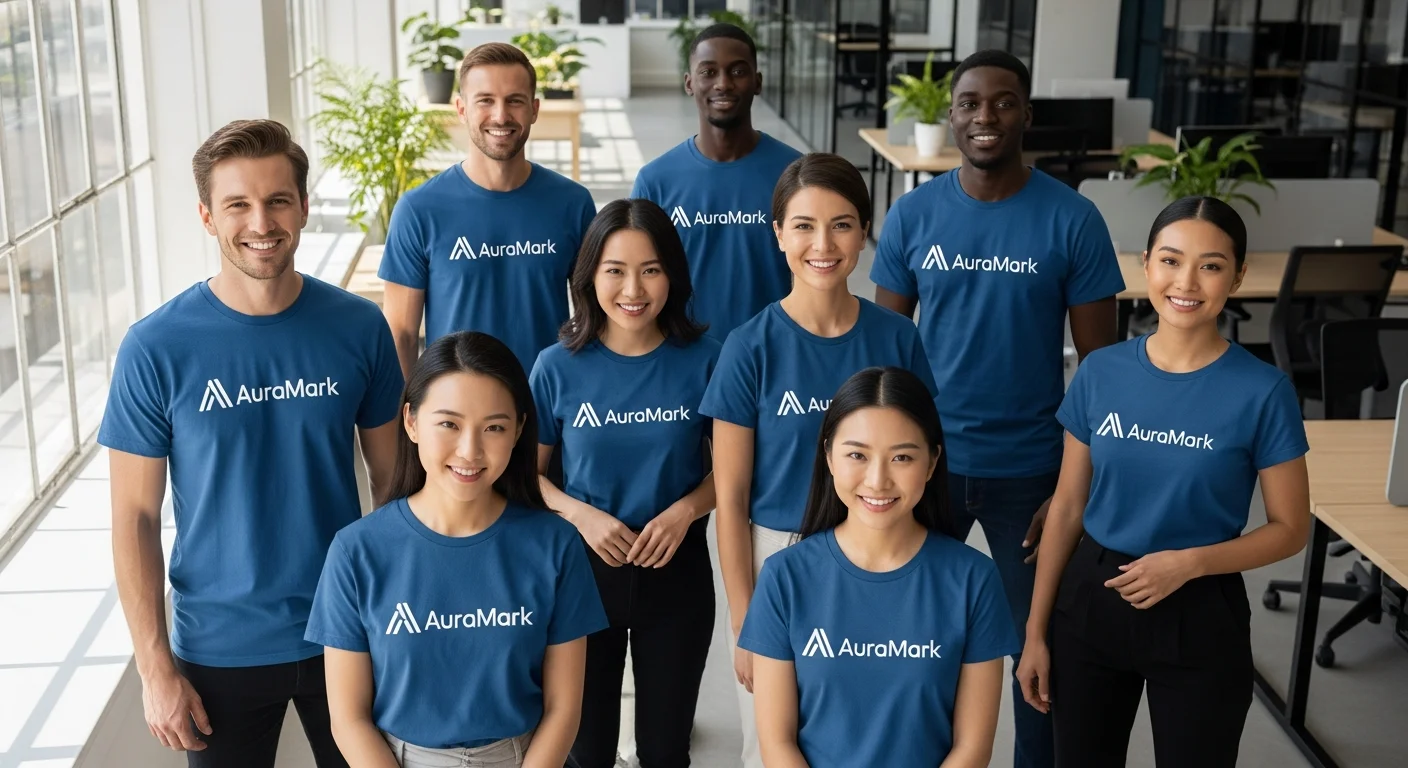
Your brand is more than a logo on a website. It is how people experience your business in the real world, and few branding tools are as powerful, cost-effective, or versatile as a custom t-shirt. Every employee wearing your branded apparel becomes a walking billboard. Every customer sporting your company swag becomes a brand ambassador. And unlike a digital ad that disappears after a scroll, a well-made business logo shirt stays in someone's wardrobe for years.
Whether you are a startup looking to create your first set of employee uniforms, an established business planning trade show merchandise, or a local shop exploring promotional products to build brand awareness, this guide covers everything you need to know about using custom t-shirts as a strategic branding and marketing asset.
Why Custom T-Shirts Are Smart Business Branding
The economics of branded apparel are remarkably compelling when compared to other marketing channels. A single custom t-shirt can generate thousands of impressions over its lifetime. Industry research suggests that a branded garment receives an average of 3,400 impressions before it is retired, making the cost per impression a fraction of a penny. Compare that to digital advertising where a single click can cost several dollars, and the value proposition becomes crystal clear.
Beyond raw impressions, branded uniforms create a professional appearance that builds customer trust. When your staff greets customers wearing coordinated company uniforms, it communicates organization, competence, and attention to detail. Studies consistently show that consumers rate businesses with uniformed employees as more trustworthy and reliable than those without.
Custom t-shirts also foster team unity and employee pride. When everyone on your team wears the same logo merchandise, it creates a sense of belonging and shared purpose that transcends job titles and departments. Employees who feel connected to their company's brand tend to deliver better customer experiences and stay with the organization longer.
From a brand recognition standpoint, repetition is everything. The more often people see your logo in their daily environment, the more familiar and trustworthy your brand becomes. Every team member wearing your branded apparel in the community, at the gym, in the grocery store, and at their kid's soccer game reinforces your brand identity in the minds of potential customers.
Employee Uniforms That People Actually Want to Wear

The days of stiff, uncomfortable employee workwear are over. Modern branded uniforms prioritize comfort and style alongside branding requirements, and the result is apparel that employees genuinely enjoy wearing both on and off the clock. The secret is choosing fabrics that feel good against the skin and fits that flatter a wide range of body types.
Start with fabric selection. Ringspun cotton offers a softer, smoother texture than standard cotton and elevates the perceived quality of your uniforms. Tri-blend fabrics with cotton, polyester, and rayon deliver a luxuriously soft feel with slight stretch that accommodates movement throughout the workday. For outdoor or physically demanding roles, moisture-wicking performance fabrics keep employees comfortable in warm conditions.
Style variety matters more than you might think. Offering crew necks, polo shirts, and henleys as uniform options allows employees to choose the silhouette that makes them feel most confident. A restaurant might offer both polo and crew neck options in the same brand colors, giving front-of-house and kitchen staff appropriate choices for their roles while maintaining brand consistency.
Sizing inclusivity is non-negotiable for professional apparel programs. Offering sizes from XS through 5XL ensures that every team member receives a uniform that fits well and feels comfortable. Nothing undermines employee satisfaction faster than a uniform program that excludes certain body types. Work with a supplier that stocks the full size range so no one is left out.
Trade Show and Event Merchandise Strategy

Trade show merchandise serves a fundamentally different purpose than employee uniforms. While uniforms build internal culture and customer-facing professionalism, event merch is designed to attract attention, start conversations, and create lasting impressions on potential leads. The most effective trade show shirts are the ones attendees actually keep and wear after the event rather than tossing in a donation bin.
Design your trade show giveaway shirts with wearability in mind. A shirt that prominently features nothing but your company logo and phone number feels like an advertisement, and most recipients will never wear it. Instead, create a design that is genuinely cool, funny, or visually striking on its own merits, with your branding incorporated as a secondary element. People wear shirts that make them look good, not shirts that make your company look good.
When planning quantities for trade show merchandise, order based on your lead generation goals rather than total event attendance. If the event expects five thousand attendees and your booth typically engages three hundred of them, ordering two hundred shirts is more strategic than ordering five hundred. Scarcity also creates demand. When attendees see that your shirts are running out, the perceived value increases.
Bundling t-shirts with other custom products like custom hats or custom mugs creates a merchandise ecosystem that reinforces your brand across multiple touchpoints. An attendee who walks away with a shirt, a hat, and a mug is far more likely to remember your brand than one who received only a single item.
Customer Loyalty and Promotional Merch
Branded merchandise is a powerful customer loyalty tool that goes beyond traditional discount-based retention strategies. When you give a customer a high-quality branded t-shirt, you are giving them something tangible that creates an emotional connection to your business. Every time they wear that shirt, they are reminded of the positive experience they had with your brand.
Promotional products work exceptionally well as purchase incentives. Offering a free branded tee with purchases over a certain amount encourages higher order values while creating walking advertisements for your business. The perceived value of a free custom shirt often exceeds its actual cost, making it a profitable promotional strategy when executed correctly.
Limited-edition merchandise drops create urgency and exclusivity that fuel brand engagement. Releasing a seasonal design, a collaboration with a local artist, or a special anniversary edition turns your branded apparel into collectible items that customers actively seek out. This strategy works particularly well for businesses with engaged social media followings and loyal customer bases.
User-generated content from customers wearing your branded merchandise provides authentic social proof that no paid advertising can replicate. Encourage customers to share photos wearing your merch by creating a branded hashtag, running photo contests, or offering discounts on future purchases for social media posts. This organic content reaches audiences who trust peer recommendations over corporate messaging.
Brand Consistency: Logo Placement and Color Matching

Brand consistency across all touchpoints is what separates amateur branding from professional brand identity. Your logo should look identical on your website, your business cards, your storefront signage, and your custom t-shirts. Achieving this consistency requires attention to color matching, logo placement standards, and design specifications.
Color matching between digital designs and printed apparel requires careful attention because screens and fabric reproduce colors differently. If your brand uses specific Pantone or PMS colors, share these specifications with your printer to ensure the closest possible match. Small color variations between batches can undermine the professional appearance you are trying to achieve.

Establish standard logo placement rules for your company apparel. The most common professional placements are left chest for a subtle, corporate look, center chest for a bold brand statement, and full back for maximum visibility. Create a simple style guide document that specifies which placement to use for which type of shirt, ensuring every order maintains visual consistency.
If your brand includes multiple visual elements such as a logo, a wordmark, and a tagline, define a clear hierarchy for how these elements appear on apparel. The logo alone on the front chest with the wordmark and tagline on the back creates a clean, layered approach. Cramming every brand element onto the front of the shirt dilutes the impact and creates a cluttered, unprofessional appearance.
Choosing the Right Printing Method for Business
The printing method you choose affects durability, appearance, and cost, all of which matter for business applications. Screen printing remains the gold standard for company uniforms because of its exceptional durability. A screen-printed logo will withstand hundreds of industrial wash cycles without significant fading or cracking, making it the most cost-effective choice for apparel that sees daily wear.
Direct-to-garment (DTG) printing excels when your business logo includes gradients, many colors, or photographic elements. If your brand identity uses a complex multicolor logo, DTG reproduces it with pinpoint accuracy at any quantity. For a detailed comparison of both methods, read our screen printing vs DTG guide.
Embroidery services add a premium feel that elevates the perceived value of your branded apparel. An embroidered logo on a polo shirt or performance jacket communicates quality and attention to detail in a way that printed logos cannot replicate. Embroidery is particularly effective for customer-facing roles where a polished, upscale appearance matters.
For businesses that need flexibility across different applications, combining methods often yields the best results. Use screen printing for employee uniforms that require maximum durability, DTG for promotional shirts with complex designs, and embroidery for executive and customer-facing apparel. This tiered approach ensures every piece of branded merchandise is produced using the optimal method for its intended use.
Bulk Pricing and Volume Discounts
Budget management is a reality for every small business, and understanding how bulk apparel orders affect your per-unit cost helps you plan effective uniform and merchandise programs. With RareCustom custom t-shirts, there are no minimum order requirements, which means you can start with a small test batch and scale up as your needs grow.
Volume discounts kick in as your order size increases. Ordering twenty-five shirts costs less per unit than ordering ten, and ordering a hundred costs even less. For businesses that plan to reorder regularly, these volume savings compound over time, making branded apparel one of the most cost-effective marketing investments available.
Free shipping on every order regardless of size eliminates one of the hidden costs that catches many businesses off guard. Some competitors offer attractive per-shirt pricing but tack on substantial shipping charges that inflate the final total. With RareCustom, the quoted price is the final price, making budget planning straightforward and predictable.
For businesses with larger apparel needs, consider setting up a recurring order schedule. Quarterly uniform refreshes ensure employees always have professional-looking gear, and planned orders allow you to take advantage of volume pricing. For specific pricing information at your target quantity, visit our pricing guide.
Setting Up an Online Company Store
An online company store streamlines the process of getting branded apparel to employees, franchisees, or customers. Rather than a central administrator managing every order, individuals can browse available styles, select their size, and place orders directly. This decentralized approach saves administrative time while ensuring everyone gets exactly what they need.
The most effective company stores offer a curated selection of pre-approved designs on various shirt styles. Employees can choose between a polo, a crew neck, and a long sleeve in the company's brand colors, with the approved logo automatically applied. This model gives individuals choice within brand guidelines, preventing the inconsistency that arises when everyone orders independently.
For franchise businesses with multiple locations, an online company store ensures brand consistency across every storefront. Each location orders from the same catalog of approved designs, guaranteeing that the customer experience is identical whether they visit your Boston location or your Denver shop. The centralized ordering system also provides visibility into total spend and ordering patterns across the organization.
Print-on-demand fulfillment eliminates the need to pre-purchase and warehouse inventory. When an employee places an order through the company store, the shirt is produced and shipped directly to them. This approach works exceptionally well for businesses with fluctuating headcount or seasonal staffing needs where predicting exact quantities in advance is difficult.
Industry-Specific Uniform Ideas

Restaurant and Food Service. Restaurant uniforms need to withstand heat, spills, and frequent laundering. Dark-colored crew necks or polo shirts in black or navy hide stains effectively while maintaining a professional appearance. Screen printing is the preferred method because it survives commercial washing machines. Consider moisture-wicking fabrics for kitchen staff working in high-heat environments.
Retail and Boutique. Retail staff shirts should enhance the shopping experience by being approachable and on-brand without being overly corporate. Many boutiques opt for a subtle left-chest logo on a stylish blank shirt that employees would enjoy wearing outside of work. The goal is for staff to look like knowledgeable brand ambassadors rather than uniformed workers.
Fitness and Wellness. Gym, yoga studio, and wellness center uniforms demand performance fabrics that move with the body and manage moisture effectively. Tri-blend and moisture-wicking shirts in your brand colors project an active, health-conscious image. Bold logo placement on the back allows trainers to be easily identified from across a crowded fitness floor.
Tech Startups and Creative Agencies. Tech company apparel tends to lean casual and creative, reflecting the industry's culture. Soft tri-blend tees with a modern minimalist logo create a Silicon Valley aesthetic that employees genuinely enjoy wearing. Many tech companies create seasonal or project-specific shirt designs that build internal culture and commemorate team accomplishments.
Construction and Trades. Job site apparel needs durability above all else. Heavyweight cotton shirts in high-visibility colors with large company branding ensure workers are identifiable on busy sites. Consider long-sleeve options for sun protection and layering, and always include safety-compliant color options where required by regulations.
Tax Benefits of Business Apparel
Custom business apparel can offer tax advantages that further improve the return on your branding investment. Employee uniforms that display the company name or logo and are required as a condition of employment are generally deductible as a business expense in the United States. This means the cost of outfitting your team in branded shirts reduces your taxable income.
Promotional products distributed at trade shows, events, or as customer gifts are typically classified as marketing expenses and are also deductible. The IRS treats promotional merchandise the same way it treats advertising costs, making your trade show giveaway shirts a legitimate and potentially significant deduction.
For businesses that provide uniforms to employees at no cost, the expense is categorized under employee benefits rather than employee compensation, which can be advantageous from a payroll tax perspective. Consult with your accountant or tax advisor to understand how apparel expenses apply to your specific business structure and jurisdiction.
Maintaining detailed records of your apparel purchases, including invoices, order quantities, and the business purpose for each order, ensures you can substantiate your deductions if audited. Many businesses create a dedicated budget line item for branded apparel to simplify tracking and maximize their tax benefits each year.
Order Custom Business T-Shirts
Ready to elevate your brand with professional custom business t-shirts? Start with the RareCustom design tool to upload your logo, choose your shirt styles, and preview your branded apparel before ordering. Our tool makes it easy to maintain brand consistency by saving your color specifications and logo files for future orders.
With no minimum order requirements, you can test a small batch of employee uniforms before committing to a larger rollout. Order five shirts to verify the fit, print quality, and color accuracy, then confidently scale to your full team size. Every order includes free shipping, so your total cost stays predictable regardless of quantity.
For larger organizations or those needing customized corporate uniform programs, our team is available to provide personalized assistance. Contact us to discuss bulk quotes, recurring order schedules, and company store setup. We work with businesses of all sizes, from solo entrepreneurs ordering their first batch of custom t-shirts to national chains outfitting thousands of employees across multiple locations.
Related Articles
Share this article
Written by
Rohan Mehta
Head of Marketing at RareCustom. Former business journalist at Retail Dive with a B.A. from Northwestern's Medill School. David covers business strategy and branding.