Eco-Friendly Custom Hoodies: Sustainable Materials & Printing Methods
Design eco-friendly custom hoodies with sustainable fabrics, water-based inks, and ethical production. A guide to reducing environmental impact without sacrificing quality.
Aisha Patel
Head of Materials Science & Sustainability at RareCustom. M.S. in Textile Engineering from NC State with AATCC certification and ISSP Sustainability Practitioner certification. 7+ years evaluating fabrics, materials, and eco-friendly production processes.
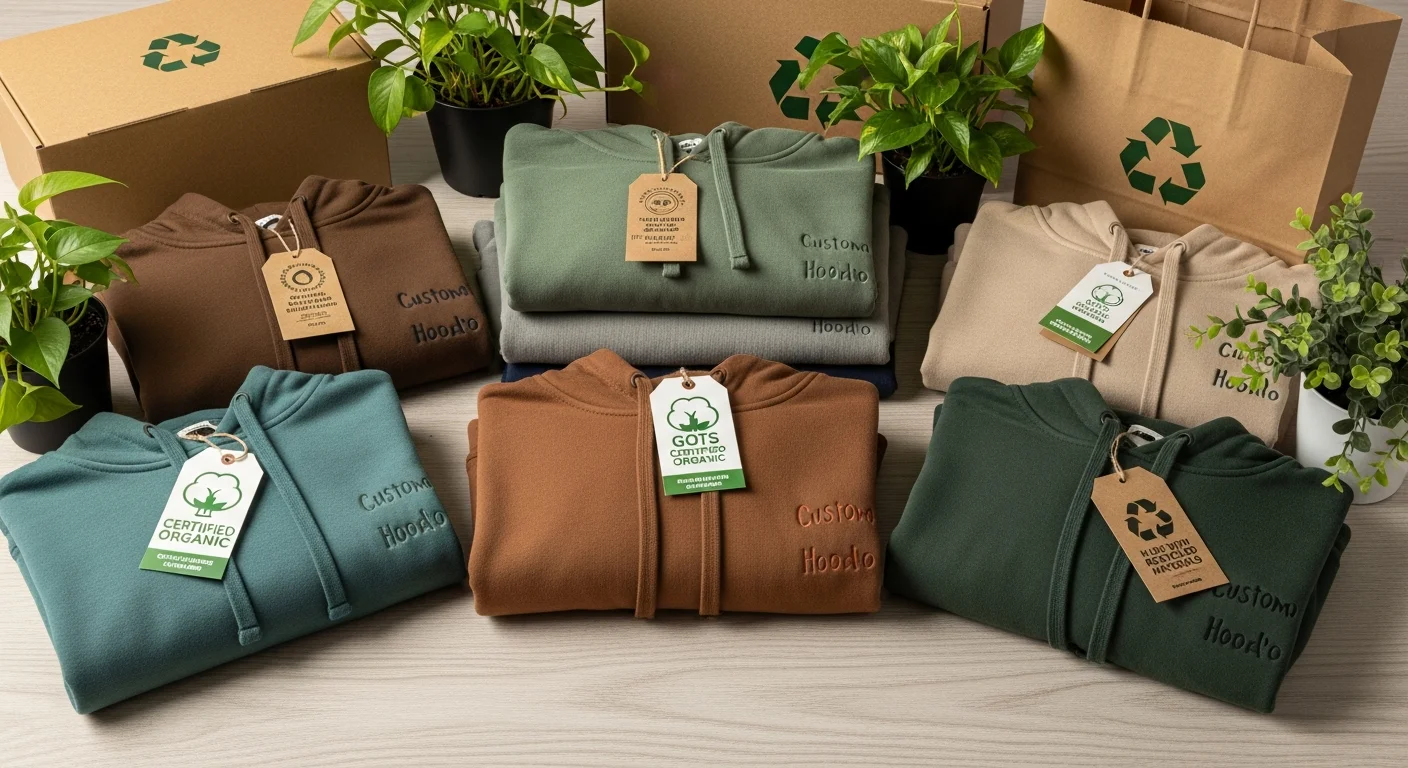
The fashion industry accounts for roughly 10 percent of global carbon emissions, and the custom apparel sector is part of that equation. But it does not have to be a significant part. Every decision you make when designing a custom hoodie, from the fabric you choose to the ink used in printing, has an environmental impact that you can actively reduce.
This guide covers practical ways to create eco-friendly custom hoodies that look and feel just as good as conventional options while significantly reducing their environmental footprint.
Sustainable Fabric Options
Organic Cotton
Organic cotton is grown without synthetic pesticides, herbicides, or genetically modified seeds. It uses 88 percent less water than conventional cotton and produces 46 percent fewer carbon emissions.
- Feel: Soft, breathable, identical hand feel to conventional cotton
- Print quality: Excellent with all printing methods
- Certification: Look for GOTS (Global Organic Textile Standard) certification
- Cost: Typically 15 to 30 percent more than conventional cotton
Recycled Polyester (rPET)
Made from post-consumer plastic bottles and recycled polyester garments. Each hoodie made from recycled polyester diverts approximately 12 to 15 plastic bottles from landfills.
- Feel: Smooth, moisture-wicking, slightly different texture from virgin polyester
- Print quality: Works well with sublimation and DTG
- Certification: Look for GRS (Global Recycled Standard) certification
- Cost: Comparable to or slightly above conventional polyester
Organic Cotton and Recycled Polyester Blends
The best of both worlds. Blends combining organic cotton with recycled polyester offer durability, softness, and environmental responsibility. A 60/40 organic cotton/recycled polyester blend is increasingly available in the custom hoodie market.

Hemp Blends
Hemp is one of the most environmentally friendly fibers available. It grows quickly, requires minimal water, naturally resists pests, and actually improves soil quality. Hemp-cotton blends create soft, durable hoodies with a distinctive texture.
Tencel and Lyocell
Made from sustainably harvested wood pulp using a closed-loop process that recycles 99 percent of the solvents used. Tencel hoodies are silky soft, moisture-managing, and biodegradable at end of life.
Sustainable Printing Methods
Water-Based Inks
Traditional plastisol inks used in screen printing contain PVC and phthalates. Water-based inks replace these with water-soluble, non-toxic alternatives that:
- Produce softer prints that breathe with the fabric
- Contain no PVC, phthalates, or heavy metals
- Allow easier wastewater treatment at production facilities
- Create a vintage, slightly faded aesthetic that many designers prefer
Discharge Printing
Instead of layering ink on top of fabric, discharge printing removes the fabric dye and replaces it with the design color. The result is an incredibly soft print with zero texture because the design becomes part of the fabric rather than sitting on top of it.
DTG with Eco Inks
Many DTG printers now use OEKO-TEX certified, water-based inks that meet strict environmental and health standards. DTG printing also produces minimal waste because there are no screens to wash or excess ink to dispose of.
Embroidery
Embroidery is inherently one of the most sustainable decoration methods. Thread is durable, does not require chemicals for application, and produces minimal production waste. Choose threads made from recycled polyester for an even smaller footprint.

Ethical Production Practices
Sustainability extends beyond materials to how and where hoodies are made:
- Fair Trade certified: Ensures fair wages and safe working conditions for garment workers
- Local production: Reduces transportation emissions and supports local economies
- Carbon-neutral shipping: Offset the carbon footprint of delivering finished hoodies
- Minimal packaging: Use recycled, recyclable, or compostable packaging materials
- Print-on-demand: Eliminates overproduction waste by only printing what is ordered
The Real Cost of Sustainable Hoodies
Eco-friendly hoodies typically cost 15 to 35 percent more than conventional options. For a mid-range custom hoodie:
| Component | Conventional | Sustainable |
|---|---|---|
| Base hoodie | $12-$18 | $16-$25 |
| Printing | $6-$10 | $7-$12 |
| Total per unit | $18-$28 | $23-$37 |
| Recommended retail | $35-$50 | $45-$65 |
The premium is shrinking as demand increases and supply chains mature. Many consumers, especially younger demographics, are willing to pay more for sustainable products, making eco-friendly hoodies a viable option for hoodie brands targeting environmentally conscious markets.
Marketing Your Eco-Friendly Hoodies
Be transparent and specific about your sustainability claims:
- State exact material percentages rather than vague "eco" labels
- Reference specific certifications (GOTS, GRS, OEKO-TEX)
- Share the specific environmental benefits in measurable terms
- Avoid greenwashing by being honest about areas where conventional methods are still used
How to Get Started
You do not need to be perfectly sustainable from day one. Start with the changes that have the biggest impact:
- Switch to organic cotton or recycled polyester blanks
- Request water-based inks for your printing
- Use minimal, recycled packaging
- Consider print-on-demand to eliminate waste from unsold inventory
Design your sustainable custom hoodie using our free design tool and select eco-friendly fabric options during checkout.
Frequently Asked Questions
Do eco-friendly hoodies print as well as conventional ones?
Yes. Modern organic cotton and recycled polyester blends accept all major printing methods with results comparable to conventional fabrics. The fabric guide covers print compatibility for different materials in detail.
Are sustainable hoodies less durable?
No. In many cases, sustainable fabrics like organic cotton and hemp blends are actually more durable than their conventional counterparts. Organic cotton fibers tend to be longer and stronger because they are not weakened by chemical processing.
How can I verify that a hoodie is actually eco-friendly?
Look for third-party certifications: GOTS for organic textiles, GRS for recycled content, OEKO-TEX for chemical safety, and Fair Trade for ethical labor. These independent certifications verify sustainability claims that brands make.
Is print-on-demand more sustainable than bulk ordering?
From a waste perspective, yes. Print-on-demand produces zero unsold inventory, which is a significant source of waste in the apparel industry. However, individual shipping has a higher per-unit carbon footprint than bulk shipping. The most sustainable approach is bulk ordering the exact quantity you need with sustainable materials and printing methods.
Share this article
Written by
Aisha Patel
Head of Materials Science & Sustainability at RareCustom. M.S. in Textile Engineering from NC State with AATCC certification and ISSP Sustainability Practitioner certification. 7+ years evaluating fabrics, materials, and eco-friendly production processes.