Fleece vs French Terry vs Cotton Blend: Hoodie Fabric Guide for Custom Printing
Compare fleece, French terry, and cotton blend hoodie fabrics for custom printing. Learn which material prints best, feels softest, and lasts longest.
Aisha Patel
Head of Materials Science & Sustainability at RareCustom. M.S. in Textile Engineering from NC State with AATCC certification and ISSP Sustainability Practitioner certification. 7+ years evaluating fabrics, materials, and eco-friendly production processes.
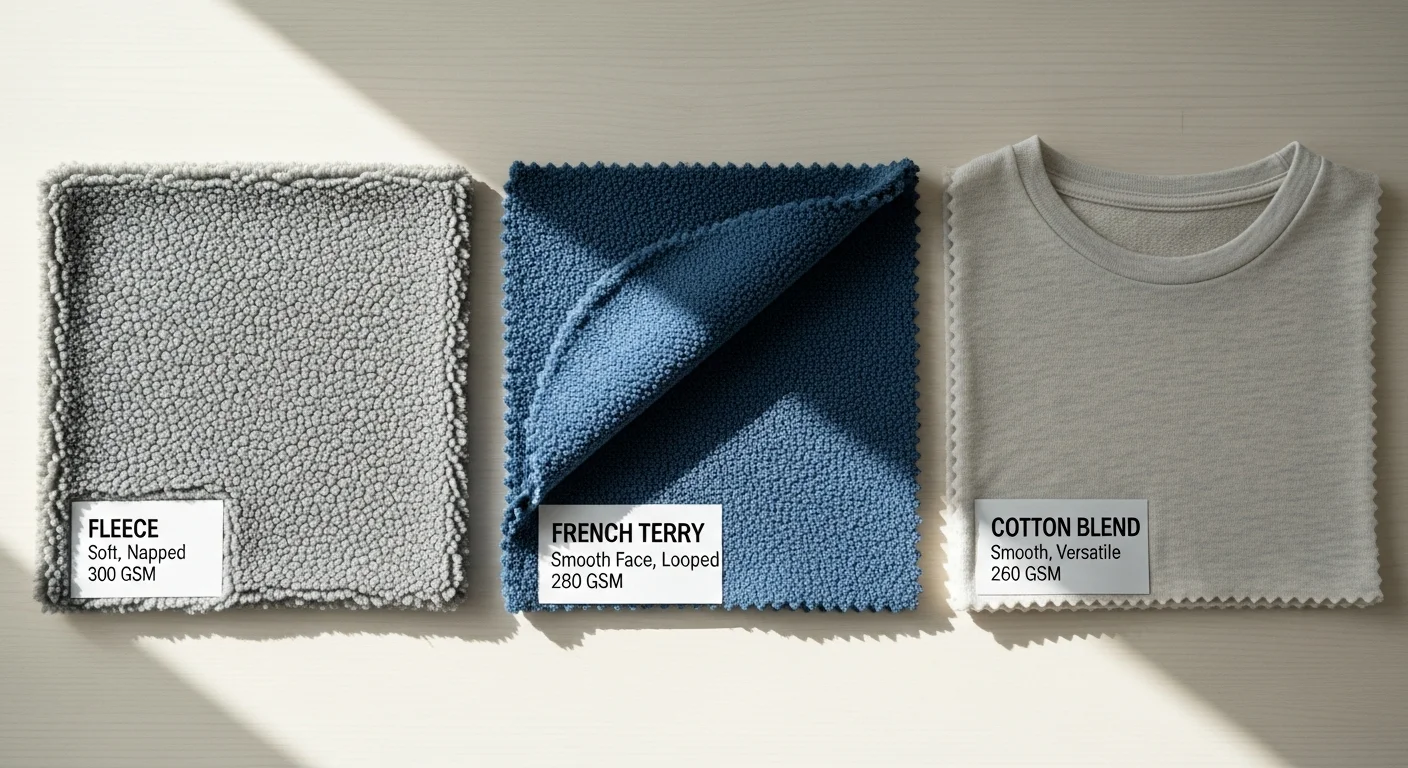
The fabric of your custom hoodie determines everything: how it feels against skin, how well your design prints, how long it lasts through wash cycles, and whether people actually reach for it on a chilly morning. Choosing the right fabric is just as important as choosing the right design.
This guide breaks down the three most common hoodie fabrics used in custom printing, fleece, French terry, and cotton blends, so you can pick the perfect material for your project.
Fleece: The Classic Heavyweight
Fleece is the traditional hoodie fabric that most people picture when they think of a hoodie. It has a smooth exterior and a soft, brushed interior that traps warmth effectively.
Characteristics
- Weight: Typically 7 to 12 ounces per square yard
- Feel: Soft, fuzzy interior with a smooth printable exterior
- Warmth: The warmest of the three options
- Best for: Cold weather, outdoor events, winter merchandise
Printing Compatibility
Fleece works well with screen printing and DTG. The smooth outer surface accepts ink cleanly, producing vibrant colors and sharp details. However, very fine lines may soften slightly due to the fabric's nap. Embroidery also works exceptionally well on fleece because the dense fabric provides a stable foundation for stitching.

French Terry: The Lightweight Alternative
French terry has loops on the inside instead of brushed fibers, creating a lighter, more breathable fabric that works across three seasons.
Characteristics
- Weight: Typically 5 to 8 ounces per square yard
- Feel: Smooth exterior, looped interior that absorbs moisture
- Warmth: Moderate, ideal for spring and fall
- Best for: Athletic wear, transitional seasons, indoor environments
Printing Compatibility
French terry's smooth surface prints beautifully with DTG and screen printing. The lighter weight means less fabric texture to interfere with fine design details. This makes French terry an excellent choice for photographic prints and designs with intricate details.
Cotton Blends: The Balanced Choice
Cotton-polyester blends, typically in 50/50 or 60/40 ratios, combine the softness of cotton with the durability and wrinkle-resistance of polyester.
Characteristics
- Weight: Varies by blend, typically 6 to 10 ounces
- Feel: Soft but structured, less likely to pill than pure cotton
- Warmth: Depends on weight, generally moderate
- Best for: All-purpose use, retail merchandise, everyday wear
Printing Compatibility
Blended fabrics accept all printing methods well. The polyester content helps maintain shape after washing, which keeps printed designs looking straight and properly positioned over time. DTG on high-cotton blends produces the softest hand feel for printed areas.

Side-by-Side Comparison
| Factor | Fleece | French Terry | Cotton Blend |
|---|---|---|---|
| Warmth | Highest | Moderate | Moderate |
| Weight | Heavy | Light | Medium |
| Breathability | Low | High | Medium |
| Print quality | Excellent | Excellent | Very good |
| Embroidery | Excellent | Good | Very good |
| Durability | High | Moderate | High |
| Price range | $$-$$$ | $$ | $-$$ |
| Best season | Winter | Spring/Fall | Year-round |
Which Fabric Should You Choose?
Choose fleece for winter events, outdoor activities, premium merchandise, or when maximum warmth is the priority. Fleece hoodies feel substantial and luxurious, which makes them ideal for business branding where perceived value matters.
Choose French terry for athletic teams, gym merchandise, spring and fall events, or when breathability matters. French terry hoodies are also popular for streetwear brands aiming for a lighter, more modern silhouette.
Choose cotton blends for all-purpose use, bulk orders where budget matters, or when you need a versatile hoodie that works across seasons and settings.
Fabric and Sustainability
If environmental impact matters to your project, look for hoodies made with organic cotton, recycled polyester, or blends that combine both. These eco-friendly options are available in all three fabric categories and print just as well as conventional materials.
Frequently Asked Questions
Which hoodie fabric is softest?
Tri-blend fabrics (cotton, polyester, rayon) are generally the softest, followed by brushed fleece. French terry feels smooth on the outside but the looped interior is less plush than fleece. For maximum softness, look for ringspun cotton fleece.
Does fabric type affect how my print looks after washing?
Yes. Polyester-blend fabrics hold printed designs better through repeated washing because they shrink less and maintain their shape. Pure cotton hoodies may shrink slightly, which can distort prints over time. Follow our hoodie care guide for best results.
What fabric weight is best for custom hoodies?
For most custom printing projects, 8 to 10 ounce fabrics hit the sweet spot between warmth, printability, and value. Lighter weights under 7 ounces may feel flimsy, while weights above 12 ounces can be uncomfortably heavy for indoor wear.
Can I print the same design on different fabric types?
Yes, but the results may look slightly different. Fleece may soften very fine lines, while French terry will reproduce them more crisply. We recommend ordering samples in each fabric to compare before committing to a large order.
Share this article
Written by
Aisha Patel
Head of Materials Science & Sustainability at RareCustom. M.S. in Textile Engineering from NC State with AATCC certification and ISSP Sustainability Practitioner certification. 7+ years evaluating fabrics, materials, and eco-friendly production processes.