Eco-Friendly Custom Jerseys: Recycled Polyester, Sustainable Inks & Green Team Gear
Order custom jerseys that perform and protect the planet. Learn about recycled polyester fabrics, water-based sublimation inks, carbon-conscious production, and end-of-life jersey recycling.
Aisha Patel
Head of Materials Science & Sustainability at RareCustom. M.S. in Textile Engineering from NC State with AATCC certification and ISSP Sustainability Practitioner certification. 7+ years evaluating fabrics, materials, and eco-friendly production processes.
As sustainability becomes a priority for organizations at every level — from youth soccer leagues to Fortune 500 companies — the demand for eco-friendly custom jerseys is growing rapidly. The good news: sustainable jersey options have reached a point where you do not have to sacrifice performance, durability, or design quality to make an environmentally responsible choice.
The custom jersey industry has unique sustainability challenges compared to casual custom t-shirts or hoodies. Jerseys are polyester-based (not cotton), use specialized printing methods, and face intense performance demands. Here is how the industry is addressing each of these challenges.
Recycled Polyester: Performance from Plastic Waste
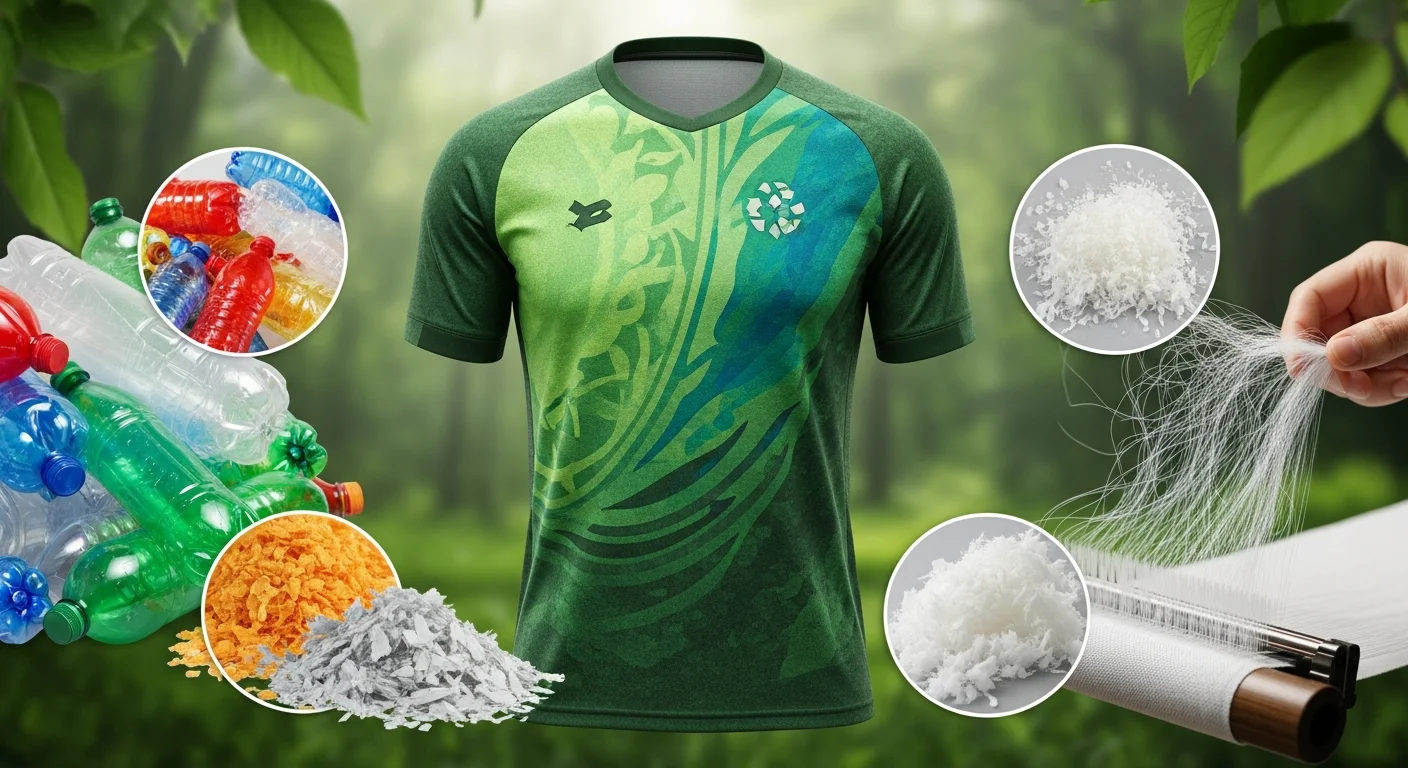
Recycled polyester (rPET) is made from post-consumer plastic bottles and post-industrial polyester waste. The recycling process melts used plastic into pellets, which are then spun into fibers identical in performance to virgin polyester. An average jersey uses the equivalent of approximately 12 recycled plastic bottles.
The performance question teams always ask: does recycled polyester wick, breathe, and stretch like virgin polyester? The answer is yes. Modern rPET fabrics match virgin polyester in every measurable performance category — moisture management, tensile strength, color fastness, and sublimation print quality. Independent testing shows no statistically significant difference between recycled and virgin polyester mesh in breathability or dry time.

Sustainable Printing: Water-Based Sublimation Inks
Sublimation printing — the dominant method for custom jerseys — has inherent environmental advantages over screen printing. Sublimation uses water-based inks that produce minimal waste. There are no screens to clean, no chemical solvents required, and excess ink can be collected and reused. The heat transfer process produces no wastewater, a significant advantage over screen printing which generates considerable chemical waste.
For a detailed comparison of these methods and their environmental impact, see our sublimation vs screen printing guide.
Carbon-Conscious Production
The carbon footprint of a custom jersey includes raw material extraction, fabric manufacturing, printing, assembly, and shipping. Teams looking to minimize their environmental impact can take several practical steps: choose a domestic producer to reduce shipping distance, order in bulk to consolidate production runs, select recycled polyester to reduce raw material impact, and opt for ground shipping over air freight.
Some jersey providers now offer carbon offset programs where a small per-unit fee funds verified environmental projects. While offset programs are not a substitute for reducing actual emissions, they provide an additional layer of environmental responsibility.
Extending Jersey Lifespan
The most sustainable jersey is one that lasts multiple seasons rather than being replaced annually. Sublimated jerseys have a significant advantage here because the embedded ink never cracks, peels, or fades under normal use. A well-cared-for sublimated jersey can last three to five seasons of regular play.
Proper care is essential for maximizing jersey lifespan. Cold water washing, air drying, and avoiding fabric softener preserve both the fabric and the sublimation print. See our jersey care guide for complete maintenance instructions.
End-of-Life Jersey Recycling
When jerseys finally reach the end of their useful life, polyester (both virgin and recycled) can be recycled again into new products. Some jersey providers and athletic organizations have begun take-back programs that collect worn-out jerseys for recycling. Old jerseys can also be repurposed as practice gear, donated to youth organizations, or recycled through textile recycling programs.

Communicating Your Sustainability Choice
If your team or organization chooses eco-friendly jerseys, share that decision. Add a small "Made from Recycled Materials" label to the interior collar. Mention the sustainability initiative on your team website or social media. For corporate events, including a sustainability callout on the jersey itself (a small recycling icon, for example) signals your company's values to participants and spectators.
Cost Considerations
Recycled polyester jerseys typically cost 5-15% more than virgin polyester equivalents. The premium is decreasing as recycled fabric production scales up. For many teams and organizations, the slightly higher cost is offset by the reputational value of demonstrating environmental responsibility. Corporate teams in particular find that the sustainability story justifies the modest price increase.
Frequently Asked Questions
Are recycled polyester jerseys as good as regular polyester?
Yes. Modern recycled polyester (rPET) matches virgin polyester in moisture-wicking, breathability, durability, and print quality. Independent testing shows no performance difference. The fibers are chemically identical once processed.
Is sublimation printing eco-friendly?
Compared to screen printing, yes. Sublimation uses water-based inks, produces no wastewater, requires no chemical solvents, and generates minimal waste. The process is cleaner and more resource-efficient than traditional garment printing methods.
Can old polyester jerseys be recycled?
Yes. Polyester is one of the most recyclable synthetic fabrics. Old jerseys can be recycled into new polyester products through textile recycling programs. Some jersey providers offer take-back programs specifically for end-of-life athletic uniforms.
How much more do eco-friendly jerseys cost?
Recycled polyester jerseys typically run 5-15% above standard pricing. For a $40 jersey, that translates to an additional $2-$6 per unit. As recycled fabric production scales, this premium continues to decrease.
Share this article
Written by
Aisha Patel
Head of Materials Science & Sustainability at RareCustom. M.S. in Textile Engineering from NC State with AATCC certification and ISSP Sustainability Practitioner certification. 7+ years evaluating fabrics, materials, and eco-friendly production processes.