Eco-Friendly Custom Socks: Recycled Materials, Organic Cotton & Sustainable Practices
Create sustainable custom socks using recycled polyester, organic cotton, and bamboo fiber. Covers certifications, eco-friendly inks, biodegradable packaging, and carbon footprint data.
Aisha Patel
Head of Materials Science & Sustainability at RareCustom. M.S. in Textile Engineering from NC State with AATCC certification and ISSP Sustainability Practitioner certification. 7+ years evaluating fabrics, materials, and eco-friendly production processes.
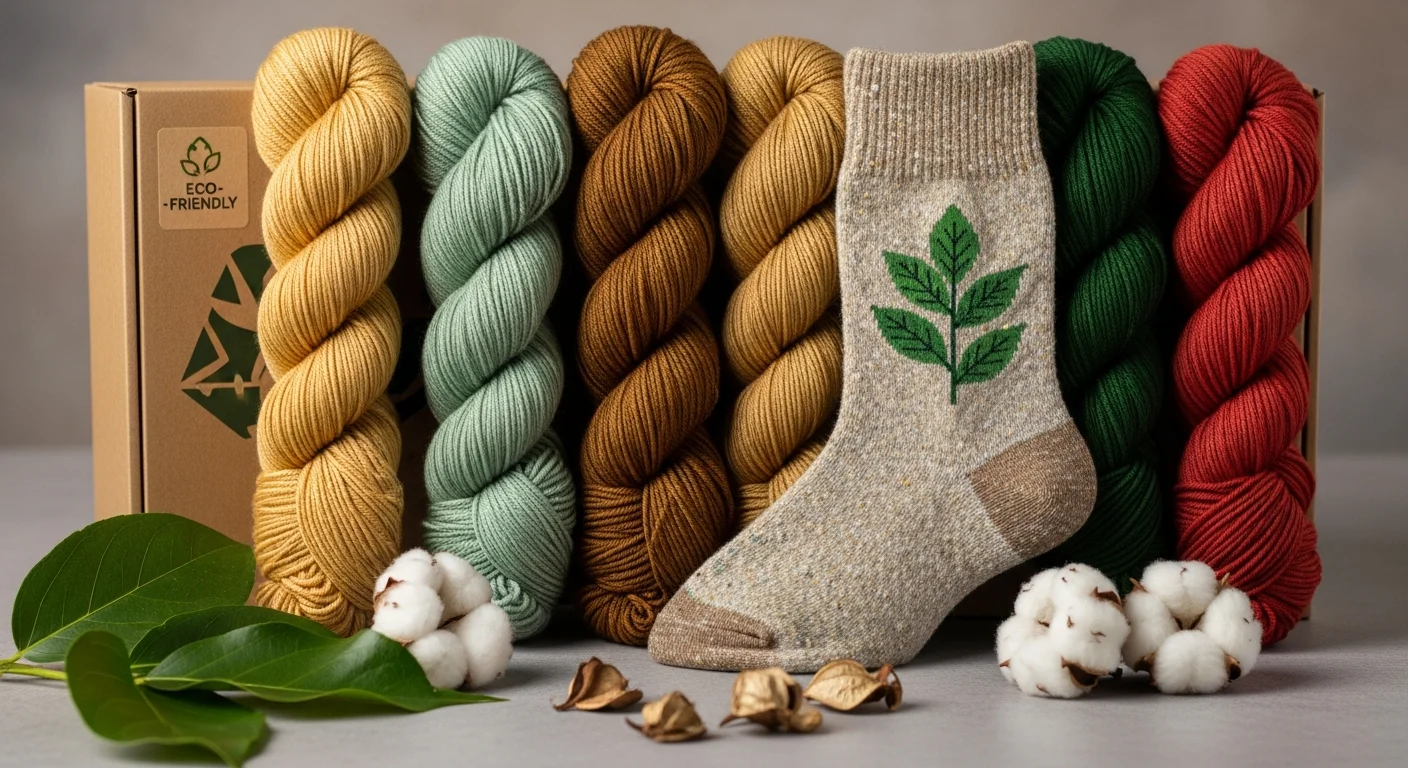
Sustainability is no longer a niche preference — it is a purchasing expectation. A 2025 McKinsey report found that 67% of consumers consider sustainability when making apparel purchases, and 42% have actively switched brands to a more sustainable option in the past twelve months. The custom sock industry has responded with an explosion of eco-friendly materials, processes, and packaging options that allow businesses, organizations, and individuals to create custom socks with a dramatically lower environmental footprint. In fact, roughly 40% of new custom sock product launches in 2025 featured at least one sustainability claim — recycled materials, organic fibers, water-based inks, or biodegradable packaging.
But sustainability in socks is more nuanced than slapping a "green" label on the product. The environmental impact of a pair of socks spans raw material sourcing, yarn production, knitting, dyeing, printing, packaging, shipping, and end-of-life disposal. Making meaningful reductions requires addressing multiple stages of the supply chain, not just swapping one fiber for another. This guide examines every sustainable material and process available for custom socks, with real data on environmental impact so you can make informed decisions that align with your values and your customers' expectations.
The State of Sustainability in Custom Socks
The sock industry produces an estimated 18 billion pairs of socks globally each year. The vast majority use conventional polyester derived from petroleum and conventional cotton grown with synthetic pesticides and heavy irrigation. Together, these materials account for significant greenhouse gas emissions, water consumption, and chemical pollution. A single pair of conventional cotton socks requires approximately 230 gallons of water to produce when accounting for cotton farming, yarn processing, and dyeing.
The shift toward sustainable socks is driven by both consumer demand and regulatory pressure. The European Union's Strategy for Sustainable and Circular Textiles, expected to take full effect by 2027, will require apparel producers to disclose the environmental footprint of their products. Similar legislation is advancing in California and New York. Brands that invest in sustainable sock production now position themselves ahead of coming regulations while meeting current market demand.
For custom sock buyers — whether you are a corporate buyer ordering branded merchandise or a startup launching a sock line — choosing sustainable materials and processes adds a marketing story that resonates with modern consumers and aligns with corporate ESG (Environmental, Social, and Governance) goals.
Recycled Polyester from Plastic Bottles
Recycled polyester (rPET) is made from post-consumer plastic bottles that are collected, sorted, cleaned, shredded into flakes, and extruded into new polyester yarn. The process reduces petroleum dependence by using existing plastic waste as the raw material. One pair of socks made from recycled polyester diverts approximately three to five plastic bottles from landfills or oceans.

From a performance standpoint, recycled polyester is functionally identical to virgin polyester. It offers the same moisture-wicking properties, durability, and color fastness. Socks made from rPET can be knitted, dyed, and printed using all the same methods as conventional polyester socks. The primary difference is environmental: rPET production generates 75% fewer carbon emissions and uses 90% less water compared to virgin polyester production, according to data from the Textile Exchange's 2024 Preferred Fiber and Materials Market Report.
Cost premiums for recycled polyester have decreased significantly. In 2020, rPET yarn cost 20-30% more than virgin polyester. By 2025, the premium narrowed to 5-12% depending on quality and quantity, making it a financially viable choice for most custom sock orders. At current pricing, a pair of custom socks using rPET yarn costs approximately $0.50 to $1.00 more per pair than the conventional equivalent. For a deeper look at how different sock fabrics compare on performance and sustainability, reference the fabric guide.
Organic Cotton Certifications: GOTS and OEKO-TEX
Organic cotton is grown without synthetic pesticides, herbicides, or genetically modified seeds. It relies on crop rotation, compost, and biological pest control instead of chemical inputs. Organic cotton farming uses 91% less water from irrigation compared to conventional cotton (much of the water comes from rainfall), eliminates toxic chemical runoff into waterways, and builds healthier soil over time.
Two certifications dominate the organic cotton landscape for textiles:
GOTS (Global Organic Textile Standard): The most rigorous certification, GOTS requires at least 70% organic fiber content (95% for the "organic" label), restricts chemical inputs at every stage of processing, mandates wastewater treatment, and includes social criteria for fair labor practices. GOTS certification covers the entire supply chain from field to finished product. Socks labeled "GOTS-certified organic cotton" have been verified by an independent auditor at every production stage.
OEKO-TEX Standard 100: This certification tests the finished product for harmful substances including formaldehyde, heavy metals, pesticide residues, and phthalates. While it does not certify organic farming practices, it guarantees that the final sock is safe for skin contact. OEKO-TEX is easier and less expensive to obtain than GOTS, making it more common among smaller manufacturers.
Organic cotton socks cost approximately 15-25% more than conventional cotton socks due to higher raw material costs and certification fees. A pair of organic cotton custom socks typically runs $6.00 to $10.00 at quantities of 200+ pairs, compared to $4.50 to $8.00 for conventional cotton equivalents.
Bamboo Fiber: Processing and Environmental Impact
Bamboo has earned a reputation as an eco-friendly fiber due to the plant's rapid growth (up to three feet per day), minimal water requirements, natural pest resistance (no pesticides needed), and ability to regenerate from existing root systems without replanting. However, the environmental story of bamboo socks is more complex than the marketing suggests.
Most bamboo fabric sold as "bamboo" is actually bamboo viscose (also called bamboo rayon). The conversion from bamboo stalks to viscose fiber involves a chemical process using carbon disulfide, sodium hydroxide, and sulfuric acid. When these chemicals are not properly managed — as is common in some manufacturing facilities — they can pollute waterways and harm workers. The resulting fiber is soft, moisture-wicking, and antimicrobial, but the processing undermines some of the raw material's environmental advantages.
A more sustainable alternative is bamboo lyocell, which uses a closed-loop solvent process that recovers and reuses over 99% of the chemical solvent. Bamboo lyocell socks retain the softness and performance of bamboo viscose while dramatically reducing chemical waste. The tradeoff is higher cost — bamboo lyocell socks cost approximately 20-35% more than bamboo viscose equivalents. When ordering bamboo custom socks, ask the manufacturer specifically whether they use viscose or lyocell processing and whether the facility holds any environmental certifications.
Water-Based and Eco-Friendly Inks
The inks used to dye and print custom socks contribute to the product's overall environmental footprint. Conventional textile inks use petrochemical-based solvents and may contain heavy metals, phthalates, and volatile organic compounds (VOCs) that release harmful emissions during printing and curing. Eco-friendly alternatives are now widely available and perform comparably in most applications.
Water-based inks replace petrochemical solvents with water as the carrier medium. They produce zero VOC emissions during printing, are safer for production workers, and create a softer hand feel on the finished sock because they penetrate the fiber rather than sitting on the surface. Water-based inks work well with sublimation printing on polyester socks and with screen printing on cotton or cotton-blend socks.
Reactive dyes bond chemically with natural fibers (cotton, bamboo), creating permanent color without heavy metals or toxic fixatives. They require less water for rinsing compared to conventional dyes and produce less contaminated wastewater. Most GOTS-certified sock production uses reactive dyes exclusively.
The cost premium for eco-friendly inks is minimal — typically adding $0.10 to $0.30 per pair to production costs. For corporate gifting programs and brand merchandise, the ability to claim eco-friendly inks on marketing materials adds value that far exceeds the modest cost increase.
Biodegradable Packaging Options
Sustainable socks deserve sustainable packaging. The custom sock industry has moved quickly to adopt biodegradable and recyclable packaging options that reduce plastic waste without compromising product protection or brand presentation.

Recycled Kraft Paper Belly Bands: Made from 100% recycled paper, printed with soy-based inks, and fully compostable. Cost: $0.25 to $0.60 per unit. These provide a clean, natural aesthetic that reinforces the sustainability message.
Compostable Poly Bags: Made from plant-based materials (PLA derived from corn starch), these bags look and function like traditional poly bags but break down in commercial composting facilities within 90 to 180 days. Cost: $0.20 to $0.45 per unit, roughly 30-50% more than conventional poly bags.
Seed Paper Tags: Hang tags embedded with wildflower or herb seeds that can be planted after use. Recipients plant the tag, water it, and grow flowers — creating a memorable brand experience with zero waste. Cost: $0.40 to $0.80 per tag. Seed paper tags work especially well for gifting occasions and promotional events.
Recycled Cardboard Gift Boxes: For premium presentation, recycled cardboard boxes with soy-ink printing offer a sustainable alternative to virgin paperboard. FSC (Forest Stewardship Council) certification verifies that the paper comes from responsibly managed forests. Cost: $1.20 to $3.50 per box depending on size and print complexity.
Carbon Footprint Comparison Per Pair
Understanding the carbon footprint of different sock materials helps you make data-driven decisions. The following estimates are based on lifecycle analysis data from the Sustainable Apparel Coalition's Higg MSI (Materials Sustainability Index) and peer-reviewed research published through 2025:
Conventional polyester sock: 2.8 to 3.5 kg CO2e per pair (includes petroleum extraction, polymerization, knitting, dyeing, and transport).
Recycled polyester sock: 0.7 to 1.2 kg CO2e per pair — a 65-75% reduction compared to virgin polyester. The primary savings come from eliminating petroleum extraction and reducing energy-intensive polymerization.
Conventional cotton sock: 3.2 to 4.5 kg CO2e per pair. Cotton's footprint is driven by irrigation water, synthetic fertilizers, and pesticides.
Organic cotton sock: 1.8 to 2.8 kg CO2e per pair — a 35-45% reduction. Savings come from eliminating synthetic chemical inputs and reduced water consumption.
Bamboo viscose sock: 2.5 to 3.8 kg CO2e per pair. Despite bamboo's low farming footprint, the chemical-intensive viscose conversion adds significant emissions.
Bamboo lyocell sock: 1.2 to 2.0 kg CO2e per pair. The closed-loop solvent recovery process dramatically reduces processing emissions.
Marketing Sustainability to Customers
Sustainability claims must be specific, verified, and honest. Vague terms like "eco-friendly" or "green" without supporting data erode consumer trust. Instead, state exactly what makes the socks sustainable: "Made from 100% recycled polyester yarn, diverting 4 plastic bottles from landfills per pair" is far more compelling than "Eco-friendly socks."
Include certifications prominently on packaging and product pages — GOTS, OEKO-TEX, GRS (Global Recycled Standard), and FSC logos carry recognized credibility. If the socks do not hold formal certification, describe the specific sustainable attributes honestly without implying certification. For example, "Made with organic cotton sourced from GOTS-certified farms" is accurate if the cotton is certified even if the finished sock has not gone through full GOTS product certification.
For businesses building a custom sock brand, sustainability can be a core differentiator. Position the sustainability story front and center on the website, include a dedicated sustainability page with sourcing details, and consider publishing annual impact reports that quantify the environmental savings of the product line. Consumers are willing to pay a 10-20% premium for verified sustainable products, according to NielsenIQ data — and that premium often more than offsets the higher material costs.
Cross-promote sustainable sock offerings alongside other eco-friendly products in the catalog. If you also offer eco-friendly custom jerseys, bundle them with sustainable socks for a complete green athletic package that appeals to environmentally conscious teams and organizations.
Frequently Asked Questions
Are recycled polyester socks as durable as conventional polyester socks?
Yes. Recycled polyester yarn undergoes the same extrusion and drawing processes as virgin polyester, resulting in fibers with identical tensile strength, elasticity, and abrasion resistance. Independent testing consistently shows no measurable difference in durability between socks made from recycled versus virgin polyester.
What certifications should you look for when buying eco-friendly custom socks?
The most respected certifications are GOTS (organic content and ethical processing), GRS (recycled content verification), OEKO-TEX Standard 100 (tested free of harmful substances), and bluesign (sustainable textile processing). Each certification covers different aspects of sustainability, so the right one depends on your specific priorities. GOTS is the most comprehensive single certification for natural fiber socks.
Do eco-friendly socks cost significantly more than conventional socks?
The premium ranges from 5% to 25% depending on the materials and certifications involved. Recycled polyester adds 5-12% to per-pair costs. Organic cotton adds 15-25%. Bamboo lyocell adds 20-35%. Eco-friendly packaging adds $0.10 to $0.50 per unit. For most custom sock orders, the total cost increase is $0.50 to $3.00 per pair — a manageable premium that can often be recouped through higher retail pricing to sustainability-minded consumers.
Can you sublimation print on recycled polyester socks?
Yes. Recycled polyester accepts sublimation printing identically to virgin polyester because the fiber chemistry is the same. Colors are equally vibrant, durability is identical, and production processes are unchanged. There is no need to adjust design files, ink formulations, or heat press settings when switching from virgin to recycled polyester socks.
Share this article
Written by
Aisha Patel
Head of Materials Science & Sustainability at RareCustom. M.S. in Textile Engineering from NC State with AATCC certification and ISSP Sustainability Practitioner certification. 7+ years evaluating fabrics, materials, and eco-friendly production processes.