Eco-Friendly Custom Sweatshirts: Sustainable Materials, Inks & Practices
Create custom sweatshirts with sustainability in mind. Explore organic cotton, recycled polyester, water-based inks, and eco-friendly production practices for greener custom apparel.
Aisha Patel
Head of Materials Science & Sustainability at RareCustom. M.S. in Textile Engineering from NC State with AATCC certification and ISSP Sustainability Practitioner certification. 7+ years evaluating fabrics, materials, and eco-friendly production processes.
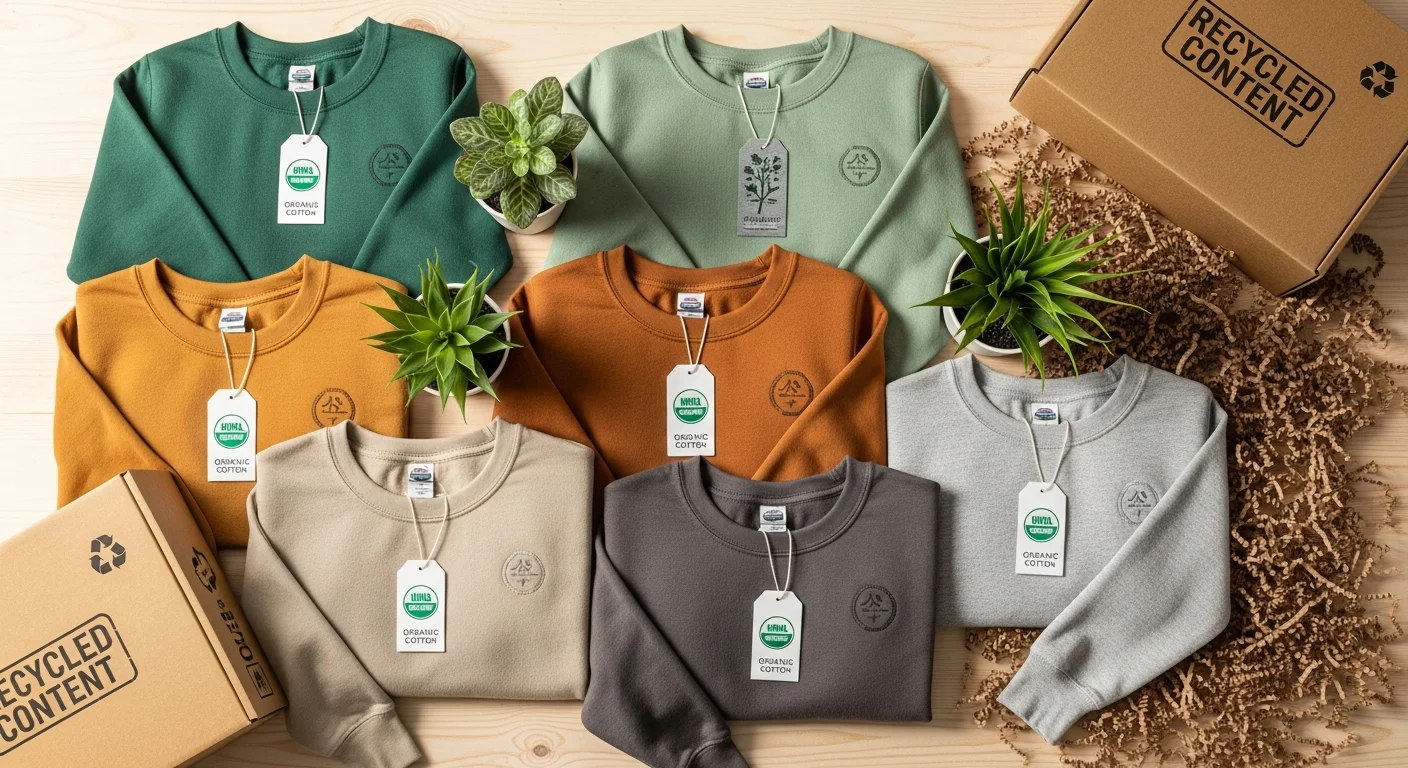
Sustainability is no longer a niche concern in custom apparel. It is a mainstream expectation, especially among younger consumers who are willing to pay more for products that align with their values. For custom sweatshirt buyers, this means growing demand for organic materials, eco-friendly inks, responsible production practices, and transparent supply chains.
This guide covers every dimension of sustainable custom sweatshirt production, from the raw materials to the printing process to the packaging that delivers the finished product. Whether you are an eco-conscious brand, a corporate buyer with sustainability mandates, or an individual who wants to make better choices, these options make it possible to create custom crewnecks that look and feel great without compromising the planet.
The Environmental Impact of Conventional Sweatshirt Production
Traditional sweatshirt manufacturing is resource-intensive. Conventional cotton farming uses significant quantities of water, pesticides, and synthetic fertilizers. Polyester production relies on petroleum-derived inputs. Chemical dyes and plastisol inks introduce toxins into waterways. Understanding these impacts helps frame why sustainable alternatives matter and why the additional cost is justified.
Organic Cotton: GOTS Certification and Beyond
Organic cotton is grown without synthetic pesticides, herbicides, or genetically modified seeds. The Global Organic Textile Standard (GOTS) certification verifies that the cotton meets strict environmental and social criteria throughout the entire supply chain, from farming to the finished garment.
On a custom sweatshirt, organic cotton feels slightly softer than conventional cotton and gets even softer with repeated washing. DTG printing performs exceptionally well on organic cotton because the natural fibers absorb water-based inks deeply, producing soft-hand prints with excellent color vibrancy.

Recycled Polyester: rPET From Plastic Bottles
Recycled polyester (rPET) diverts plastic bottles from landfills and oceans and transforms them into textile fiber. A single custom sweatshirt can contain the equivalent of eight to twelve recycled plastic bottles. The resulting fabric performs identically to virgin polyester in terms of durability, wrinkle resistance, and moisture management.
Many modern sustainable sweatshirt blanks use a blend of organic cotton and recycled polyester, combining the soft feel of natural fiber with the durability and shape retention of recycled synthetic. This combination is increasingly available from major blank brands at competitive pricing.
Hemp and Tencel Blends
Hemp grows quickly with minimal water, no pesticides, and actually improves soil health. Hemp-blend sweatshirts have a natural, slightly textured feel and excellent durability. Tencel (lyocell) is made from sustainably harvested wood pulp in a closed-loop process that recycles 99 percent of the solvent. Both materials are emerging options for eco-conscious custom apparel.
Sustainable Printing Methods
Water-based inks are the most eco-friendly printing option. They contain no PVC, phthalates, or heavy metals, and produce a softer print feel than conventional plastisol inks. On custom sweatshirts, water-based prints absorb into the fabric rather than sitting on top, creating a print that breathes with the garment.
Discharge printing removes the fabric dye in the print area and replaces it with water-based color, resulting in an ultra-soft print with no hand feel at all. This method works exclusively on natural-fiber garments and produces a vintage, lived-in quality that is increasingly popular.

On-Demand Production: Eliminating Waste
Print-on-demand production eliminates overstock waste by producing each garment only when a customer orders it. No unsold inventory means no garments destined for landfills. For brands and organizations exploring sustainable custom sweatshirts, on-demand production is one of the most impactful choices, even if the per-unit cost is slightly higher than bulk ordering.
Eco-Friendly Packaging
Sustainable packaging completes the eco-friendly loop. Options include compostable poly mailers made from cornstarch, recycled cardboard boxes, recycled tissue paper, and plastic-free shipping materials. Communicating your packaging choices to customers reinforces the sustainability story and demonstrates commitment beyond the garment itself.
Marketing Sustainability Authentically
Transparency is essential when marketing sustainable products. State your materials, certifications, and supply chain practices clearly and specifically. Avoid vague claims like "eco-friendly" without substantiation. Share the specific certifications (GOTS, GRS, OEKO-TEX) your products carry, and be honest about areas where you are still improving. Customers reward authenticity and punish greenwashing.
For comparison on sustainable options for custom hoodies, our companion guide covers additional considerations for hooded sustainable apparel.
Frequently Asked Questions
Are eco-friendly sweatshirts more expensive?
Sustainable blanks typically cost two to six dollars more per unit than conventional options. Water-based inks add one to two dollars per print. The total premium for a fully sustainable custom crewneck is usually five to ten dollars per unit, which most customers are willing to absorb, especially when the sustainability story is communicated clearly.
Which certifications should I look for?
GOTS (Global Organic Textile Standard) for organic cotton, GRS (Global Recycled Standard) for recycled content, and OEKO-TEX Standard 100 for chemical safety. These are the three most recognized and trusted certifications in sustainable apparel. Look for them on the blank garment specifications before ordering.
Can I get the same print quality on sustainable fabrics?
Yes. Organic cotton and recycled-blend fabrics accept screen printing, DTG, and embroidery with results comparable to conventional fabrics. In many cases, organic cotton produces superior DTG results because the natural fibers absorb water-based inks more deeply. For more on how different fabrics interact with print methods, see our fabric guide.
Share this article
Written by
Aisha Patel
Head of Materials Science & Sustainability at RareCustom. M.S. in Textile Engineering from NC State with AATCC certification and ISSP Sustainability Practitioner certification. 7+ years evaluating fabrics, materials, and eco-friendly production processes.