Stainless Steel vs Plastic vs Glass: Choosing the Right Custom Tumbler
Compare stainless steel, plastic, and glass tumblers for your custom project — insulation performance, decoration compatibility, durability, pricing, and which material works best for each use case.
Aisha Patel
Head of Materials Science & Sustainability at RareCustom. M.S. in Textile Engineering from NC State with AATCC certification and ISSP Sustainability Practitioner certification. 7+ years evaluating fabrics, materials, and eco-friendly production processes.
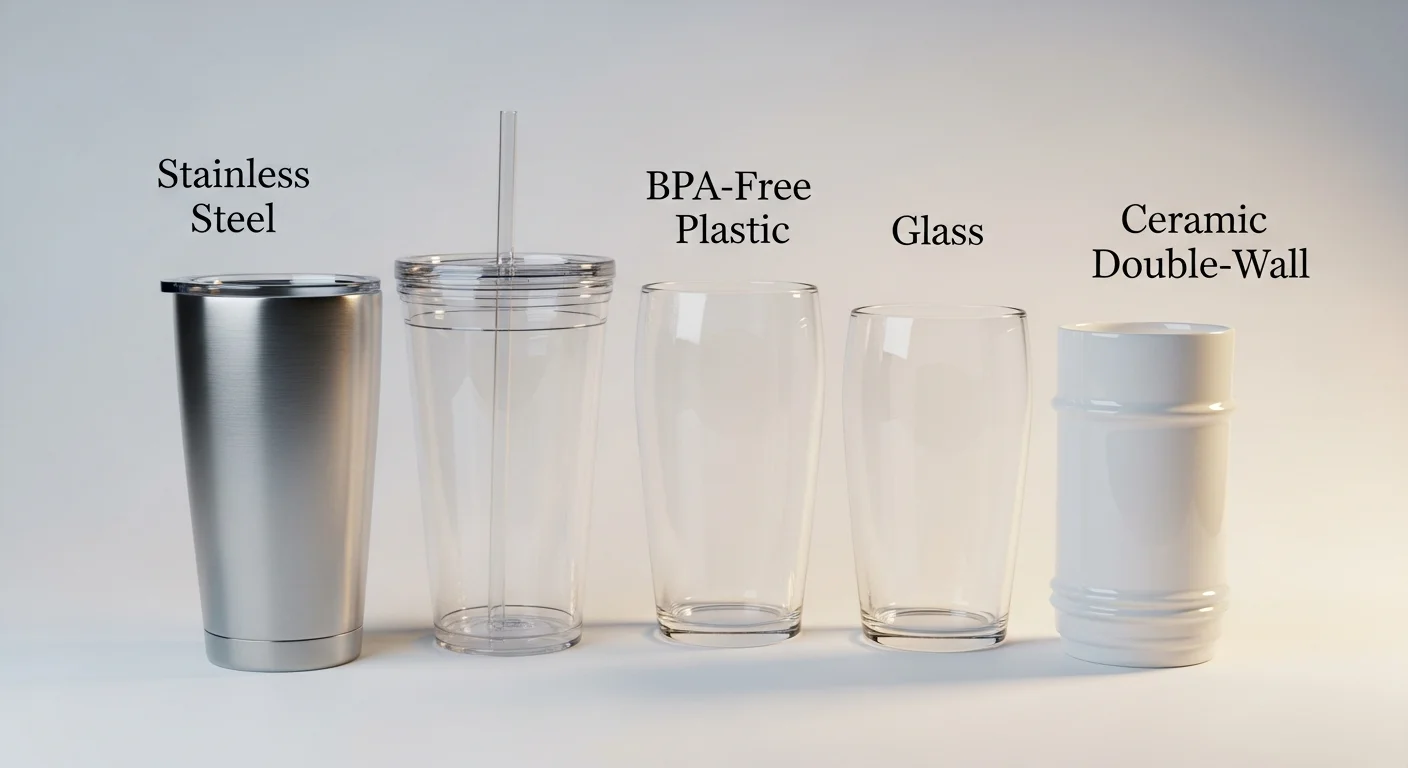
The material your custom tumbler is made from affects every aspect of the finished product — how long it keeps drinks hot or cold, which decoration methods are available, how much it weighs, whether it survives being dropped, and ultimately how much it costs. Stainless steel, plastic, and glass are the three primary material categories, and each one serves a different audience and purpose. A corporate client ordering 200 premium branded tumblers for an executive retreat has very different material needs than a summer camp ordering 500 lightweight tumblers for kids, which in turn differs from an eco-conscious boutique seeking elegant glass drinkware for a retail product line.
This guide examines each material in detail — construction, insulation performance, decoration compatibility, durability, safety, environmental impact, and price — so you can make an informed decision before committing to a design and placing an order. Whether you are purchasing your first custom tumbler as a personal gift or sourcing materials for a large-scale promotional campaign, understanding the strengths and trade-offs of each material category prevents costly mistakes and ensures the final product meets expectations. For a step-by-step walkthrough of the entire design process, start with the beginner's guide to custom tumblers.
Stainless Steel Tumblers — The Premium Standard
18/8 stainless steel (also called food-grade stainless or 304-grade) is the dominant material in the premium custom tumbler market. The designation "18/8" refers to the alloy composition — 18 percent chromium and 8 percent nickel — which provides excellent corrosion resistance, durability, and a neutral taste that does not transfer flavors between beverages. Surgical steel drinkware made from this alloy is certified safe for food and beverage contact by the FDA and comparable international regulatory bodies, making it the safest metal option for everyday use.
The defining feature of stainless steel tumblers is double-wall vacuum insulation. Two concentric walls of stainless steel are separated by a vacuum gap — the absence of air molecules between the walls eliminates convective and conductive heat transfer, keeping hot drinks hot for 6 to 8 hours and cold drinks cold for 12 to 24 hours depending on the specific tumbler design and ambient conditions. This thermal retention performance is unmatched by any other tumbler material and is the primary reason stainless steel commands a premium price point.
The exterior of a stainless steel tumbler is typically finished with a powder-coated surface that provides color, grip, and scratch resistance. Powder coating is available in over 100 colors and finishes, including matte vs glossy finish options and textured grip coating for outdoor and athletic use. This powder-coated stainless steel surface is what enables laser engraving — the laser burns through the colored coating to reveal the silver metal beneath, creating the distinctive metallic reveal aesthetic. Stainless steel also supports sublimation (when a polymer coating is applied over the powder coat) and UV printing (which adheres directly to the powder-coated or bare metal surface).

Plastic Tumblers — Affordable and Lightweight
BPA-free plastic tumblers serve a different market segment than stainless steel, excelling in scenarios where low cost, light weight, and high volume matter more than insulation performance. The three most common plastics used in custom tumblers are Tritan (a copolyester known for its clarity and shatter resistance), acrylic (clear, lightweight, and inexpensive), and polypropylene (the most affordable option, often used for event giveaways and children's drinkware).
Tritan plastic drinkware is the premium tier of plastic tumblers — it is shatterproof, odor-resistant, dishwasher safe, and maintains crystal-clear transparency even after hundreds of wash cycles. Acrylic tumbler custom options are popular for their glass-like clarity at a fraction of the weight and cost, making them a frequent choice for weddings, bachelorette parties, and pool-side events where breakage is a concern. Both Tritan and acrylic tumblers can be manufactured with double walls, creating an insulating air gap that provides modest thermal retention (hot for 1–2 hours, cold for 3–4 hours — significantly less than vacuum-insulated steel, but adequate for short-term use).
The clear body of many plastic tumblers enables unique design possibilities not available with opaque materials. Floating designs — where a printed or vinyl insert sits between the inner and outer walls — create a layered, dimensional look that is eye-catching for retail products and event giveaways. Some acrylic tumblers also support glitter or confetti fills between the walls, adding a novelty element that is particularly popular for gifts, bachelorette parties, and youth events. The lightweight tumbler characteristics of plastic (typically 40–60 percent lighter than comparable stainless steel tumblers) make them ideal for shipping in bulk and for users who carry their drinkware in bags or backpacks.

Glass Tumblers — Elegant and Eco-Friendly
Borosilicate glass tumblers occupy the premium end of the eco-friendly drinkware spectrum. Borosilicate glass — the same type used in laboratory glassware — is more resistant to thermal shock than standard soda-lime glass, meaning it can handle hot beverages without cracking. Tempered glass drinkware adds an additional layer of strength through a heating and rapid-cooling process that makes the glass up to five times stronger than untreated glass of the same thickness.
Double-wall glass construction creates an insulating air pocket between two layers of borosilicate glass, providing modest thermal retention while keeping the outer surface cool to the touch even with hot beverages inside. This double-wall design also produces an elegant visual effect where the liquid appears to float inside the tumbler — a premium aesthetic that resonates with design-conscious consumers and makes glass tumblers popular in specialty coffee shops, boutique retail, and high-end gift markets.
Glass tumblers typically include a silicone sleeve for grip and drop protection and a bamboo or stainless steel lid for portability. The eco-friendly appeal of glass is significant — it is infinitely recyclable without quality degradation, does not leach chemicals regardless of temperature, and provides the purest taste experience of any tumbler material. For brands and individuals prioritizing sustainability, glass tumblers align with ESG values and make a visible statement about environmental commitment. The trade-offs are fragility (glass breaks on hard surfaces), weight (glass tumblers are the heaviest option per ounce of capacity), and shipping complexity (each unit requires protective packaging). For a comparison of environmental impact across materials, see the eco-friendly and sustainable custom tumblers guide.
Insulation Performance Comparison
Thermal retention is one of the most important differentiators between tumbler materials, especially for customers who commute, work outdoors, or spend long hours away from home. The tumbler insulation comparison below reflects real-world performance under standard conditions (room temperature environment, lid closed, no ice replacement).
Stainless steel double-wall vacuum insulated: hot beverages remain above 140°F for 6 to 8 hours; cold beverages with ice remain below 40°F for 12 to 24 hours. This is the gold standard for thermal retention and the reason stainless steel tumblers dominate the commuter and outdoor markets. The heat retention hours and cold retention hours are possible because the vacuum between the walls virtually eliminates heat transfer. A single-wall stainless tumbler (without vacuum insulation) provides minimal thermal retention comparable to plastic.
Plastic double-wall insulated: hot beverages remain above 140°F for 1 to 2 hours; cold beverages with ice remain below 40°F for 3 to 4 hours. The air gap between the walls provides modest insulation, but air is a far less effective insulator than a vacuum. Plastic tumblers are adequate for office use, events, and situations where the drink will be consumed within an hour or two.
Glass double-wall: hot beverages remain above 140°F for 1 to 2 hours; cold beverages with ice remain below 40°F for 2 to 3 hours. Performance is similar to plastic double-wall, with the added benefit that the outer wall stays cool to the touch for hot drinks. Glass single-wall: provides no meaningful insulation — the glass rapidly equilibrates to the beverage temperature, making single-wall glass suitable only for immediate consumption.

Decoration Method Compatibility
Each tumbler material supports a different set of decoration methods, so the material choice directly impacts the design possibilities. Stainless steel tumblers offer the widest decoration compatibility — laser engraving steel produces the distinctive metallic reveal look, sublimation on polymer-coated stainless delivers full-color photographic prints, and UV printing adheres well to both powder-coated and bare metal surfaces. This versatility makes stainless steel the most flexible platform for custom tumbler projects. For a detailed comparison of these methods, read the sublimation vs laser engraving vs UV printing guide.
Plastic tumblers are best decorated with UV printing, which produces vibrant, full-color results on clear, colored, and frosted plastic surfaces. Sublimation on plastic works with certain polymer-coated acrylic and polycarbonate tumblers, though the color accuracy and durability are generally inferior to sublimation on stainless steel. Screen printing is another option for plastic tumblers, especially for large-volume orders with simple one-to-four-color designs. Laser engraving is not recommended for plastic — the heat from the laser melts the material rather than cleanly engraving it.
UV printing glass is the primary decoration method for glass tumblers, producing crisp, colorful designs that adhere well to the smooth glass surface. Sandblasting creates a frosted etched effect similar in concept to laser engraving on metal — it removes material to create a translucent pattern on clear glass. Decals and ceramic transfers are also used for glass decoration, particularly for designs that need to wrap around the entire surface. Glass does not support sublimation without a specialty coating, which limits its use for photographic-quality full-wrap designs.
Durability and Safety Comparison
Drop-test durability separates the three materials more dramatically than any other factor. Stainless steel tumblers survive falls from desk height (30 inches) and counter height (36 inches) onto hard surfaces with, at most, a cosmetic dent in the powder coating. The tumbler remains functional and leak-free. This shatterproof drinkware characteristic makes stainless steel the default choice for travel-friendly scenarios, car cupholders, outdoor activities, and environments where drops are likely. The tumbler weight comparison does tip against steel — a 20oz stainless tumbler typically weighs 10 to 14 ounces empty, compared to 4 to 6 ounces for an equivalent plastic tumbler.
Plastic tumblers also survive drops without breaking, though Tritan and polypropylene outperform acrylic in impact resistance. Acrylic can crack or shatter on hard impacts, while Tritan and polypropylene flex on impact and return to shape. All three plastics are significantly lighter than stainless steel, making them the preferred choice when the lightweight tumbler factor is a priority — such as when shipping hundreds of units for an event or when children will be carrying the drinkware.
Glass tumblers are the most fragile option. Even tempered or borosilicate glass will break if dropped on tile, concrete, or hardwood floors from desk height. The silicone sleeves included with most glass tumblers provide some protection against minor bumps but will not prevent breakage from a direct drop. This fragility means glass tumblers require more careful handling and more protective packaging for shipping, adding to the per-unit cost. From a safety perspective, all three materials are certified BPA-free and food-grade when sourced from reputable manufacturers. Stainless steel and glass have the advantage of being completely non-reactive — they will not absorb flavors, odors, or colors from beverages, whereas some lower-grade plastics may retain flavors after extended use with strongly colored or flavored drinks.
Price Comparison Across Materials
Material cost is often a deciding factor, especially for bulk orders where the per-unit price difference multiplies across hundreds or thousands of tumblers. Plastic tumblers offer the lowest per-unit cost, starting at approximately $3 to $6 per unit for basic polypropylene options and $5 to $10 for premium Tritan or acrylic tumblers with double-wall construction. This makes plastic the go-to material for high-volume event giveaways, children's programs, and budget-conscious promotional campaigns.
Stainless steel tumblers occupy the mid-to-premium price range, typically $8 to $18 per unit for quality 18/8 stainless steel with double-wall vacuum insulation and powder coating. Higher-end options with premium finishes, specialized coatings, or integrated accessories (straws, handles, carrying pouches) can reach $20 to $30 per unit. The higher material cost is offset by the significantly better insulation performance, superior durability, and the premium perceived value that makes stainless steel the preferred choice for corporate gifts and retail merchandise.
Glass tumblers range from $8 to $20 per unit, with double-wall borosilicate options at the higher end. The additional cost of silicone sleeves, specialty lids, and protective shipping packaging can add $3 to $5 per unit compared to equivalent plastic or steel options. Glass tumblers offer the highest perceived elegance and the strongest eco-friendly positioning, but the combination of higher cost and fragility limits their use to applications where those qualities are the primary selling point. For detailed pricing including decoration costs and volume discounts, see the custom tumbler pricing guide.
Choosing the Right Material for Your Project
The best material depends on the intended use case, budget, and priorities of the project. Choose stainless steel if: insulation performance is a priority (commuters, outdoor enthusiasts, all-day sippers); the tumbler will be used daily and needs to withstand drops, car cupholders, and dishwashers; you want the widest range of decoration options (laser engraving, sublimation, UV printing); the product needs to project a premium, high-quality image (corporate gifts, retail merchandise, executive branding); or if car cupholder compatibility and travel-friendly durability are requirements.
Choose plastic if: budget is the primary constraint and you need to maximize quantity within a fixed spend; the tumblers are for a one-time event, giveaway, or short-term promotional campaign; weight matters (shipping costs, children's use, outdoor events); you want clear or translucent design options that are not available in metal; or the intended audience is children, where shatterproof, lightweight tumblers are essential for safety.
Choose glass if: environmental sustainability is a core brand value or selling point; the tumbler will be used primarily at home or in an office (not during active travel or commuting); the aesthetic needs to project elegance, sophistication, and eco-consciousness; the recipient values pure taste and chemical-free beverage contact; or the product is intended for retail sale where the premium look and feel justify the higher price and fragility. For a comparison of tumblers against another popular drinkware category, see custom tumblers vs custom mugs.

Frequently Asked Questions
Is 18/8 stainless steel safe for hot beverages?
Yes. 18/8 stainless steel (304-grade) is FDA-certified for food and beverage contact at all temperatures. It does not leach chemicals, impart metallic flavors, or react with acidic beverages like coffee or citrus water. This food-grade stainless construction is the same alloy used in professional cookware and medical instruments.
Can you sublimate on a plastic tumbler?
Sublimation on plastic works only on tumblers with a polymer sublimation coating — most commonly found on certain acrylic and polycarbonate tumblers designed specifically for sublimation. Standard uncoated plastic tumblers do not support sublimation; UV printing is the recommended method for uncoated plastics.
Are glass tumblers safe for travel?
Glass tumblers with silicone sleeves and secure lids are suitable for gentle travel (commuting by car with the tumbler in a cupholder, walking to the office). However, they are not recommended for outdoor activities, sports, or any environment where drops are likely. For travel-intensive use, stainless steel is the safer and more durable choice.
Which material has the smallest carbon footprint?
Over the lifecycle of the product, stainless steel and glass tumblers typically have the lowest carbon footprint drinkware impact because they last for years and replace hundreds of disposable cups. Glass is infinitely recyclable without quality loss, giving it a slight edge in end-of-life sustainability. Plastic tumblers have a lower manufacturing footprint but a shorter usable lifespan and are more difficult to recycle depending on the polymer type.
Design Your Perfect Tumbler
Now that you understand the material options, it is time to bring your design to life. Whether you choose the premium durability of stainless steel, the affordable versatility of plastic, or the elegant sustainability of glass, RareCustom offers all three material categories with no minimum order quantities and free access to the online design tool with tumbler-specific templates for every size and material type.
Browse the full custom tumbler collection to explore available styles, materials, and decoration options, or jump directly into the design tool to start creating your custom tumbler today. Need help choosing the right combination of material and decoration for a specific project? Contact the RareCustom team for personalized recommendations based on your budget, quantity, and design goals.
Related Articles
Share this article
Written by
Aisha Patel
Head of Materials Science & Sustainability at RareCustom. M.S. in Textile Engineering from NC State with AATCC certification and ISSP Sustainability Practitioner certification. 7+ years evaluating fabrics, materials, and eco-friendly production processes.