How to Start a Custom Keychain Business: Print-on-Demand Guide for 2026
Learn how to start a profitable custom keychain business using print-on-demand. Covers market analysis, profit margins, supplier selection, marketplace setup, best-selling niches, pricing strategy, and scaling.
Marcus Chen
E-Commerce Growth & Merchandising Lead at RareCustom. Marcus helps entrepreneurs launch custom keychain businesses on Etsy, Shopify, and Amazon using print-on-demand fulfillment.
Custom keychains have quietly become one of the most profitable product categories in the print-on-demand and handmade marketplace ecosystem. They are small, lightweight, and inexpensive to produce, yet they command retail prices that deliver healthy profit margins. They appeal to an extraordinarily broad customer base — from teenagers buying fandom merchandise to corporate buyers ordering branded promotional items. And unlike apparel or home decor products that require complex sizing, color matching, and photography, keychains are relatively simple to design, produce, photograph, and ship. If you have been considering starting an online business, custom keychains represent one of the lowest-risk, highest-potential product categories available in 2026.
This guide walks you through every step of building a custom keychain business — from market analysis and supplier selection to store setup, pricing strategy, marketing tactics, and scaling. Whether you want to build a full-time income or create a profitable side hustle, the strategies outlined here will give you a clear, actionable roadmap for turning your creative ideas into a sustainable revenue stream.
Why Custom Keychains Are a Top Print-on-Demand Product
The custom keychain market benefits from several structural advantages that make it particularly attractive for new and growing businesses. First, the product category has massive search volume and consumer demand. "Custom keychains" generates over twenty-two thousand monthly searches on Google alone, with dozens of related long-tail keywords adding tens of thousands more searches. This organic demand means there is a built-in audience actively looking for the exact products you plan to sell.
Second, keychains have an exceptionally favorable cost-to-price ratio. The production cost for a custom acrylic keychain ranges from fifty cents to two dollars depending on size, print method, and supplier, while the retail price typically falls between eight and twenty dollars. This markup — often four hundred to one thousand percent — provides generous margins that absorb platform fees, shipping costs, and advertising expenses while still delivering meaningful profit per sale.
Third, keychains are gift-driven products. A significant percentage of custom keychain purchases are gifts for friends, partners, family members, and colleagues. Gift purchases have higher average order values because buyers are less price-sensitive when purchasing for others, and they frequently order multiple units — a set of matching couple keychains, a collection for a bridal party, a batch for team members. The gift economy also generates strong seasonal sales spikes around Valentine's Day, Mother's Day, graduation season, and the winter holidays.
Fourth, keychains ship easily and affordably. Their small size and light weight qualify them for first-class mail rates domestically and economical international shipping options. Low shipping costs mean you can offer free shipping as a competitive advantage without destroying your margins, or you can include shipping in the product price for a cleaner customer experience.
Market Size and Growth: The Numbers Behind the Opportunity
The custom keychain market is not just large — it is growing rapidly. Amazon data shows that search volume for custom keychain products has increased by one hundred eight percent over the past two years, making it one of the fastest-growing custom product categories on the platform. Etsy reports that personalized keychains consistently rank in the top ten gift categories during peak shopping seasons, with the holiday season alone driving millions of keychain transactions across the marketplace.

The global personalized gifts market — of which keychains are a significant component — is projected to reach forty-four billion dollars by 2027, growing at a compound annual rate of over nine percent. This growth is driven by consumer demand for unique, meaningful products that express personal identity, commemorate milestones, and carry emotional significance. Custom keychains sit squarely at the intersection of these consumer desires — they are personal, expressive, functional, and affordable.
Competition exists, of course, but the market is far from saturated. The sheer variety of niches, styles, and customer segments means there is ample room for new entrants who bring fresh design perspectives, target underserved audiences, or offer superior customer experience. Success in the custom keychain market is less about being the first and more about being the most relevant to a specific customer segment.
Profit Margins by Material
Understanding your cost structure is essential for building a profitable keychain business. Here is a realistic breakdown of production costs, retail prices, and net margins for the most popular keychain materials:
Acrylic keychains: Production cost of fifty cents to one dollar fifty per unit. Typical retail price of eight to fifteen dollars. After marketplace fees (approximately fifteen to twenty percent), shipping supplies, and packaging, net profit ranges from four to ten dollars per unit. Acrylic offers the best margin-to-volume ratio and should be the foundation of most keychain businesses.
Metal keychains: Production cost of two to four dollars per unit. Typical retail price of fifteen to twenty-five dollars. Net profit of seven to fifteen dollars per unit. Metal keychains are positioned as premium products and sell well for corporate gifts and upscale personal gifts. The higher price point means fewer impulse purchases but larger per-order values.
Leather keychains: Production cost of two to five dollars per unit for genuine leather, one dollar fifty to three dollars for vegan leather. Typical retail price of twelve to twenty-two dollars. Net profit of five to thirteen dollars per unit. Leather appeals to the gift market — groomsmen gifts, anniversary presents, and personalized accessories. For deep insights into promotional keychains for business clients, check our business promotional branding guide.
PVC/rubber keychains: Production cost of one to three dollars per unit plus mold fee. Typical retail price of ten to eighteen dollars. The custom mold requirement means PVC keychains have higher upfront costs but excellent margins on reorders. Best for mascot designs, character merchandise, and kid-focused products.
Choosing Your Print-on-Demand Supplier
Your supplier relationship is the backbone of your keychain business. The right supplier delivers consistent quality, reliable turnaround times, and competitive pricing that allow you to fulfill customer expectations and maintain healthy margins. Here are the key factors to evaluate when selecting a keychain supplier:
Product quality: Order samples from at least three to five suppliers before committing. Evaluate print clarity, color accuracy, material thickness, hardware quality (keyring and chain), and overall finish. Compare samples side by side under different lighting conditions. A supplier whose samples look good in studio lighting but poor in natural light will generate customer complaints and returns.
Turnaround time: Production and shipping timelines directly affect your customer experience. For domestic POD suppliers, expect two to five business days for production plus two to seven days for shipping. For overseas suppliers, production may be faster but shipping takes seven to twenty-one days. Factor these timelines into your listings' stated delivery windows and add buffer days for unexpected delays.
Minimum order quantities: True print-on-demand suppliers have no minimums — they produce one unit at a time. Some suppliers offer better pricing with minimum orders of twenty-five, fifty, or one hundred units. If you are starting out and testing designs, prioritize suppliers with no minimums. As your best sellers emerge, shift to suppliers with bulk pricing for those proven designs. For detailed guidance on bulk ordering, see our bulk ordering guide with pricing tiers.
Integration capabilities: Many suppliers offer direct integration with Etsy, Shopify, WooCommerce, and Amazon through apps or APIs that automate order routing. Automated fulfillment saves significant time as your order volume grows and reduces the risk of manual errors in order processing.
Setting Up Your Online Store

The marketplace or platform you choose for your keychain business shapes your visibility, customer base, fee structure, and operational workflow. Each platform has distinct advantages:
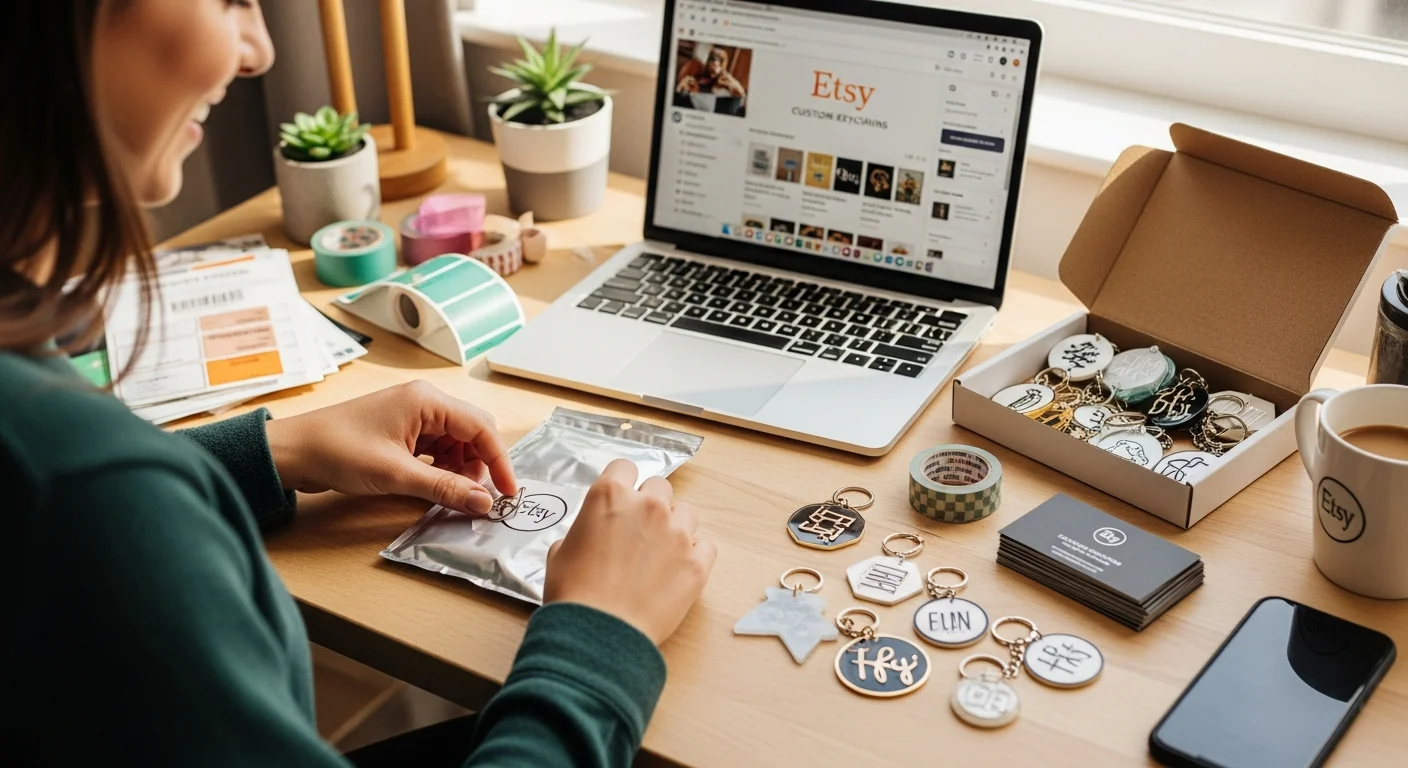
Etsy: The dominant marketplace for custom and handmade keychains. Etsy's built-in audience of gift shoppers and personalized product seekers provides immediate exposure without requiring you to build traffic from scratch. The platform's personalization request feature lets buyers submit names, dates, and custom text directly through the listing, streamlining the customization process. Etsy charges a listing fee of twenty cents per item, a six and a half percent transaction fee, and a three percent plus twenty-five cent payment processing fee. Despite these fees, Etsy's high-converting traffic makes it the recommended starting platform for most keychain businesses.
Shopify: For sellers who want full control over branding, pricing, and customer data, Shopify provides a professional standalone store with extensive customization options. Monthly plans start at thirty-nine dollars, and transaction fees vary by payment method. Shopify requires you to drive your own traffic through marketing, but it offers higher margins per sale (no marketplace transaction fees) and complete brand ownership. Many successful keychain sellers start on Etsy to validate their designs and then expand to Shopify for long-term growth.
Amazon Handmade: Amazon's handmade marketplace provides access to Amazon's massive customer base with the credibility of the Amazon brand behind your listings. The application process is more selective than Etsy, and the referral fee of fifteen percent is higher, but the sheer volume of Amazon traffic can generate significant sales for well-optimized listings. Amazon is particularly effective for keychain sellers targeting corporate buyers and gift shoppers who default to Amazon for purchases.
Many successful keychain businesses sell across multiple platforms simultaneously — listing their full catalog on Etsy and Amazon while driving direct traffic to a Shopify store for repeat customers and wholesale inquiries. Start with one platform, optimize your listings and operations, and expand to additional channels once your core business is running smoothly.
Best-Selling Keychain Niches

Niche selection is the most strategic decision you will make when launching your keychain business. A well-chosen niche allows you to target a specific, passionate customer segment with designs that resonate deeply rather than competing broadly with generic offerings. Here are the niches generating the strongest sales and growth in 2026:
Pet portrait keychains: Custom keychains featuring illustrated or stylized portraits of customers' pets consistently rank among the highest-selling personalized keychain products. Pet owners are emotionally invested in their animals and willing to pay premium prices for high-quality, personalized pet accessories. Memorial pet keychains for owners who have lost a beloved pet are among the highest-priced and most emotionally valued products in the entire custom keychain market.
Anime and fandom keychains: Original character designs, fan art, and fandom-inspired keychains dominate the convention merchandise and online collector markets. Chibi-style character illustrations on clear acrylic are the most popular format. The fandom market is repeat-purchase driven — collectors buy multiple designs from the same artist, creating recurring revenue from an engaged customer base. For tips on designing acrylic keychains specifically for this market, visit our acrylic keychain design guide.
Retro motel and vintage keychains: The motel keychain trend shows no signs of slowing down. Sellers who create collections of themed motel key tags — vacation destinations, humorous sayings, zodiac signs, seasonal designs — build a collectible product line that encourages repeat purchases. The oversized format and distinctive aesthetic photograph exceptionally well for social media marketing.
Couple and relationship keychains: Matching keychains, puzzle piece pairs, and romantic personalized designs serve the gift market year-round with massive spikes during Valentine's Day and anniversary season. Couple keychains benefit from naturally occurring two-unit average order values since most customers buy the pair.
Professional and occupation keychains: Keychains designed for specific professions — nurses, teachers, first responders, real estate agents, baristas — tap into occupational pride and identity. These make popular gifts from students to teachers, patients to nurses, and clients to their service providers.
Pricing Strategy for Maximum Profit
Pricing your keychains correctly requires balancing competitiveness with profitability. Underpricing erodes margins and positions your products as cheap. Overpricing reduces conversion rates and pushes buyers to competitors. The sweet spot varies by material, complexity, and target market, but here are the general guidelines that successful keychain sellers follow:
For standard acrylic keychains with digital designs, price between nine and fourteen dollars for single units. For personalized keychains requiring custom text or photos, price between twelve and eighteen dollars — the personalization justifies a premium because the buyer receives a one-of-a-kind product. For premium materials like metal and leather, price between fifteen and twenty-five dollars. For complex or large-format keychains, price between eighteen and thirty dollars.
Offer bundle discounts that encourage multi-unit purchases. A keychain priced at twelve dollars individually might be offered at two for twenty dollars or three for twenty-seven dollars. These bundles increase average order value while giving the customer a perceived discount. Gift buyers and collectors are particularly responsive to bundle pricing because they are already predisposed to purchasing multiple units.
Factor in all costs when calculating your target price — production cost, platform fees, payment processing fees, shipping materials, packaging, and the time you invest in design and customer communication. Many new sellers price based on production cost alone and are surprised when their apparent margins disappear after accounting for all expenses. Build a detailed cost spreadsheet before setting your prices and revisit it quarterly as your costs and volume evolve.
Marketing Your Keychain Business: TikTok and Instagram
Visual platforms drive keychain sales because keychains are inherently photogenic products that generate engagement through their designs, colors, and personalization details. TikTok and Instagram are the two most effective marketing channels for custom keychain businesses in 2026.
On TikTok, process videos — showing the design, printing, cutting, and packaging of keychains — consistently generate high engagement and views. The satisfying visual and auditory experience of watching a keychain being produced resonates with TikTok's audience, and the short-form video format perfectly suits the quick, visually compelling nature of keychain production. Use trending sounds, participate in craft and small business hashtag challenges, and post consistently — three to five times per week — to build an audience that converts to customers.
On Instagram, focus on high-quality product photography, customer photo reposts, and Reel content that showcases new designs, packaging reveals, and behind-the-scenes moments. Instagram's shopping features allow you to tag products directly in posts and stories, creating a seamless path from content to purchase. Collaborate with micro-influencers in your niche — a pet account featuring your pet portrait keychains or a travel account showcasing your motel keychains — to reach targeted audiences who are already predisposed to purchase.
Use our design tool to create keychain mockups that look professional in your marketing content, even before production is complete. High-quality mockups allow you to gauge market interest and collect pre-orders for new designs before committing to production inventory.
Scaling Your Keychain Business to Full-Time Income

Scaling a keychain business from a side project to a full-time income follows a predictable path that most successful sellers navigate over twelve to twenty-four months. The scaling journey typically progresses through four phases:
Phase one — Validation (months one through three): Launch with ten to twenty designs across two or three niches. Test different styles, formats, and price points. Monitor which designs generate the most views, favorites, and sales. Expect modest revenue during this phase — the goal is learning, not earning. Identify your one or two strongest niches based on actual sales data rather than assumptions.
Phase two — Optimization (months four through eight): Double down on your winning niches. Expand your design catalog in those categories. Optimize listing titles, descriptions, tags, and photography based on what you learned in phase one. Invest in better product photography and packaging. Begin building a social media presence on one primary platform. Revenue should grow consistently as your listings gain search visibility and positive reviews accumulate.
Phase three — Expansion (months nine through fourteen): Expand to additional sales channels — add Shopify if you started on Etsy, or vice versa. Introduce new product lines that complement your keychains — consider expanding to custom phone cases that appeal to the same customer segments. Invest in paid advertising on the platforms where your organic content performs best. Hire freelance designers to accelerate your design output beyond what you can produce alone.
Phase four — Scaling (months fifteen and beyond): At this stage, your business generates predictable monthly revenue and you have identified the systems, suppliers, and strategies that drive growth. Consider transitioning from pure print-on-demand to holding inventory of your best sellers for faster shipping. Explore wholesale relationships with retail stores and corporate clients. Build an email list for direct marketing. The goal is creating a business that generates consistent revenue regardless of marketplace algorithm changes or seasonal fluctuations.
The custom keychain business opportunity in 2026 is substantial — low barriers to entry, growing consumer demand, favorable economics, and accessible marketing channels create an environment where creative, persistent entrepreneurs can build meaningful revenue. Start with a small collection, listen to your customers, iterate on your designs, and scale methodically. Browse our full range of custom keychain options to explore the materials, styles, and possibilities that will fuel your business growth.
Share this article
Written by
Marcus Chen
E-Commerce Growth & Merchandising Lead at RareCustom. Marcus helps entrepreneurs launch custom keychain businesses on Etsy, Shopify, and Amazon using print-on-demand fulfillment.