Custom Acrylic Keychains: Design Guide, Printing Tips & Trending Ideas
Learn everything about custom acrylic keychains from material types and printing methods to trending design ideas. Covers clear, glitter, frosted, and holographic acrylic plus UV printing tips and file requirements.
Camille Dupont
Senior Designer at RareCustom. Camille breaks down acrylic keychain design from material selection and UV printing to trending styles like anime charms and Spotify code keychains.
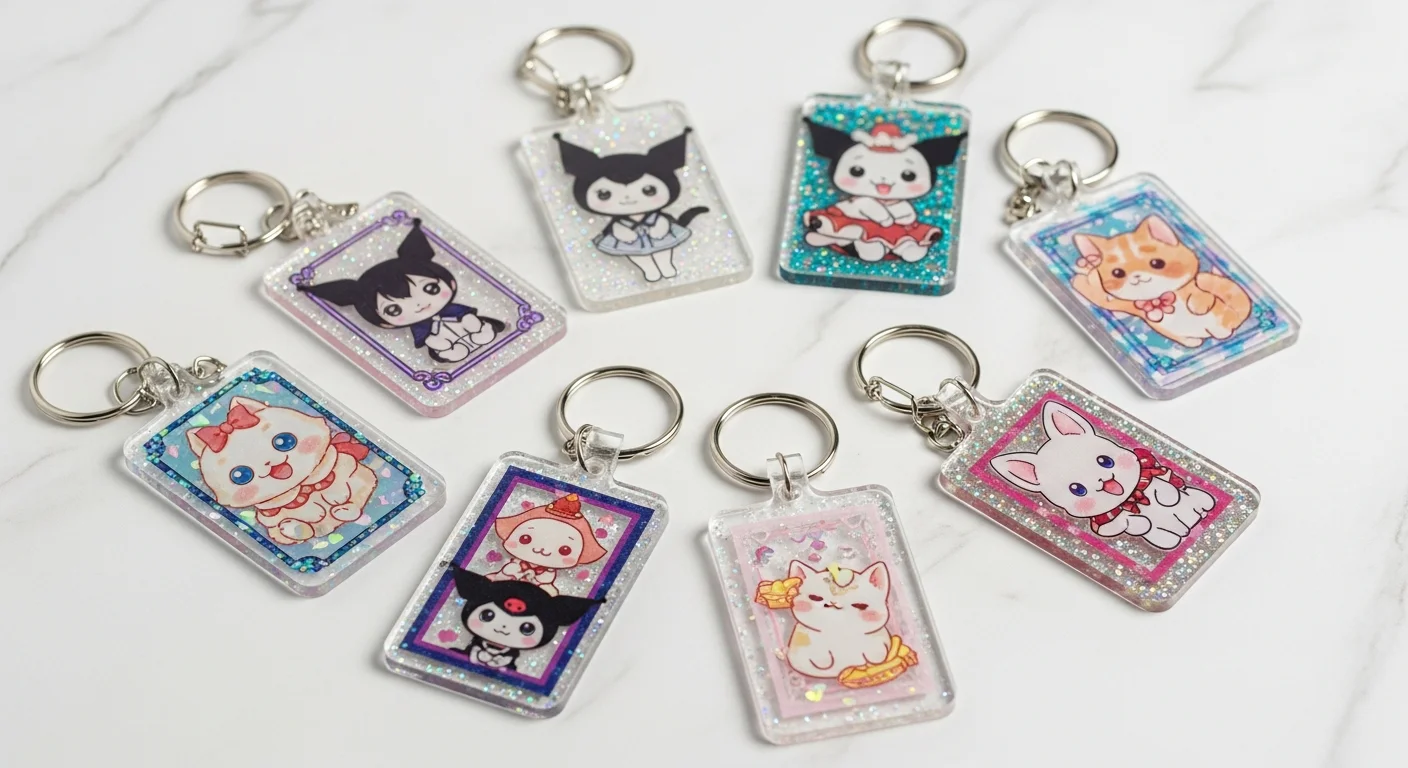
Acrylic keychains have exploded in popularity over the past several years, becoming one of the most requested products in the custom accessories market. Their lightweight feel, crystal-clear appearance, and ability to reproduce full-color artwork with stunning detail make them the go-to choice for everyone from small business owners and content creators to event planners and gift shoppers. Whether you are designing a batch of promotional keychains for a brand launch or creating a single personalized piece for a friend, understanding the materials, printing methods, and design best practices behind custom acrylic keychains will help you produce a finished product that looks professional and lasts for years.
This guide walks you through every aspect of acrylic keychain design — from selecting the right type of acrylic to preparing your artwork files, choosing between printing techniques, and exploring the trending design styles that are dominating the market right now. By the end, you will have a clear roadmap for turning your concept into a polished, production-ready keychain.
What Are Acrylic Keychains and Why Are They So Popular
Acrylic keychains are small accessories made from sheets of acrylic plastic — also known as polymethyl methacrylate or PMMA — that are laser-cut into custom shapes and printed with full-color designs using UV or digital printing technology. The standard thickness ranges from two to three millimeters, producing a keychain that feels solid in the hand without being heavy or bulky. Acrylic is optically clear by default, which means your printed artwork appears to float within a transparent, glass-like surface.
Several factors have driven acrylic keychains to the top of the custom accessories market. First, they are incredibly affordable to produce, especially in bulk, making them accessible for hobbyists and large-scale businesses alike. Second, modern UV printing allows for photographic-quality reproduction on acrylic, supporting gradients, fine text, and millions of colors in a single print pass. Third, acrylic keychains are lightweight and durable — they resist shattering much better than glass and will not rust or tarnish like metal. Finally, the ability to cut acrylic into virtually any shape using laser technology means your keychain can take the exact silhouette of your character, logo, or illustration rather than being confined to a standard circle or rectangle.
Types of Acrylic: Clear, Glitter, Frosted, and Holographic
Not all acrylic is created equal. The type of acrylic you choose as your base material dramatically affects the final appearance of your keychain. Each variant offers a different visual texture that can complement or enhance your design:
Clear acrylic: The most popular and versatile option. Clear acrylic is completely transparent, allowing your printed design to take center stage. The transparency creates a clean, modern look and works beautifully with designs that incorporate negative space — areas where the clear acrylic shows through as part of the aesthetic. Clear acrylic is the default choice for character illustrations, photo reproductions, and logo keychains where color accuracy is paramount.
Glitter acrylic: Embedded with fine glitter particles throughout the acrylic sheet, this material adds sparkle and dimension to your keychain without any additional production steps. Glitter acrylic is available in dozens of colors — silver, gold, pink, blue, holographic rainbow, and more. The glitter effect is visible from both sides, making it particularly striking for double-sided designs. It is a favorite for fan merchandise, party favors, and accessories targeting a younger demographic.
Frosted acrylic: Features a matte, translucent finish that softens the appearance of printed designs. Frosted acrylic diffuses light rather than transmitting it clearly, giving your keychain an elegant, understated quality. It works exceptionally well with minimalist designs, pastel color palettes, and typographic layouts. The frosted texture also hides fingerprints better than clear acrylic, which is a practical advantage for keychains that will be handled frequently.
Holographic acrylic: Infused with holographic film or particles that create a rainbow-shifting effect when the keychain catches light. Holographic acrylic adds a wow factor that photographs beautifully for social media and product listings. The shifting colors interact differently with various print designs, so it is worth requesting a physical sample before committing to a large order. For a complete comparison of acrylic against other keychain materials like metal, leather, and PVC, read our custom keychain materials guide.

Single-Sided vs Double-Sided Designs
One of the first decisions you will make when designing an acrylic keychain is whether to print on one side or both sides. Each approach has distinct advantages:
Single-sided printing: Your design is printed on one face of the acrylic, with the reverse side typically showing a solid white or colored backing layer that prevents the design from appearing reversed when viewed from the back. Single-sided keychains are simpler to design and slightly less expensive to produce. They work well for designs intended to be displayed with one face forward, such as when attached to a bag or lanyard.
Double-sided printing: Both faces of the acrylic feature printed designs. The two sides can show the same design (so the keychain looks correct from any angle) or different designs (front and back of a character, a logo on one side and contact information on the other). Double-sided printing requires careful alignment between the two print layers and usually costs ten to twenty percent more than single-sided. The visual impact is worth the premium — a double-sided keychain looks polished and intentional from every viewing angle.
When designing for double-sided printing, remember that the two designs must mirror each other along the vertical axis. If your front design has a character facing left, the back design should have the character facing right so that when the keychain flips over, the character appears to simply be seen from behind rather than inexplicably reversed.

UV Printing vs Digital Printing on Acrylic
The printing method used to apply your design to the acrylic surface determines the color vibrancy, detail resolution, and durability of the finished keychain. Two primary methods dominate the acrylic keychain market:
UV printing: This is the industry standard for custom acrylic keychains. UV printers use ultraviolet light to instantly cure specially formulated inks as they are deposited onto the acrylic surface. The result is a vibrant, scratch-resistant print that bonds directly to the material. UV printing supports full CMYK color plus white ink, which is critical for creating opaque areas on transparent acrylic. Without a white ink layer beneath your colored design, the colors would appear washed out and translucent. UV printing handles fine detail exceptionally well — text as small as six points and intricate line work reproduce cleanly.
Digital (inkjet) printing: Some manufacturers use modified digital inkjet printers to apply designs to acrylic. Digital printing can achieve similar color quality to UV printing but typically lacks the instant-cure advantage, meaning the ink may be slightly less durable and more susceptible to scratching over time. Digital printing is sometimes used for very small runs or prototype samples. For production quantities, UV printing is the superior choice in virtually every scenario.
Regardless of the printing method, always request a proof or sample before approving a large production run. Colors on screen never perfectly match colors on acrylic — the material's transparency, the white ink layer density, and the specific ink formulation all influence the final appearance. A physical sample eliminates surprises. For a detailed comparison of all keychain decoration techniques including engraving and enamel fill, visit our keychain decoration methods guide.

Epoxy Coating: When and Why to Add It
Epoxy coating — also called epoxy dome or resin dome — is a clear, raised layer of liquid resin applied on top of the printed acrylic surface. Once cured, it creates a smooth, glossy dome that magnifies the design beneath and adds a significant layer of scratch and UV protection. Epoxy coating transforms a flat printed keychain into something that feels premium and substantial.
The advantages of epoxy coating are primarily durability and perceived value. The resin layer absorbs everyday wear, protecting the printed ink from keys, coins, and other objects sharing pocket or bag space with the keychain. The magnification effect also makes colors appear richer and more vivid. However, epoxy coating adds to the per-unit cost — typically two to five cents per keychain depending on size — and adds one to two days to production time.
Epoxy coating is recommended for keychains intended for resale, premium gifts, or any application where the keychain will receive heavy daily handling. For short-term promotional giveaways or budget-conscious projects, the standard UV print without epoxy is perfectly adequate.
Design File Requirements: PNG with Transparency
Preparing your artwork correctly is the single most important step in producing a professional-looking acrylic keychain. Because acrylic keychains are laser-cut to the shape of your design, your file needs to communicate both the print area and the cut line:
File format: PNG with a transparent background is the preferred format. The transparent areas tell the manufacturer where to cut — the laser follows the outer edge of your artwork. Some manufacturers also accept AI (Adobe Illustrator) or PSD (Photoshop) files with separate layers for artwork and cut line.
Resolution: Submit artwork at a minimum of 300 DPI at the actual print size. A two-inch keychain printed at 300 DPI requires an image at least 600 pixels wide. Higher resolution is always better — 600 DPI provides exceptional detail for fine text and intricate patterns.
Bleed and safe zone: Include a two to three millimeter bleed area beyond your intended cut line to account for slight variations in laser cutting alignment. Keep all critical design elements — text, faces, important details — at least two millimeters inside the cut line to prevent them from being trimmed. Use our design tool to set up your file with the correct dimensions and safe zones automatically.
Color mode: Design in CMYK color mode for the most accurate color reproduction in print. If you design in RGB, colors may shift during conversion — particularly vivid blues and greens that fall outside the CMYK gamut.
Trending Acrylic Keychain Ideas
The acrylic keychain market moves fast, with new design trends emerging every season. Here are the styles generating the most demand right now:
Anime and manga characters: Custom acrylic keychains featuring original anime-inspired characters or fan art remain the dominant category in the handmade and convention merchandise space. Chibi-style characters, dynamic action poses, and group ensemble designs sell consistently across platforms like Etsy, convention artist alleys, and independent online stores.
Pet portrait keychains: Custom keychains featuring illustrated or stylized portraits of pets have surged in popularity as personalized gifts. Pet owners submit a photo, and the designer creates a cartoon or watercolor-style illustration of the pet that is then printed on clear acrylic. These make exceptional memorial gifts and everyday carry pieces.
Spotify code keychains: A creative trend where the scannable Spotify barcode for a meaningful song is incorporated into the keychain design alongside album art, song title, or a personal message. When scanned with the Spotify app, the keychain plays the associated song — turning a simple accessory into an interactive, sentimental gift.
Matching set keychains: Designed as pairs or groups, these keychains fit together like puzzle pieces or complete a design when placed side by side. Popular for best friends, couples, and families. The clear acrylic makes the interlocking shapes particularly striking.
If you want to push the boundaries of standard shapes, explore custom shaped keychains for die-cut and novelty silhouette options that make your designs stand out even further.

Common Design Mistakes to Avoid
Even experienced designers make errors when transitioning to acrylic keychain design. Avoiding these common pitfalls will save you time, money, and frustration:
Forgetting the white ink layer: On clear acrylic, any area without a white ink backing will appear translucent and washed out. If you want your colors to be vibrant and opaque, your design file must include a white layer behind all colored areas. This is the single most common mistake new designers make.
Text too small: Acrylic keychains are small — typically one and a half to three inches across. Text that looks perfectly readable on your monitor at full zoom can become illegible at actual print size. As a rule, keep text at eight points or larger for body copy and twelve points or larger for primary text. Bold fonts reproduce more reliably than thin or script fonts at small sizes.
Ignoring the cut line margin: Designs that extend too close to the laser cut edge risk being partially trimmed. Always maintain at least a two-millimeter safe zone between your important design elements and the cut boundary. Backgrounds and decorative patterns can bleed to the edge, but text and faces should not.
Using low-resolution images: Pixelation is immediately visible on a glossy acrylic surface. Photos pulled from social media or web searches are almost always too low in resolution for print. Source or create artwork at 300 DPI minimum.
Over-designing: It is tempting to pack every available square millimeter with detail, but acrylic keychains benefit from visual breathing room. Negative space — areas of clear acrylic showing through — is a design feature, not wasted space. The transparency of the material is part of its appeal.
Custom acrylic keychains offer an extraordinary combination of affordability, visual impact, and creative freedom. From the type of acrylic you select to the printing technique and trending design styles you pursue, each decision shapes the final product. Start your design using our custom keychain builder and bring your acrylic keychain idea to life with confidence.
Share this article
Written by
Camille Dupont
Senior Designer at RareCustom. Camille breaks down acrylic keychain design from material selection and UV printing to trending styles like anime charms and Spotify code keychains.