Sublimation vs Screen Printing vs Vinyl for Custom Mugs: Which Is Best?
Compare sublimation, screen printing, and vinyl for custom mugs. Durability, cost per unit, color range, and best use cases for each mug printing method explained with real pricing data.
Terrence Okafor
Head of Production at RareCustom with 20+ years in commercial printing. SGIA certified with mastery of sublimation and screen printing methods for performance athletic wear.
The printing method chosen for custom mugs determines the look, durability, color range, and per-unit cost of every mug produced. Unlike custom t-shirts where screen printing and DTG cover most needs, the drinkware industry uses a different set of decoration techniques — each producing distinctly different results. Choosing the wrong method for a design is one of the most expensive mistakes first-time buyers make, resulting in mugs where prints fade after a few washes, colors look dull compared to the screen mockup, or per-unit costs blow past the budget.
This guide breaks down three primary custom mug decoration methods head-to-head: sublimation dye transfer, screen printing (pad printing), and vinyl adhesive application. By the end, the right method for any design, budget, and use case will be clear — whether the order is a single personalized gift mug or 1,000 branded promotional mugs for a trade show. Each method has specific strengths that make it ideal for certain projects and limitations that make it a poor fit for others.
How Sublimation Printing Works
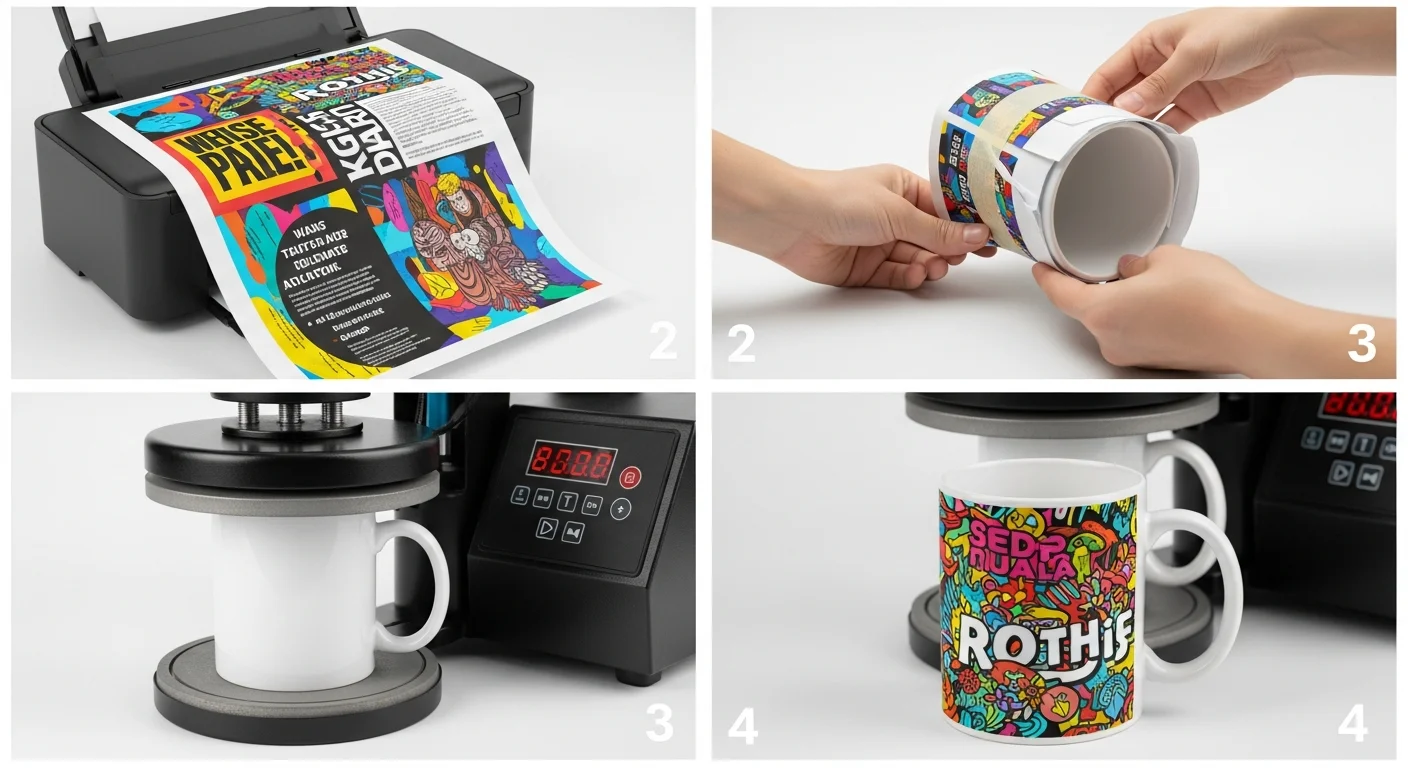
Sublimation is the most widely used printing method for custom mugs in the personalized merchandise industry, accounting for approximately 75 percent of all custom ceramic mug orders. The process uses specialized sublimation ink that is first printed onto transfer paper using an inkjet printer, then applied to the mug inside a heat press at 350 to 400 degrees Fahrenheit for 3 to 5 minutes. At this temperature, the ink converts directly from a solid to a gas (a phase change called sublimation) and permanently infuses into the polymer coating on the mug's surface.
Because the dye molecules penetrate into the coating rather than sitting on top of it, sublimation produces prints that are scratch-resistant, fade-resistant, dishwasher safe, and microwave safe. The surface of a sublimated mug feels smooth to the touch — there is no raised texture, no film, and no edge where the print begins or ends. Running a fingernail across the design reveals no difference between the printed and unprinted areas. This durability is effectively permanent under normal household use.
The key limitation of sublimation is the substrate requirement: it only works on surfaces with a polyester or polymer coating. For mugs, this means white or light-colored ceramic mugs that have been specially coated for sublimation. Sublimation cannot be used on raw uncoated ceramic, glass without a coating, or dark-colored mugs because the transparent dye requires a white base to display colors accurately. Stainless steel mugs can be sublimated if they have a white polymer coating applied, though the results tend to be slightly less vibrant than on ceramic.

How Screen Printing (Pad Printing) Works for Mugs
Screen printing on mugs differs significantly from screen printing on flat textiles. Because a mug is a cylindrical three-dimensional object, traditional flat-screen printing cannot be applied directly. Instead, manufacturers use pad printing (also called tampography) or cylindrical screen printing. In pad printing, ceramic ink is transferred from an etched plate to the mug surface via a silicone pad that conforms to the curved shape. In cylindrical screen printing, the mug rotates against a flat screen while ink is forced through the mesh openings.
After the ink is applied, the mugs are kiln-fired at 1,300 to 1,500 degrees Fahrenheit, permanently fusing the ceramic ink into the glaze. This firing process makes screen-printed mugs extremely durable — the ink literally becomes part of the ceramic surface. Kiln-fired prints can withstand thousands of dishwasher cycles, commercial kitchen scrubbing, and years of daily use without any degradation. This is why virtually every mass-produced printed mug in retail stores (from restaurant chains to souvenir shops) uses screen printing.
Screen printing is typically limited to one to four spot colors per design. Each color requires a separate screen or plate, and each additional color adds $0.50 to $1.50 per mug to the production cost. The method excels for bold logos, simple text, and graphic designs with clean color separations. It cannot reproduce photographic images, gradients, or designs with more than four colors without specialty processes that dramatically increase cost.
How Vinyl Wrap and Decals Work
Vinyl decals are cut from sheets of adhesive vinyl (or printed adhesive vinyl) and applied directly to the mug surface. The vinyl sits on top of the mug rather than being infused into it, creating a slightly raised, tactile surface. Cut vinyl uses a cutting machine (Cricut, Silhouette) to create shapes from solid-color vinyl sheets — ideal for text, simple logos, and geometric shapes. Printed vinyl uses an inkjet or eco-solvent printer to print full-color designs onto white adhesive vinyl, which is then applied to the mug.
Vinyl application requires no heat press and no specialized coating on the mug, making it the most accessible DIY method. It works on virtually any smooth, non-porous surface — ceramic, glass, stainless steel, and enamel mugs all accept vinyl decals. However, vinyl mugs have significant durability limitations: they are hand-wash only, not dishwasher safe, not microwave safe (vinyl can melt or peel), and the adhesive bond degrades over time with exposure to moisture and temperature changes. For personal DIY projects and short-term promotional items, vinyl is a cost-effective option, but it is not suitable for products intended for daily use or commercial sale.

Durability and Longevity Comparison
Durability is the most critical factor for any product intended for daily use, and the three methods differ dramatically in this regard.
Sublimation produces prints that last the lifetime of the mug under normal household use. Because the dye is infused into the polymer coating at a molecular level, there is nothing on the surface to scratch, peel, or wear away. Sublimation mugs are dishwasher safe (top rack recommended), microwave safe, and resistant to UV fading. The only way to degrade a sublimation print is to physically damage the polymer coating itself through abrasive scrubbing or harsh chemical exposure over extended periods.
Screen printing (kiln-fired) is equally durable because the ceramic ink is fused into the glaze at extreme temperatures. Kiln-fired mugs can withstand commercial dishwashers, industrial scrubbing, and decades of use — this is why screen printing is the standard for restaurant and hotel mugs. The only risk is chipping of the mug itself, which can expose the raw ceramic beneath the printed area.
Vinyl has the shortest lifespan. Adhesive vinyl on mugs typically begins showing signs of peeling, lifting at edges, or discoloration within 3 to 12 months of regular use, depending on how frequently the mug is washed and whether it is exposed to hot liquids. Hand-washing extends the life somewhat, but vinyl is fundamentally a temporary decoration method for drinkware. For items that will be used daily, sublimation or screen printing is strongly recommended.
Color Range and Design Complexity
Sublimation offers the widest color range of any mug printing method — it reproduces the full CMYK gamut with smooth gradients, photorealistic images, fine details, and unlimited colors at no additional per-color cost. A photograph, a watercolor illustration, and a 20-color logo all print at the same price. Full-wrap designs (printing that covers the entire circumference of the mug) are standard with sublimation, and the seamless edge-to-edge coverage creates a polished, professional appearance.
Screen printing is limited to spot colors — typically one to four distinct, solid colors. Each color is mixed to a precise PMS (Pantone Matching System) specification, which means brand colors can be matched with higher accuracy than sublimation's CMYK simulation. For bold corporate logos with specific PMS colors, screen printing actually produces a more exact color match. However, screen printing cannot reproduce gradients, photographs, or complex multi-color artwork without significant cost increases.
Vinyl color range depends on the method. Cut vinyl is limited to the stock colors available in vinyl sheet form (typically 50 to 100 standard colors plus specialty finishes like metallic, glitter, and holographic). Printed vinyl can reproduce full-color designs similar to sublimation, but the color accuracy depends on the printer and vinyl quality, and the finished surface has a different texture (glossy or matte film rather than smooth ceramic).

Cost Comparison by Order Size
Per-unit cost varies significantly by printing method and order quantity. The following represents typical pricing for a standard white 11-ounce ceramic mug with a single-side design:
Single mug (1 unit): Sublimation $12 to $18 (best option at this quantity); screen printing is not available for single units due to setup costs; vinyl $5 to $10 for DIY but hand-wash only.
Small batch (10 to 24 units): Sublimation $8 to $12 per mug; screen printing $10 to $15 per mug (setup costs spread across few units); vinyl $4 to $8 per mug (DIY or small shop).
Medium batch (25 to 99 units): Sublimation $6 to $9 per mug; screen printing $5 to $8 per mug (setup costs become manageable); vinyl is rarely practical at this quantity for commercial quality.
Large batch (100 to 499 units): Sublimation $4 to $7 per mug; screen printing $3 to $5 per mug (most cost-effective for simple designs); vinyl is not recommended.
Bulk (500+ units): Sublimation $3 to $5 per mug; screen printing $2 to $4 per mug (most cost-effective overall for simple designs at scale). For detailed pricing tiers and volume discount breakdowns, read the complete pricing guide.

Which Method Is Best for Your Project?
The right printing method depends on three factors: design complexity, order size, and intended use. Use this decision framework to choose:
Choose sublimation when: The design includes photographs, gradients, or more than four colors. The order is 1 to 200 mugs. The mugs need to be dishwasher and microwave safe. Personalization (different names, photos, or messages on each mug) is required — sublimation handles variable data at no extra cost per unique design.
Choose screen printing when: The design is a simple logo with one to four solid colors. The order is 250 or more mugs. The mugs will be used in commercial settings (restaurants, hotels, events) where maximum durability is required. Exact PMS color matching for brand compliance is critical.
Choose vinyl when: The project is a DIY gift or craft project with a small number of mugs. The mugs will be handled gently and hand-washed. Budget is extremely limited and durability is not a priority. Specialty finishes (metallic, glitter, holographic) are desired for novelty effect.
What RareCustom Uses and Why
RareCustom uses professional sublimation printing for all custom mugs because it provides the best combination of color range, durability, and affordability for personalized merchandise. Sublimation allows every mug to have a unique design at no additional setup cost — whether a customer orders one photo mug or 100 branded mugs, each can feature a different image, name, or message without per-design surcharges. The free design tool includes mug templates with accurate print area boundaries, 3D preview, and instant pricing — start a design to see exactly how the finished mug will look before ordering.
Frequently Asked Questions
Can sublimation be used on black or dark-colored mugs?
Standard sublimation cannot be used on dark mugs because the dye is transparent and requires a white base to display colors accurately. Dark mugs can use color-changing (magic mug) technology where a thermochromic coating covers the sublimation print and reveals it when hot liquid is added. Alternatively, dark mugs can be decorated with screen printing or vinyl.
How long does sublimation printing last on mugs?
Sublimation prints last the lifetime of the mug under normal use. Because the dye is infused into the polymer coating at a molecular level, it cannot be scratched off, washed away, or peeled. The only degradation occurs if the polymer coating itself is physically damaged through abrasive cleaning over many years.
Is screen printing or sublimation better for logos?
For small orders (under 100 mugs), sublimation is better because it has no setup costs and reproduces logos in full color at any quantity. For large orders (250+ mugs) with simple one-to-four-color logos, screen printing is more cost-effective per unit and offers exact PMS color matching for brand compliance.
Related Articles
Share this article
Written by
Terrence Okafor
Head of Production at RareCustom with 20+ years in commercial printing. SGIA certified with mastery of sublimation and screen printing methods for performance athletic wear.