TPU vs Polycarbonate vs Silicone: Choosing the Right Custom Phone Case Material
Compare TPU, polycarbonate, and silicone phone case materials. Drop protection, grip, print compatibility, wireless charging, yellowing resistance, and best uses for each material explained.
Aisha Patel
Head of Materials Science & Sustainability at RareCustom. M.S. in Textile Engineering from NC State with AATCC certification and ISSP Sustainability Practitioner certification. 7+ years evaluating fabrics, materials, and eco-friendly production processes.
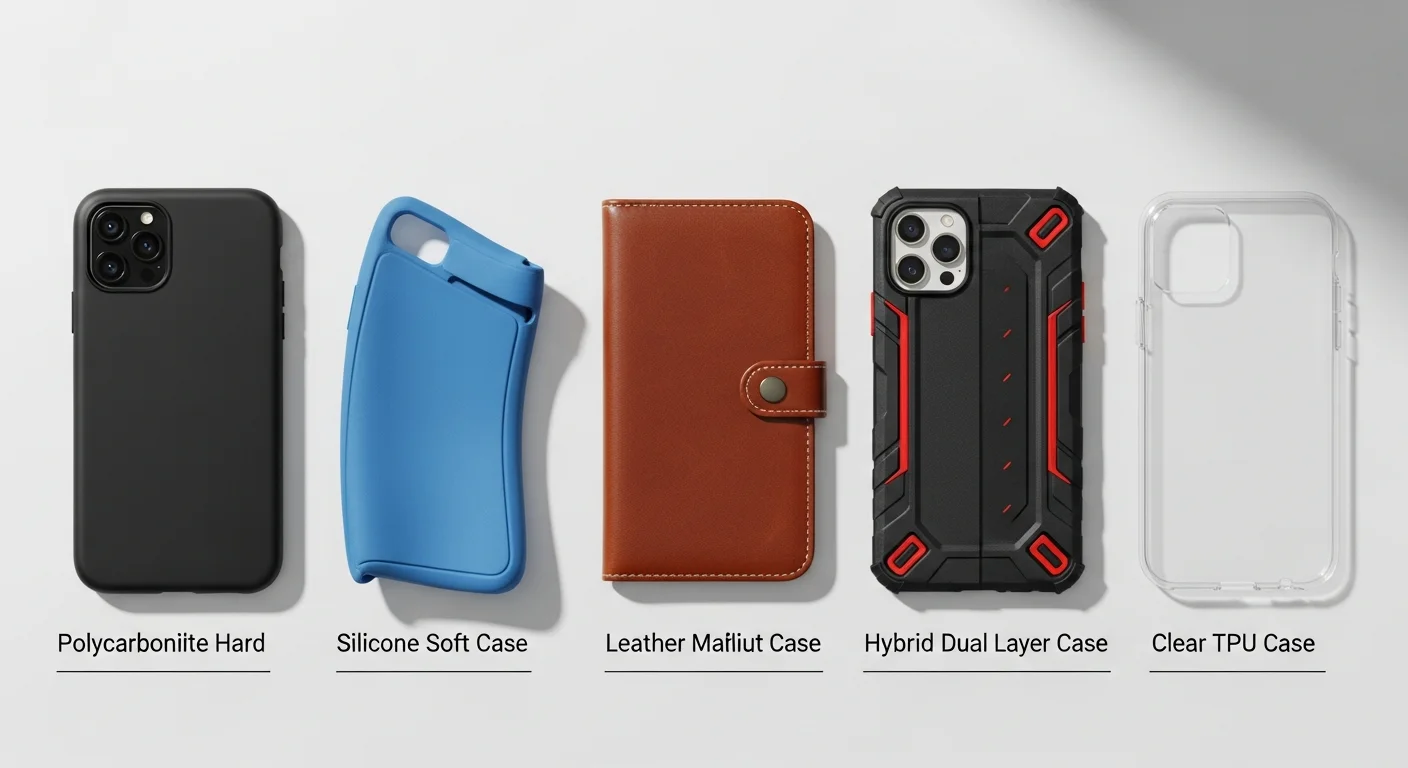
The material your custom phone case is made from determines far more than its appearance. Material choice dictates how well the case absorbs impact, how it feels in your hand, how compatible it is with various printing technologies, whether it supports wireless charging, and how it ages over months of daily use. Three materials dominate the custom phone case industry — thermoplastic polyurethane (TPU), polycarbonate (PC), and silicone — each offering a distinct combination of flexibility, strength, grip, printability, and price.
Choosing the wrong material leads to frustration: a case that feels too slippery and slides off tables, a printed design that peels after a few weeks, a case that yellows embarrassingly within months, or a bulky shell that defeats the purpose of a slim phone design. Choosing the right material means getting a case that protects reliably, holds its printed design for months, feels comfortable in hand, and works seamlessly with accessories like wireless chargers and MagSafe modules. This guide compares TPU, polycarbonate, silicone, and hybrid constructions across every criterion that matters for custom phone case projects.
TPU Phone Cases — The Flexible All-Rounder
Thermoplastic polyurethane, universally known as TPU, is the most widely used material in the phone case industry. A flexible TPU case combines the elastic properties of rubber with the processability of thermoplastic, resulting in a material that bends without breaking, absorbs impact energy through controlled deformation, and returns to its original shape after stress is removed.
TPU cases typically range from 1.0 to 2.0 millimeters in wall thickness for slim designs and 2.5 to 4.0 millimeters for rugged models. The shock-absorbing material properties of TPU make it exceptionally effective at protecting phones from drops: when a TPU case hits a hard surface, the material compresses and flexes at the point of impact, distributing the force across a wider area and extending the deceleration time. This significantly reduces the peak force transmitted to the phone, which is the force that causes screen cracks and internal component damage.
In terms of tactile feel, TPU sits between hard plastic and soft rubber. It offers a natural grippy texture that resists sliding on smooth surfaces — a meaningful safety feature that reduces accidental drops. The material's slight flexibility makes it easy to install and remove without the snapping force required by rigid cases, and it does not risk cracking during installation.
For custom printing, TPU is highly compatible with UV ink on TPU technology. UV-curable inks bond effectively to the TPU surface through photo-initiated polymerization, creating a durable decoration layer that flexes with the case material without cracking or peeling. DTF transfers also adhere well to TPU surfaces. Sublimation, however, is generally not recommended for TPU cases because the material lacks the polymer coating required for dye sublimation transfer — the inks do not penetrate and bond properly, resulting in poor adhesion and rapid fading.
The primary drawback of TPU is susceptibility to yellowing. Clear and light-colored TPU cases are notorious for developing a yellow tint over time as the material reacts to UV light exposure, body oils, and heat. Standard TPU may show visible yellowing within two to four months of daily use. Premium formulations with anti-yellowing coating and UV stabilizers can delay this process significantly — up to eight to twelve months — but cannot eliminate it entirely. For projects where long-term clarity is essential, polycarbonate is a more stable option.
Polycarbonate Phone Cases — Crystal Clear and Rigid
Polycarbonate (PC) is an engineering-grade thermoplastic known for exceptional rigidity, optical clarity, and impact strength. A rigid PC phone case distributes impact force across its entire surface rather than absorbing it through deformation, which provides excellent protection against scratches, scrapes, and moderate drops. Polycarbonate is the same material used in bulletproof glass panels, safety goggles, and aircraft canopies — applications where clarity and strength are both critical.
The defining advantage of polycarbonate for custom phone cases is its optical transparency. Clear polycarbonate shells offer glass-like clarity that showcases the phone's original back panel design, color, and finish. This makes PC the preferred material for clear case designs where the phone itself is part of the aesthetic, with the custom design serving as an accent element rather than a full-coverage wrap.

Polycarbonate excels as a printing substrate. Its rigid, smooth surface provides an ideal canvas for all three major printing methods. UV printing produces sharp, vivid results on PC with excellent adhesion. Sublimation on polycarbonate is the industry standard when a polymer coating is applied — the coating accepts sublimation dyes readily, producing the most durable and vibrant prints available. DTF transfers adhere firmly to the smooth PC surface with minimal risk of edge lifting.
The trade-offs of polycarbonate center on feel and fragility at extremes. PC cases are noticeably more slippery in hand than TPU or silicone, which increases the risk of accidental drops on smooth surfaces. While PC is strong, it is also brittle under point-load stress — a hard impact on a corner or edge can cause the material to crack rather than flex. And unlike TPU, a cracked PC case cannot self-heal; the crack propagates until the case fails. To mitigate these weaknesses, many manufacturers add a textured coating or soft-touch finish to improve grip, and reinforce corners with built-in air cushion chambers.
Silicone Phone Cases — Soft-Touch and Grippy
Silicone phone cases, particularly those made from liquid silicone rubber (LSR), offer the softest, most tactile hand-feel of any case material. LSR cases feature a velvety, almost suede-like finish that provides maximum grip — the high-friction surface makes it nearly impossible for the phone to slide off inclined surfaces, out of loose pockets, or from a relaxed grip. For users who prioritize in-hand security above all else, silicone is the clear winner.
Silicone provides decent impact protection through energy absorption. The soft, elastic material cushions drops by compressing on impact and slowly returning to shape. However, silicone's protection level falls between TPU and polycarbonate for most drop scenarios. The material absorbs low-energy impacts effectively but may bottom out under high-energy drops, transmitting force to the phone. Wall thickness tends to be greater than TPU for equivalent protection, adding more bulk to the phone's profile.

For custom printing, silicone presents challenges. The material's soft, low-surface-energy finish makes ink adhesion difficult. UV printing on silicone requires careful surface preparation and specialized primer layers to achieve reliable bonding. Even with proper preparation, UV ink on silicone may not achieve the same adhesion longevity as on TPU or polycarbonate. Sublimation is not compatible with silicone. DTF transfers adhere inconsistently depending on the specific silicone formulation and surface texture. For custom-printed phone cases, TPU or polycarbonate are generally more reliable substrates.
Other considerations for silicone include its tendency to attract lint, dust, and pet hair. The soft, slightly tacky surface acts like a magnet for particulate matter, requiring more frequent cleaning to maintain a clean appearance. Silicone cases are also more prone to tearing at thin areas like button cutouts and charging port openings, where repeated flexing concentrates stress.
Hybrid and Dual-Layer Cases — The Best of Both Worlds
Hybrid phone cases combine two or more materials to capture the advantages of each while minimizing their individual weaknesses. The most common hybrid construction pairs a rigid polycarbonate outer shell with a flexible TPU inner liner, creating a dual-layer system that delivers both impact distribution (from the PC shell) and shock absorption (from the TPU liner).

In a dual-layer case, the polycarbonate back panel serves as the primary printing surface, offering the same excellent compatibility with UV, sublimation, and DTF methods as a standalone PC case. The TPU bumper wraps around the edges, providing flexible grip and shock absorption where drops most commonly make contact. This separation of functions — hard back for design, soft edges for protection — represents the current state of the art in custom phone case engineering.
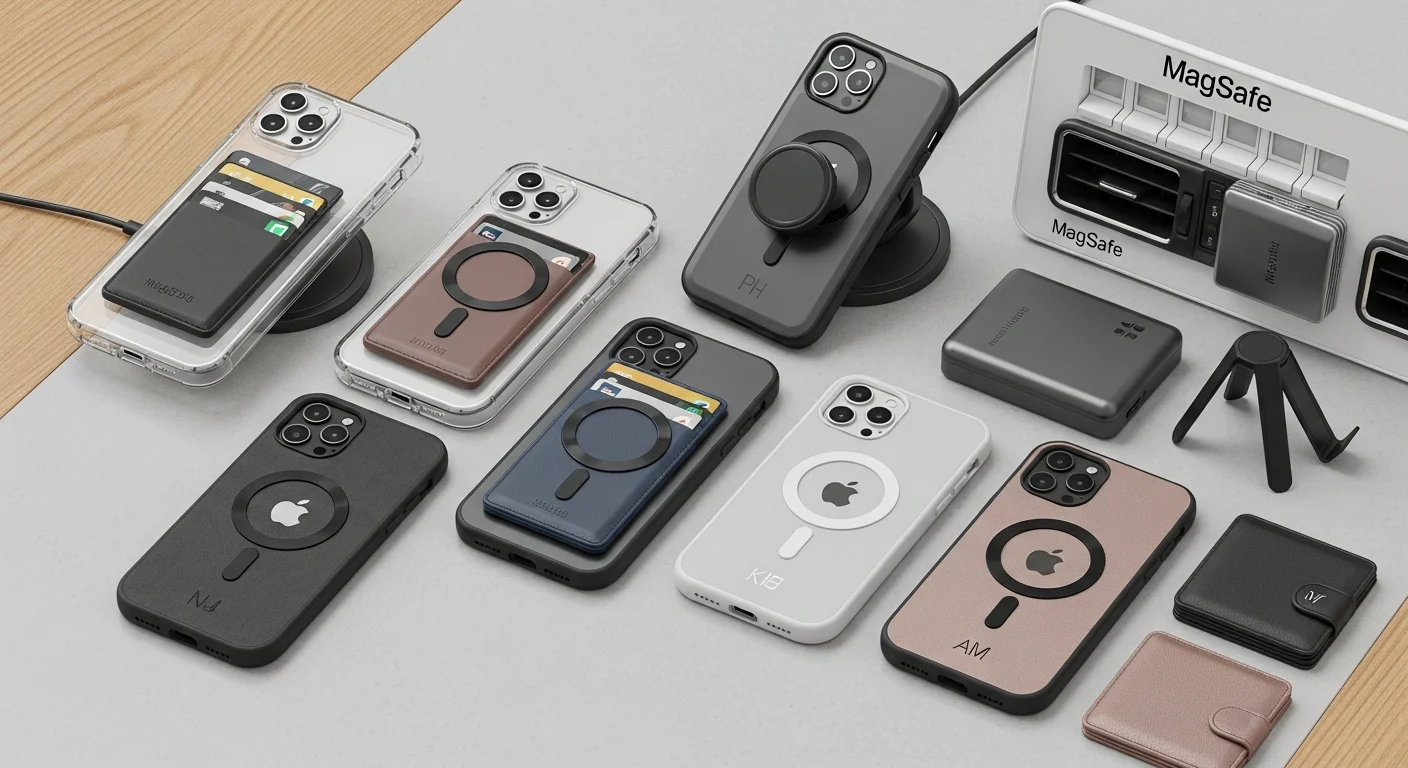
Some premium hybrid designs incorporate additional features: air-cushion corners with hollow chambers that compress on impact, raised lip edges that protect the screen and camera lens from flat-surface contact, and ribbed interior patterns that improve ventilation and reduce heat buildup during wireless charging. The MagSafe and functional phone case features guide explores these advanced design elements in detail.
The trade-off for hybrid construction is cost and thickness. Dual-layer cases are typically 20 to 40 percent thicker than single-material designs and cost more to manufacture. For users who prioritize slim profiles and minimal weight, a single-material TPU or PC case may be more appropriate. For those seeking maximum protection alongside premium print quality, hybrid cases represent the best compromise available.
Drop Protection Comparison
Drop protection is arguably the most important functional criterion for any phone case. The table below summarizes protection performance based on industry testing standards and real-world drop scenarios.
| Test Criterion | TPU | Polycarbonate | Silicone | Hybrid (PC+TPU) |
|---|---|---|---|---|
| 4-foot drop onto concrete | Excellent | Good | Good | Excellent |
| 6-foot drop onto concrete | Good | Fair (crack risk) | Fair | Excellent |
| Corner impact resistance | Excellent | Fair (brittle) | Good | Excellent |
| Scratch resistance | Moderate | Excellent | Low | High |
| Screen lip protection | Good | Good | Good | Excellent |
| Camera lens protection | Good | Good | Moderate | Excellent |
| MIL-STD-810G rated options | Yes (rugged) | Rare | No | Yes (common) |
The MIL-STD-810G standard — a United States Department of Defense testing protocol for environmental durability — is the benchmark for phone case drop protection claims. Cases meeting this standard have survived 26 drops from 48 inches onto two-inch plywood over concrete in multiple orientations. MIL-STD-810G certification is most commonly achieved by rugged TPU cases and hybrid dual-layer designs. Pure polycarbonate and silicone cases rarely achieve this certification due to their respective brittleness and softness limitations.
Print Compatibility Matrix
Print compatibility directly affects design quality, longevity, and the range of available customization options. This matrix summarizes how each material performs with each printing technology.
| Printing Method | TPU | Polycarbonate | Silicone | Hybrid |
|---|---|---|---|---|
| UV Printing | Excellent | Excellent | Fair (needs primer) | Excellent (on PC) |
| Sublimation | Not recommended | Excellent (coated) | Not compatible | Good (on coated PC) |
| DTF Transfer | Good | Good | Fair (variable) | Good (on PC) |
| White ink support | UV only | UV and DTF | UV only | UV and DTF |
| Full-wrap edge print | UV possible | Sublimation best | UV limited | UV on PC back |
| 3D texture effects | UV only | UV only | Not practical | UV on PC back |
For the widest range of design possibilities, polycarbonate and hybrid cases offer the most versatile printing substrate. TPU is excellent for UV printing and adequate for DTF but excludes sublimation. Silicone is the most challenging substrate for all printing methods and is best avoided for projects where print longevity is a priority. For a detailed comparison of how these printing methods work and their relative strengths, see the UV printing vs sublimation vs DTF phone case guide.
Wireless Charging Compatibility
With Qi wireless charging and MagSafe becoming standard features on flagship smartphones, case material and thickness directly impact charging performance. Wireless charging works by electromagnetic induction between a coil in the charging pad and a coil in the phone. The case material sits between these coils and must allow the electromagnetic field to pass through without excessive attenuation.
All three primary case materials — TPU, polycarbonate, and silicone — are wireless charging compatible at standard thicknesses (under 3 millimeters total). None of these materials contain metals or ferromagnetic particles that would block the charging field. The primary factor affecting wireless charging through a case is thickness, not material composition. Cases under 3 millimeters work with standard 7.5W Qi charging. Cases under 2 millimeters work with faster 15W MagSafe charging on iPhones.
However, some custom additions can interfere with wireless charging. Metal plates (used for magnetic car mounts), embedded magnets that are not MagSafe-aligned, metallic foil decorations, and thick glitter or embedded-object layers can block or redirect the charging field. If wireless charging compatibility is essential, verify that the case design does not include any metallic elements between the phone's charging coil and the case's exterior surface. Cases designed specifically for MagSafe include a ring of aligned magnets that enhance rather than impede wireless charging. The MagSafe and functional features guide covers MagSafe-optimized case selection in detail.
Yellowing, Aging, and Long-Term Durability
All phone case materials degrade over time, but they do so in different ways and at different rates. Understanding the aging characteristics of each material helps set realistic expectations and informs purchasing decisions for projects where long-term appearance matters.

TPU yellowing is the most visible aging phenomenon in phone cases. Clear TPU begins to develop a yellow tint within two to four months of daily use. The yellowing is caused by a combination of UV light exposure, reaction with skin oils and sweat, and thermal oxidation from body heat and ambient temperature. Premium TPU formulations with anti-yellowing coating and UV stabilizer additives can delay visible yellowing to six to twelve months, but the process is ultimately inevitable in all TPU products. Opaque and dark-colored TPU cases mask yellowing effectively — the discoloration occurs but is invisible against a colored background.
Polycarbonate clarity is significantly more stable than TPU over time. High-quality PC cases maintain optical clarity for 12 to 24 months under normal use conditions. Polycarbonate is inherently more UV-stable than TPU and does not react as readily with skin oils. However, PC cases are more susceptible to surface micro-scratches that gradually reduce clarity, producing a hazy, matte appearance over time. Hard-coat treatments and nano-coatings that fill micro-scratches can extend the clear appearance significantly.
Silicone aging manifests primarily as surface degradation. The soft, grippy finish gradually becomes tacky, sticky, or rough-textured over months of handling. Silicone also becomes more prone to tearing at stress points (button cutouts, speaker openings) as the material fatigues from repeated flexing. Color fading is minimal because silicone pigments are integrated throughout the material rather than applied to the surface. Overall, silicone cases have the shortest functional lifespan of the three materials, typically lasting four to eight months before grip quality and aesthetics decline noticeably.
Which Material Is Right for Your Project?
The best material choice depends on your priorities. Use this decision framework to match your project requirements to the optimal case material.
Choose TPU when: Shock absorption and drop protection are your top priorities. You want a grippy, comfortable case that stays put on surfaces. You plan to use UV printing for your custom design. You prefer a case that is easy to install and remove. You are ordering opaque or dark-colored cases where yellowing is invisible. You want the most affordable option with the broadest device compatibility.
Choose polycarbonate when: You want a crystal-clear case that showcases the phone's original design. You need the widest printing method compatibility including sublimation. Scratch resistance and long-term clarity matter more than flexibility. You want a slim, lightweight profile with a premium, rigid feel. You are creating a clear case design with floating graphic elements using white UV ink.
Choose silicone when: Maximum grip is your absolute top priority. Soft, velvety hand-feel is more important than print longevity. You are not planning to custom print on the case (or are using a limited print area). You want a lightweight, affordable case for short-term use or frequent replacement.
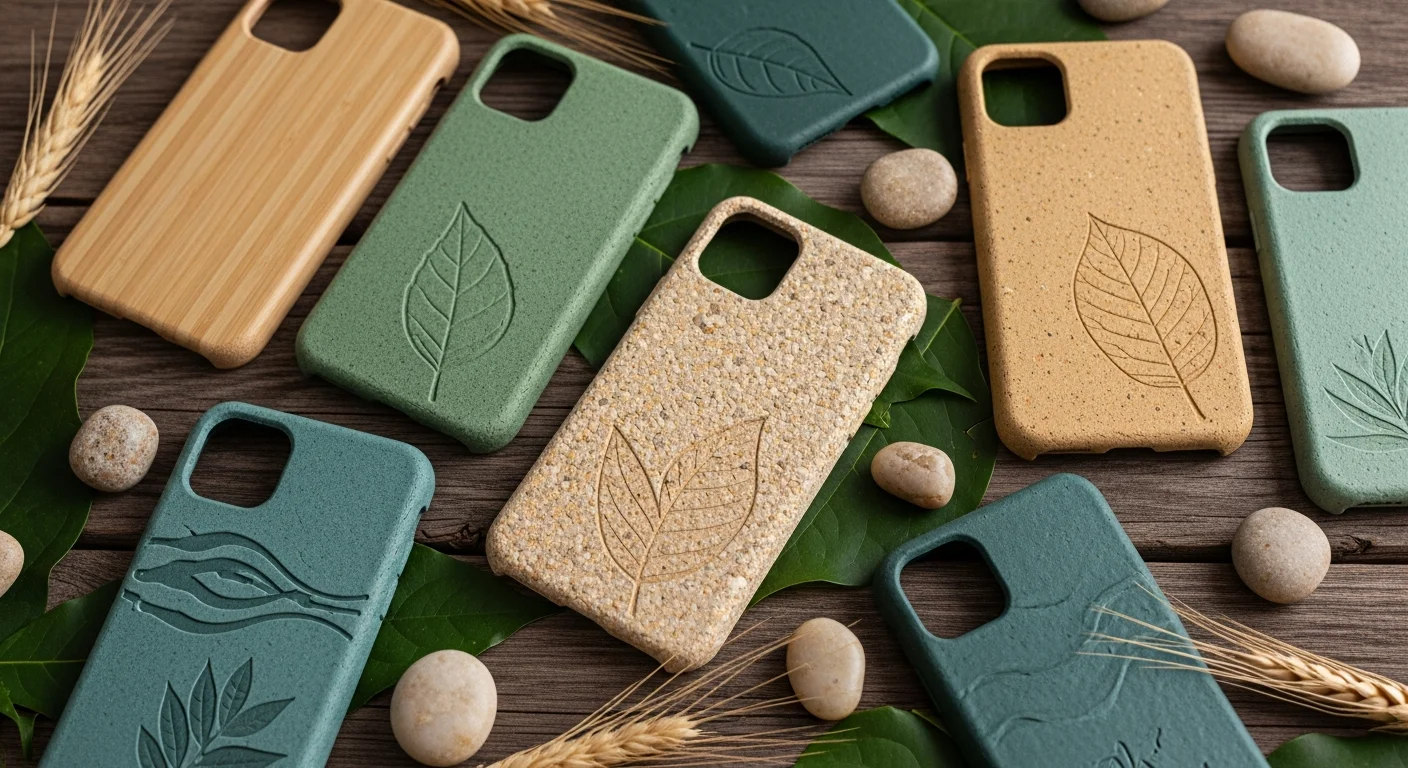
Choose hybrid (PC+TPU) when: You want the best combination of protection and print quality. Maximum drop protection (MIL-STD-810G rated) is required. You need compatibility with MagSafe accessories. You want a premium product that justifies a higher price point. You are creating branded cases for corporate gifting or resale. For eco-friendly phone case options using recycled or bio-based materials, hybrid designs are also leading the way in sustainable innovation.
Explore Your Custom Phone Case Options
Understanding case materials is the foundation for making an informed custom phone case decision. Whether you prioritize the flexible protection of TPU, the crystal clarity of polycarbonate, the tactile grip of silicone, or the comprehensive performance of a hybrid design, the right material ensures your custom artwork looks great and lasts long.
RareCustom offers multiple case materials across its full device lineup, with UV printing available on all substrates and sublimation on premium polymer-coated polycarbonate blanks. Each case style page shows available material options, and the design tool automatically adjusts templates and print area specifications based on your material selection.
Try the free design tool to experiment with different case styles and materials, or browse all custom phone case options to compare available materials for your specific phone model. If you are starting from scratch, the beginner's guide to custom phone cases walks through the complete process step by step.
Related Articles
- How to Design Custom Phone Cases: The Complete Beginner's Guide — Full walkthrough from concept to finished case.
- UV Printing vs Sublimation vs DTF for Phone Cases — Compare printing methods for quality, durability, and cost.
- MagSafe and Functional Phone Case Features Guide — Explore MagSafe, kickstands, wallet attachments, and wireless charging.
- Eco-Friendly and Sustainable Custom Phone Cases — Recycled materials, bio-plastics, and green production methods.
Share this article
Written by
Aisha Patel
Head of Materials Science & Sustainability at RareCustom. M.S. in Textile Engineering from NC State with AATCC certification and ISSP Sustainability Practitioner certification. 7+ years evaluating fabrics, materials, and eco-friendly production processes.