Custom Keychain Materials: Acrylic vs Metal vs Leather vs PVC Compared
Compare custom keychain materials side by side. Covers acrylic, metal, leather, PVC, wood, and resin keychains with detailed analysis of cost, durability, weight, best use cases, and print quality for each.
Aisha Patel
Head of Materials Science & Sustainability at RareCustom. Aisha provides detailed comparisons of acrylic, metal, leather, PVC, wood, and resin keychain materials.
Choosing the right material for your custom keychains is the single most important decision you will make in the design process. The material determines everything — how the keychain looks and feels in hand, how long it lasts under daily use, what printing and decoration methods are available to you, how much each unit costs, and ultimately how the recipient perceives the quality and value of the finished piece. A stunning design printed on the wrong material will underperform, while even a simple design on the right material can exceed expectations.
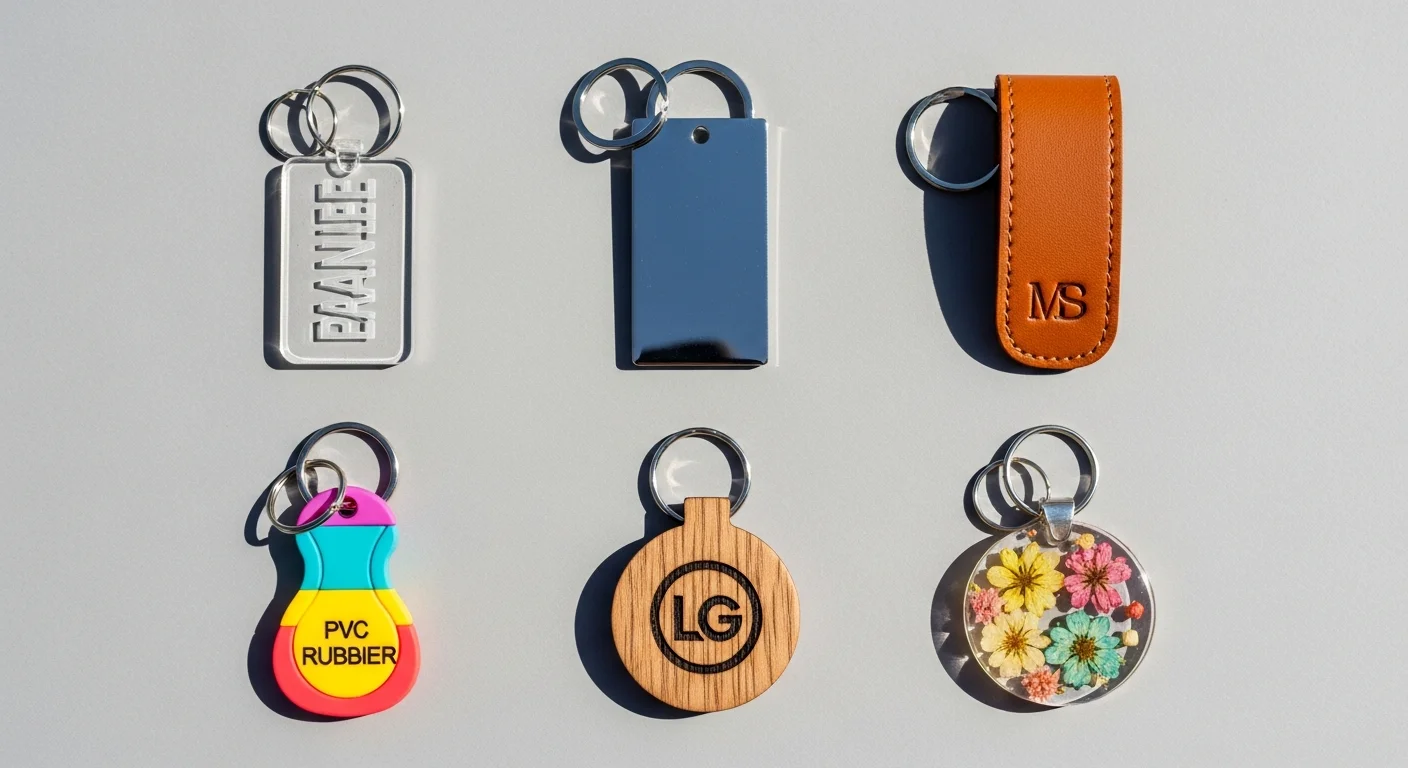
This guide provides an honest, detailed comparison of the six most popular custom keychain materials — acrylic, metal, leather, PVC and rubber, wood, and resin. For each material, we cover the key characteristics, advantages, limitations, best use cases, and pricing considerations that should inform your decision. By the end, you will have a clear understanding of which material best serves your specific project, whether you are creating promotional giveaways, premium gifts, merchandise for resale, or personal accessories.
Acrylic Keychains: Lightweight, Vibrant, and Affordable
Acrylic — specifically polymethyl methacrylate or PMMA — is the most popular material for custom keychains and for good reason. It delivers the best combination of visual impact, design flexibility, and cost efficiency in the custom keychain market. Acrylic sheets are laser-cut into any shape you can imagine and printed with full-color UV printing that reproduces photographic-quality imagery with millions of colors in a single pass.

The visual appeal of acrylic is rooted in its optical clarity. Standard clear acrylic is completely transparent, allowing your design to appear as though it is floating within a glass-like surface. This transparency creates negative space effects that no other keychain material can replicate — areas where the clear acrylic shows through become part of the design, producing a clean, modern aesthetic. Beyond clear acrylic, you can choose from glitter-infused sheets that sparkle in the light, frosted sheets that diffuse color for a soft matte appearance, and holographic sheets that shift through rainbow colors as the viewing angle changes.
Acrylic keychains are remarkably lightweight — typically weighing between eight and fifteen grams depending on size and thickness. This makes them comfortable for everyday carry without adding noticeable bulk to a keyring, pocket, or bag. The standard thickness of two to three millimeters provides a solid, substantial feel without heaviness. For a deep dive into acrylic keychain design specifically, including printing techniques and trending styles, visit our acrylic keychain design guide.
Best for: Full-color designs, character illustrations, photo keychains, promotional giveaways, convention merchandise, fan art, budget-conscious bulk orders.
Limitations: Can scratch on the surface over time without epoxy coating, not as premium-feeling as metal or leather, may crack under extreme pressure or impact.
Price range: $0.60 to $2.50 per unit depending on size, print sides, epoxy coating, and quantity.
Metal Keychains: Durable, Premium, and Weighty
Metal keychains occupy the premium end of the custom keychain spectrum. The weight, durability, and tactile quality of metal immediately communicate quality and permanence — a metal keychain feels like an investment piece rather than a disposable accessory. The most common metals used for custom keychains include zinc alloy, stainless steel, brass, and aluminum, each offering a slightly different balance of weight, finish quality, and cost.
Zinc alloy is the most popular choice for custom metal keychains because it accepts multiple decoration methods — die-casting, enamel fill, laser engraving, and UV printing — while remaining cost-effective at moderate production quantities. Zinc alloy keychains can be plated in silver, gold, black nickel, antique bronze, and other finishes that dramatically affect the final appearance. Stainless steel provides superior durability and a sleek modern aesthetic but costs more to produce and is more limited in shape complexity. Brass offers a warm, golden tone that develops a natural patina over time, appealing to customers who appreciate aged, vintage-looking accessories.
The decoration methods available for metal keychains are distinct from those used on other materials. Soft enamel fill creates recessed color areas separated by raised metal borders — the classic pin or badge aesthetic. Hard enamel produces a completely smooth, flush surface where the metal and color sit at the same level. Laser engraving removes the surface plating to reveal the base metal beneath, creating permanent, abrasion-proof text and graphics. Each method produces a different visual effect and carries different cost implications.
Best for: Corporate gifts, employee recognition awards, real estate closing gifts, premium brand merchandise, commemorative pieces, bottle opener keychains.
Limitations: Heavier than other materials (can add noticeable weight to keyring), higher per-unit cost, limited full-color printing options compared to acrylic, custom molds required for die-cast shapes.
Price range: $1.50 to $5.00 per unit depending on metal type, decoration method, size, and quantity.
Leather Keychains: Luxurious, Tactile, and Giftable

Leather keychains evoke craftsmanship, tradition, and luxury in a way that no synthetic material can replicate. The natural grain patterns, the rich earthy scent, the way leather softens and develops character with age — these sensory qualities create an emotional connection between the keychain and its owner that is difficult to achieve with other materials. Custom leather keychains are the default choice for premium gift-giving occasions, upscale brand merchandise, and any application where the keychain needs to feel genuinely special.
The leather market offers several material options at different price points and with different ethical considerations. Genuine full-grain leather is the highest quality option — it uses the outermost layer of the animal hide, displaying the natural grain pattern and developing a beautiful patina over time. Top-grain leather is slightly less premium, having been sanded to remove imperfections, but it still provides excellent durability and a smooth, consistent appearance. Vegan leather alternatives — made from polyurethane, cork, pineapple leaf fiber, or mushroom-derived materials — offer an animal-free option that appeals to eco-conscious consumers while maintaining a leather-like look and feel.
Decoration methods for leather keychains center around techniques that work with the material's natural texture. Laser engraving is the most popular method, burning precise text and graphics into the leather surface with a rich, dark brown contrast against lighter leather tones. Debossing presses the design into the leather, creating a recessed impression that is felt as well as seen. Embossing raises the design above the surface. Foil stamping applies metallic gold, silver, or copper lettering and graphics. Each technique produces a distinctly different result and appeals to different aesthetic sensibilities. For a comprehensive exploration of leather keychain styles and personalization options, read our leather keychains engraving and styles guide.
Best for: Groomsmen gifts, corporate executive gifts, real estate closing gifts, wedding favors, luxury brand merchandise, personalized gifts with names or initials.
Limitations: Limited to engraved or debossed decoration (no full-color printing on genuine leather), requires care to prevent moisture damage, higher cost per unit, natural variations in grain mean no two keychains are identical.
Price range: $2.00 to $6.00 per unit for genuine leather, $1.20 to $3.50 for vegan leather alternatives.
PVC and Rubber Keychains: Flexible, Colorful, and Kid-Friendly
Soft PVC — polyvinyl chloride — and rubber keychains occupy a unique position in the custom keychain market. They are the only material that allows for true three-dimensional molded designs where elements physically pop off the surface of the keychain. A PVC keychain can have raised text, dimensional characters, textured backgrounds, and multiple layers of depth that create a tactile, almost toy-like quality. This dimensional capability makes PVC the preferred material for mascot keychains, character merchandise, children's products, and any design that benefits from a playful, touchable quality.
PVC keychains are manufactured using a custom mold process. A steel mold is created from your design, and liquid PVC is injected into the mold, colored, and cured. The mold creation is a one-time cost — typically fifty to one hundred fifty dollars depending on complexity — that is amortized across the production run. Once the mold exists, subsequent reorders are significantly cheaper since only the material and production costs apply. This makes PVC particularly cost-effective for designs that will be reordered multiple times.
The color options for PVC keychains are virtually unlimited. Colors are mixed into the PVC material itself, producing vibrant, solid-color sections that will not fade, peel, or wear off over time. Each color section is separated by a thin raised border, creating a stained-glass-like effect. PVC keychains are also extremely durable — they are flexible enough to absorb impacts without cracking, waterproof, and resistant to UV fading. These properties make them ideal for outdoor use, children's accessories, and applications where the keychain will encounter rough handling.
Best for: Mascot and character merchandise, children's products and party favors, promotional giveaways for outdoor and active brands, sports team merchandise, restaurant and food brand promotions.
Limitations: Requires custom mold (upfront cost and longer lead time), not suitable for photographic or gradient designs, minimum order quantities tend to be higher due to mold costs, may feel less premium than metal or leather.
Price range: $1.00 to $3.50 per unit plus $50 to $150 mold fee for 2D designs, $1.50 to $5.00 plus $80 to $200 mold fee for 3D designs.
Wood Keychains: Eco-Friendly and Rustic

Wood keychains appeal to consumers and brands who value natural materials, sustainability, and handcrafted aesthetics. The warm, organic feel of wood creates a sensory experience that synthetic materials cannot replicate — the grain patterns are visible and tactile, the weight is moderate and balanced, and the material develops a natural patina with handling that makes each keychain increasingly unique over time.
The most common woods used for custom keychains include bamboo, maple, walnut, cherry, and birch. Each wood species offers a different color, grain pattern, and density. Bamboo is the most eco-friendly option and provides a light, warm tone with subtle grain. Maple is pale and smooth, providing excellent contrast for laser-engraved designs. Walnut offers rich, dark brown tones with dramatic grain patterns. Cherry falls between maple and walnut in color, with a reddish warmth that deepens over time.
Decoration options for wood keychains include laser engraving, which burns the design into the wood surface with remarkable precision, and UV printing, which applies full-color designs directly onto the wood. Laser engraving is the more popular choice because the contrast between the engraved areas and the natural wood surface creates a beautiful, organic aesthetic. The engraving depth can be varied to create subtle or dramatic contrast effects. UV printing on wood allows for full-color designs but the wood grain shows through the ink, creating a unique textured appearance.
Best for: Eco-conscious brands, rustic and bohemian event favors, craft market merchandise, nature and outdoor brands, sustainable corporate gifts.
Limitations: Susceptible to moisture damage if not properly sealed, limited shape complexity compared to acrylic or PVC, can crack or split under extreme conditions, natural wood variations mean slight differences between units.
Price range: $1.00 to $3.00 per unit depending on wood type, size, and decoration method.
Resin Keychains: Artisan and Encapsulation
Resin keychains represent the artisan end of the custom keychain market. Made from liquid epoxy or UV-cure resin that is poured into molds and cured into a solid, glass-like state, resin keychains can encapsulate small objects, dried flowers, glitter, metallic foils, and other elements within a transparent or tinted matrix. The result is a miniature, wearable art piece that captures attention and invites close inspection.
The encapsulation capability is what sets resin apart from every other keychain material. A resin keychain can contain real pressed flowers preserved in perpetuity, tiny seashells from a memorable beach trip, glitter and holographic elements suspended in three-dimensional space, or miniature printed elements floating within a colored resin background. This makes resin keychains particularly popular for memorial pieces, nature-inspired designs, and premium artistic accessories where each unit is intended to feel handcrafted and unique.
Resin keychains are typically more expensive and time-consuming to produce than other materials because each unit involves a multi-step process of mold preparation, element placement, pouring, curing, demolding, and finishing. Production is often done by hand or in small batches rather than on high-speed production lines, which limits scalability and increases per-unit costs. However, for the right application — premium gifts, artisan market sales, memorial keepsakes — the visual impact and emotional resonance of a resin keychain justify the investment.
Best for: Artisan and handmade market sales, memorial and tribute keychains, nature and botanical themed accessories, premium artistic gifts, limited-edition collectibles.
Limitations: Higher per-unit cost, longer production time, limited scalability for large bulk orders, can yellow with prolonged UV exposure if lower-quality resin is used, heavier than acrylic.
Price range: $3.00 to $10.00 per unit depending on complexity, inclusions, size, and production method.
Material Comparison Table

To help you make a quick, informed decision, here is a side-by-side comparison of all six materials across the factors that matter most. Consider this table a starting point — your specific project requirements, audience expectations, and budget constraints will ultimately guide the final choice.
Acrylic scores highest for color reproduction, design flexibility, and affordability. Metal leads in durability and perceived premium value. Leather excels in tactile quality and gift-worthiness. PVC dominates three-dimensional design capabilities. Wood wins for sustainability and natural aesthetic appeal. Resin offers the most unique artistic possibilities. No single material is universally best — each shines in specific applications and contexts.
When evaluating materials, also consider the decoration methods each one supports. Acrylic works with UV printing and epoxy coating. Metal supports die-casting, enamel fill, laser engraving, and UV printing. Leather pairs with laser engraving, debossing, embossing, and foil stamping. PVC uses color-molded sections. Wood accepts laser engraving and UV printing. Resin relies on embedded elements and surface treatments. For a detailed exploration of all these decoration techniques, read our keychain decoration methods comparison.
Which Material for Which Purpose
Selecting the right material becomes straightforward when you match it to your primary use case. Here are the clearest recommendations based on the most common custom keychain applications:
Promotional giveaways and trade shows: Acrylic. The low cost, full-color printing, and lightweight construction make acrylic the obvious choice for high-volume distribution where budget efficiency matters most.
Corporate gifts and employee recognition: Metal or leather. The weight and premium feel of these materials communicate value and respect, making recipients feel genuinely appreciated rather than receiving a generic promotional item.
Wedding and event favors: Acrylic for budget-friendly celebrations, leather for rustic and bohemian themes, metal for formal and premium affairs. The choice depends on the event's aesthetic and the per-unit budget allocated for favors.
Children's products and toys: PVC or rubber. The flexibility, durability, and dimensional molding capabilities make PVC the safest and most engaging material for young audiences.
Merchandise for resale: Acrylic for volume-driven sales at lower price points, resin for premium artisan sales at higher margins, metal for mid-to-premium positioning.
Eco-conscious projects: Wood or recycled-content materials. Wood keychains from sustainably sourced forests and vegan leather alternatives appeal to environmentally motivated consumers.
Whatever material you choose, the design and personalization you bring to the keychain are what ultimately make it special. Browse the full range of custom keychain materials and styles to find the perfect match for your project and start creating keychains that look, feel, and perform exactly the way you envision them.
Share this article
Written by
Aisha Patel
Head of Materials Science & Sustainability at RareCustom. Aisha provides detailed comparisons of acrylic, metal, leather, PVC, wood, and resin keychain materials.