Keychain Decoration Methods: Engraving vs Printing vs Enamel Fill Compared
Compare keychain decoration methods including UV printing, laser engraving, soft and hard enamel fill, screen printing, debossing, and epoxy dome coating. Includes cost comparison and durability rankings.
Terrence Okafor
Head of Production at RareCustom. Terrence compares UV printing, laser engraving, enamel fill, and epoxy dome coating methods to help customers choose the best keychain decoration.
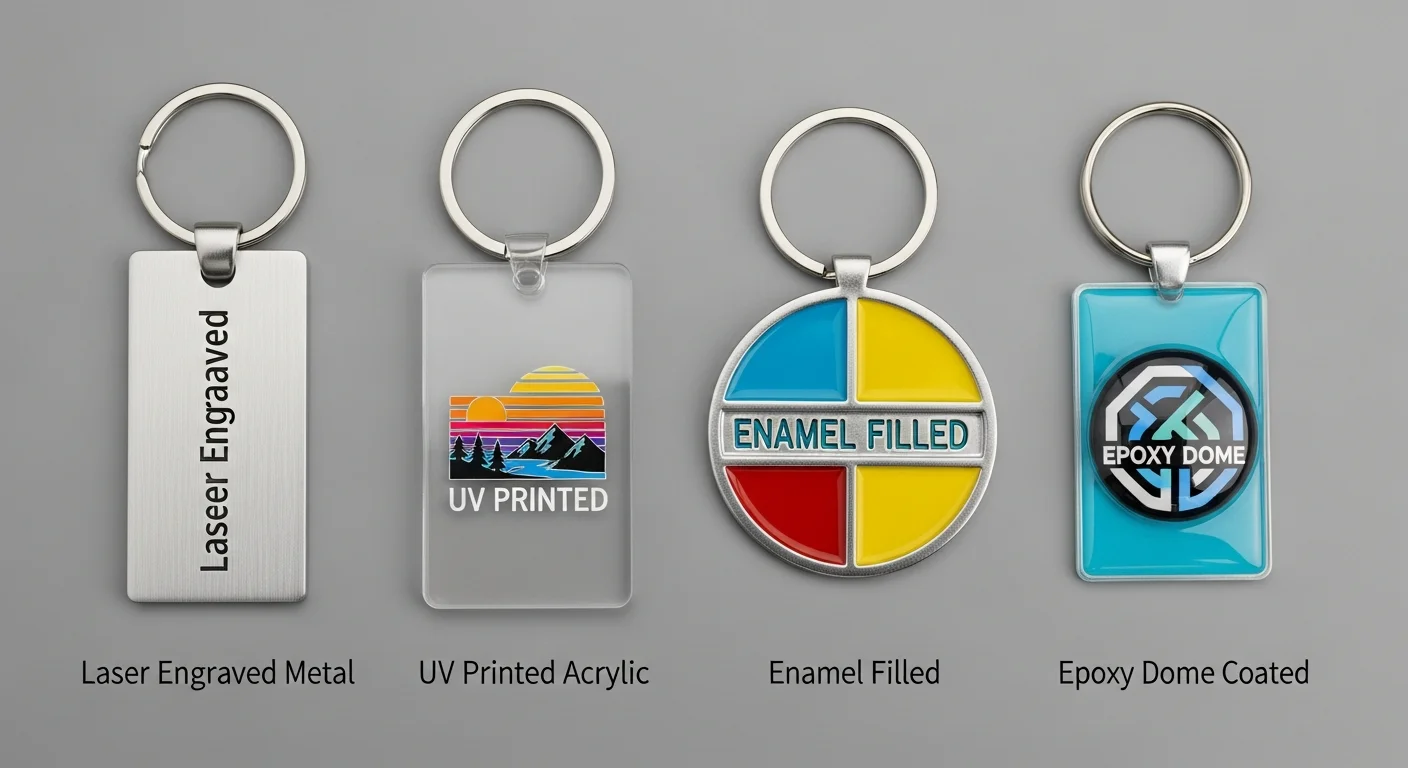
The decoration method you choose for your custom keychain determines how your design looks, how long it lasts, and how much each unit costs to produce. A beautifully designed keychain can fall flat if the wrong decoration technique is paired with the wrong material, while a simple design can look spectacular when the right method brings it to life. This guide provides a comprehensive comparison of every major keychain decoration method — from UV printing and laser engraving to soft enamel fill and epoxy dome coating — so you can match the right technique to your material, design, budget, and intended use.
Understanding decoration methods is especially important if you are producing keychains for resale, corporate branding, or high-visibility events where quality and durability are non-negotiable. A promotional keychain that fades after a month in someone's pocket reflects poorly on your brand. A premium gift keychain with a crisp, permanent engraving reinforces the perception of quality. The difference comes down to choosing the right method for the right application.
Overview of Keychain Decoration Methods
Modern keychain production offers six primary decoration techniques, each with distinct characteristics. Before diving into the details of each method, here is a high-level summary to orient your decision-making:
UV printing — Full-color, photo-quality designs applied with ultraviolet-cured inks. Best for acrylic and flat metal surfaces. Excellent color range, moderate durability.
Laser engraving — Permanent designs burned or etched into metal, leather, or wood surfaces using a focused laser beam. Monochromatic (typically silver/gray on metal, tan on leather). Maximum durability.
Enamel fill (soft and hard) — Colored enamel paint applied into recessed areas of a die-cast metal keychain. Available in a wide range of colors. Classic, premium appearance. Excellent durability.
Screen printing — Ink pushed through a stenciled mesh screen onto flat surfaces. Cost-effective for simple, one to four color designs on metal or acrylic. Moderate durability.
Debossing and embossing — Designs pressed into or raised from leather, metal, or thick material surfaces using heated dies. Tactile, elegant, and permanent. No color unless combined with foil stamping.
Epoxy dome coating — A clear resin layer applied over a printed or decorated surface, creating a raised, glossy protective dome. Adds scratch resistance and perceived value.
UV Printing: Full-Color Photo Quality
UV printing is the workhorse of the modern custom keychain industry. Using specialized inkjet technology, UV printers deposit tiny droplets of CMYK ink plus white ink onto the keychain surface, then instantly cure the ink using ultraviolet light. The result is a vibrant, full-color design with smooth gradients, photographic detail, and crisp text — all bonded directly to the material surface.
UV printing excels on flat surfaces, making it the default choice for acrylic keychains and flat metal keychains. The technology supports full-bleed printing (edge-to-edge coverage), transparent effects on clear acrylic (by selectively omitting the white ink layer), and double-sided printing with precise front-to-back alignment. Color accuracy is excellent, though it is always worth requesting a physical proof before large runs since screen colors never perfectly match printed output.
The primary limitation of UV printing is durability under extreme conditions. While UV-cured inks are resistant to normal handling, they can scratch if a keychain is carried loose in a pocket with keys and coins over extended periods. Adding an epoxy dome coating significantly extends the life of UV-printed designs. For a complete guide to designing UV-printed keychains, visit our acrylic keychain design guide.

Laser Engraving: Permanent and Premium
Laser engraving creates designs by physically removing or altering material from the keychain surface using a concentrated beam of light. The result is a permanent design that cannot be rubbed off, scratched away, or faded by UV exposure — it is literally carved into the material. This permanence makes laser engraving the gold standard for keychains intended to last a lifetime.
On metal keychains, laser engraving produces a bright, silver-toned mark against the darker metal surface. The contrast is clean and professional, making it ideal for logos, monograms, serial numbers, and text-heavy designs. Stainless steel, aluminum, brass, and zinc alloy all respond well to laser engraving, though the visual effect varies slightly between metals.
On leather keychains, laser engraving burns away the top layer of the material, revealing a lighter, contrasting color beneath. The effect is warm and organic — each piece has subtle natural variations due to the leather's grain pattern. Laser engraving on leather is fast, affordable, and produces results that improve with age as the leather develops its patina. For specific guidance on leather engraving, see our leather keychain guide.
The main limitation of laser engraving is that it is inherently monochromatic. The engraved mark is a single tone — the natural color of the exposed material. If your design requires multiple colors, laser engraving alone will not suffice. However, laser engraving can be combined with enamel fill or color printing to create multi-tonal effects on metal keychains.
Soft Enamel vs Hard Enamel Fill
Enamel fill is the traditional decoration method for die-cast metal keychains and lapel pins. The process involves pouring liquid enamel paint into recessed areas of a metal keychain that have been created by the die-casting mold. Once the enamel cures, the colors are locked into the metal framework, creating a durable, vibrant design with a distinctly classic appearance.
Soft enamel: After filling and curing, soft enamel keychains have a textured surface where you can feel the raised metal lines (die lines) separating each color. Running your finger across a soft enamel keychain, you will feel the ridges and valleys created by the metal borders and the slightly recessed enamel fill. This tactile quality is part of the appeal — soft enamel keychains have a handcrafted feel that flat-printed keychains cannot replicate. Soft enamel is less expensive than hard enamel, making it the more common choice for promotional and merchandise keychains.
Hard enamel (cloisonne): After filling, hard enamel keychains undergo an additional polishing step that grinds the enamel flush with the metal die lines, creating a perfectly smooth, flat surface. The result is a jewel-like finish with a high-end appearance that rivals fine jewelry. Hard enamel is more durable than soft enamel — the polished surface resists scratching better — but it costs twenty to forty percent more and requires longer production times. Hard enamel is the premium choice for collectible keychains, corporate gifts, and any application where the keychain will be displayed or closely inspected.

Screen Printing on Keychains
Screen printing is one of the oldest and most widely used printing techniques in the promotional products industry. The process involves pushing ink through a fine mesh screen that has been stenciled with your design, depositing a layer of ink onto the keychain surface. Each color in the design requires a separate screen, making screen printing most cost-effective for designs with one to four colors.
On metal keychains, screen printing produces clean, opaque colors with good durability. The ink sits on top of the metal surface, creating a smooth, flat design. Screen printing is commonly used for flat aluminum keychains, dog tags, and bottle opener keychains where full-color UV printing may not be available or cost-effective.
On acrylic keychains, screen printing is less common than UV printing but is still used for simple logo applications and large-volume promotional runs where the setup cost of screen printing (stencil creation) is offset by the lower per-unit ink cost at very high volumes.
The limitation of screen printing compared to UV printing is color complexity. Photographic images, gradients, and designs with more than four colors are impractical with screen printing. Each additional color adds setup time, cost, and alignment complexity. For simple, bold designs — a one-color logo, a two-color text layout — screen printing is an excellent, durable choice.

Debossing and Embossing
Debossing and embossing are pressure-based decoration techniques that reshape the material surface without adding ink, paint, or additional materials. These methods are used primarily on leather and thick metal keychains:
Debossing creates an indented impression by pressing a heated metal die into the surface. The design is recessed below the material plane, creating a subtle, elegant effect that you feel before you see. Debossing is permanent and ages beautifully on leather as the indented areas accumulate natural oils and darken differently from the surrounding surface.
Embossing creates a raised impression by pressing a die from behind the material, pushing the design upward above the surface plane. Embossing produces a more dramatic three-dimensional effect than debossing and works best on thicker materials that can hold the raised shape without distortion.
Both techniques can be enhanced with foil stamping — gold, silver, or colored foil applied during the pressing process to add color to the impressed area. The combination of physical impression and metallic foil creates a luxurious effect that is popular for premium brand keychains, wedding favors, and executive gifts.
Epoxy Dome Coating
Epoxy dome coating is not a decoration method by itself but rather a protective and aesthetic enhancement applied on top of other decoration techniques. A measured amount of clear, self-leveling epoxy resin is poured over the decorated surface of the keychain and allowed to cure into a raised, glossy dome. The dome magnifies the design beneath, making colors appear richer and details sharper, while providing a thick layer of scratch and impact protection.
Epoxy dome coating is most commonly applied to UV-printed metal and acrylic keychains, screen-printed keychains, and photo insert keychains. It is not typically used with enamel fill keychains (which already have a durable surface) or engraved keychains (where filling the engraved cavity with resin would obscure the engraving detail).
The cost of epoxy dome coating is modest — typically adding two to eight cents per keychain depending on size — and the perceived value increase is significant. A domed keychain feels more premium, catches light attractively, and lasts considerably longer under daily handling conditions than an un-coated keychain.
Which Method for Which Material
Matching the right decoration method to the right material is crucial for achieving the best results. Here is a quick reference guide for the most common pairings:
Acrylic keychains: UV printing is the dominant and recommended method. Screen printing is a secondary option for high-volume, simple designs. Epoxy dome coating is an optional enhancement for both.
Metal keychains (zinc alloy, stainless steel, aluminum): Laser engraving for permanent, monochromatic designs. Soft or hard enamel fill for multi-color die-cast designs. UV printing for full-color flat metal surfaces. Screen printing for simple logo applications. Epoxy dome as an optional enhancement.
Leather keychains: Laser engraving for precise, permanent designs. Debossing and embossing for tactile, traditional aesthetics. Foil stamping for metallic accents. Direct printing is possible but less common and less durable on leather than on acrylic or metal.
PVC/rubber keychains: Color is built into the mold — each section of the mold is filled with a different color of liquid PVC, which cures into the final design. No surface decoration is applied after molding. For an in-depth material comparison, see our keychain materials comparison.
Cost Comparison by Decoration Method
Decoration method significantly impacts your per-unit cost. Here is a relative cost ranking from lowest to highest for a standard two-inch keychain at five hundred units:
Screen printing: Lowest per-unit cost for simple designs (one to two colors). Setup cost is moderate (screen creation). Best value at very high volumes where the setup cost is amortized.
UV printing: Slightly higher than screen printing but supports unlimited colors with no additional per-color cost. No setup fee in most cases. The best value for designs with three or more colors, gradients, or photographic elements.
Laser engraving: Moderate cost with no consumable materials (no ink, no screens). The laser setup is minimal, making it cost-effective even for small quantities. Cost per unit is consistent regardless of design complexity — a detailed logo costs the same as a simple monogram.
Soft enamel fill: Higher cost due to the die-casting mold required for the metal base. Mold costs range from fifty to two hundred dollars (one-time investment). Per-unit enamel fill cost is moderate. Best value when the mold cost is spread across five hundred or more units.
Hard enamel fill: The premium option. Twenty to forty percent more expensive than soft enamel due to the additional polishing step. Justified for premium gifts, collectibles, and brand merchandise where the finish quality is a selling point.
Debossing/embossing with foil: Moderate to high cost. Requires a custom metal die (similar cost to enamel molds). Foil material adds a small per-unit cost. Best value at quantities of two hundred or more.
Durability Rankings
How long your keychain design lasts under daily use conditions is a critical factor, especially for products intended as gifts, resale items, or brand representations. Here are the decoration methods ranked by durability from most to least durable:
1. Laser engraving: The most durable method by a significant margin. The design is physically carved into the material and cannot be removed by scratching, rubbing, or chemical exposure. Laser engravings on stainless steel keychains will outlast the keychain hardware itself.
2. Hard enamel fill: Extremely durable. The polished enamel surface resists scratching and chipping. Hard enamel keychains from decades ago remain in excellent condition, attesting to the longevity of this technique.
3. Soft enamel fill: Very durable, though the recessed enamel can chip if subjected to sharp impacts. The raised metal die lines protect the enamel from most surface abrasion.
4. Debossing/embossing: Permanent impression that cannot wear off. The design becomes more pronounced over time on leather as the material ages. On metal, the impression is permanent and unaffected by handling.
5. UV printing with epoxy dome: Good durability. The epoxy dome protects the UV print from scratching and UV fade. Expected lifespan of three to five years under daily use conditions.
6. UV printing (without epoxy): Moderate durability. UV-cured inks bond well to acrylic and metal surfaces but can show wear after one to two years of heavy daily handling, particularly on edges and high-contact areas.
7. Screen printing: Moderate durability on metal, lower on acrylic. Screen print inks are thicker than UV inks and can chip or peel at edges over time, particularly if the keychain is subjected to friction or moisture.

Choosing the right decoration method is one of the most impactful decisions in the custom keychain design process. By matching the method to your material, budget, and intended use, you ensure that your finished keychains look professional, last as long as they need to, and deliver the brand impression or gift experience you are aiming for. Browse our full range of custom keychain options to explore materials and decoration methods, or head to our design tool to start building your custom keychain now.
Share this article
Written by
Terrence Okafor
Head of Production at RareCustom. Terrence compares UV printing, laser engraving, enamel fill, and epoxy dome coating methods to help customers choose the best keychain decoration.