Custom Band Merch T-Shirts: Concert, Tour, and Festival Merchandise That Sells
Create custom band merch t-shirts for concerts, tours, and festivals. Design tips, pricing strategies, shirt quality selection, and selling at shows vs online.
Tony Vu
Founder & President of RareCustom. Tony has partnered with independent musicians and bands to create tour merchandise, bringing production expertise and competitive pricing to the music merch industry.
For musicians and bands at every level, from garage bands playing their first local show to touring acts filling theaters and arenas, custom band merch t-shirts represent one of the most important revenue streams and marketing tools available. A well-designed band shirt does triple duty: it generates direct income at shows and online, it transforms fans into walking billboards who advertise your music everywhere they go, and it creates a tangible emotional connection between the artist and the listener that streaming platforms simply cannot replicate.
The band merch t-shirt has been a cornerstone of music culture for decades. From the iconic Rolling Stones tongue to Nirvana's smiley face to the Ramones presidential seal, band shirts have transcended their origins as concert souvenirs to become some of the most recognizable and enduring pieces of graphic design in history. Today, whether you play punk, country, hip-hop, electronic, or folk, custom t-shirts remain the single most important merch item for building your brand and connecting with your audience.
Why Band Merch Matters More Than Ever
In the streaming era, band merchandise has become increasingly critical to artist revenue. While streaming platforms pay fractions of a cent per play, a single t-shirt sale can generate ten to twenty dollars in profit. For independent and mid-level artists, merch sales at shows often generate more income than the performance fee itself. This economic reality makes band merch not just important but essential for sustainable music careers.
Beyond revenue, band merch creates physical artifacts in an increasingly digital world. Fans who own a band t-shirt feel a deeper connection to the music than those who only listen through streaming platforms. The shirt becomes a personal statement, a signal to other fans, and a tangible reminder of a live experience. In an era where music is often consumed passively, concert t-shirt designs demand active engagement and loyalty from fans.
Band shirts also serve as organic marketing. Every fan wearing your shirt in public exposes your band's name, imagery, and identity to potential new listeners. Unlike paid advertising that disappears when the budget runs out, a durable, well-designed band shirt continues advertising your music for years. The return on investment from a single shirt sale extends far beyond the immediate profit margin.
Social media has amplified the marketing power of band merch exponentially. Fans regularly post photos wearing their favorite band shirts, tagging the artist and exposing the merch to their entire network. This user-generated content is more authentic and persuasive than any ad campaign, and it costs the artist nothing beyond the initial design and production investment. A shirt that photographs well and sparks conversation becomes a viral marketing asset.
Tour Shirt Design Essentials
The tour t-shirt is the flagship of any band's merchandise line, and its design requires careful attention to multiple elements that work together to create a collectible, visually striking, and commercially successful product. Tour shirts carry specific design conventions that fans expect, and understanding these conventions helps you create shirts that feel authentic and desirable.
The front of a tour shirt typically features the band's name or logo prominently, often combined with a graphic illustration that captures the tour's visual identity. This front design should work as a standalone piece of graphic art that looks compelling even to someone unfamiliar with the band. Bold, high-contrast designs photograph well in concert lighting and across social media platforms, where merch visibility drives impulse purchases.
Front Design Composition
The most effective front designs balance the band name with visual imagery. The band name or logo should be immediately legible, even from across a crowded venue. Supporting graphics can be intricate and detailed, but the band name needs to read clearly at a glance. Consider how the design will look under stage lighting, in flash photography, and in dimly lit venue settings where most concert photos are taken.
Design style should align with the band's genre and visual identity. Heavy metal and punk bands typically gravitate toward dark, aggressive imagery with bold typography. Indie and folk acts often favor minimalist, hand-drawn aesthetics with earthy color palettes. Electronic and hip-hop artists frequently embrace bold geometric patterns and contemporary design trends. Your shirt design should feel like a natural extension of your album artwork and stage presence.
Concert Venue Merch Strategies
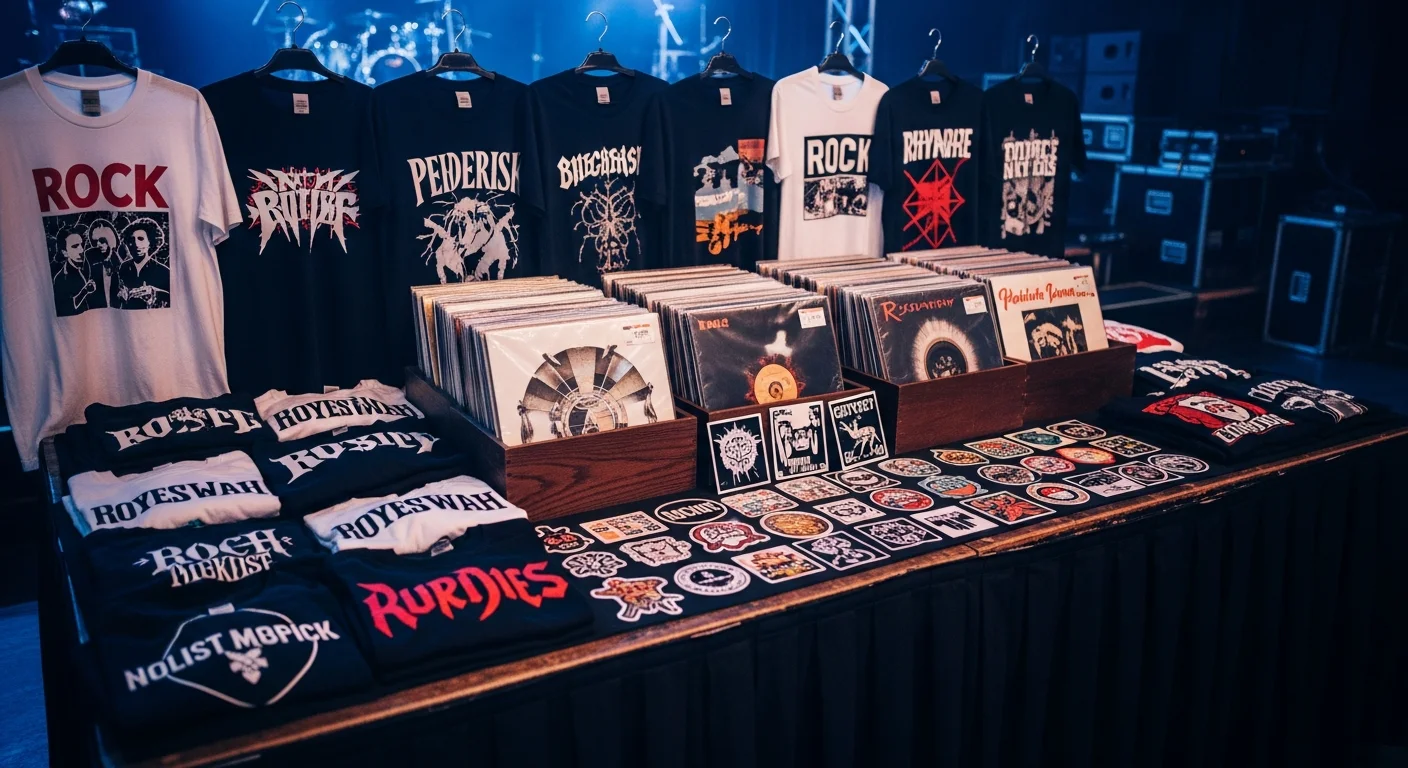
Selling concert merchandise successfully requires understanding the unique dynamics of the live music environment. The merch table is not a traditional retail setting. Fans are excited, often impatient, and making purchasing decisions in seconds rather than minutes. Your merch display, pricing, payment options, and staffing all impact how many shirts you move per show.
Display visibility is paramount. Your merch table should be positioned where fans naturally congregate before and after the show. If venue placement is not in your control, make your display as eye-catching as possible with well-lit product samples, clear pricing signage, and a banner or backdrop featuring your band imagery. Fans who can see the merch table from across the room are more likely to visit than those who have to search for it.
Having multiple size options readily accessible in organized bins or stacks speeds up transactions. The longer a fan waits in line, the more likely they are to abandon the purchase. Pre-sort shirts by size with clear labels, and have your most popular sizes, typically Medium, Large, and XL, in the most accessible positions. Staff your table with someone who can process sales quickly and knows the inventory well.
Accept multiple payment methods. Cash-only merch tables lose significant sales to fans who do not carry physical currency. Mobile payment processors like Square, Stripe, or PayPal Here allow you to accept credit cards and mobile payments with minimal setup and reasonable processing fees. The investment in card processing equipment pays for itself many times over in captured sales that would otherwise be lost.
Festival Merchandise Ideas
Music festival shirts present unique opportunities and challenges compared to standard concert merch. Festivals attract diverse audiences who may not be familiar with your band, making your merch table a potential introduction rather than a loyalty purchase. Festival shirt designs need to work as standalone pieces of art that appeal to a broader audience beyond dedicated fans.
Festival-specific editions create urgency and exclusivity. A shirt design available only at a particular festival becomes a collector's item for attendees and a conversation piece among fans who discover the band later. Include the festival name, date, and location on the shirt to maximize its commemorative value and differentiate it from your standard tour merchandise.
Consider the festival environment when designing shirts. Outdoor festivals in hot weather favor lighter fabrics and colors that do not absorb as much heat. Tank tops and crop tops may outsell standard t-shirts at summer festivals. Bold, colorful designs stand out in the visual noise of a festival environment, where your merch is competing with dozens of other bands' offerings for attention and wallet share.
Festival merch pricing should account for the competitive landscape. Unlike a headlining show where you are the primary artist, festival settings mean fans are dividing their merch budget across multiple bands. Offering a festival-exclusive shirt at a slightly lower price point than your standard tour merch can increase unit sales while still generating healthy margins. Bundle deals, like two shirts for a discounted price, encourage larger purchases.
Vintage and Retro Band Shirt Aesthetics

The vintage band shirt aesthetic has dominated music merch trends for the past decade, and its popularity shows no signs of fading. Distressed graphics, faded color palettes, retro typography, and intentionally worn-looking prints create shirts that feel like treasured vintage finds even when they are brand new. This aesthetic appeals to fans who value authenticity and the cultural cachet associated with vintage rock tees.
Achieving an authentic vintage look involves several design techniques. Using slightly muted, desaturated colors instead of bright, saturated hues creates the impression of faded fabric. Adding subtle texture overlays that simulate print wear gives fresh designs the character of well-loved vintage shirts. Distressed edges around text and graphics, created digitally through texture masks, mimic the natural degradation of decades-old screen prints.
Typography plays a crucial role in vintage authenticity. Fonts that evoke specific eras, such as groovy seventies scripts, bold eighties block letters, or grunge-era handwritten styles, immediately establish the design's temporal context. Combining era-appropriate fonts with complementary graphic styles creates a cohesive vintage aesthetic that feels genuine rather than artificially aged. Our design trends guide covers current aesthetic movements including the vintage revival.
Shirt color selection reinforces the vintage effect. Worn-in colors like heather gray, washed black, vintage navy, and faded olive create a softer, more authentic canvas for vintage-style designs than bright whites or deep blacks. Many blank shirt manufacturers offer "vintage" or "washed" color options specifically designed to complement retro graphic treatments.
Front Artwork Concepts
The front artwork of a band shirt is the centerpiece of the entire design and often the deciding factor in whether a fan reaches for their wallet. Successful front designs combine the band's visual identity with artistic execution that makes the shirt desirable as both a fan item and a piece of fashion. The best band shirts are worn by people who may not even listen to the music because the design is that compelling.
Illustration-based front designs offer the most creative freedom and typically generate the most excitement among fans. Custom illustrations that capture the band's thematic essence, whether dark and brooding, whimsical and colorful, or edgy and provocative, create unique visual statements that differentiate your merch from every other band at the festival or on the tour circuit.
Photography-based front designs work well for artists with strong visual brands. High-contrast black-and-white band photos, stylized concert photography, and artistic portrait treatments all translate well to t-shirt printing. DTG printing technology has made photographic t-shirt designs more accessible and affordable than ever, enabling full-color photographic prints at quantities as low as a single unit.
Typographic front designs strip the concept down to its most essential element: the band's name. When executed well, a purely typographic front design can be as impactful as any illustration. The key is choosing or creating custom lettering that captures the band's personality in its letterforms. Custom hand-lettered logos, modified display fonts, and creative typography treatments create distinctive word marks that become synonymous with the band itself. Explore font options in our font guide for custom designs.
Back Design: Tour Dates Layout
The back of a tour shirt traditionally features a list of tour dates, venues, and cities. This convention serves both practical and sentimental purposes: it documents the tour for historical reference and allows fans to find their specific show on the shirt, creating a personal connection to the garment. The tour dates layout has become such a recognized format that it is virtually synonymous with concert merchandise.
Standard tour date formatting lists each date followed by the city and venue name, arranged vertically in chronological order. Consistent alignment, typically left-aligned or centered, creates a clean, scannable list that fans can quickly browse to find their show. Font size should be large enough to read but small enough to fit the complete tour schedule within the available print area.
Creative Tour Date Layouts
While the traditional vertical list remains the most common approach, creative alternatives can differentiate your merch from the standard format. Map-based layouts that plot tour stops geographically, circular or spiral arrangements that create visual interest, and stylized layouts that integrate tour dates into larger graphic compositions all offer fresh takes on the conventional format.
Highlighting specific shows within the tour date list creates personalized appeal. Bolding, color-coding, or marking sold-out shows, hometown performances, or the specific show where the shirt was purchased gives fans a reason to examine the back closely and find their personal connection to the tour. Some bands even create venue-specific back designs available only at each individual show, creating extreme collectibility.
Pricing Band Merch for Maximum Profit
Pricing band merchandise correctly balances accessibility for fans with profitability for the artist. Price too high and you alienate fans who want to support you but cannot afford luxury pricing. Price too low and you leave money on the table, undervalue your brand, and may even signal low quality to potential buyers. The sweet spot depends on your audience, venue, and production costs.
| Shirt Type | Production Cost | Suggested Retail | Profit Margin |
|---|---|---|---|
| Standard Tour Tee | $6-10 | $25-35 | 65-75% |
| Premium/Limited Edition | $10-15 | $35-50 | 65-70% |
| Festival Exclusive | $7-12 | $30-40 | 60-70% |
| Vintage/Distressed | $8-14 | $30-45 | 60-70% |
| Basic Logo Tee | $5-8 | $20-25 | 65-70% |
Research what comparable acts in your genre charge for merch and position your pricing relative to your scene peers. Fans have genre-specific price expectations. Punk and indie scenes traditionally favor lower merch prices, while electronic, pop, and arena-level rock acts command higher price points. Aligning with genre expectations prevents sticker shock at the merch table.
Offer multiple price points to capture different segments of your fan base. A basic logo tee at twenty dollars, a standard tour shirt at thirty dollars, and a limited-edition premium design at forty to fifty dollars gives fans options that match their budget and enthusiasm level. This tiered approach maximizes total merch revenue by converting fans at every price sensitivity level. For comprehensive pricing strategies, review our pricing and cost savings guide.
Bundle pricing encourages larger purchases. "Any two shirts for fifty dollars" or "shirt plus poster for thirty-five dollars" incentivize fans to buy more than they originally intended, increasing your average transaction value. Bundles work especially well at headlining shows where fans are committed enough to want multiple items.
Choosing Shirt Quality and Blank Selection
The blank shirt you choose for band merch communicates as much about your brand as the design printed on it. Fans notice shirt quality immediately, and a thin, scratchy, poorly fitting blank can undermine even the most stunning graphic design. Investing in quality blanks demonstrates respect for your fans and builds positive brand associations that encourage repeat purchases.
Popular premium blank brands for band merch include Bella+Canvas, Next Level, and Comfort Colors. These brands offer soft, well-constructed shirts with modern fits that fans genuinely enjoy wearing. Bella+Canvas 3001 and Next Level 3600 are industry-standard choices that balance quality and cost effectively. Comfort Colors garment-dyed blanks are particularly popular for vintage and indie aesthetics due to their pre-washed, lived-in feel.
Fit matters enormously for band shirt sales. Oversized, boxy blanks that were standard in the nineties and two-thousands have largely given way to slimmer, more modern silhouettes. Offering both standard unisex and fitted options accommodates the broadest range of body types and preferences. Including a size chart at your merch table or online store reduces returns and exchanges while increasing customer satisfaction. Our size guide helps you select the right fits for your audience.
Fabric weight affects both comfort and perceived value. Mid-weight shirts in the 4.2 to 5.3 ounce range offer the best balance of durability and comfort for most climates. Lighter weight shirts around 3.5 to 4.0 ounces feel more premium and drape better but may not hold up to heavy touring use. Heavier weight shirts above 5.5 ounces feel substantial but can be uncomfortably warm in venue settings. Match your fabric weight to your audience's expectations and the typical venues where your merch will be sold.
Selling at Shows vs Online
Most successful bands sell band merch through both live show sales and online stores, and each channel has distinct advantages and strategies. Understanding the differences helps you optimize your approach for maximum revenue across both platforms and avoid common mistakes that leave money on the table.
Live show sales benefit from the emotional peak of the concert experience. Fans who just experienced an incredible performance are in a heightened emotional state that makes them more likely to purchase merchandise as a tangible connection to that experience. The immediacy of live sales, where fans can see, touch, and try on products, eliminates the uncertainty that reduces online conversion rates. The challenge is having adequate inventory, efficient transaction processing, and visible display positioning.
Online sales provide consistent, passive revenue between tours and reach fans who could not attend live shows. An online merch store extends your sales window from a few hours per show to twenty-four hours a day, three hundred sixty-five days a year. Online stores also enable you to offer a wider range of designs, sizes, and products without the logistical constraints of transporting inventory to every show. Pair your band tees with complementary items like custom hoodies and custom hats in your online store.
Print-on-demand services like those offered through custom t-shirts platforms eliminate the upfront investment and inventory risk of online merch sales. Instead of ordering hundreds of shirts in advance and hoping they sell, print-on-demand produces each shirt as it is ordered. This model is ideal for bands that want to offer online merch without tying up capital in unsold inventory or managing shipping logistics.
The most effective strategy combines both channels. Use live shows to sell exclusive designs and create urgency through limited quantities, while maintaining an online store with your core merchandise line available year-round. Promote your online store at shows, and promote upcoming shows through your online store, creating a feedback loop that strengthens both channels.
Limited Edition Drops and Exclusivity
Limited edition band merch creates urgency and collector value that drives sales and builds fan engagement. By limiting the quantity of specific designs, you transform a t-shirt from a commodity into a collectible. Fans who know a design is limited feel motivated to purchase immediately rather than deliberating, and those who secure a limited-edition piece feel a sense of exclusivity that deepens their connection to the band.
Numbered editions, where each shirt is physically marked with its number in the run, such as "47 of 200," maximize perceived exclusivity. This numbering transforms a t-shirt into a documented artifact, and lower numbers tend to carry extra cachet among collectors. The effort involved in numbering editions also communicates that the band values quality and craftsmanship over mass production.
Timed drops, where a design is available for purchase only during a specific window, create urgency without the inventory risk of limited-quantity runs. Announcing a forty-eight-hour or one-week sale window for an exclusive design generates concentrated demand and social media buzz. All shirts ordered during the window are produced and shipped, meaning you never under-order or over-order.
Seasonal and event-specific limited editions align drops with natural marketing moments. A Halloween-themed design available only during October, a tour-launch exclusive, or a design commemorating a specific milestone creates contextual relevance that makes the purchase feel timely and special. Planning your limited-edition calendar in advance allows you to build anticipation and market each drop effectively.
Designing for Different Music Genres

Genre-specific merch design acknowledges that visual aesthetics in music are deeply tied to genre identity. Metal fans expect different design sensibilities than indie folk listeners, and hip-hop fans gravitate toward different aesthetics than country fans. Aligning your merch design with genre visual conventions ensures your shirts feel authentic within your musical community while still expressing your unique artistic identity.
Heavy metal and hard rock merch typically features dark backgrounds, intricate illustration work, gothic or blackletter typography, and imagery drawn from horror, mythology, and the macabre. These designs often use single-color or two-color palettes on black shirts, creating dramatic contrast and bold visual impact. Screen printing is the traditional and often preferred method for metal merch due to its bold, opaque ink coverage.
Indie and alternative rock merch embraces a broader design spectrum, from minimalist typography on neutral tones to psychedelic illustrations on tie-dye blanks. The indie aesthetic often values understated design, unexpected color choices, and artistic references that signal cultural literacy. Comfort Colors blanks in muted, washed tones are particularly popular in the indie merch space for their lived-in aesthetic.
Hip-hop and R&B merch frequently draws from streetwear and fashion-forward design sensibilities. Bold branding, oversized graphics, premium blank shirts, and limited-edition drops align with the streetwear culture that overlaps significantly with hip-hop audiences. These merch designs often incorporate fashion elements like specific fits, branded labels, and premium packaging that position the shirts as fashion items rather than traditional concert souvenirs. For starting a merch brand beyond basic concert sales, our t-shirt business guide provides comprehensive launch strategies.
Country and Americana merch tends toward warm, earthy aesthetics with vintage typography, Americana imagery, and designs that evoke craftsmanship and authenticity. Neutral and warm color palettes, weathered textures, and hand-drawn or hand-lettered elements create designs that feel personal and artisan rather than mass-produced. These designs connect with country audiences who value tradition, storytelling, and genuine artistic expression.
Frequently Asked Questions
How many band t-shirt designs should I bring on tour?
Most touring bands carry three to five designs per tour. This typically includes a primary tour shirt, a basic logo tee, one or two alternative designs, and potentially a limited-edition or venue-specific option. More designs require more inventory investment and table space, so start with fewer options and expand based on demand patterns you observe during the tour.
What printing method is best for band merch?
Screen printing is the traditional and most cost-effective choice for band merch, especially at quantities of fifty or more per design. It offers excellent durability, vibrant colors, and a classic feel that fans expect. DTG is better for complex, multi-color designs or small runs. Sublimation works for all-over prints on polyester shirts. The right method depends on your design complexity, budget, and order quantities.
How should I price my band t-shirts?
Standard band t-shirts typically retail between twenty-five and thirty-five dollars at shows, with production costs between six and twelve dollars per unit. Limited editions and premium blanks command thirty-five to fifty dollars. Research pricing at comparable shows in your genre and market to set competitive prices. Aim for a sixty to seventy-five percent profit margin on standard designs.
Can I sell band merch online without holding inventory?
Yes, print-on-demand services allow you to sell band merch online without upfront inventory investment. Your designs are printed and shipped individually as orders come in. While per-unit costs are higher than bulk ordering, the elimination of inventory risk and upfront capital makes this model ideal for bands between tours or testing new designs.
How do I create a band shirt design on a budget?
Start with free design tools like Canva or Inkscape. Use bold typography-based designs that do not require custom illustration. Limit your color palette to reduce screen printing costs. Choose mid-range blank shirts that balance quality and affordability. Design a single versatile shirt rather than multiple complex designs. Our Canva design tutorial walks through creating professional artwork at no cost.
Turn Your Music Into Wearable Art
Custom band merch t-shirts are more than merchandise. They are artifacts of musical culture, revenue engines for independent artists, and walking advertisements that introduce new listeners to your music every day. Whether you are designing your first tour shirt or refreshing an established merch line, investing in quality design, smart pricing, and strategic distribution pays dividends that extend far beyond the merch table.
Ready to create merch that sells? Explore our custom t-shirts platform for quality blanks, professional printing, and flexible order quantities perfect for bands at every level. Use our design studio to upload artwork and preview your designs on real shirt mockups. Visit how it works for a step-by-step walkthrough from design upload to delivery, and start turning your fans into brand ambassadors with merch they will wear for years.
Related Articles
Share this article
Written by
Tony Vu
Founder & President of RareCustom. Tony has partnered with independent musicians and bands to create tour merchandise, bringing production expertise and competitive pricing to the music merch industry.