How to Start a T-Shirt Business in 2026: Complete Print-on-Demand Guide
Learn how to launch a profitable t-shirt business using print-on-demand. Niche selection, design sourcing, pricing strategy, marketing, and fulfillment explained step by step.
Marcus Chen
E-Commerce Growth & Merchandising Lead at RareCustom. MBA from Wharton, former Shopify strategist. Marcus has helped 200+ merchants launch custom merchandise lines and specializes in business strategy, bulk ordering, and fundraising programs.

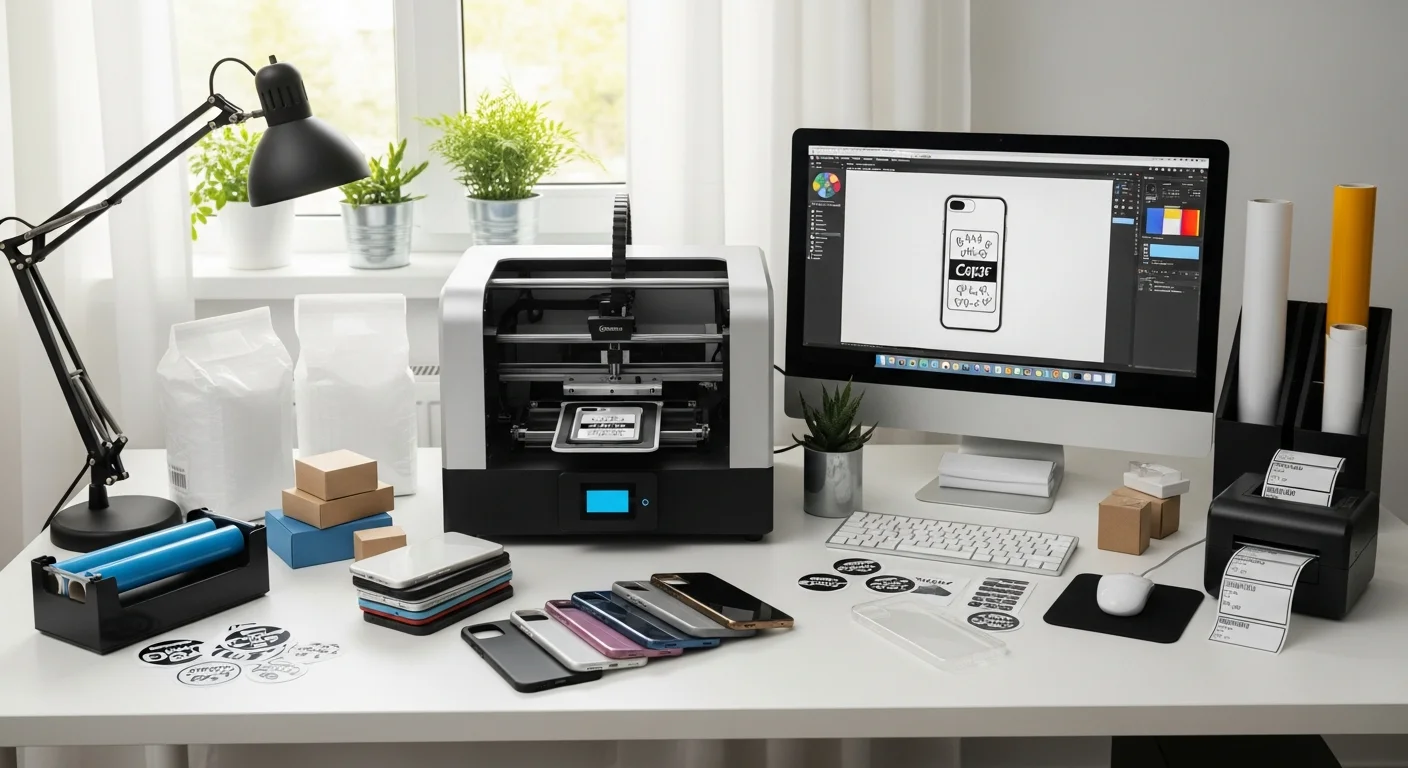
The custom t-shirt industry continues to grow, and 2026 is shaping up to be one of the best years to launch a print-on-demand business. Low startup costs, zero inventory risk, and an expanding market of consumers who crave personalization make the POD business model one of the most accessible paths to entrepreneurship. Whether you are looking for a profitable side hustle or planning to build a scalable business, this guide walks you through every step from niche selection to your first sale and beyond.
A print-on-demand business lets you sell custom t-shirts without buying inventory upfront. When a customer places an order, your production partner prints and ships the shirt directly to the buyer. You focus on designs, marketing, and customer experience while the fulfillment process runs in the background. This dropshipping model eliminates the traditional barriers to starting a custom t-shirt business: no warehouse, no upfront investment in stock, and no unsold inventory gathering dust.
Why 2026 Is a Great Time to Start
Several converging trends make 2026 an ideal year to launch an online t-shirt store. The global custom apparel market is projected to exceed $10 billion, driven by consumer demand for personalization, self-expression, and niche identity. People want shirts that reflect their hobbies, beliefs, professions, and sense of humor, and they are willing to pay a premium for designs that speak directly to them.
Technology has dramatically lowered the barriers to entry. Free or low-cost e-commerce store platforms make setting up a professional online store possible in an afternoon. Social media marketing tools let you reach your target audience with precision targeting that was previously available only to large brands with massive budgets. And print-on-demand fulfillment services have matured to offer fast turnaround, high-quality printing, and reliable shipping at competitive prices.
Personalization trends continue to accelerate. Consumers are moving away from mass-market fashion toward items that feel unique and meaningful. A niche market t-shirt that speaks to rock-climbing enthusiasts, plant parents, or retired teachers has a built-in audience of passionate buyers who will share your designs organically within their communities.
Sustainable brands are also gaining traction. Print-on-demand is inherently more sustainable than traditional retail because shirts are produced only when ordered, eliminating waste from overproduction. Positioning your brand around sustainability resonates with environmentally conscious consumers who prefer to support businesses aligned with their values.
Step 1 - Choose Your Niche

Niche selection is the single most important decision you will make when starting a t-shirt business. A broad, unfocused store selling generic designs to everyone will struggle to compete with established brands. A tightly focused store serving a specific target audience with designs that resonate deeply will build a loyal customer base quickly.
Start by identifying communities and interests you are genuinely passionate about or knowledgeable in. Your niche market could be based on a profession (nurses, teachers, firefighters), a hobby (fishing, yoga, gaming), a life stage (new parents, retirees, college freshmen), or a cause (mental health awareness, environmental activism, animal rescue). The more specific, the better. "Dog lovers" is a broad niche. "Goldendoodle owners who hike" is a niche with a passionate, identifiable audience.
Validate your niche before investing time in designs. Use keyword research tools to check search volume for niche-specific terms. Browse social media groups and forums to gauge community size and engagement. Look at competitors already selling to this audience and identify gaps in their offerings that you can fill. A viable niche has an active community, searchable intent, and room for differentiation.
Avoid niches that are overly saturated unless you have a genuinely unique angle. "Funny t-shirts" is one of the most competitive spaces in custom apparel. "Funny t-shirts for accountants" narrows the field dramatically and lets you craft humor that accountants specifically appreciate, creating a product that feels made just for them.
Consider niches with built-in gifting potential. Profession-based shirts, hobby-specific designs, and milestone-celebration tees are frequently purchased as gifts, expanding your customer base beyond the niche community itself. A nurse's spouse searching for "gifts for nurses" is just as valuable a customer as the nurse buying for themselves.
Step 2 - Source or Create Your Designs
Your designs are the product. In a custom t-shirt business, the shirt itself is a commodity. What customers are buying is the design, the message, and the connection it creates. Investing in quality custom designs is the foundation of a successful brand.
If you have graphic design skills, creating your own designs gives you complete creative control and eliminates ongoing design costs. Tools like Adobe Illustrator, Canva Pro, and Procreate enable designers of all skill levels to create professional graphic designs suitable for printing. Focus on clean lines, readable typography, and designs that work at t-shirt scale. For typography guidance, our guide on the best fonts for t-shirt designs is an essential resource.
If design is not your strength, hire freelance designers through platforms like Fiverr, Upwork, or 99designs. Brief your designers clearly with reference images, color preferences, and the emotional tone you want to convey. Budget between $20 and $100 per design depending on complexity, and always ensure you receive commercial usage rights for every design you purchase.
T-shirt templates and design marketplaces offer another route. Sites like Creative Market and Design Bundles sell pre-made designs and graphic elements that you can customize for your niche. This approach is faster and cheaper than custom design but requires careful modification to ensure your shirts feel unique rather than generic.
Regardless of how you source designs, create product mockups for every listing. Mockup generators show your design on realistic shirt images without needing physical samples. High-quality mockups are essential for product listings, social media posts, and advertising. They help customers visualize the finished product and significantly increase conversion rates.
Step 3 - Choose Your Production Partner
Your production partner is the engine of your POD business model. They print your designs on blank shirts and ship them directly to your customers under your brand. Choosing the right partner affects print quality, turnaround time, shipping speed, and ultimately customer satisfaction.
Evaluate potential partners on several criteria. Print quality should be your top priority. Order samples from multiple providers and compare color accuracy, detail sharpness, and print durability after washing. A beautiful mockup means nothing if the physical product disappoints customers. Read our comprehensive comparison of screen printing vs DTG printing to understand how different methods affect quality and cost.
Turnaround time and shipping speed directly impact customer satisfaction. Most POD providers produce shirts within two to five business days. Combined with standard shipping, customers typically receive their orders within one to two weeks. Fast turnaround and reliable delivery build trust and reduce support requests from customers wondering where their order is.
Product selection matters. Your production partner should offer a range of blank shirt brands, styles, and sizes that align with your target audience's expectations. If your niche values premium feel, your partner needs to offer Bella+Canvas, Comfort Colors, or similar mid-to-premium blanks. If your niche is price-sensitive, access to quality economy blanks like Gildan is essential.
Integration capabilities determine how smoothly orders flow from your online t-shirt store to production. The best partners integrate directly with major e-commerce platforms, automatically receiving orders and uploading tracking information without manual intervention. This automation is critical as your business scales beyond a handful of daily orders.
Step 4 - Set Up Your Online Store

Your e-commerce store is your digital storefront. It needs to look professional, load quickly, and make the purchasing process effortless. Several platforms cater specifically to apparel sellers, each with different strengths.
Shopify is the most popular platform for custom t-shirt businesses due to its extensive app ecosystem, POD integrations, and user-friendly interface. Monthly costs start at around $30, with additional fees for premium themes and apps. Shopify handles payment processing, inventory management, and basic SEO optimization out of the box.
Etsy provides access to a massive built-in marketplace of buyers actively searching for custom and unique products. The platform charges listing fees and transaction fees, but the organic traffic can be significant for niche products. Many successful t-shirt sellers use Etsy as a secondary sales channel alongside their primary Shopify store.
WooCommerce on WordPress offers maximum flexibility for technically inclined sellers. It is free to use with self-hosted WordPress, though hosting, themes, and plugins add costs. WooCommerce gives you complete control over your store's design, functionality, and SEO optimization, making it ideal for sellers who want to build a fully custom brand experience.
Regardless of platform, invest time in professional product photography using mockup generators, compelling product descriptions that speak to your niche audience, and a clean, trustworthy store design. First impressions matter enormously in e-commerce, and a polished store converts significantly better than a hastily assembled one.
Step 5 - Price Your Products for Profit

Pricing strategy determines whether your t-shirt business is profitable or just a hobby. Too high and you scare away customers. Too low and you work for free. The right price balances competitiveness with healthy profit margins that sustain and grow your business.
Start with your total cost per shirt. This includes the blank shirt cost, printing cost, platform fees, payment processing fees (typically 2.9% plus $0.30 per transaction), and any shipping costs you absorb. Add these up to establish your cost floor. You must price above this number to make any profit at all.
Apply a markup that reflects your market positioning. Most successful t-shirt businesses operate with profit margins between 30% and 60% per shirt. Niche designs that serve passionate communities can command higher margins because customers perceive them as unique and valuable. Generic designs in competitive markets require lower margins to compete on price.
Research competitor pricing in your niche to ensure your prices are reasonable. If similar shirts sell for $25 to $35, pricing yours at $45 requires a strong value proposition to justify the premium. If competitors charge $30 and your cost per shirt is $15, a retail price of $28 to $32 keeps you competitive while delivering a solid profit margin. For a complete understanding of cost components, check our detailed guide on custom t-shirt pricing.
Consider offering bundle pricing where customers save by buying multiple shirts. "Buy 2, Get 10% Off" or "3 for $60" incentives increase average order value while moving more inventory. Bundle pricing is especially effective for niche brands where customers want to collect multiple designs within the same theme.
Step 6 - Create Compelling Product Listings
Your product listings are your sales team. Each listing needs to convince a potential customer to click "Add to Cart" using nothing but images, words, and social proof. Great listings combine high-quality mockups, benefit-driven descriptions, and strategic keyword placement.
Product titles should include your primary keyword and a compelling descriptor. "Funny Nurse T-Shirt - Night Shift Survival Club" is more searchable and more clickable than "Custom Shirt Design #47." Think about what your target audience would type into a search bar and incorporate those terms naturally.
Product descriptions should sell the experience, not just the specifications. Instead of "100% cotton, crew neck, printed with DTG technology," try "Soft enough for 12-hour shifts, funny enough to make the break room laugh. This premium cotton tee is printed with fade-resistant ink that survives the washing machine as well as you survive Monday mornings." Speak your audience's language and address their desires.
Include practical details like sizing information, care instructions, and shipping timelines lower in the description. Customers want emotional connection first and logistics second. Link to your size guide and care information to reduce returns and build confidence in the purchase. Following our beginner design guide helps ensure your listings showcase designs at their best.
Use all available image slots. Show the shirt from multiple angles, on different body types if possible, and in lifestyle settings that reflect how your target audience would wear it. Mockup generators make this easy without requiring physical inventory or professional photography.
Step 7 - Market Your T-Shirt Business

Marketing is where most new t-shirt businesses either thrive or stall. The best designs in the world mean nothing if nobody sees them. A multi-channel marketing strategy that combines organic content, paid advertising, and community engagement drives consistent traffic to your store.
Social media marketing is the most cost-effective channel for new t-shirt brands. Instagram and TikTok are visual platforms where apparel content performs naturally. Post lifestyle photos, behind-the-scenes design process videos, customer photos, and niche-specific content that your target audience finds entertaining or valuable. Consistency matters more than perfection. Posting three to five times per week keeps your brand visible and the algorithm favorable.
Pinterest is an underrated goldmine for t-shirt businesses. Users come to Pinterest with purchase intent, searching for gift ideas, event planning inspiration, and niche-specific products. Pin your product mockups with keyword-rich descriptions and link directly to your product pages. Pinterest content has a significantly longer shelf life than Instagram or TikTok posts, generating traffic for months or even years.
SEO optimization for your store and individual product pages drives organic traffic from search engines. Target long-tail keywords that your niche audience searches for, such as "funny camping t-shirt for dad" or "veterinarian graduation gift shirt." Optimize product titles, descriptions, image alt text, and meta descriptions for these terms. Organic search traffic is free and compounds over time as your store's authority grows.
Paid advertising on Facebook and Instagram allows precise targeting by interest, demographic, and behavior. Start with a small daily budget ($5 to $10) and test multiple ad variations to find what resonates. Once you identify a winning ad, gradually increase the budget to scale. The key metric is return on ad spend (ROAS). Aim for at least a 3:1 ratio, meaning every dollar spent generates three dollars in revenue.
Step 8 - Fulfill and Ship Orders

The fulfillment process is where your production partner earns their keep. In a well-configured POD business model, order fulfillment is almost entirely automated. A customer places an order on your store, the order data is transmitted to your production partner, they print and ship the shirt, and tracking information is uploaded back to your store and shared with the customer.
Monitoring fulfillment quality is your ongoing responsibility. Periodically order samples from your own store to verify print quality, packaging presentation, and delivery timelines. If quality slips, address it with your partner immediately or consider switching providers. Your customers hold you responsible for the product, regardless of who physically printed and shipped it.
Shipping communication is a critical touchpoint in the customer experience. Ensure your store sends automated emails at key stages: order confirmation, production started, shipped with tracking number, and delivered. These updates reduce "where is my order" support inquiries and demonstrate professionalism that builds trust and encourages repeat purchases.
Returns and exchanges are inevitable. Establish a clear, customer-friendly return policy that accounts for sizing issues and print defects. Most POD providers handle defective returns, but you need a process for customers who ordered the wrong size. A hassle-free exchange policy reduces negative reviews and turns potentially unhappy customers into loyal fans.
Scaling: From Side Hustle to Full Business
Once your t-shirt business generates consistent revenue, scaling becomes the focus. Scaling a POD business involves expanding your product line, reaching new audiences, and optimizing operations for efficiency.
Expand your product catalog beyond t-shirts. Add custom hoodies, custom hats, custom mugs, and other products that appeal to your existing audience. Cross-selling accessories and complementary items increases average order value and gives customers more ways to express their connection to your brand.
Diversify your sales channels. If you started on Etsy, add a Shopify store. If you launched on Shopify, expand to Amazon Merch or Redbubble. Each platform exposes your designs to a different audience, and the incremental effort of listing on additional channels is small compared to the potential revenue uplift.
As volume grows, consider transitioning some products from pure POD to bulk ordering with inventory management. High-selling designs that consistently move 50 or more units per month can be produced more affordably in bulk, improving your profit margins significantly. This hybrid model combines the safety of POD for new designs with the margin benefits of bulk for proven sellers.
Invest in brand building beyond individual product sales. An email list, a social media following, and a reputation for quality and niche expertise create a scalable business asset that generates passive income through repeat customers and word-of-mouth referrals. The most successful t-shirt businesses evolve from selling shirts to building communities.
Common Mistakes New T-Shirt Businesses Make
Skipping niche research. Launching without validating your niche results in beautiful designs that nobody searches for or wants to buy. Spend time on keyword research and competitive analysis before investing in designs.
Poor design quality. Low-resolution images, cluttered layouts, and amateurish typography immediately signal a low-quality product. Invest in professional designs or develop your skills before launching. First impressions matter, and your designs are your first impression.
Ignoring product quality. Choosing the cheapest possible blank shirt and printing option saves pennies per unit but costs you customers. Negative reviews about thin fabric, cracking prints, and uncomfortable fits damage your brand permanently. Order samples and verify quality before selling to customers.
Underpricing. New sellers often price too low in an attempt to compete, erasing their profit margins entirely. Factor in all costs including platform fees, advertising, and your time. A $15 shirt that costs $12 after all expenses generates $3 of profit that disappears after a single customer service interaction.
Neglecting marketing. "Build it and they will come" does not work in e-commerce. Allocate time and budget for marketing from day one. Even the best products need visibility to generate sales. Consistency in content creation and advertising is more important than occasional bursts of activity.
Launch Your T-Shirt Business with RareCustom
RareCustom provides everything you need to launch and grow a successful custom t-shirt business. Our free design tool lets you create professional designs without expensive software. Our production capabilities cover DTG printing, screen printing, and embroidery on a wide range of premium blank shirts. And our no minimum order policy means you can test new designs risk-free, producing only what sells.
Every order includes free shipping, transparent pricing with no hidden fees, and fast turnaround times that keep your customers happy. Whether you are printing your first sample or fulfilling your thousandth order, the quality and service remain consistently excellent.
Browse our full range of custom t-shirts to explore the blanks, styles, and printing options available for your business. Then use our design tool to bring your first design to life. Your t-shirt business starts with a single shirt. Make it a great one.
Related Articles
- Custom T-Shirt Pricing Explained: What Affects Cost and How to Save
- How to Design a Custom T-Shirt from Scratch: Beginner's Complete Guide
- Screen Printing vs DTG: Which Method Is Best for Your Custom T-Shirts?
- 25 Best Fonts for Custom T-Shirt Designs (With Visual Examples)
Frequently Asked Questions
How much does it cost to start a t-shirt business?
With print-on-demand, you can start with virtually zero upfront investment. Your primary costs are your e-commerce platform subscription (free to $30 per month), design creation ($0 if you design yourself, $20 to $100 per design if outsourced), and marketing budget ($0 for organic, $5+ per day for paid ads). You do not need to purchase inventory upfront.
How much profit can you make selling custom t-shirts?
Profit margins typically range from 30% to 60% per shirt, depending on your pricing strategy and cost structure. A shirt that costs $12 to produce and sells for $28 generates $16 in gross profit. At 100 sales per month, that is $1,600 in monthly gross profit before marketing and platform costs.
Do I need a business license to sell t-shirts online?
Requirements vary by location. Most jurisdictions require some form of business registration and a sales tax permit. Consult your local government's business licensing office or a small business attorney for guidance specific to your area. Many successful sellers start as sole proprietors and formalize their structure as the business grows.
What is the best platform to sell custom t-shirts?
Shopify is the most popular choice for dedicated stores due to its POD integrations and professional features. Etsy is excellent as a secondary channel for reaching customers already searching for custom products. The best approach is often to start on one platform and expand to others as your business grows.
Share this article
Written by
Marcus Chen
E-Commerce Growth & Merchandising Lead at RareCustom. MBA from Wharton, former Shopify strategist. Marcus has helped 200+ merchants launch custom merchandise lines and specializes in business strategy, bulk ordering, and fundraising programs.