Custom Leather Keychains: Styles, Engraving Options & Premium Personalization
Discover the world of custom leather keychains including genuine vs vegan leather, laser engraving, debossing, foil stamping, hardware options, and the best occasions for personalized leather keychain gifts.
Aisha Patel
Head of Materials Science & Sustainability at RareCustom. Aisha evaluates genuine, vegan, and PU leather options and engraving techniques for premium custom keychains.
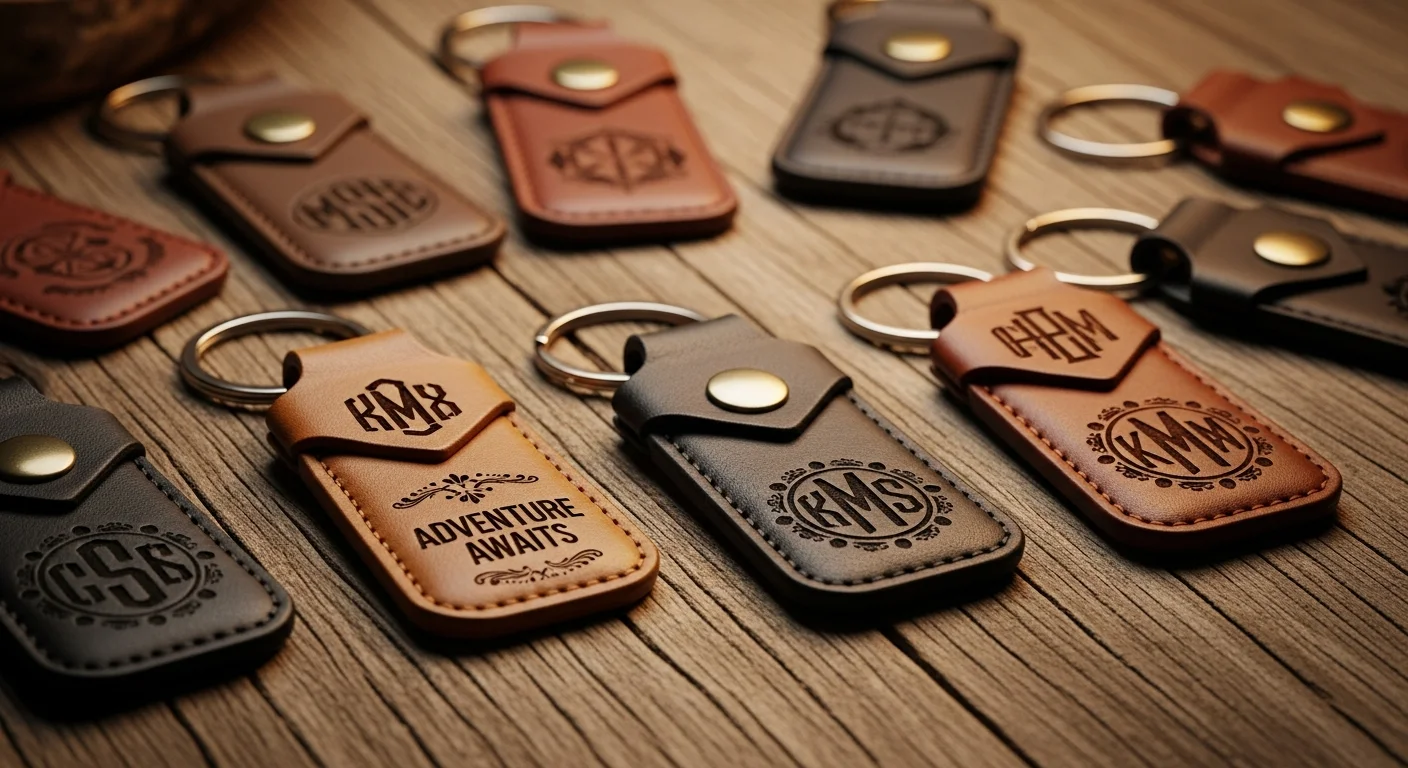
There is something about leather that immediately communicates quality, craftsmanship, and permanence. When you hand someone a custom leather keychain, they feel the weight and texture of the material before they even read the engraving. That tactile first impression sets leather keychains apart from every other material in the custom accessories market. While acrylic dominates the colorful, playful end of the spectrum and metal owns the sleek, modern category, leather occupies the premium, artisanal space — the choice for gifts that feel personal, corporate accessories that communicate prestige, and everyday carry items that develop character over years of use.
This guide covers every aspect of custom leather keychains — from selecting the right type of leather and choosing between decoration methods like laser engraving, debossing, and foil stamping, to selecting hardware, understanding color options, and caring for your leather keychain so it ages beautifully. Whether you are ordering a single personalized keychain for a groomsman or five hundred branded keychains for a corporate event, the decisions outlined here will ensure your finished product looks and feels exceptional.
Why Leather Keychains Feel Premium
Leather's premium perception is not accidental — it is the result of genuine material qualities that synthetic alternatives struggle to replicate. First, leather has weight. A leather keychain feels substantial in your hand, creating an immediate sense of value. Second, leather has texture. The grain pattern, the softness of the surface, and the way it warms to your touch all create sensory engagement that plastic and metal cannot match. Third, and perhaps most importantly, leather ages. Unlike acrylic or PVC keychains that look essentially the same on day one thousand as they did on day one, genuine leather develops a patina over time — a rich darkening and softening that makes each keychain uniquely yours. This aging process transforms a leather keychain from a nice accessory into a personal artifact.
The premium perception of leather also carries strong gift-giving associations. When someone receives a leather accessory, they intuitively understand that the giver chose something a step above the ordinary. This perception makes leather keychains particularly effective for occasions where the gesture matters — groomsmen gifts, client appreciation, employee milestones, and anniversary presents.
Genuine Leather vs Vegan Leather vs PU Leather
The term "leather" encompasses several distinct materials with significantly different properties, price points, and ethical considerations. Understanding these differences is essential for making the right choice for your project:
Genuine leather (cowhide, goatskin): Made from animal hides that are tanned and finished through a multi-step process that has been refined over centuries. Genuine cowhide is the most common leather used in keychains — it is strong, durable, and available in a wide range of thicknesses and finishes. Full-grain leather is the highest quality tier, featuring the complete outer surface of the hide with natural grain patterns intact. Top-grain leather is slightly sanded to remove imperfections, resulting in a more uniform appearance. Both types develop a beautiful patina over time and can last decades with proper care.
Vegan leather: An umbrella term for non-animal materials designed to look and feel like leather. Modern vegan leathers range from mushroom-based Mylo to pineapple-derived Pinatex to high-tech polyurethane composites. The quality range is enormous — premium vegan leathers are virtually indistinguishable from genuine leather in appearance and can approach similar durability, while budget vegan leathers may crack, peel, or discolor within a year. For ethical or dietary reasons, many customers specifically request vegan options, making it important to offer this choice.
PU (polyurethane) leather: A specific type of synthetic leather made by coating a fabric backing with polyurethane. PU leather is the most common material used in budget-friendly leather-look keychains. It is softer and more flexible than genuine leather, available in a wider range of colors (including vivid shades that genuine leather cannot achieve), and costs forty to sixty percent less. The trade-off is longevity — PU leather typically shows wear after one to two years of daily use, compared to five to ten-plus years for genuine leather. For a complete comparison of all keychain materials, explore our keychain materials comparison guide.

Laser Engraving on Leather
Laser engraving is the most popular decoration method for custom leather keychains, and for good reason. A focused laser beam burns away a thin layer of the leather surface, revealing a lighter color beneath and creating a permanent, precise design. The contrast between the engraved area and the surrounding leather produces a sophisticated, understated look that is impossible to replicate with printing or stamping.
The advantages of laser engraving on leather are significant. First, the design is permanent — it will not fade, peel, or wear off because it is physically carved into the material rather than applied on top of it. Second, laser engraving achieves extraordinary detail. Text as small as four points, intricate logo elements, and fine line illustrations reproduce clearly on leather. Third, the engraving process is fast — a typical keychain design takes fifteen to thirty seconds to engrave, making it efficient for both single pieces and bulk production runs.
Different types of leather respond to laser engraving differently. Dark-colored leathers produce the most dramatic contrast because the engraved area reveals a lighter, tan-colored inner layer. Light-colored leathers, such as natural or tan, produce a more subtle effect where the engraved area appears as a slightly darker, burnished tone. Full-grain leather engraves with more character due to its natural texture, while top-grain and PU leather produce cleaner, more uniform engravings. For a comprehensive overview of all engraving and printing techniques available for keychains, read our keychain decoration methods guide.

Debossing and Embossing on Leather
While laser engraving removes material to create a design, debossing and embossing use pressure and heat to reshape the leather surface without removing any material. These traditional techniques have been used in leather craft for centuries and carry strong associations with luxury and artisanal quality.
Debossing presses a heated metal die into the leather, creating an indented impression of your design. The result is a recessed image or text that you can feel with your fingertips. Debossing is subtle, elegant, and ages beautifully — as the leather develops its patina, the debossed areas accumulate oils and color differently from the surrounding surface, making the design more pronounced over time.
Embossing is the reverse of debossing — it creates a raised impression on the leather surface. The die presses from behind the leather, pushing the design upward. Embossing produces a more dramatic three-dimensional effect than debossing but requires thicker leather to achieve clean results. Both techniques require a custom metal die, which is a one-time investment that can be reused for unlimited production runs.
Foil Stamping on Leather Keychains
Foil stamping combines the impression technique of debossing with a thin layer of metallic or pigmented foil, creating a design that is both indented and colored. The most popular foil colors for leather keychains are gold, silver, and rose gold — these metallic finishes contrast beautifully against brown, black, and tan leather backgrounds.
The foil stamping process involves heating a metal die, placing a sheet of foil between the die and the leather, and applying pressure. The heat and pressure bond the foil to the leather in the pattern of the die. The result is a design that catches light and adds a touch of luxury that plain engraving or debossing cannot achieve. Foil stamping is particularly popular for monograms, wedding dates, and brand logos on premium keychains.
Hardware and Shape Options
The hardware attached to a leather keychain — the metal components that connect the leather piece to keys — plays a surprisingly important role in the overall quality perception and functionality of the finished product:
Split ring: The classic circular keyring that most people associate with keychains. Available in various diameters, finishes (nickel, brass, gunmetal, black, rose gold), and gauges. A heavy-gauge split ring feels more premium and is less likely to bend open accidentally.
Snap hook (lobster clasp): A spring-loaded clip that allows the keychain to be quickly attached to and removed from belt loops, bag straps, and zipper pulls. Snap hooks add versatility and are particularly popular for keychains intended as bag charms or accessories beyond simple key organization.
Pull-tab (strap loop): A leather loop that slides over a carabiner or D-ring. This minimalist attachment style keeps the hardware footprint small and lets the leather itself be the visual focus. Pull-tab keychains work well with car key fobs and modern, slim key organizers.
Screw post: A two-piece post that passes through the leather and secures with a screw. Screw posts allow the keyring to rotate freely and are extremely durable, though they are slightly more complex to assemble.

Color and Finish Options for Leather
Leather keychains are available in a range of colors and finishes that influence both the visual appearance and the way the material ages over time:
Natural/tan: Undyed or lightly dyed leather in its natural state. This color shows laser engraving as a subtle darkened tone and develops the most dramatic patina over time, transitioning from light honey to rich amber with use and sun exposure.
Brown (various shades): The most popular color for leather keychains. Dark brown hides imperfections well and provides excellent contrast for laser engraving. Medium brown offers a classic, warm aesthetic that appeals broadly.
Black: Sleek and modern, black leather works well for corporate and masculine-oriented designs. Laser engraving on black leather appears as a gray or silver tone, creating a sophisticated contrast.
Custom colors: PU and vegan leathers are available in virtually unlimited colors, including burgundy, navy, forest green, white, and pastels. Genuine leather can also be custom-dyed, though the process is more complex and may affect engraving results.
Care Tips for Leather Keychains
Proper care extends the life of a leather keychain and ensures it ages gracefully rather than deteriorating. Share these tips with your customers or gift recipients:
Condition periodically: Apply a small amount of leather conditioner every three to six months to prevent the leather from drying out and cracking. Use a product formulated specifically for the type of leather — saddle soap for natural leather, appropriate conditioners for dyed or colored leather.
Avoid prolonged moisture: While brief contact with water will not damage quality leather, prolonged soaking or regular exposure to moisture can cause warping, discoloration, and mold growth. If a leather keychain gets wet, pat it dry with a soft cloth and allow it to air dry at room temperature — never use a hair dryer or heat source.
Store properly: When not in use for extended periods, store leather keychains in a cool, dry place away from direct sunlight. Excessive heat and UV exposure can cause fading and drying.
Best Occasions for Leather Keychains
Leather keychains shine brightest as personalized gifts for meaningful occasions. Their premium feel and timeless aesthetic make them appropriate for events where a thoughtful, lasting impression matters:
Groomsmen and bridesmaid gifts: Personalized leather keychains engraved with initials, the wedding date, and a short message are one of the most popular groomsmen gift choices. They are practical, tasteful, and can be presented in a gift box for a complete package. Pair them with matching couple keychains for the bride and groom.
Corporate client appreciation: A leather keychain embossed with the company logo and the client's name makes a sophisticated thank-you gift that recipients use daily. The premium material signals that you value the relationship beyond a standard promotional item.
Graduation and milestone gifts: Engrave the graduation year, degree, or a short motivational message on a leather keychain to commemorate academic achievements. The leather will age alongside the recipient's career, gaining character over the years.
Anniversary and birthday presents: Custom leather keychains with meaningful dates, coordinates of a special location, or a personal message create intimate, everyday-carry reminders of important moments and relationships.

Custom leather keychains represent the intersection of functionality, craftsmanship, and personal expression. From the type of leather you select to the decoration technique and hardware you pair it with, each choice contributes to a finished product that recipients will carry and cherish for years. Explore the full range of leather options and start designing your custom keychain at our custom keychains page, or use the design tool to visualize your engraving, foil stamping, or debossing before placing your order.
Share this article
Written by
Aisha Patel
Head of Materials Science & Sustainability at RareCustom. Aisha evaluates genuine, vegan, and PU leather options and engraving techniques for premium custom keychains.