Custom Scrub Jackets: Branded Medical Wear for Healthcare Teams & Clinics
Learn how to order custom scrub jackets for healthcare teams, clinics, and medical practices. Compare scrub jackets vs lab coats, explore embroidery options for names and logos, and discover antimicrobial fabric choices for medical environments.
Marcus Chen
E-Commerce Growth & Merchandising Lead at RareCustom. Marcus advises healthcare practices on branded scrub jackets, lab coats, and medical team uniform programs.
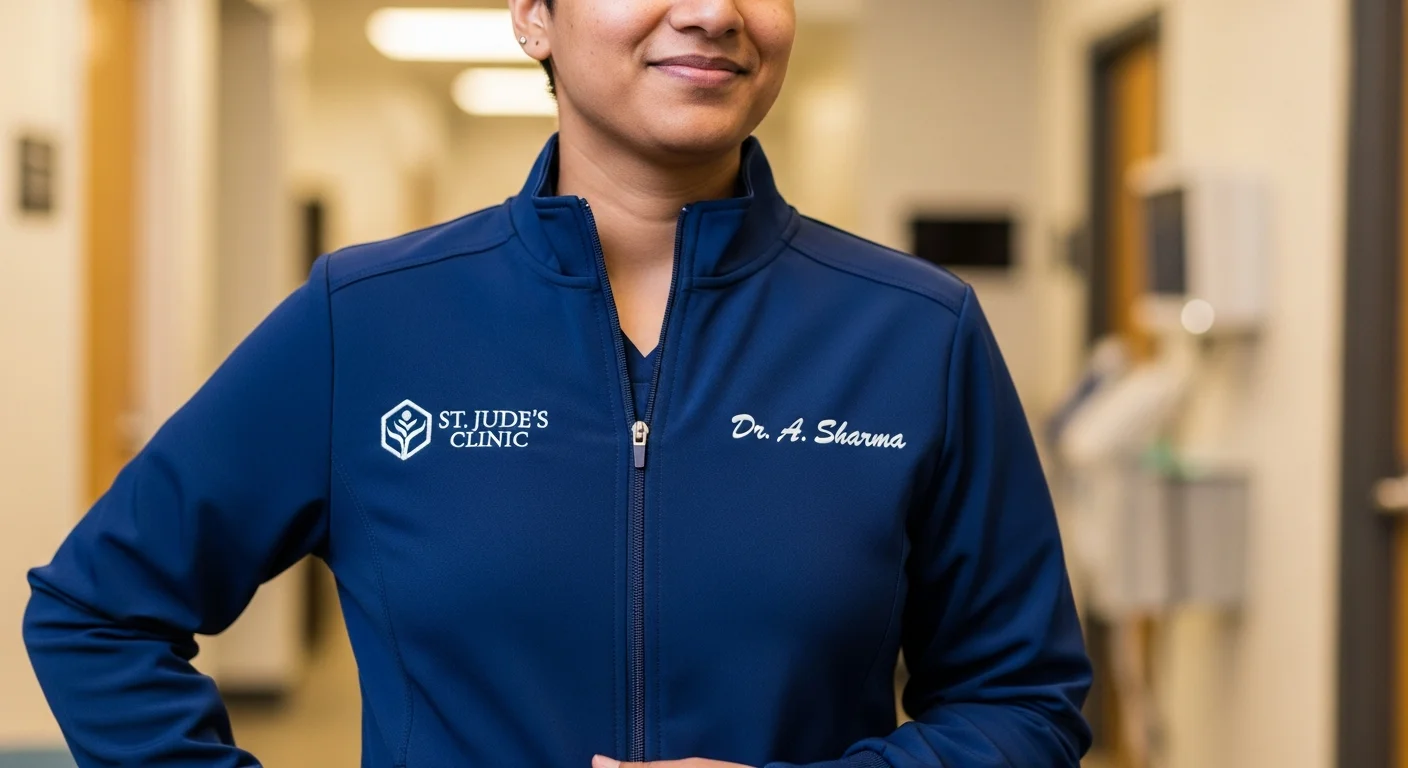
In healthcare settings, custom scrub jackets serve a dual purpose that few other garments achieve — they provide functional medical-grade outerwear while simultaneously building team identity, reinforcing brand recognition, and creating a professional appearance that puts patients at ease. Whether you run a private dental practice, a multi-location veterinary clinic, a hospital department, or a home health agency, branded custom jackets for your medical team make a tangible difference in patient perception and staff morale.
This guide covers everything healthcare administrators and practice managers need to know about ordering custom scrub jackets, from choosing the right garment style and fabric to selecting the best embroidery options and managing orders across multiple departments. You will learn how to navigate the specific requirements of medical environments while creating branded outerwear that your team is proud to wear every shift.
Why Healthcare Teams Need Custom Jackets
The benefits of custom scrub jackets extend far beyond aesthetics. In medical environments, branded outerwear addresses practical, professional, and psychological needs that directly impact patient satisfaction and team performance.
Patient trust and recognition: Patients feel more comfortable when they can easily identify staff members. A custom scrub jacket with the practice name, team member's name, and title (RN, DDS, DVM, PA) immediately establishes credibility and helps patients distinguish between doctors, nurses, technicians, and support staff. This clarity is especially important in busy clinical settings where patients interact with multiple team members during a single visit.
Professional consistency: Branded scrub jackets create a cohesive, polished appearance across your entire team. When every staff member wears the same style jacket with consistent logo placement and color coordination, the practice projects an image of organization, attention to detail, and professionalism that patients notice and appreciate.
Warmth and comfort: Clinical environments are notoriously cold. Hospital corridors, operating rooms, and dental operatories are kept at lower temperatures for infection control and equipment requirements. Scrub jackets provide essential warmth for staff who spend entire shifts in air-conditioned spaces, improving comfort and focus throughout long workdays.
Infection control: Unlike personal jackets or sweaters brought from home, custom scrub jackets designed for medical use can be laundered according to healthcare standards, treated with antimicrobial finishes, and managed as part of the facility's uniform hygiene protocol. This is a critical distinction that directly supports patient safety.
Team morale and belonging: Matching custom jackets create a sense of team identity and belonging among staff members. New employees feel welcomed when they receive their personalized jacket on the first day. Long-term staff take pride in wearing a professional garment that represents their expertise and their team. This psychological benefit contributes to employee satisfaction and retention.
Scrub Jacket vs Lab Coat vs Warm-Up
Healthcare facilities use several different jacket formats, and choosing the right one depends on your clinical setting, departmental norms, and functional requirements. Understanding the differences helps you select the best option for your team.
Scrub jackets: The most common and versatile option for clinical staff. Scrub jackets are hip-length, lightweight, and designed to layer over standard scrub tops. They typically feature snap or zip closures, patch pockets, and a relaxed fit that allows full range of motion. Scrub jackets are appropriate for nurses, dental hygienists, veterinary technicians, medical assistants, and most clinical roles.
Lab coats: Longer than scrub jackets, extending to mid-thigh or knee length. Lab coats project a more formal, authoritative appearance and are traditionally associated with physicians, pharmacists, and research professionals. Custom lab coats with embroidered names and credentials establish a visual hierarchy in clinical settings where patient identification of the primary care provider is important.
Warm-up jackets: Structured more like athletic warm-ups, with zip fronts, stand-up collars, and form-fitting silhouettes. Warm-up jackets offer a contemporary, sporty alternative to traditional scrub jackets. They are popular in physical therapy clinics, sports medicine practices, and modern dental offices that favor a less clinical aesthetic.
Choosing the right format: Consider your practice's culture, patient demographics, and practical needs. Traditional medical practices and hospitals often prefer the formality of lab coats for physicians and scrub jackets for clinical staff. Modern clinics, pediatric practices, and specialty offices may prefer warm-up jackets for their approachable, contemporary appearance. Many multi-department practices use different jacket formats for different roles, creating visual hierarchy while maintaining brand consistency through shared logos and colors.

Fabric Requirements for Medical Settings
Medical garments face demands that standard apparel does not — frequent high-temperature laundering, exposure to fluids and chemicals, all-day wear in temperature-controlled environments, and strict infection control protocols. Choosing the right fabric ensures your custom scrub jackets perform reliably in these demanding conditions.
Polyester-cotton blends: The most popular fabric for medical scrub jackets is a 65/35 polyester-cotton blend. This combination offers the wrinkle resistance and durability of polyester with the breathability and comfort of cotton. The blend withstands industrial laundering temperatures (typically 160°F or higher) without shrinking, fading, or degrading. It also accepts embroidery cleanly, providing a stable base for detailed logo and text stitching.
Polyester performance fabrics: 100% polyester performance fabrics with moisture-wicking properties are increasingly popular for warm-up style jackets. These fabrics pull sweat away from the body, dry quickly, and resist staining. Performance polyester is especially well-suited for staff members who are physically active during their shifts — physical therapists, dental surgeons, and emergency department nurses.
Stretch fabrics: Modern scrub jackets increasingly incorporate spandex or elastane blends (typically 2-5% stretch fiber) for improved range of motion and a more tailored fit. Stretch fabrics are particularly appreciated by surgeons, hygienists, and technicians who perform repetitive arm and upper-body movements throughout their shifts.
Weight and warmth: Scrub jacket fabric weight typically ranges from 5 to 8 ounces per square yard. Lighter weights (5-6 oz) are suitable for facilities with moderate climate control, while heavier weights (7-8 oz) provide additional warmth for cold operating rooms, walk-in refrigerators, and facilities in colder climates. Match the fabric weight to the temperature conditions your staff actually work in.
Embroidery: Name, Title, and Logo
Embroidery is the preferred decoration method for custom medical jackets because it conveys professionalism, durability, and attention to detail. Embroidered logos and names withstand hundreds of wash cycles without fading, peeling, or cracking — essential for garments that are laundered frequently in healthcare settings.
Logo placement: The practice logo is typically embroidered on the left chest, positioned above the breast pocket if present. Size the logo at 3-4 inches wide for optimal visibility and proportion. The logo should be rendered in a limited color palette (2-4 thread colors) for clarity and cost efficiency. Provide your embroiderer with a vector file (SVG, AI, or EPS) of your logo for the cleanest digitization results.
Name and credential embroidery: The staff member's name is typically embroidered on the right chest in a clean, readable font — block letters or simple scripts at 8-12mm text height. Include credentials and titles directly below or after the name: "Sarah Johnson, RN," "Dr. Michael Chen, DDS," or "Jessica Torres, CVT." This identification embroidery serves both patient communication and regulatory compliance purposes.
Back and sleeve embroidery: Some practices add the practice name or website across the upper back (shoulder blade area) of the jacket. Sleeve embroidery can feature department identifiers, certification badges, or specialty designations. Keep additional embroidery placements purposeful and avoid overcrowding — medical garments should look professional, not promotional. For more decoration options, see our embroidery vs printing comparison.

Color Options and Department Coding
Color serves both aesthetic and functional purposes in medical environments. Many healthcare facilities use color coding to help patients and visitors identify staff roles at a glance, while maintaining a cohesive branded appearance across the organization.
Classic medical colors: Navy blue, ceil blue, royal blue, hunter green, and black are the most traditional scrub jacket colors. These darker shades hide stains effectively, project authority and competence, and pair well with virtually any scrub top color underneath. Navy and black are the safest choices for practices that want a universally professional appearance.
Department color coding: Larger practices and hospitals often assign specific colors to different departments or roles. Nursing staff in navy, surgical team in ceil blue, radiology in hunter green, and administrative staff in black, for example. This color-coding system helps patients navigate the facility and identify the correct team member quickly. Custom embroidered logos in white or contrasting thread appear cleanly on any of these base colors.
Branded color matching: Many practices want their scrub jacket colors to match their brand identity. If your practice logo features specific Pantone or brand colors, work with your supplier to find the closest available fabric match. While exact Pantone matching on garment fabric is challenging, most suppliers offer 15-30 standard colors that cover a wide range of brand palettes.
Pattern and print options: Pediatric practices, veterinary clinics, and specialty offices sometimes choose printed scrub jackets featuring subtle patterns, cartoon characters, or themed designs. While these are less common in traditional medical settings, they create a friendly, approachable atmosphere that helps anxious patients (especially children and animals) feel more comfortable.

Antimicrobial and Fluid-Resistant Options
In healthcare environments where infection control is paramount, antimicrobial and fluid-resistant fabric treatments provide an additional layer of protection for both staff and patients. These functional upgrades add modest cost to the garment but deliver significant practical value.
Antimicrobial treatments: Fabrics treated with antimicrobial agents (such as silver-ion technology or Microban) inhibit the growth of bacteria, fungi, and odor-causing microorganisms on the jacket surface. This is particularly valuable for jackets worn in close patient contact, in surgical environments, or during extended shifts where laundering between patients is not practical.
Fluid-resistant finishes: DWR (durable water repellent) and fluid-resistant coatings cause liquid splashes to bead up and roll off the jacket surface rather than soaking into the fabric. This protects staff from incidental fluid exposure and prevents staining from common clinical substances. Fluid-resistant jackets are especially important for emergency departments, labor and delivery units, dental operatories, and veterinary practices.
Soil release treatments: Soil release finishes allow stains to wash out more easily during laundering, extending the garment's usable life and maintaining a cleaner appearance between washes. Staff members who work with dyes, chemicals, or bodily fluids benefit significantly from soil release technology.
Maintaining treatment effectiveness: Most antimicrobial and fluid-resistant treatments maintain effectiveness through 30-50 industrial wash cycles. Avoid fabric softeners, which coat fibers and reduce treatment performance. Follow the garment manufacturer's specific care instructions to maximize the lifespan of these functional treatments.

Ordering for Multi-Department Practices
Large practices, hospital systems, and multi-location clinics face unique ordering challenges when equipping multiple departments with custom scrub jackets. Strategic planning and centralized management ensure consistency, cost efficiency, and smooth distribution across the organization.
Centralized design management: Establish a master design template that defines logo placement, embroidery standards, approved colors, and font specifications for the entire organization. This template ensures that jackets produced at different times, in different quantities, and even from different suppliers maintain visual consistency. Store the master template digitally and distribute it to all authorized purchasers.
Department-specific customization: Within the master template, allow for department-level customization — different base colors, department identifiers on sleeves, and role-specific credentials on name embroidery. This layered approach provides individual department identity while maintaining organization-wide brand cohesion. The approach mirrors corporate branding strategies — see our corporate branding jacket guide for additional frameworks.
Size inventory management: Maintain a small inventory of blank (logo-only, no name) jackets in common sizes for new hires. Adding name embroidery to pre-stocked blank jackets is faster and less expensive than ordering a single custom jacket from scratch. Reorder inventory when stock drops below your minimum threshold for any size.
Budget and purchase order management: Allocate annual uniform budgets by department based on headcount and turnover rates. Establish a replacement policy (typically 2-3 jackets per staff member per year) and a process for new hire orders. Centralizing purchasing through a single coordinator or uniform committee prevents duplicate orders and negotiates better volume pricing from suppliers.
For practices that also need branded workwear beyond medical settings — maintenance staff, administrative offices, or off-site teams — our branded workwear guide covers additional jacket styles and decoration options suitable for non-clinical roles.
Care and Laundering
Proper care extends the life of custom scrub jackets and maintains both their appearance and any antimicrobial or fluid-resistant treatments. Healthcare laundering requirements differ from standard garment care, and following the correct procedures protects your investment.
Laundering temperature: Healthcare garments should be washed at 160°F (71°C) or higher to ensure pathogen deactivation. Most polyester-cotton blends withstand these temperatures without shrinking or fading. Verify that your chosen fabric is rated for healthcare-grade laundering temperatures before ordering.
Embroidery care: Turn jackets inside out before washing to protect embroidered areas from abrasion. Avoid bleach directly on embroidered sections unless the thread is white or colorfast-rated. Industrial laundering with commercial-grade detergents is generally safe for embroidered medical garments and maintains thread color integrity through dozens of cycles.
Stain pre-treatment: Treat stains promptly before laundering. Blood, iodine, and chemical stains set permanently if allowed to dry. Hydrogen peroxide works effectively on blood stains without damaging most fabrics or embroidery. For iodine and betadine stains, sodium thiosulfate solution provides reliable removal.
Replacement cycle: Even with proper care, custom scrub jackets in daily clinical use typically need replacement every 6-12 months due to cumulative wear from frequent laundering. Plan your ordering cadence to anticipate replacement needs and maintain a professional appearance across your team. Budget for replacement jackets as an ongoing operational expense rather than a one-time purchase.
Custom scrub jackets represent one of the most practical and impactful branding investments a healthcare practice can make. They improve patient trust, strengthen team identity, and provide essential workplace comfort — all while projecting the professional image that today's healthcare consumers expect. Start designing your team's branded medical wear through our custom jacket platform and use our design tool to preview embroidered logos and name placements before you order.
Share this article
Written by
Marcus Chen
E-Commerce Growth & Merchandising Lead at RareCustom. Marcus advises healthcare practices on branded scrub jackets, lab coats, and medical team uniform programs.