Custom Work Jackets: Branded Workwear for Construction, Trades & Field Teams
Discover the best custom work jackets for construction crews, trade professionals, and field teams. Learn about hi-vis options, logo placement, ANSI safety compliance, embroidery methods, and bulk ordering.
Natalie Voss
Content & SEO Lead at RareCustom. Natalie covers branded workwear trends and helps construction crews, tradespeople, and field teams find the right custom work jacket solutions.
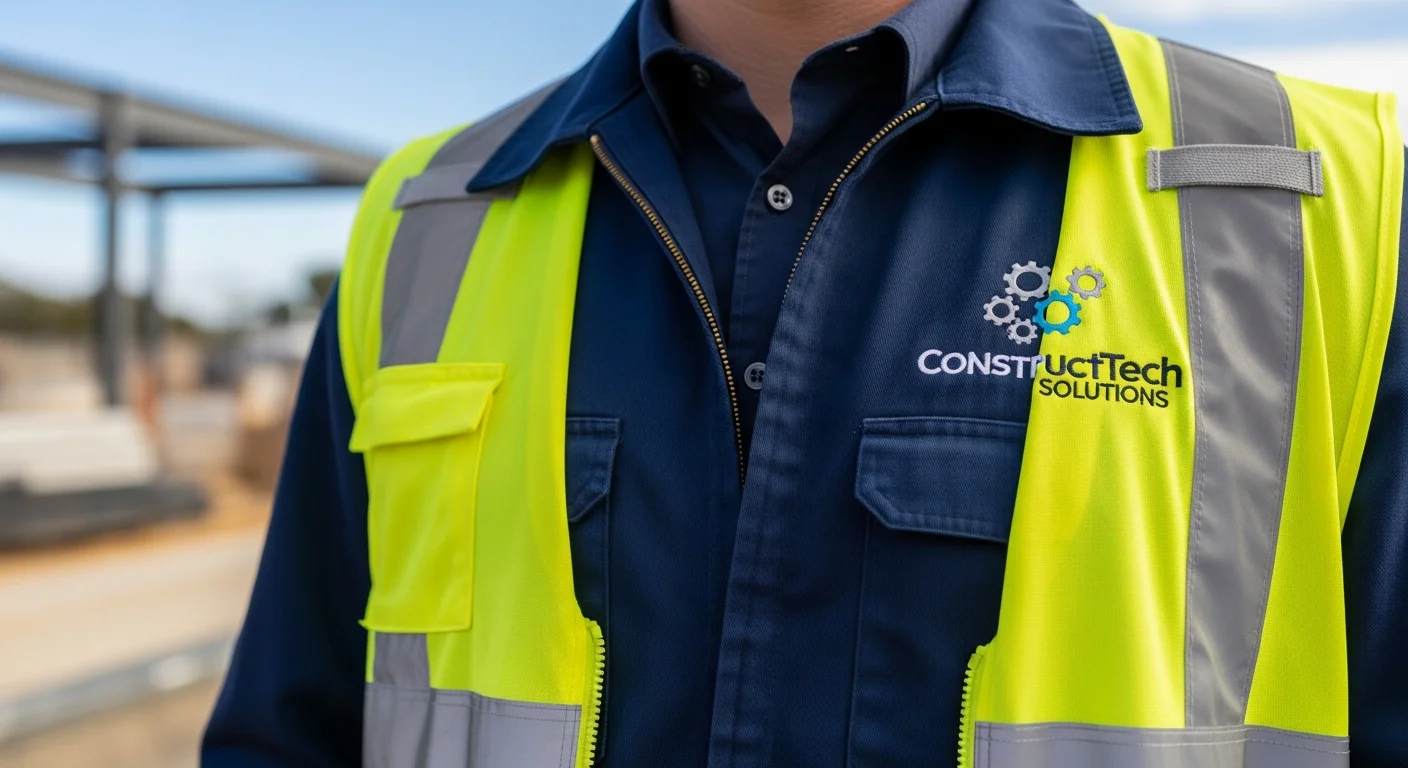
In the construction, trades, and field service industries, your team's workwear is your most visible branding asset. Trucks, tools, and business cards have limited reach, but a crew wearing matching branded custom work jackets turns every job site, every supply store visit, and every lunch break into a marketing opportunity. Beyond branding, work jackets serve critical functional purposes — weather protection, safety compliance, durability under harsh conditions, and practical features that make hard physical labor more comfortable.
Whether you are an electrical contractor outfitting a crew of twelve, a landscaping company branding your seasonal workers, a construction firm ordering hi-vis jackets for a large project team, or a field service business looking to project professionalism at every client site, this guide covers choosing, customizing, and ordering work jackets that look sharp and perform under pressure.
Why Branded Work Jackets Matter
Branded work jackets serve a dual purpose that few other marketing investments can match — they address a practical need while functioning as mobile advertising:
Professional credibility: Homeowners and commercial clients judge contractors by appearance before they see a single minute of work. A crew that arrives in clean, branded jackets projects competence and accountability. This first impression directly influences client confidence and willingness to recommend your services.
Brand visibility: Your crew moves through neighborhoods, commercial areas, hardware stores, and restaurants throughout the workday. Every stop is an opportunity for someone to see your company name, logo, and phone number. A well-branded jacket is a walking billboard that generates impressions without recurring advertising costs.
Team unity and morale: Providing quality branded gear makes employees feel valued and part of something larger. Workers who feel invested in are more likely to take pride in their work, represent the brand positively, and stay with the company longer.
Safety identification: On busy job sites with multiple contractors, branded jackets help identify which workers belong to which company. This is important for site managers and safety inspectors. Pair your branded jackets with custom work T-shirts for warm-weather months when jackets come off but brand visibility should remain. Round out your branded workwear program with custom hard hat stickers or branded caps for complete jobsite visibility.
Best Styles for Field Work
Work jackets need to balance durability, functionality, and comfort across a wide range of working conditions:
Insulated work jackets: For cold-weather outdoor work, insulated jackets with quilted or synthetic fill provide essential warmth without excessive bulk. Duck canvas insulated jackets are the industry standard — they combine tough abrasion resistance with reliable warmth. Articulated elbows and gusseted underarms allow full range of motion.
Hi-vis safety jackets: Required on many job sites, high-visibility jackets use fluorescent yellow-green or orange fabric with retroreflective tape to ensure workers are visible. Hi-vis jackets are available in various weights from lightweight vests to fully insulated winter jackets. For cold-weather hi-vis options, see our guide to custom winter jackets and insulation materials.
Softshell jackets: Softshells bridge the gap between a fleece and a hard-shell rain jacket. They provide moderate warmth, wind resistance, and water repellency in a flexible, stretch fabric. Softshells are ideal for electricians, HVAC technicians, plumbers, and telecommunications installers. The smooth outer surface is excellent for embroidery and printing.
Canvas work jackets: The classic trades jacket. Heavy-duty duck canvas provides outstanding abrasion resistance. Canvas jackets are available unlined, blanket-lined, and quilted-lined. The heavyweight fabric stands up to years of daily wear in demanding environments.

Durability Features to Look For
Work jackets take more abuse in a single week than most casual jackets endure in a year. Choosing jackets with robust construction extends useful life and reduces replacement costs:
Reinforced stress points: Bar tacking at pocket corners, zipper endpoints, and seam intersections prevents tearing. Triple-stitched main seams provide structural integrity under repetitive motion.
Heavy-duty zippers: YKK or equivalent heavy-gauge zippers with large, gloved-hand-friendly pulls are essential. Metal teeth are more durable than plastic in cold temperatures. Two-way zippers allow the bottom to be opened for seated work in vehicles.
Abrasion-resistant fabrics: Cordura nylon overlays on shoulders, elbows, and forearms protect the areas most subject to wear. Ripstop fabrics prevent small tears from spreading. For extreme durability, look for jackets with a denier rating of 500 or higher.
Water and stain resistance: DWR (durable water repellent) coatings cause water to bead and roll off rather than soaking in. Stain-resistant treatments help maintain a professional appearance despite exposure to grease and construction materials.

Logo Placement: Left Chest and Back
Effective logo placement on work jackets maximizes brand visibility while maintaining a clean, professional look:
Left chest: The standard location for company logos. A three to four inch wide embroidered or printed logo on the left chest is visible during face-to-face interactions. This placement instantly reads as professional branding rather than casual decoration.
Back panel: A larger version of the logo or the full company name across the upper back creates visibility from behind and at greater distances. For maximum impact, combine the company name with a phone number or website URL below the logo so potential customers can act immediately.
Right chest: Sometimes used for the employee's name or a secondary identifier like a department name, job title, or certification badge.
Sleeve placement: Some companies add a small logo or certification mark on one or both sleeves. This is common in safety-sensitive industries where certification logos provide on-site credibility.

Safety Compliance: ANSI Ratings
For construction, utility, and roadwork applications, custom work jackets must meet specific safety standards:
ANSI Class 1: The minimum visibility level. Requires a small amount of high-visibility material and one stripe of reflective tape. Suitable for workers in areas separated from traffic and warehouse workers.
ANSI Class 2: Requires more high-visibility material and two stripes of reflective tape. This is the most commonly required classification for construction workers, utility crews, and survey teams. Adequate for most daytime roadside and construction site work.
ANSI Class 3: The highest visibility level. Requires high-visibility material on the torso and sleeves with reflective tape throughout. Required for workers in high-speed traffic areas, nighttime roadwork, and emergency response.
Customization on hi-vis jackets: Adding logos to safety jackets requires careful placement to avoid obscuring reflective tape. Work with a manufacturer experienced in hi-vis customization to ensure branding does not compromise the safety rating. Logos are typically placed between reflective tape stripes or on the back below the shoulder tape.
Material Guide for Work Jackets
Selecting the right material depends on working conditions, climate, and physical demands:
Duck canvas (12 oz): The traditional workwear fabric. Cotton duck canvas is tough, breathable, and develops a rugged patina with wear. Best for general construction, landscaping, and trades work where abrasion resistance is primary.
Ripstop nylon: Lightweight and tear-resistant, ideal for jackets that need to be light for active work while resisting tears from sharp edges. Also highly packable for stowing in toolboxes or vehicle cabs.
Polyester fleece: Soft, warm, and moisture-wicking, fleece is excellent as a mid-layer or standalone jacket for moderate cold. Anti-pill treatments keep it looking professional after repeated washing. Fleece accepts embroidery beautifully.
Softshell (bonded polyester/spandex): Combines wind resistance, water repellency, and four-way stretch. The smooth outer surface resists snagging and produces clean embroidery results. Increasingly popular for its versatility across a wide temperature range. Softshells also work beautifully for corporate branding programs where the jacket needs to transition seamlessly from the job site to a client meeting or trade show.
Embroidery vs Screen Printing for Workwear
The two most common decoration methods each have distinct advantages for work jackets:
Embroidery: Thread stitched directly into the jacket fabric creates a raised, textured design that projects quality and permanence. Embroidery is the preferred method for work jackets because it withstands heavy washing, abrasion, and harsh conditions. An embroidered logo will outlast the jacket itself. Embroidery works on virtually all jacket materials.
Screen printing: Ink printed directly onto the fabric produces smooth, flat graphics with unlimited color options. Screen printing is cost-effective for large, multi-color designs — especially full-back prints that would be prohibitively expensive to embroider. The trade-off is durability: printed graphics can crack or fade after extended wear and heavy washing.
For most work jacket applications, embroidery on the left chest and screen printing on the back is the optimal combination. For a deeper comparison of decoration methods across all jacket types, see our guide on embroidery vs printing vs patches for custom jackets.
Ordering for Your Crew
Ordering custom work jackets for an entire crew requires careful planning:
Step 1 — Gather sizes: Create a size collection form and distribute it to every crew member. Ask for chest measurement, height, and preferred fit. Provide a measuring guide so everyone measures consistently.
Step 2 — Choose your style and material: Based on working conditions, select the jacket style that best balances function and appearance. Order a sample jacket to evaluate fit and quality before committing to the full order.
Step 3 — Finalize the design: Upload your company logo and specify placement and colors. Use the design tool to preview the finished look and share the digital proof with stakeholders. Confirm all text is accurate and properly spelled.
Step 4 — Place the order with extras: Order ten percent more jackets than your current headcount. The marginal cost of extras now is far less than a separate reorder later.
Step 5 — Plan distribution: When jackets arrive, inspect a sampling from each size for quality, color accuracy, and construction. Distribute to crew members and address any sizing issues promptly.

For corporate environments where work jackets transition to client-facing settings, explore our corporate branding jacket guide for styles that bridge job site and boardroom. Ready to start building your branded workwear? Explore our full custom jackets collection and use our design studio to configure logo placement, colors, and sizes for your crew.
Share this article
Written by
Natalie Voss
Content & SEO Lead at RareCustom. Natalie covers branded workwear trends and helps construction crews, tradespeople, and field teams find the right custom work jacket solutions.