Custom Tote Bag Design Guide: Trends and Ideas for 2026
Get inspired with the latest custom tote bag design trends for 2026 — minimalist logos, typographic designs, eco messaging, retro aesthetics, and data-driven strategies. Includes design tips, color trend forecasts, and examples.
Natalie Voss
Content & SEO Lead at RareCustom. Natalie tracks design trends in custom merchandise and curates actionable inspiration for tote bag designs across industries and use cases.
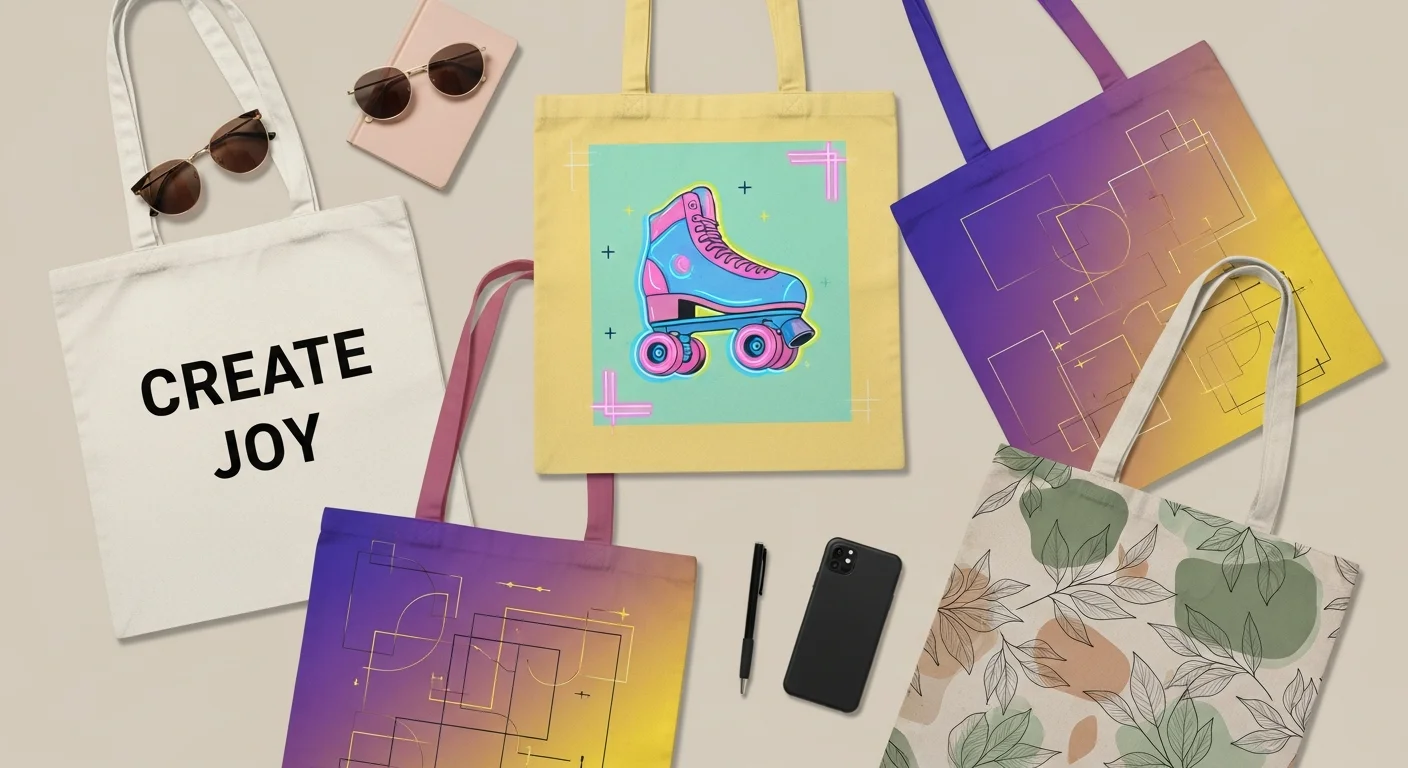
The design on your custom tote bag is what transforms it from a generic carrier into a statement piece, a conversation starter, and a brand ambassador. Whether you are designing for a business, an event, or personal use, the right design approach makes the difference between a bag that gets used daily and one that stays in a closet. This guide covers the custom tote bag design trends shaping 2026, practical design tips for any project, and inspiration to help you create bags that people genuinely want to carry.
Top Custom Tote Bag Design Trends for 2026
1. Minimalist logos on natural materials: The "less is more" philosophy dominates custom bag design in 2026. A single-color logo or monogram on natural canvas or jute communicates sophistication and environmental awareness simultaneously. This trend is driven by consumer fatigue with overbranded products — subtlety signals confidence. Keep your design to 3" x 3" or smaller for maximum minimalist impact.
2. Bold typography as the primary design element: Instead of logos, many brands are using oversized, carefully selected typography as the sole design element. A single word ("CREATE," "WANDER," "HOME"), a meaningful phrase, or a brand name in a distinctive custom font creates a design that functions as both branding and wearable art. Choose fonts that reflect your brand personality — geometric sans-serifs for modern tech brands, hand-drawn scripts for creative businesses, classic serifs for heritage brands.
3. Eco-messaging with data: The next evolution of sustainability branding goes beyond generic green messaging ("eco-friendly," "go green") to specific, data-driven claims: "This bag is made from 8 recycled plastic bottles," "Replaces 500+ single-use bags over its lifetime," or "GOTS-certified organic cotton." Specific data builds credibility that vague eco-slogans have lost. Pair the message with a clean design that lets the data speak. Recycled material bags and organic cotton bags support these claims with certified materials.
4. Retro and vintage aesthetics: Nostalgic design is thriving across all product categories, and tote bags are no exception. Hand-lettered text, vintage illustration styles, distressed textures, and retro color palettes (burnt orange, avocado green, mustard yellow) create bags with character and warmth. Retro designs work especially well on natural canvas, where the bag's earthy tone complements vintage-inspired artwork.
5. Illustrated storytelling: Custom illustrations that tell a story — your brand's founding, a city skyline, a product journey, or an event narrative — create bags that recipients connect with emotionally. Unlike generic stock graphics, custom illustrations are unique to your brand and impossible to replicate. Invest in an original illustration and it becomes a signature brand asset across multiple products.
6. Two-tone and color-block designs: Using two contrasting colors (bag body + handles, or front + trim) creates visual interest without complex printing. Color-blocking is achieved through bag construction rather than printing, meaning you get a multi-color effect at single-color print cost. Popular combinations: natural canvas with colored handles, black bag with white handles, or navy bag with natural canvas trim.

Sustainable Design Trends for 2026
Sustainability is no longer a niche concern — it is a mainstream design driver that influences everything from material selection to visual messaging on custom tote bag design trends. In 2026, the most forward-thinking brands are integrating sustainability into the design itself, not just the product specs.
Visible material storytelling: Designs that let the material speak for itself are gaining traction. Instead of covering an organic cotton or recycled fabric bag with a full-coverage print, leave large areas of the natural material visible. A small, clean logo paired with exposed natural canvas or jute texture communicates authenticity and eco-awareness more effectively than any printed message. The material becomes the message.
Circular economy messaging: Progressive brands are designing tote bags with end-of-life instructions printed directly on the bag — "When this bag wears out, compost it" (for organic cotton) or "Return this bag for recycling at any [Brand] location." This approach demonstrates genuine commitment to sustainability beyond the point of sale and differentiates your brand from competitors who stop at "made from recycled materials."
Carbon-neutral branding: Some brands are printing their carbon offset information directly on the bag: "The production and shipping of this bag has been carbon-offset through [specific program]." This level of transparency appeals to environmentally aware consumers who want to understand the full environmental impact of their purchases.
Plant-dyed and natural color palettes: Chemical-free, plant-based dyes (indigo, turmeric, madder root) are emerging as a premium sustainable option. While more expensive and limited in color range, plant-dyed tote bags appeal to the growing market segment that prioritizes chemical-free, artisanal products. The subtle, imperfect color variations of plant dyeing actually enhance the natural, handcrafted aesthetic.
Repair-friendly design: Designing bags with reinforced stress points, replaceable components (detachable handles), and repair instructions reflects the growing "buy less, buy better" consumer mindset. This design philosophy, inspired by brands like Patagonia, builds customer loyalty and extends product lifespan — turning a tote bag purchase into a long-term brand relationship.
Typography and Font Trends for Tote Bags
Typography is the single most important design element for custom tote bags in 2026. The right font choice can communicate your brand personality, set the tone for an event, or transform a simple bag into a wearable piece of art. Here are the typography trends driving custom tote bag design trends this year.
Maximalist display fonts: After years of minimalist sans-serif dominance, bold, expressive display fonts are making a comeback. Extra-bold, condensed typefaces with dramatic weight contrast create immediate visual impact. These fonts work best for single words or very short phrases — "BOLD," "CREATE," "RISE" — where the letterforms themselves become the design. Pair with a single ink color on natural canvas for a gallery-worthy effect.
Hand-lettered and brush scripts: Custom hand-lettered typography adds warmth, personality, and uniqueness that digital fonts cannot replicate. Wedding tote bags, artisan brand bags, and personal gift bags benefit from the organic, imperfect beauty of hand-lettering. Commission a local calligrapher or lettering artist to create custom lettering for your design. Brush script fonts (like Procreate-created lettering) balance the hand-made aesthetic with digital reproducibility.
Serif revival: Traditional serif fonts are experiencing a renaissance in custom merchandise design. After a decade where sans-serif fonts dominated (led by tech company branding), serifs are returning as a signal of heritage, credibility, and sophistication. Classic serifs like Garamond, Baskerville, and Caslon print beautifully on canvas and work especially well for corporate branding, literary themes, and luxury products. Pair with generous letter-spacing for maximum elegance on embroidered designs.
Stacked and layered typography: Instead of a single line of text, stacked typography arrangements — where different words use different sizes, weights, and fonts within a structured grid — create visually complex designs that reward closer inspection. This approach works well for multi-word messages, event details (date + location + occasion), and brands with longer names. Use a maximum of two complementary fonts to maintain visual cohesion.
Monospaced and technical fonts: For tech companies, coding bootcamps, and brands with a digital or technical identity, monospaced fonts (inspired by terminal/code editor typography) create a distinctive, modern aesthetic. These fonts pair well with clean, geometric design elements and work best in screen printing where the uniform character width prints consistently.

Color Palette Trends for Custom Merchandise
Color selection sets the tone for your entire bag design. Understanding broader color palette trends for custom merchandise helps you create custom tote bag designs that feel current and resonate with your target audience.
Earth tones: Terracotta, sage green, warm sand, and clay brown continue to dominate as consumers gravitate toward natural, grounding colors. Earth tones pair beautifully with natural canvas and jute materials, reinforcing eco-friendly brand positioning. These colors work particularly well for lifestyle brands, wellness companies, and outdoor/adventure businesses.
Deep jewel tones: Emerald green, sapphire blue, burgundy, and deep purple add richness and premium perception. Jewel tones work well for corporate and luxury applications where the bag needs to convey sophistication. Print in gold or silver metallic on jewel-tone bags for a striking, high-end result.
Soft pastels: Lavender, blush pink, sky blue, and mint green are popular for personal gifts, wedding merchandise, and lifestyle brands targeting younger demographics. Pastels print best on white or light-colored bags. The pastel trend aligns with the growing popularity of calming, "gentle" brand aesthetics in beauty, wellness, and fashion.
Classic neutrals: Black, navy, and charcoal remain workhorses for corporate and professional use. These colors hide wear and dirt well, making them practical for daily-use bags. Print in white or metallic for maximum contrast. Neutral bags have the broadest appeal and the longest fashion lifespan — they never look dated.
Warm whites and off-whites: The natural, unbleached color of cotton canvas and organic cotton is itself a trending color choice. Warm white communicates purity, simplicity, and eco-awareness. Rather than dyeing the bag, let the natural material color serve as the background and print in a single contrasting color (black, navy, forest green, or terracotta) for a clean, timeless design that highlights the natural material.
Gradient and ombre effects: Digital printing technology has made gradient designs (smooth color transitions) achievable on custom tote bags. Sunset gradients (warm peach to deep coral), ocean gradients (pale aqua to deep navy), and forest gradients (sage to emerald) create visually stunning bags that stand out from flat-color designs. These effects work best with DTG or sublimation printing on smooth, light-colored fabrics.

Practical Design Tips for Any Project
Start with the purpose: Before opening any design software, answer: Who will carry this bag? Where will they carry it? What should viewers think when they see it? The answers to these questions should drive every design decision — from font choice to color palette to print placement.
Design for the material: Different materials render the same design differently. A detailed watercolor illustration looks stunning on smooth cotton via DTG but muddy on textured jute via screen printing. Match your design complexity to your chosen material and printing method. Review our printing methods guide for material-specific recommendations.
Test at actual size: Print your design on paper at the exact size it will appear on the bag (100% scale). Hold the printout against a bag or similar surface and evaluate it at arm's length. Designs that look great on a computer screen can feel too small, too large, or too detailed at physical size. Our design tool shows a realistic preview, but nothing beats a physical size test.
Leave margin for gussets and seams: If your bag has a bottom gusset, designs placed too close to the bottom edge will fold into the gusset crease and become partially hidden. Keep the lower edge of your design at least 2 inches above the bottom seam. Similarly, leave 1-inch margins from side seams to prevent the design from wrapping around the bag edge.
Consider the filled bag: An empty tote bag is a flat canvas, but a full bag bulges and wraps. Designs placed at the extreme edges of the bag can distort when the bag is loaded. Center-weighted designs maintain their appearance regardless of how full the bag is.
Design Resources and Tools
RareCustom design tool: Our free online design tool lets you add text, upload images, choose from templates, and preview your design on your chosen bag style in real-time. No design experience needed — the tool guides you through the process step by step.
Free design templates: We offer a library of pre-designed templates that you can customize with your brand name, colors, and messaging. Templates are available for corporate branding, wedding designs, teacher gifts, and beach themes.
Custom design services: For brands that want a professional, original design, our in-house design team can create custom artwork from your brief. Custom design services start at $50 for simple logo cleanup and go up to $200+ for original illustrations. Contact our team to discuss your design needs.
Start Designing Your Custom Tote Bags
Feeling inspired? Open our free design tool and start creating your custom tote bags today. Upload your artwork, experiment with colors and placements, and see your design come to life on your chosen bag style. No minimum orders, free shipping on orders $75+, and every design previewed before you order.
For trend-forward custom tote bag design trends inspiration, browse our blog for the latest in custom merchandise ideas. Explore our complete custom product range: t-shirts, hoodies, hats, mugs, stickers, socks, and tumblers. Visit how it works to learn about our ordering and printing process.
Share this article
Written by
Natalie Voss
Content & SEO Lead at RareCustom. Natalie tracks design trends in custom merchandise and curates actionable inspiration for tote bag designs across industries and use cases.