Custom Cotton Tote Bags: Organic vs Conventional Fabrics Explained
Compare organic and conventional cotton for custom tote bags. Learn about GOTS certification, environmental impact, printing quality differences, pricing, and which cotton type best fits your project and brand values.
Aisha Patel
Head of Materials Science & Sustainability at RareCustom. M.S. in Textile Engineering from NC State. Aisha evaluates organic vs conventional cotton for custom tote bags based on certifications, durability, and environmental impact.
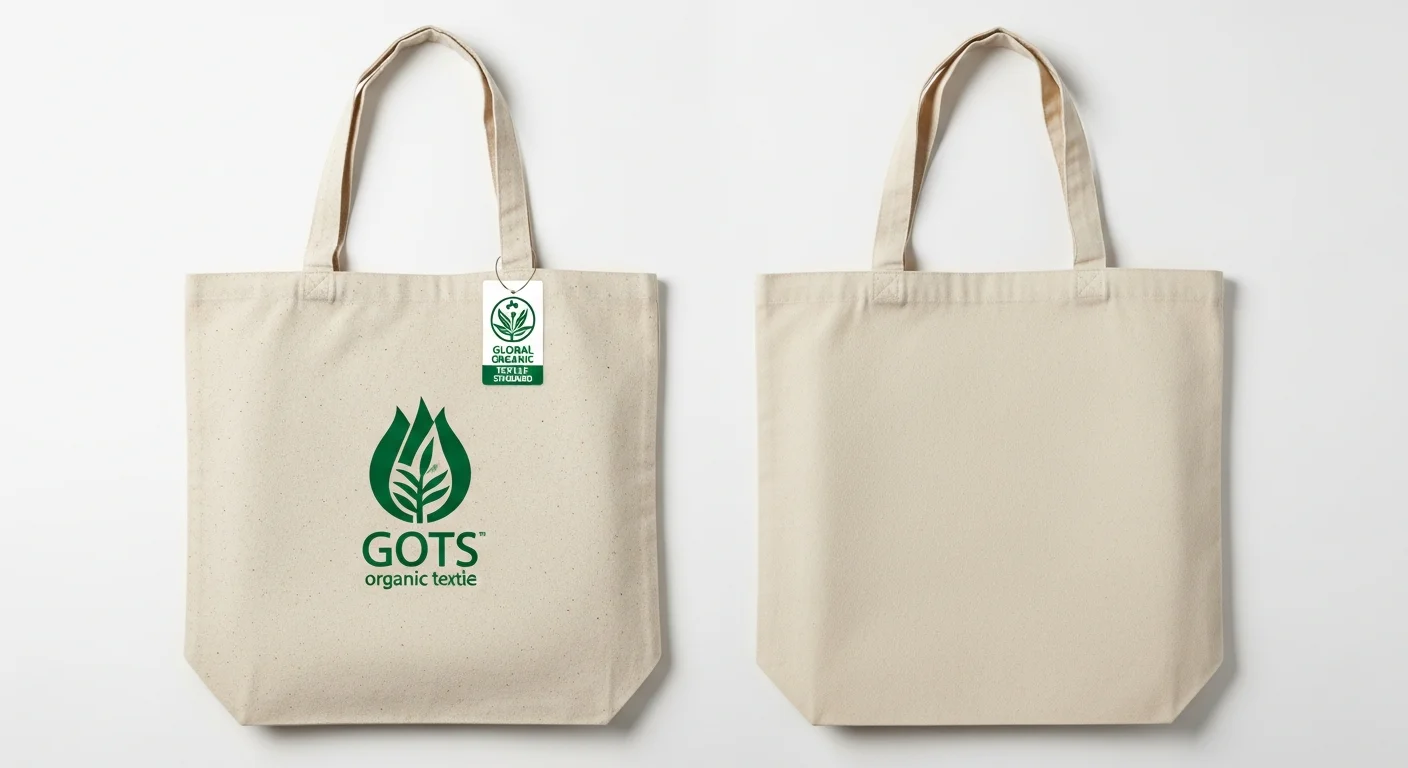
Cotton is the most common fabric used in custom tote bags, and for good reason — it is soft, durable, biodegradable, and takes printed designs beautifully. But within the world of cotton tote bags, there is a growing choice to make: conventional cotton or organic cotton. The difference matters for your brand image, environmental impact, and sometimes even print quality.
This guide compares organic and conventional cotton for custom tote bags across every dimension that matters — from farming practices and certifications to how each type performs with screen printing, DTG, and embroidery.
What Is Organic Cotton?
Organic cotton is cotton grown without synthetic pesticides, herbicides, or genetically modified seeds. Organic cotton farming uses natural pest control methods (crop rotation, beneficial insects), natural fertilizers (compost, manure), and rain-fed irrigation where possible. The result is a fiber that is chemically identical to conventional cotton but produced with significantly less environmental impact.
For a cotton product to be labeled "organic," it must be certified by an accredited body. The most widely recognized certification is GOTS (Global Organic Textile Standard), which covers the entire supply chain from raw fiber to finished product. GOTS certification requires that at least 70% of the textile fibers are organic (95% for products labeled "organic" rather than "made with organic"), and that all chemical inputs meet strict environmental and toxicological criteria.
Conventional cotton, by contrast, accounts for approximately 16% of global insecticide use despite covering less than 3% of the world's agricultural land. A single conventional cotton t-shirt requires approximately 713 gallons of water to produce. Organic cotton farming uses 71% less water and 62% less energy according to the Textile Exchange's lifecycle analysis data.

How Organic and Conventional Cotton Compare for Tote Bags
Softness and Hand Feel: Organic cotton tends to have a slightly softer hand feel than conventional cotton of the same weight. The absence of harsh chemical treatments during processing preserves the natural softness of the cotton fiber. Many customers notice a subtle difference when handling organic cotton tote bags — they feel smoother and more supple, particularly after a few washes.
Durability: Both organic and conventional cotton offer similar durability when woven into canvas. The tensile strength of the cotton fiber is determined primarily by the staple length (fiber length) and twist, not by how it was farmed. A 12oz organic cotton canvas tote will last just as long as a 12oz conventional cotton canvas tote — typically 3-5 years of regular use.
Color and Appearance: Unbleached organic cotton has a slightly warmer, more natural tone than conventional cotton. This is because conventional cotton is often treated with optical brightening agents (OBAs) that give it a whiter appearance. The natural, warm-cream color of organic cotton can be an aesthetic advantage for brands emphasizing natural and sustainable values.
Printing Compatibility: Both cotton types perform equally well with all decoration methods. Screen printing, DTG, embroidery, and heat transfer all produce excellent results on organic cotton. The fabric's ink absorption, color vibrancy, and print durability are virtually identical. Some printers note that organic cotton's slightly softer surface produces marginally softer DTG prints, though the difference is subtle.

Certifications to Look For
When ordering organic cotton custom tote bags, verify that the manufacturer can provide certification documentation. Legitimate certifications include:
GOTS (Global Organic Textile Standard): The gold standard for organic textiles. GOTS covers the entire supply chain from raw material to final product, including environmental criteria and social responsibility standards. Products labeled "GOTS organic" contain at least 95% certified organic fibers.
OCS (Organic Content Standard): Tracks the organic fiber through the supply chain but has less stringent processing and social criteria than GOTS. Products labeled "OCS 100" contain at least 95% organic material.
OEKO-TEX Standard 100: Tests for harmful substances in finished textiles. Not specifically an organic certification, but verifies that the product is free from harmful chemicals. Both organic and conventional cotton products can be OEKO-TEX certified.
Be cautious of "eco-friendly" or "green" claims without backing certifications. Without GOTS, OCS, or equivalent verification, there is no guarantee that the cotton was actually grown organically. At RareCustom, our organic cotton tote bags carry GOTS certification with full traceability documentation available upon request.

Environmental Impact Comparison
The environmental advantages of organic cotton are well documented. According to data from the Textile Exchange and Soil Association:
Water Usage: Organic cotton farming uses 71% less water than conventional cotton. This is primarily because organic farms rely more on rain-fed irrigation and healthier soils that retain moisture more effectively. For a standard tote bag using approximately 4 oz of cotton, organic cotton saves roughly 450 gallons of water per bag compared to conventional.
Chemical Inputs: Organic cotton eliminates synthetic pesticides and fertilizers entirely. Conventional cotton uses approximately 200g of pesticides per kilogram of cotton produced. This matters not just for the environment but for the workers in cotton fields — organic farming dramatically reduces chemical exposure for agricultural workers.
Carbon Footprint: Organic cotton production generates 46% fewer greenhouse gas emissions than conventional cotton, primarily due to the elimination of synthetic fertilizer production and application.
Biodiversity: Organic cotton farms support 30% more biodiversity than conventional farms. Crop rotation and natural pest management create healthier ecosystems that support beneficial insects, birds, and soil organisms.
Supply Chain Transparency and Traceability
One of the most significant advantages of choosing organic cotton for your custom cotton tote bags is the supply chain transparency that comes with third-party certification. GOTS certification, in particular, requires documentation and auditing at every stage of the production process — from the cotton farm to the spinning mill, the weaving facility, the dyeing plant, and the finished product manufacturer. This chain-of-custody verification gives your brand a credible sustainability story backed by verifiable data, not just marketing claims.
Supply chain transparency matters increasingly to corporate buyers and consumers. A 2025 McKinsey study found that 67% of consumers consider supply chain practices when making purchasing decisions, and 78% of B2B buyers require sustainability documentation from their promotional merchandise vendors. By choosing GOTS-certified organic cotton custom tote bags, you gain access to detailed traceability records that you can reference in corporate sustainability reports, marketing collateral, and client presentations.
For brands distributing promotional tote bags at trade shows or corporate events, supply chain transparency adds tangible value. You can include a QR code on the bag's interior tag that links to the certification documentation, giving recipients direct access to the bag's sustainability credentials. This level of transparency builds trust and differentiates your brand from competitors using uncertified or greenwashed alternatives.
At RareCustom, we maintain GOTS chain-of-custody documentation for all our organic cotton products and can provide certification numbers for any order upon request. Our organic cotton is sourced primarily from certified farms in India and Turkey, processed through audited facilities, and verified at every step before reaching our printing production floor.
Consumer Perception and Brand Value of Organic
Choosing organic cotton for your custom cotton tote bags is as much a branding decision as an environmental one. Research consistently shows that the "organic" label increases perceived product value, willingness to pay, and positive brand associations among consumers. A Nielsen global survey found that 73% of millennials and 66% of all consumers are willing to pay more for products from sustainable brands — and the organic label is one of the most recognized and trusted sustainability markers.
For businesses using custom tote bags as promotional merchandise, the organic distinction creates multiple marketing advantages. The bag itself becomes a conversation starter — recipients are more likely to notice and comment on an organic cotton bag than a conventional one, especially when the organic certification is visible through a tag, label, or printed message. Each time the bag is carried in public, it reinforces your brand's association with quality and environmental responsibility.
The brand value of organic extends beyond the initial recipient. Organic cotton tote bags are more likely to be kept and reused than conventional alternatives because the perceived value is higher. A conventional promotional tote has an average retention period of 6-11 months; an organic cotton tote with visible certification branding averages 18-24 months. This extended retention period translates directly into more brand impressions per dollar spent. When you factor in the cost-per-impression over the bag's lifetime, organic cotton custom tote bags often deliver better marketing ROI than their conventional counterparts despite the higher upfront cost.
Industries where organic cotton tote bags deliver the strongest brand impact include natural foods and beverages, wellness and yoga brands, environmental nonprofits, B Corp certified companies, sustainable fashion retailers, organic beauty and skincare, and farm-to-table restaurants. If your target audience aligns with any of these sectors, organic cotton is likely the right choice for your custom tote bag order.
Long-Term Cost Analysis: Organic vs Conventional
At first glance, organic cotton appears more expensive — and on a per-bag basis, it is. But a comprehensive cost analysis that accounts for brand value, retention rates, and marketing ROI often tells a different story. Understanding the true cost comparison helps you make an informed decision for your custom cotton tote bag project.
Upfront cost per bag: Organic cotton custom tote bags cost approximately 15-25% more than equivalent conventional cotton bags. For a standard 12oz canvas tote, that translates to roughly $2-$4 more per unit. On a 500-bag corporate order, the organic premium adds $1,000-$2,000 to the total production cost.
Cost per impression: If a conventional cotton tote bag generates an estimated 3,300 impressions over its 11-month average retention period, the cost per impression at $8/bag is approximately $0.0024. An organic cotton tote bag at $10/bag generating 5,200 impressions over its 18-month average retention period achieves a cost per impression of approximately $0.0019 — a 21% lower cost per impression despite the higher unit price. The longer retention period and higher usage frequency of organic bags more than compensate for the upfront premium.
Bundle strategy: For budget-conscious brands that want the organic advantage, consider a tiered approach. Use organic cotton tote bags for your highest-value customer interactions — VIP gifts, executive events, and premium retail packaging — while using conventional cotton for large-volume promotional distributions. This targets the organic investment where it creates the most brand value. You can also pair organic cotton totes with other custom merchandise like custom mugs, custom hoodies, or custom stickers to create premium gift bundles.
Pricing: What Does Organic Cost?
Organic cotton tote bags typically cost 15-25% more than equivalent conventional cotton bags. For a standard 12oz canvas tote, expect to pay approximately $2-$4 more per bag for organic. On a 100-bag order at our standard bulk pricing, the organic premium adds roughly $200-$400 to the total — a modest investment for brands that value sustainability messaging.
The premium is driven by three factors: organic cotton yields are 15-20% lower per acre than conventional, GOTS certification requires third-party auditing throughout the supply chain, and organic cotton represents less than 1% of global cotton production, limiting supply. However, as organic cotton adoption grows, the price gap is narrowing — it has shrunk from 30-40% a decade ago to 15-25% today.
For budget-conscious projects that still want an eco-friendly angle, consider recycled PET tote bags which deliver a sustainability story at a lower cost premium than organic cotton.
Which Cotton Should You Choose?
Choose organic cotton if: your brand emphasizes sustainability, your audience is eco-conscious, you need GOTS or OCS certification for your marketing materials, or you want to minimize your environmental footprint. Organic cotton is particularly popular with natural food brands, B Corps, environmental nonprofits, yoga studios, and wellness companies.
Choose conventional cotton if: budget is the primary concern, you are ordering very large quantities (1,000+) where the per-bag premium adds up significantly, or your brand messaging does not center on sustainability. Conventional cotton canvas still produces excellent, durable custom tote bags — choosing conventional does not mean choosing low quality.
A middle-ground option is using conventional cotton canvas but pairing it with eco-friendly messaging about reusability. Even a conventional cotton tote bag replaces 500+ single-use plastic bags over its lifetime, which is a genuine environmental benefit worth communicating to your audience. You can also explore other material options in our canvas material guide or compare jute tote bags for a completely different sustainable aesthetic.
Order Your Custom Cotton Tote Bags
Ready to create custom cotton tote bags — organic or conventional? Use our free design tool to get started. Upload your logo, choose your material, and preview your design instantly. No minimum orders and free shipping on orders $75+.
Need help deciding between organic and conventional? Contact our team for a personalized recommendation based on your project size, budget, and brand values. You can also explore our complete range of custom tote bag materials including jute, canvas, and recycled options. Browse our other custom products — custom t-shirts, custom hats, and custom tumblers — to build a complete branded merchandise collection.

Share this article
Written by
Aisha Patel
Head of Materials Science & Sustainability at RareCustom. M.S. in Textile Engineering from NC State. Aisha evaluates organic vs conventional cotton for custom tote bags based on certifications, durability, and environmental impact.