Custom Canvas Tote Bags: The Ultimate Material Guide for 2026
Everything you need to know about custom canvas tote bags — cotton duck vs canvas, weight options from 8oz to 18oz, printing compatibility, durability testing, and how to choose the right canvas for your project.
Aisha Patel
Head of Materials Science & Sustainability at RareCustom. Aisha's deep knowledge of canvas weights, weaves, and printing compatibility helps customers choose the right fabric for their custom tote bags.
When most people think of custom tote bags, they picture a sturdy canvas bag with a logo on the front. Canvas is the most popular material for custom tote bags for good reason — it is durable, affordable, eco-friendly, and takes printed designs beautifully. But not all canvas is created equal. The weight, weave, and cotton type dramatically affect how your finished bag looks, feels, and performs.
This guide breaks down everything you need to know about custom canvas tote bags so you can choose the right material for your specific project, whether you are ordering branded bags for your business or creating personalized gifts for a special occasion.
What Is Canvas? Cotton Duck vs Canvas Explained
Canvas is a plain-weave or twill-weave fabric traditionally made from cotton, linen, or hemp fibers. In the custom tote bag industry, canvas almost always refers to cotton canvas, also known as cotton duck. The term "duck" comes from the Dutch word "doek" meaning linen canvas — it has nothing to do with ducks. Cotton duck and cotton canvas are functionally the same material, though some manufacturers use "duck" for plain-weave versions and "canvas" for twill-weave versions.
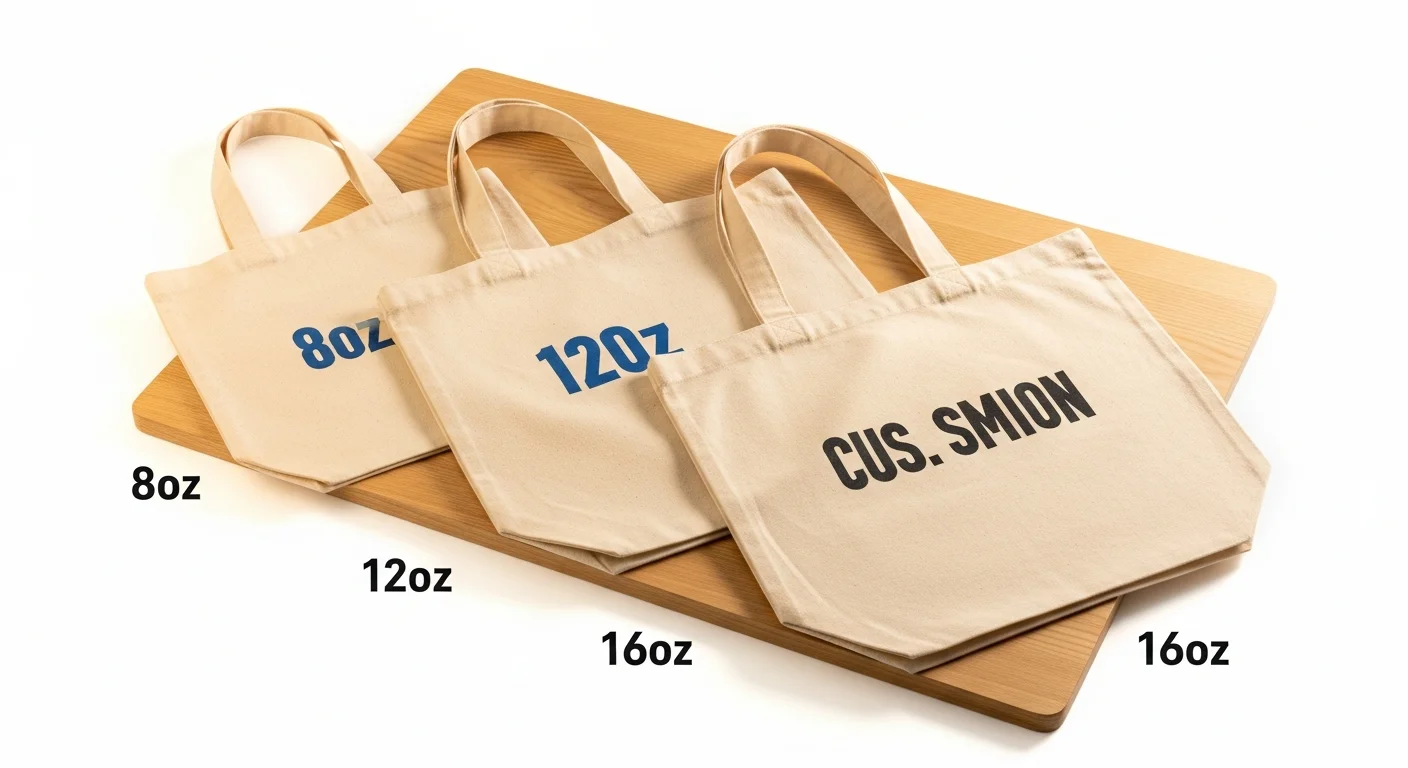
The key difference between canvas weights determines its suitability for different tote bag applications. Lighter canvas (6-8 oz) creates a softer, more foldable bag ideal for grocery shopping and casual use. Medium-weight canvas (10-12 oz) delivers the classic sturdy tote feel preferred for promotional and retail bags. Heavy-weight canvas (14-18 oz) produces a rigid, structured bag suited for premium retail, tool bags, and luxury brand merchandise.

Canvas Weight Options: 8oz to 18oz
Canvas weight is measured in ounces per square yard (oz/sq yd). This single number is the most important factor in determining how your custom canvas tote bag will look and perform. Here is a breakdown of common canvas weights used in custom tote bag production:
8oz Canvas (Light) — A soft, pliable fabric that folds flat for storage. Produces lightweight tote bags ideal for grocery runs, book bags, and casual daily carry. Print quality is excellent with both screen printing and DTG. The thinner fabric makes these bags the most affordable canvas option. Typical lifespan with regular use: 1-2 years. Weight capacity: approximately 15-20 pounds.
10oz Canvas (Medium-Light) — A step up in sturdiness while retaining some foldability. Popular for promotional giveaway bags where you want a balance between perceived quality and cost. Works well with all printing methods including embroidery. Typical lifespan: 2-3 years. Weight capacity: approximately 20-25 pounds.
12oz Canvas (Standard) — The industry standard for premium custom tote bags. Provides a substantial, quality feel that customers associate with a well-made product. This weight holds its shape when empty and develops a beautiful patina with age. Our most popular choice for business branding and retail bags. Typical lifespan: 3-5 years. Weight capacity: approximately 30-35 pounds.
14-16oz Canvas (Heavy) — A thick, structured fabric that creates rigid, self-standing bags. Popular for tool bags, wine totes, and luxury brand merchandise. The heavy weight limits foldability but delivers an unmistakably premium feel. Works exceptionally well with embroidery and screen printing. Typical lifespan: 5-7 years. Weight capacity: approximately 40-50 pounds.
18oz Canvas (Extra Heavy) — Military-grade canvas used for heavy-duty utility bags, tool carriers, and firewood totes. Rarely used for standard promotional tote bags due to cost and weight but ideal for premium lifestyle brands. Typical lifespan: 7-10 years. Weight capacity: approximately 60+ pounds.
How Canvas Weight Affects Printing
The weight and texture of your canvas directly affects how each printing method performs. Screen printing works well across all canvas weights — the ink sits on top of the tightly woven surface and adheres firmly to the cotton fibers. Heavier canvas actually improves screen printing results because the thicker fabric absorbs less ink, producing crisper edges and more vibrant colors.
DTG (direct-to-garment) printing performs best on lighter to medium canvas (8-12 oz). The inkjet-based process relies on ink absorbing into the fabric fibers, and lighter canvas allows better ink penetration and color saturation. On heavier canvas (14-18 oz), DTG results can appear slightly muted because the dense fiber structure limits ink absorption. For detailed photographic designs on heavy canvas, consider heat transfer vinyl as an alternative.
Embroidery works well on all canvas weights but truly shines on 12oz+ canvas. The heavier fabric provides a stable foundation for embroidery needles, reducing puckering and distortion around stitched areas. For embroidered tote bags, we recommend 12oz canvas as the minimum weight for professional results.

Natural vs Pre-Dyed Canvas
Custom canvas tote bags are available in two base formats: natural (unbleached/undyed) and pre-dyed. Natural canvas has a warm, off-white to cream color with visible cotton fibers. It is the most popular choice for custom tote bags because the neutral base allows printed designs to stand out clearly, and the natural look reinforces eco-friendly brand messaging.
Pre-dyed canvas is available in 20+ colors including black, navy, red, forest green, and pastel shades. Dyed canvas works best with screen printing (using opaque white or light inks on dark backgrounds) and embroidery. DTG printing on dark-dyed canvas requires a white underbase layer, which can affect the softness of the print area. If your design uses many colors on a dark bag, screen printing typically delivers better results than DTG.
One advantage of natural canvas is cost — undyed canvas is 10-15% less expensive than pre-dyed canvas because it skips the dyeing process. For large promotional orders where budget matters, natural canvas with a bold screen-printed logo delivers maximum brand impact at the lowest per-unit cost.
Canvas Tote Construction: Stitching, Handles, and Gussets
Beyond the fabric itself, construction quality determines how long your custom canvas tote bag will last. Key construction details to evaluate:
Stitching: Premium canvas totes use double-stitched seams with reinforced bar tacking at stress points (where handles attach to the body). Single-stitched seams save cost but reduce durability — a heavily loaded single-stitched bag can fail at the handle attachment point after months of regular use. All RareCustom canvas totes use double-stitched seams as standard.
Handles: Canvas tote handles come in two styles — self-fabric (same canvas material) and webbing (cotton or poly webbing strap). Self-fabric handles maintain a cohesive look and feel, while webbing handles offer slightly more strength per unit weight. Handle length matters for usability: 22-inch handles allow comfortable over-the-shoulder carry, while 10-inch handles are better for hand-carry only.
Gussets: A gusset is the folded panel at the bottom (and sometimes sides) of a tote bag that gives it depth and capacity. Gusseted canvas totes stand upright when loaded, making them practical for groceries, books, and retail purchases. Flat tote bags (no gusset) are more compact when empty and cost less to produce but have limited capacity for bulky items.
Canvas Durability and Stress Testing
One of the primary reasons that custom canvas tote bags remain the industry favorite is their exceptional durability under real-world conditions. At RareCustom, every canvas weight we offer undergoes rigorous stress testing to ensure your branded bags perform reliably in daily use. Our testing protocol evaluates seam tensile strength, handle attachment integrity, fabric abrasion resistance, and colorfastness after repeated washing cycles.
Seam tensile testing involves applying incrementally increasing force to the sewn seams of a finished bag until failure occurs. A properly double-stitched 12oz canvas tote withstands over 70 pounds of direct force at the seam before any thread breakage begins — well above the 30-35 pound everyday weight capacity. Handle attachment bar tacking, which is the most common failure point in cheaper bags, is tested separately by suspending a weighted load from each handle. Our reinforced bar-tacked handles on 12oz canvas consistently hold 50+ pounds per handle without pulling away from the bag body.
Fabric abrasion testing simulates years of daily use by rubbing the canvas surface against a standardized abrasive material under controlled pressure. A 12oz cotton duck canvas achieves a Martindale abrasion rating of 15,000-20,000 cycles, meaning the fabric surface remains intact and printable even after thousands of contacts with rough surfaces like grocery checkout counters, car seats, and desktops. Heavier canvas weights (14-18oz) achieve 25,000+ cycles, which is why they are preferred for tool bags and industrial applications.
Colorfastness testing evaluates how well screen-printed and DTG-printed designs hold up after repeated washing. Our standard wash-fastness protocol subjects printed canvas to 25 machine-wash cycles at 30°C and measures color density change. Screen printing on canvas retains 95%+ color density after 25 washes, while DTG printing retains 85-90% — both well within professional standards. These results confirm that your logo and branding will remain vibrant through years of regular use and laundering.

Canvas Care and Washing Instructions
Proper care extends the life of custom canvas tote bags significantly. Cotton canvas is one of the easiest tote bag materials to clean and maintain, which is another advantage over synthetic alternatives like non-woven polypropylene or recycled PET.
Machine washing: Most canvas tote bags can be machine washed on a gentle cycle with cold or warm water (up to 30°C/86°F). Turn the bag inside out to protect printed designs, and use a mild detergent free of bleach or optical brighteners. Avoid hot water, which can cause cotton shrinkage of up to 5% and may affect the adhesion of heat-transferred designs.
Drying: Air drying is recommended for all custom canvas tote bags. Lay the bag flat or hang it by the handles to maintain its shape. Tumble drying on low heat is acceptable for unprinted bags but can cause slight shrinkage and accelerate wear on printed areas. Never tumble dry on high heat — the extreme temperature can crack screen-printed designs and cause significant cotton shrinkage.
Spot cleaning: For minor stains, blot immediately with a damp cloth and a small amount of mild soap. Avoid rubbing vigorously over printed areas. For grease stains, apply a small amount of baking soda to absorb the oil before washing. For ink stains, rubbing alcohol applied with a cotton swab can lift the stain without affecting screen-printed designs on the opposite side of the fabric.
Storage: Store canvas tote bags flat or folded in a cool, dry place. Avoid damp storage areas, which can promote mildew growth on natural cotton fibers. If long-term storage is needed, place a silica gel packet inside the bag to absorb ambient moisture.
Canvas vs Other Materials Comparison
Choosing between canvas and other tote bag materials depends on your priorities. Here is how custom canvas tote bags compare to the most popular alternatives available for custom tote bag orders:
Canvas vs jute: Canvas offers a smoother surface for detailed printing and a wider range of base colors, while jute provides a more distinctive natural texture and rustic aesthetic. Canvas is more versatile for DTG and multi-color screen printing; jute is better for simple bold designs where the natural material texture is part of the appeal. Canvas bags are generally easier to wash and maintain.
Canvas vs recycled PET: Canvas is biodegradable and made from a renewable resource (cotton), while recycled PET diverts plastic waste from landfills but is not biodegradable. Canvas has a softer, more natural hand feel; recycled PET is lighter weight and naturally water-resistant. For sublimation printing, recycled PET is superior; for DTG and embroidery, canvas delivers better results.
Canvas vs non-woven polypropylene: Non-woven bags are the cheapest tote option and common at trade shows and conferences. Canvas costs 2-4x more per bag but lasts 10-20x longer, creates a dramatically better brand impression, and is biodegradable. For any project where brand perception matters, canvas is the clear winner.
Canvas vs leather: Leather occupies the premium tier — higher cost, longer lifespan, and luxury brand associations. Canvas is the practical everyday choice; leather is the aspirational gift choice. Many brands use canvas totes for promotional distribution and leather totes for executive or VIP gifts.
Environmental Benefits of Cotton Canvas
Cotton canvas tote bags offer significant environmental advantages that make them a responsible choice for eco-conscious brands. A single reusable canvas tote bag replaces an estimated 500-700 single-use plastic bags over its lifetime, diverting substantial plastic waste from landfills and waterways. For brands that pair their custom tote bags with sustainability messaging, this statistic alone provides compelling marketing content.
Cotton is a renewable agricultural crop that biodegrades completely within 1-5 months in composting conditions. Unlike synthetic tote bags made from polyester or polypropylene, a discarded cotton canvas bag leaves no microplastic residue in the environment. This end-of-life advantage is increasingly important to consumers — 73% of millennials say they are willing to pay more for sustainable products, according to Nielsen research.
For brands seeking the strongest environmental story, organic cotton canvas eliminates pesticide use and reduces water consumption by 71% compared to conventional cotton. Pairing organic canvas tote bags with other sustainable custom products — like reusable custom tumblers, eco-friendly stickers, or organic cotton t-shirts — creates a comprehensive sustainability-focused brand kit that resonates with environmentally aware audiences.
Canvas production also supports fair labor practices when sourced through certified supply chains. Look for GOTS (Global Organic Textile Standard) or Fair Trade certified canvas to ensure that your custom bags are made under ethical working conditions with fair wages. This supply chain transparency adds depth to your brand's sustainability narrative and provides verifiable claims for marketing materials.
Choosing the Right Canvas for Your Project
Here is a quick decision guide based on common use cases:
Corporate giveaways and trade shows: 10oz natural canvas with single-color screen-printed logo. Balances quality perception with cost efficiency. Order in bulk for maximum savings — check our custom tote bag pricing for volume discounts.
Retail branded bags: 12oz canvas (natural or custom dyed) with multi-color screen printing or embroidered logo. The heavier weight signals quality and customers will reuse these bags for years, generating thousands of brand impressions.
Eco-friendly promotions: 8-10oz organic cotton canvas with a sustainability message. The organic certification adds marketing value, and lighter weight keeps costs reasonable for large orders.
Premium gifts and luxury merch: 14-16oz canvas with embroidered or debossed branding. The thick, structured feel communicates craftsmanship. Pair with custom tumblers or custom mugs for a premium gift set.
Personal gifts: 12oz canvas with DTG printing for photo-quality personalization. Perfect for wedding gifts, teacher appreciation, and one-of-a-kind presents.
Start Designing Your Custom Canvas Tote Bags
Ready to create your custom canvas tote bags? Use our free online design tool to choose your canvas weight, color, and decoration method. Upload your logo or artwork, preview your design in real-time, and order with confidence — no minimums, free shipping on orders over $75, and a 100% satisfaction guarantee.
For help choosing the right canvas weight and construction for your project, contact our team. We have printed over 500,000 custom bags and can recommend the perfect combination of material, weight, and printing method for your specific needs. Learn more about how our ordering process works or explore additional custom products like custom hoodies and custom hats to build a complete branded merchandise collection.

Share this article
Written by
Aisha Patel
Head of Materials Science & Sustainability at RareCustom. Aisha's deep knowledge of canvas weights, weaves, and printing compatibility helps customers choose the right fabric for their custom tote bags.