Custom Recycled Tote Bags: Sustainability Meets Custom Design
Learn how custom recycled tote bags are made from post-consumer plastic bottles, their environmental impact, printing options, durability, and how to choose the right recycled material for your sustainable brand.
Aisha Patel
Head of Materials Science & Sustainability at RareCustom. Aisha oversees RareCustom's recycled material sourcing and GRS certification compliance for sustainable custom tote bags.
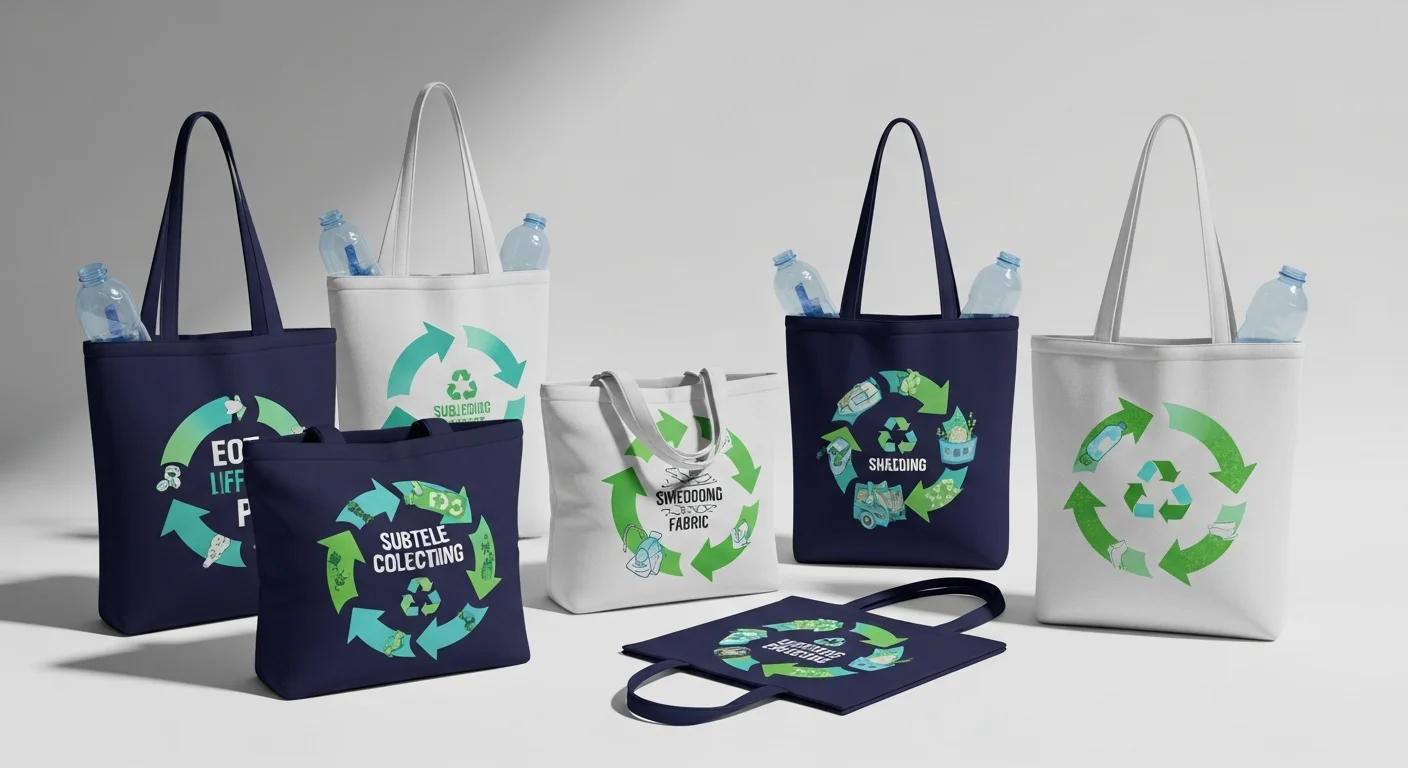
Every year, approximately 380 million tons of plastic are produced globally, and only 9% gets recycled. Custom recycled tote bags transform that problem into a product — converting post-consumer plastic bottles into durable, printable fabric that carries your brand while diverting waste from landfills and oceans.
This guide explains how recycled tote bags are made, the certifications that verify sustainability claims, how they compare to cotton and canvas alternatives, and how to design custom recycled bags that communicate your commitment to sustainability.
How Recycled Tote Bags Are Made
Recycled PET (rPET) tote bags are made from post-consumer plastic bottles — the same PET (polyethylene terephthalate) plastic used in water bottles, soda bottles, and food containers. The manufacturing process transforms waste plastic into a durable woven fabric through several steps:
Collection and sorting: Post-consumer PET bottles are collected through recycling programs, sorted by color (clear bottles produce white/light fabric; green/colored bottles produce darker fabric), and cleaned to remove labels, caps, and contaminants.
Shredding and melting: Clean bottles are shredded into small flakes, washed again, and melted at approximately 260°C (500°F) to form a viscous polymer.
Fiber extrusion: The molten polymer is forced through spinnerets (tiny nozzles) to create thin fibers, similar to how synthetic fabrics are traditionally manufactured from virgin polyester. These fibers are then drawn (stretched) to increase strength and cooled to set their shape.
Yarn spinning and weaving: The rPET fibers are spun into yarn and woven into fabric using standard textile machinery. The resulting fabric is virtually indistinguishable from virgin polyester in look and feel but carries a dramatically smaller environmental footprint.
A standard custom tote bag uses approximately 5-8 recycled plastic bottles worth of material. For a 500-bag corporate order, that means diverting 2,500-4,000 plastic bottles from landfills — a tangible sustainability metric you can share in your marketing materials.

Environmental Benefits by the Numbers
The environmental case for recycled PET tote bags is compelling and well-documented:
Energy savings: Manufacturing rPET fabric uses 59% less energy than producing virgin polyester. This is because the most energy-intensive step in polyester production — extracting and refining petroleum — is eliminated entirely when using recycled bottles as the raw material.
Carbon reduction: rPET production generates 32% fewer CO2 emissions compared to virgin polyester. For a 1,000-bag order, choosing recycled material over virgin polyester prevents approximately 440 kg of CO2 emissions — equivalent to driving a car 1,100 miles.
Waste diversion: Each tote bag diverts 5-8 plastic bottles from landfills or ocean pollution. The average American uses 156 plastic bottles per year; a single recycled tote bag represents roughly 5% of one person's annual plastic bottle consumption converted into something useful.
Water conservation: rPET production uses 90% less water than growing and processing cotton. For brands comparing recycled polyester to organic cotton, recycled PET has the edge on water usage, while organic cotton has the edge on biodegradability.

How rPET Quality Compares to Virgin Materials
A common misconception about recycled PET tote bags is that the recycled fabric is somehow inferior to virgin polyester in quality, strength, or appearance. In reality, modern rPET manufacturing produces fabric that is virtually identical to virgin polyester across every measurable performance dimension — and in some cases, rPET actually performs better due to advances in recycling technology.
Tensile strength: rPET fabric achieves 95-100% of the tensile strength of virgin polyester when processed through modern fiber extrusion methods. The molecular structure of PET polymer is preserved through the recycling process — the plastic is melted and re-extruded rather than chemically broken down, which means the resulting fibers maintain the same structural integrity as virgin-produced fibers. Independent laboratory testing consistently confirms that rPET tote bags withstand the same weight loads and stress as their virgin counterparts.
Color consistency: Early recycled polyester products sometimes suffered from slight color inconsistencies caused by residual dyes from the source bottles. Modern sorting and washing technologies have largely eliminated this issue. Current rPET fabric achieves Delta E color consistency values below 1.5 (barely perceptible to the human eye) across production runs, matching the consistency standards of virgin polyester production.
UV resistance: rPET fabric offers excellent UV resistance, with colorfastness ratings comparable to virgin polyester. In accelerated weathering tests, sublimation-printed rPET tote bags retain 90%+ color vibrancy after 200 hours of simulated UV exposure — making them suitable for outdoor use, beach bags, and bags that spend time in direct sunlight.
Wash durability: Recycled PET tote bags can be wiped clean with a damp cloth or hand washed without affecting fabric integrity or printed designs. The synthetic fibers resist water absorption (unlike cotton, which absorbs moisture), which means rPET bags dry quickly and resist mildew development even in humid storage conditions.

Certifications for Recycled Tote Bags
Sustainability claims without third-party verification are just marketing. When ordering custom recycled tote bags, look for these certifications to ensure your bags genuinely contain recycled content and were produced responsibly:
GRS (Global Recycled Standard): The most comprehensive recycled material certification. GRS verifies recycled content, chain of custody, social and environmental practices, and chemical restrictions throughout the supply chain. Products certified GRS contain a verified percentage of recycled material (typically 50-100%). GRS certification requires annual facility audits by accredited third-party assessors, making it the most trustworthy verification available for recycled content claims.
RCS (Recycled Claim Standard): A lighter certification that verifies recycled content and chain of custody but does not include social or environmental practice requirements. Suitable for brands that want verified recycled content claims without the full GRS audit scope. RCS is managed by Textile Exchange, the same organization behind GRS, and follows similar chain-of-custody protocols.
OEKO-TEX Standard 100: Tests finished products for harmful substances. Not specific to recycled materials but provides assurance that the recycled fabric does not contain residual contaminants from the recycling process. This certification is particularly valuable for recycled products because the source material (plastic bottles) may have previously contained beverages, which introduces concerns about chemical residue in the recycled fibers.
SCS Recycled Content Certification: Scientific Certification Systems (SCS) offers independent verification of recycled content percentages. SCS certification is recognized by leading green building programs and corporate sustainability frameworks, making it valuable for brands that report recycled material usage in ESG disclosures.
At RareCustom, our recycled PET tote bags carry GRS certification with documented chain-of-custody records available upon request. We recommend that brands using recycled tote bags in their marketing include the certification logo and number on the bag's interior tag or on accompanying marketing materials to substantiate their sustainability claims.
Printing on Recycled PET Fabric
Recycled PET fabric accepts most decoration methods well, with a few considerations unique to the material:
Screen printing delivers excellent results on rPET. The smooth, consistent surface of woven recycled polyester provides a clean base for ink adhesion. Colors appear vibrant and coverage is uniform. Screen printing is the most cost-effective method for large orders of custom recycled tote bags.
Sublimation printing is where recycled PET truly shines. Because the fabric is polyester-based, dye-sublimation works perfectly — the heat-activated dyes bond permanently with the polyester fibers at a molecular level. This produces permanent, all-over, full-color prints that never crack, peel, or fade. Sublimation is ideal for complex, multi-color designs and all-over patterns.
DTG printing works on rPET but requires a polyester-specific ink formulation rather than the cotton-optimized inks used on canvas bags. Results are good but sublimation is generally preferred for polyester-based bags when unlimited-color printing is needed.
Embroidery works well on recycled PET fabric. The woven structure provides adequate stability for embroidery needles, though the synthetic fibers may cause slightly more needle wear compared to cotton canvas.
Consumer Appeal and Marketing Your Recycled Bags
Custom recycled tote bags offer a unique marketing advantage that no other tote bag material can match: a specific, quantifiable environmental impact story. While organic cotton and jute communicate sustainability through their natural origins, recycled PET tells a waste-reduction story with concrete numbers — and consumers respond powerfully to specific metrics over vague green claims.
The most effective marketing approaches for recycled tote bags include printing the number of bottles diverted on the bag itself (for example, "This bag is made from 8 recycled plastic bottles"), incorporating the recycling symbol into your design, and including a brief description of the rPET manufacturing process on the bag's interior label. These tangible details transform the bag from a simple promotional item into a conversation starter about your brand's environmental commitment.
Consumer research consistently shows that recycled products generate positive brand associations. A 2025 Cone Communications study found that 87% of consumers have a more positive image of companies that support environmental issues, and 92% are more likely to trust a company that supports environmental causes. Custom recycled tote bags provide a visible, everyday demonstration of your brand's commitment that consumers encounter repeatedly — at the grocery store, in the office, on the commute — generating ongoing positive brand reinforcement.
For corporate buyers, recycled tote bags also satisfy increasing procurement sustainability requirements. Many Fortune 500 companies now require that promotional merchandise meet minimum recycled content thresholds, and GRS-certified recycled PET tote bags meet or exceed these standards. If your organization sells to or partners with large corporations, offering recycled merchandise can be a competitive differentiator in the procurement process.
To maximize the marketing impact of your custom recycled tote bags, consider pairing them with other sustainable custom products like organic cotton t-shirts, reusable tumblers, eco-friendly stickers, and reusable mugs to create a comprehensive sustainable brand kit.
Recycled PET vs Cotton vs Canvas: Which Should You Choose?
Each tote bag material serves different priorities. Here is how recycled PET compares to the alternatives:
Choose recycled PET if: Water resistance matters (rPET is naturally water-resistant), you want a measurable waste diversion story (X bottles diverted), your design uses all-over printing (sublimation is perfect for rPET), or you need the lightest weight option. Recycled PET is especially popular with tech companies, outdoor brands, and organizations focused on ocean plastic awareness.
Choose cotton/canvas if: You prefer a natural fiber feel, your printing method is DTG, your audience values biodegradability over recycled content, or you want a more traditional tote bag aesthetic. Read our canvas material guide for detailed comparisons.
Choose jute if: You want the most visually distinctive natural material and your printing needs are limited to screen printing or embroidery.
Design Your Custom Recycled Tote Bags
Ready to turn plastic waste into branded merchandise? Use our free online design tool to create your custom recycled tote bags. Choose your style, upload your artwork, and preview your design in real-time. No minimum orders, free shipping on orders $75+.
For large orders (100+), contact our team for volume pricing and to discuss GRS-certified sourcing options. Pair your recycled tote bags with other eco-friendly custom products like organic cotton t-shirts and reusable tumblers for a complete sustainable brand kit. Learn more about how our ordering process works or explore our full range of custom tote bag materials to find the perfect fit for your project.

Share this article
Written by
Aisha Patel
Head of Materials Science & Sustainability at RareCustom. Aisha oversees RareCustom's recycled material sourcing and GRS certification compliance for sustainable custom tote bags.